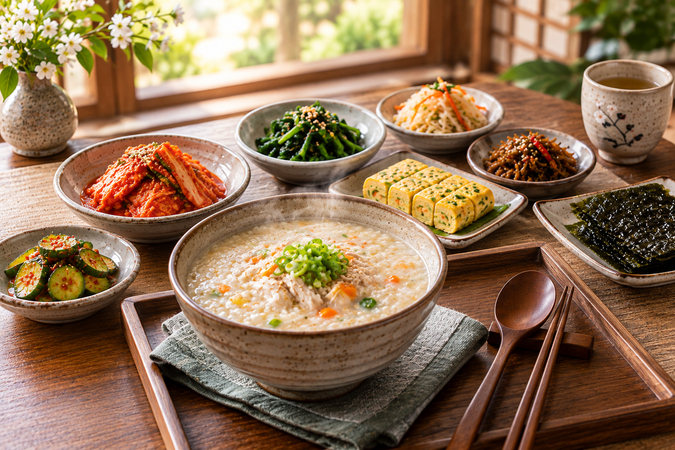
When most Americans picture breakfast, they probably think of eggs, toast, cereal, pancakes, bacon, yogurt, or a cup of coffee grabbed on the way out the door. A Korean-style breakfast, however, can look surprisingly similar to what might be served for lunch or dinner.
Rice in the morning? Soup before coffee? Kimchi next to your eggs?
For someone accustomed to a typical American breakfast, the first Korean breakfast table can feel almost like eating dinner at 8 a.m.
So I decided to try something different: for one full week, I ate a Korean-style breakfast every morning.
I wasn’t trying to recreate an elaborate restaurant meal. Instead, I wanted to understand what makes an everyday Korean breakfast different from the sweet, bread-based, or grab-and-go breakfasts common in the United States.
For seven mornings, my meals revolved around simple combinations of rice, soup, eggs, vegetables, seaweed, kimchi, and small side dishes.
By the end of the week, I realized that the biggest difference wasn’t any single ingredient.
It was the entire idea of what breakfast could be.
What Is a Korean-Style Breakfast?
There isn’t one official Korean breakfast.
Modern Koreans eat many different things in the morning. Some people eat toast, cereal, fruit, yogurt, sandwiches, or simply drink coffee. Busy schedules have changed breakfast habits just as they have in many other countries.
But a traditional Korean-style home meal is built around a very recognizable structure:
- Rice
- Soup or stew
- Kimchi
- Several small side dishes, called banchan
- Sometimes eggs, fish, tofu, or meat
That basic structure is important because Korean meals traditionally do not divide foods as strictly into “breakfast foods” and “dinner foods” as American meals often do.
A bowl of rice and soup that works at 7 p.m. may work perfectly well at 7 a.m.
The Korea Tourism Organization describes Korean food as traditionally centered around rice, soup or stew, kimchi, vegetables, meat, seafood, and numerous side dishes.
That means the Korean breakfast table can initially look surprisingly substantial to an American visitor.
But it doesn’t necessarily mean cooking ten dishes every morning.
Much of the food can already be prepared.
Kimchi is stored in the refrigerator. Banchan may have been prepared earlier. Rice can be kept warm in a rice cooker. Soup can be reheated.
Once I understood that, the whole system made much more sense.
The Biggest Surprise: Breakfast Didn’t Taste Like “Breakfast”
This was probably the strangest adjustment on Day 1.
My first meal was simple:
Steamed rice, a fried egg, kimchi, roasted seaweed, and a small bowl of soup.
Nothing about the food itself was unfamiliar.
What felt unfamiliar was eating those flavors immediately after waking up.
I had mentally associated garlic, sesame oil, kimchi, rice, and soup with lunch or dinner.
But that distinction quickly began disappearing.
By the third or fourth day, rice in the morning no longer seemed unusual.
That made me realize how culturally constructed our idea of “breakfast food” really is.
In the United States, pancakes make sense at 8 a.m., but a bowl of rice might seem strange.
In another food culture, the opposite can be perfectly normal.
Day 1: Rice, Egg, Kimchi, and Seaweed
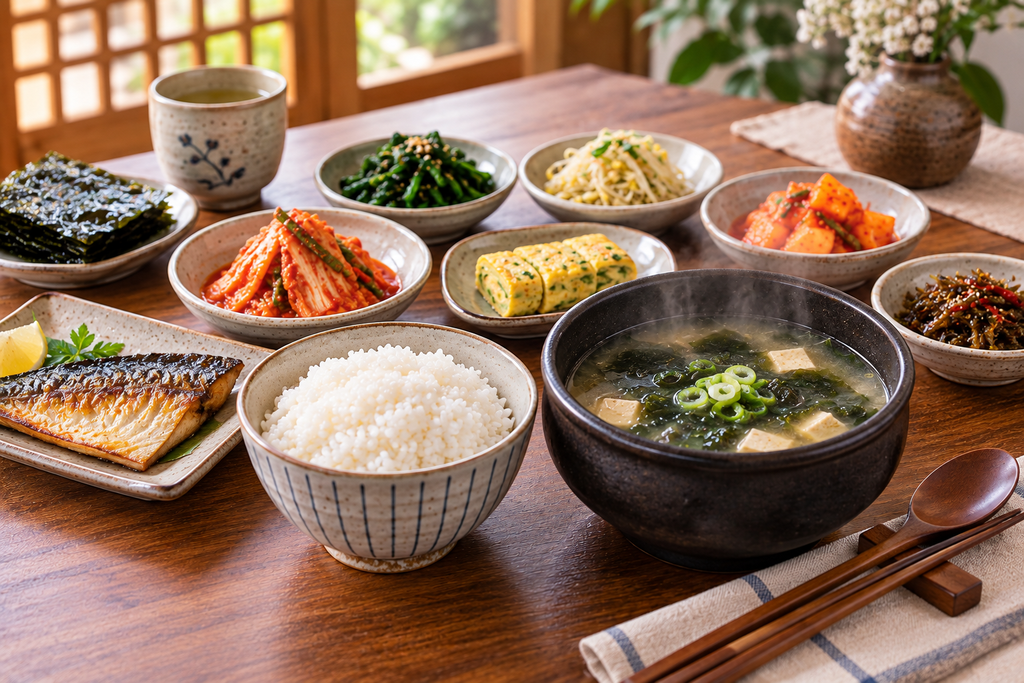
I deliberately kept my first breakfast easy.
I prepared warm rice and added a fried egg. On the side, I had kimchi and roasted seaweed.
This turned out to be one of the easiest Korean-style breakfasts for a beginner.
The combination works because every component plays a different role.
The rice is mild.
Kimchi brings acidity, spice, and crunch.
Seaweed adds saltiness and a roasted flavor.
The egg adds richness and protein.
Instead of eating each food separately, I started combining small bites.
Rice with kimchi.
Rice wrapped in seaweed.
Egg with rice.
Egg, kimchi, and rice together.
This is one of the pleasures of eating Korean food: a relatively small number of dishes can produce many different flavor combinations.
What Felt Different
There was almost no sweetness.
That was immediately noticeable.
Many familiar American breakfast choices contain noticeable sweetness—cereal, flavored yogurt, muffins, pastries, pancakes, waffles, breakfast bars, or sweetened coffee.
This breakfast moved completely in the opposite direction.
It was warm, savory, salty, spicy, and comforting.
Day 2: Rice and Miyeokguk
On the second morning, I tried rice with miyeokguk, Korean seaweed soup.
Eating soup in the morning initially sounded unusual.
Once I actually tried it, however, it made perfect sense.
A warm broth is gentle and comforting early in the day, especially on a cool morning.
Instead of starting with something dry like toast, I was eating a warm bowl of soup alongside rice.
Miyeokguk also has an important place in Korean culture. It is famously eaten on birthdays, but it isn’t limited to birthday celebrations. It can also be part of ordinary home meals.
The meal felt much calmer than eating something while rushing out the door.
And that introduced another difference I began noticing during the experiment.
A Korean-style meal encourages you to sit down.
Day 3: Gyeran, Rice, Kimchi, and Banchan
Day 3 was when the experiment started becoming easier.
I ate rice with egg, kimchi, seasoned vegetables, and another small side dish.
This was also when I began understanding the usefulness of banchan.
Banchan are the small side dishes served alongside rice.
They might include seasoned spinach, bean sprouts, braised potatoes, cucumber, tofu, dried anchovies, pickled vegetables, or countless other foods.
You don’t need large portions of each one.
Instead, several small dishes provide different textures and flavors.
The Korea Tourism Organization explains that rice and soup form the center of a traditional table while meat, seafood, vegetable dishes, kimchi, and other banchan surround them.
That arrangement allows the diner to create different combinations with every bite.
For me, this was completely different from eating one breakfast sandwich where nearly every bite tastes the same.
Day 4: Kongnamulgukbap
On Day 4, I wanted to try something that felt even more distinctly Korean: kongnamulgukbap.
Kongnamulgukbap is bean sprout and rice soup.
The Korea Tourism Organization specifically describes bean sprout and rice soup as a popular breakfast menu item. It is especially associated with Jeonju and is known for its mild, refreshing broth.
This meal helped correct one assumption I had made about Korean breakfast.
I had assumed that eating rice, soup, and side dishes meant breakfast would always feel heavy.
It didn’t.
A broth-based meal with bean sprouts and rice can actually feel surprisingly straightforward.
It is warm and satisfying without needing pancakes, butter, syrup, sausage, or pastries.
And there was something particularly pleasant about eating hot soup first thing in the morning.
Day 5: Leftovers Became Breakfast
Day 5 taught me perhaps the most practical lesson of the entire week.
Korean breakfast doesn’t always require making “breakfast.”
I already had rice.
There was kimchi in the refrigerator.
I had leftover vegetables and a little soup.
That became breakfast.
This dramatically changed how I thought about morning cooking.
American breakfast often involves foods specifically purchased for breakfast.
Korean-style eating can make much greater use of foods that are already part of the household’s regular meals.
Yesterday’s soup?
Reheat it.
Rice in the rice cooker?
Serve it.
Three containers of banchan in the refrigerator?
Put small portions on the table.
Add an egg if you want something freshly cooked.
Breakfast is ready.
For anyone who hates complicated morning cooking, this may be one of the most attractive aspects of Korean home-style eating.
Day 6: Juk Changed the Pace
By Day 6, I wanted something softer, so I tried juk, Korean porridge.
Juk comes in many forms.
It may be made with rice, vegetables, pumpkin, abalone, chicken, or other ingredients.
Compared with a full rice-and-banchan meal, porridge feels simpler and gentler.
It also showed me that “Korean breakfast” isn’t a single formula.
You can have a table filled with several dishes.
Or you can have one warm bowl.
That flexibility makes the idea much easier to incorporate into everyday life.
For someone trying Korean food for the first time, juk may actually be one of the easiest morning meals to understand.
It feels familiar enough to oatmeal or other hot cereals, although the flavors and ingredients can be completely different.
Day 7: My Simple Korean-American Breakfast
On the final day, I stopped trying to make my breakfast particularly “traditional.”
Instead, I used what I had learned during the previous six days.
I made rice, egg, kimchi, seaweed, and vegetables.
Then I had coffee afterward.
This was probably the breakfast I would be most likely to continue eating.
And that was an important realization.
Trying another country’s food culture doesn’t have to mean perfectly reproducing someone else’s table.
Food culture changes constantly.
Modern Korean households are diverse, too.
Some people may eat rice and soup. Others may grab toast. Some may skip breakfast altogether.
My goal wasn’t to declare one breakfast “authentically Korean.”
It was to experience a different way of organizing the morning meal.
Korean Breakfast vs. American Breakfast
After seven days, several differences stood out.
1. Savory Foods Dominate
Traditional Korean-style breakfasts tend to lean strongly toward savory flavors.
Rice, soup, vegetables, kimchi, eggs, tofu, fish, and seaweed create a completely different flavor profile from pancakes, cereal, pastries, or sweet yogurt.
For someone accustomed to sweet breakfasts, this may be the biggest adjustment.
2. Rice Replaces Bread
Bread isn’t absent from modern Korean breakfasts.
But in a traditional Korean meal structure, rice occupies the central position.
That one substitution changes everything around it.
Toast naturally pairs with butter, jam, eggs, or bacon.
Rice naturally pairs with soup, kimchi, vegetables, fish, eggs, and banchan.
Change the staple food and the entire breakfast changes with it.
3. Soup at Breakfast Is Normal
This was one of my favorite discoveries.
Soup isn’t necessarily a lunch or dinner food.
A mild soup can be surprisingly enjoyable in the morning.
Korean cuisine includes many soups and rice soups, from simple vegetable-based soups to regional specialties.
Kongnamulgukbap is one clear example of a soup-and-rice dish associated with breakfast.
4. Vegetables Appear Early in the Day
This was another major difference.
Vegetables aren’t usually the first thing many Americans imagine when thinking about breakfast.
Yet Korean banchan can put spinach, bean sprouts, radish, cucumber, cabbage, mushrooms, and other vegetables on the table before the day has really begun.
I liked that.
It made breakfast feel less like a separate category of food and more like a regular meal.
5. Fermented Foods Can Be Part of Breakfast
Yes, that means kimchi.
Eating fermented cabbage in the morning may initially seem unusual to someone new to Korean food.
After several days, I barely thought about it.
Kimchi works particularly well with plain rice because the rice balances its strong flavor.
It also makes an extremely simple meal feel much more interesting.
Do Koreans Really Eat This Every Morning?
No.
This is important.
Korea in 2026 is a modern, fast-moving society, and breakfast habits vary enormously by age, household, schedule, occupation, and personal preference.
Someone commuting early in Seoul may grab coffee and a sandwich.
A student may eat cereal.
Someone else may skip breakfast.
Another household may still serve rice, soup, kimchi, and banchan.
So it would be misleading to look at an elaborate Korean table and say, “This is what every Korean eats every morning.”
It isn’t.
A better way to understand it is that rice, soup, kimchi, and banchan represent an important traditional Korean meal structure—and that structure can be used at breakfast as well as at other meals.
Is a Korean Breakfast Difficult to Make?
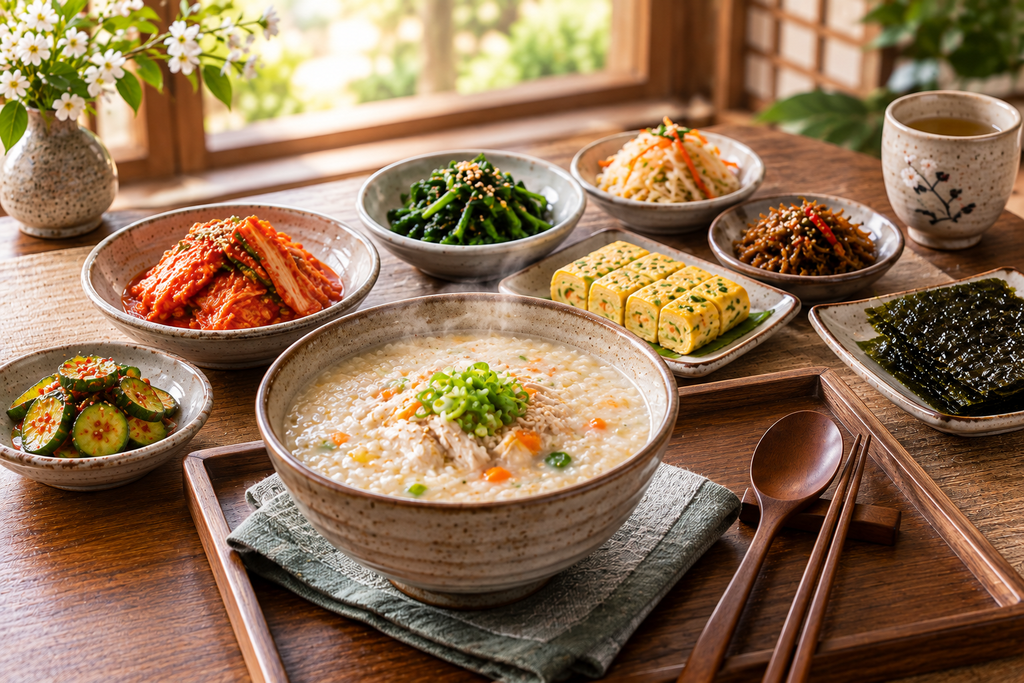
It can look difficult.
But it doesn’t have to be.
The secret is preparation.
If you attempt to cook rice, soup, kimchi, and four different banchan from scratch at 7 a.m., you probably won’t continue for long.
Instead, prepare foods in advance.
Keep kimchi in the refrigerator.
Make enough soup for multiple meals.
Prepare two or three simple banchan.
Use a rice cooker.
Keep roasted seaweed available.
Then cook one fresh item, such as an egg.
Suddenly, a Korean-style breakfast can take only a few minutes to assemble.
The Easiest Korean Breakfast for Beginners
If you’ve never tried this style of breakfast, don’t start with ten side dishes.
Start with four ingredients:
Rice + egg + kimchi + roasted seaweed.
That’s enough.
Once you’re comfortable with that combination, add one vegetable side dish.
Then try soup.
Later, experiment with tofu, fish, or other banchan.
This approach is cheaper, easier, and much less intimidating.
What I Learned After Seven Days
Before starting this experiment, I thought the biggest difference would be rice.
It wasn’t.
The biggest difference was changing my definition of breakfast.
I had unconsciously created rules about morning food.
Soup belongs at dinner.
Kimchi belongs at lunch.
Rice isn’t breakfast.
Vegetables aren’t breakfast.
But those aren’t universal rules.
They’re habits.
Once those assumptions disappeared, Korean-style breakfast stopped feeling strange remarkably quickly.
There was also something enjoyable about beginning the day with several small flavors rather than one dominant food.
One bite might be rice and seaweed.
The next might include kimchi.
Then egg.
Then soup.
Then vegetables.
Breakfast became less repetitive.
Would I Keep Eating Korean-Style Breakfast?
Yes—but probably not seven days a week.
Some mornings, toast and coffee are simply easier.
But I would definitely keep several ideas from this experiment.
Rice and eggs make an incredibly easy meal.
Kimchi can transform plain rice.
Soup is much better in the morning than I expected.
And having prepared banchan in the refrigerator makes assembling meals extremely convenient.
Most importantly, I no longer think breakfast needs to taste like breakfast.
How to Try the 7-Day Korean Breakfast Challenge
Want to try it yourself?
Here’s an easy beginner schedule.
Day 1: Rice + fried egg + kimchi + roasted seaweed
Day 2: Rice + miyeokguk + kimchi
Day 3: Rice + egg + two vegetable banchan
Day 4: Kongnamulgukbap
Day 5: Rice + leftover soup + leftover banchan
Day 6: Korean juk
Day 7: Build your own Korean-style breakfast using your favorite foods from the week
Don’t worry about making everything perfectly traditional.
The point is to experience how different ingredients change the way breakfast feels.
Final Thoughts
Trying a Korean-style breakfast for seven days changed something surprisingly simple: my assumptions about what belongs on a breakfast table.
Rice didn’t feel strange anymore.
Soup became comforting.
Kimchi became something I could imagine eating early in the day.
And small vegetable side dishes made breakfast far more varied than I expected.
Korean food is often introduced internationally through Korean BBQ, fried chicken, bibimbap, or spicy noodles.
Those foods are delicious, but they show only one side of Korean eating.
An ordinary bowl of rice surrounded by soup and a few small side dishes reveals something different.
It shows the quieter side of Korean food—the everyday meals eaten at home.
And sometimes that is the best way to understand a food culture.
If you’re curious about Korean cuisine, don’t stop at Korean BBQ.
Try breakfast.
You may discover that the most surprising Korean meal is the one you eat first thing in the morning.
Frequently Asked Questions
What is a typical Korean breakfast?
A traditional Korean-style breakfast may include rice, soup or stew, kimchi, vegetables, and several banchan. Eggs, tofu, fish, or meat may also be included. Modern Korean breakfast habits vary widely, however, and many people also eat Western-style foods or skip breakfast.
Do Koreans really eat rice for breakfast?
Rice has traditionally been a staple of Korean meals and can be eaten at breakfast, lunch, or dinner. Modern eating habits are more diverse, but rice remains an important part of Korean food culture.
Do Koreans eat kimchi for breakfast?
Kimchi can be served as part of a Korean breakfast, particularly when the meal follows the traditional rice-and-banchan structure.
Is soup common for Korean breakfast?
Yes. Soup can accompany rice as part of a traditional Korean-style meal. Certain rice soups are also associated with breakfast. Kongnamulgukbap, or bean sprout and rice soup, is one example.
What is the easiest Korean breakfast for a beginner?
Try warm rice with a fried egg, kimchi, and roasted seaweed. It requires very little preparation and introduces the basic combination of rice with savory Korean side dishes.
Do I need many banchan to make a Korean breakfast?
No. Two or three simple side dishes are plenty for a home breakfast. Even rice, egg, kimchi, and seaweed can make an easy Korean-style morning meal.
Is Korean breakfast always spicy?
No. Korean food includes spicy dishes, but many breakfast-friendly foods such as rice, eggs, seaweed soup, porridge, tofu, and seasoned vegetables can be mild.
Can I make a Korean-style breakfast in America?
Absolutely. Rice, eggs, tofu, seaweed, vegetables, and many Korean pantry ingredients are widely available. You can begin with just a few basic ingredients and expand your Korean pantry gradually.