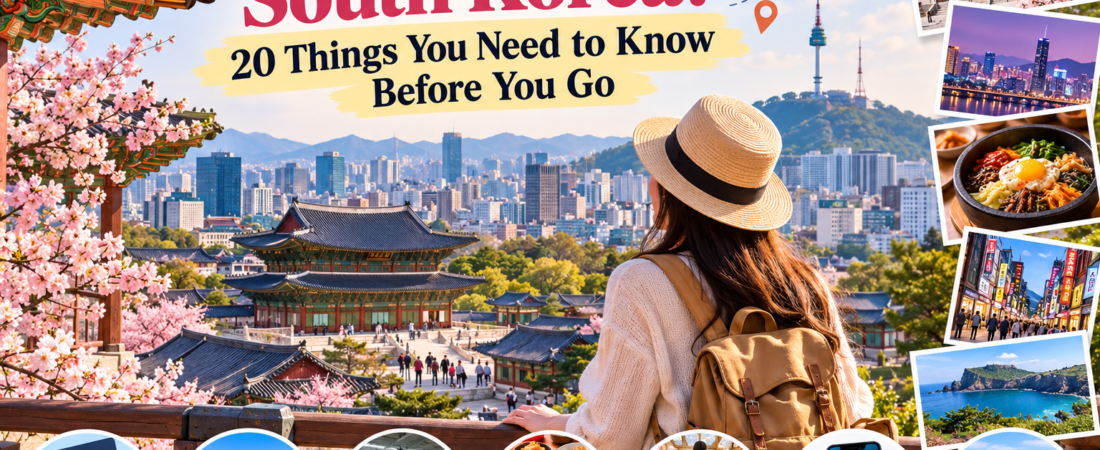
Planning your first trip to South Korea can feel exciting and slightly overwhelming at the same time.
Maybe you have watched Korean dramas, listened to K-pop, tried Korean barbecue, or seen videos of Seoul’s neon streets, traditional palaces, cafés, convenience stores, and night markets. But visiting South Korea in person is different from watching it through a screen.
The country is modern, fast-moving, highly connected, and surprisingly easy to travel around once you understand a few basics.
For first-time visitors, the biggest questions are usually practical ones:
Do you need a visa? How much cash should you carry? Can you use your credit card? Which transportation card should you buy? Is the subway difficult to use? Do people speak English? What apps should you install? And what cultural rules should you know before sitting down at a restaurant?
This guide covers 20 essential things to know before your first trip to South Korea, from airport arrival and transportation to food, etiquette, technology, safety, shopping, and everyday life.
Whether you are spending a few days in Seoul or traveling around the country, these tips can make your trip much easier.
1. Check South Korea’s Entry Requirements Before You Fly
Before booking your flight, confirm the current entry requirements for your nationality.
Visa requirements depend on your passport and the purpose and length of your stay.
Some travelers can enter South Korea without a traditional visa but may normally be required to obtain a K-ETA, or Korea Electronic Travel Authorization.
For 2026, South Korea has extended the temporary K-ETA exemption for countries and regions already covered by the exemption through December 31, 2026. Travelers should still confirm whether their passport is included because the rules differ by nationality. K-ETA
Even if your nationality is temporarily exempt from K-ETA, entry rules can change.
Before your first trip to South Korea, check your passport expiration date and official immigration requirements.
Travel Tip
Do not rely on an old blog post or video for immigration rules.
Entry policies are one of the things you should verify again shortly before departure.
2. Incheon Airport Is Farther From Central Seoul Than Many Visitors Expect
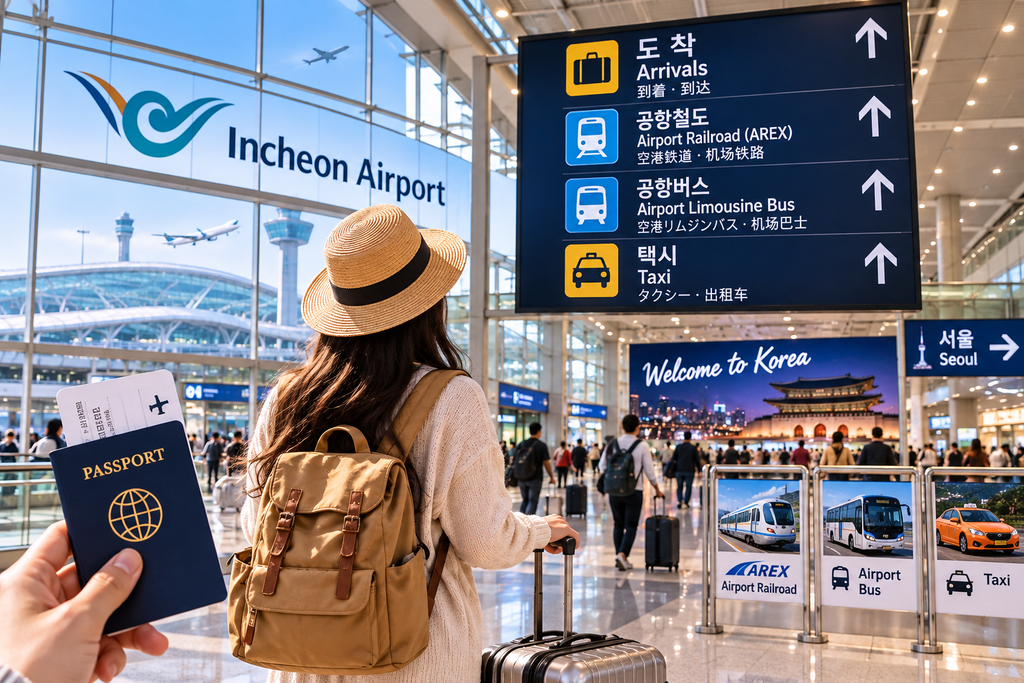
Most international travelers arrive through Incheon International Airport.
The airport is outside central Seoul, so you should plan how you will reach your hotel before landing.
Common options include:
- Airport Railroad Express, often called AREX
- All-stop airport trains
- Airport limousine buses
- Taxis
- Private airport transfers
The best choice depends on where your hotel is located, how much luggage you have, and your arrival time.
If you are staying near Seoul Station, the airport railroad can be convenient.
If your hotel is located farther from a major train station and you have several suitcases, an airport limousine bus or taxi may be more comfortable.
Do not assume that landing at the airport means you will be standing in central Seoul within a few minutes.
Give yourself time for immigration, baggage claim, transportation, and hotel check-in.
3. Get a Transportation Card Soon After Arrival
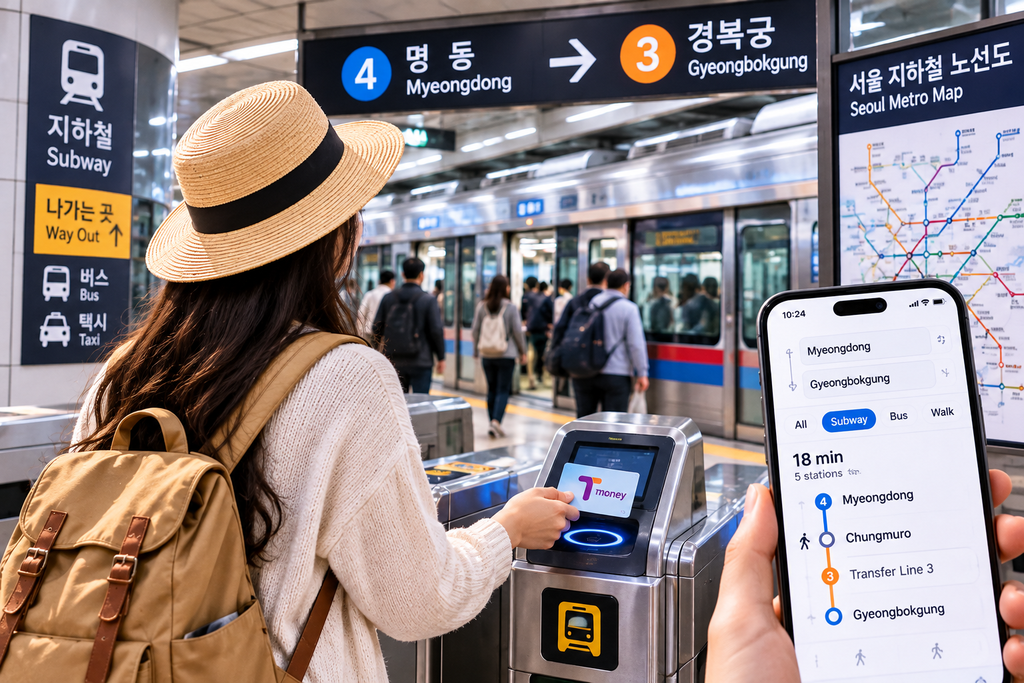
Public transportation is one of the easiest ways to travel in South Korea.
A rechargeable transportation card such as Tmoney can be used on many buses and subway systems, and it can be purchased at convenience stores and transportation facilities.
Travelers generally tap the card when entering and leaving the subway. On buses, you should also tap when boarding and when getting off, especially if you want applicable transfer benefits. Visit Korea
Having a transportation card means you do not need to buy a separate ticket every time you ride the subway.
For a first-time visitor, that makes daily travel much easier.
Keep the card somewhere easy to reach because you may use it several times a day.
4. Seoul’s Subway Looks Complicated, but It Is Easier Than It Seems
When you first look at a Seoul subway map, it may seem intimidating.
There are many lines, stations, colors, and transfer points.
But the system becomes much easier once you understand three things:
station name, line number, and direction.
Many subway stations have English signs, and major transportation information is accessible to international travelers.
Instead of memorizing the entire subway system, simply plan one trip at a time.
For example:
Myeongdong → Gyeongbokgung Palace
or
Hongdae → Gangnam
Navigation apps can tell you where to transfer and which exit to use.
The exit number matters more than many first-time visitors realize.
Some subway stations are huge, and using the wrong exit can put you several blocks away from your destination.
5. Do Not Depend Only on Google Maps
One surprise for some international travelers is that navigation in South Korea may work differently from what they are used to at home.
It is smart to install Korean navigation apps before your trip.
Common useful categories include:
- Map/navigation apps
- Subway apps
- Translation apps
- Taxi apps
- Transportation apps
Having two map options is useful because one app may provide better information for a particular location.
Before leaving your hotel each morning, save important addresses and check the Korean spelling of your destination.
This is especially helpful when taking taxis.
6. Learn a Few Korean Words Before You Go
You do not need to speak Korean fluently to travel in South Korea.
However, a few simple phrases can make everyday interactions much smoother.
Useful words include:
Annyeonghaseyo — Hello
Gamsahamnida — Thank you
Juseyo — Please give me / please
Eolmayeyo? — How much is it?
Hwajangsil eodiyeyo? — Where is the restroom?
Even if your pronunciation is not perfect, making an effort is usually appreciated.
Translation apps can handle longer conversations.
Another useful habit is saving the Korean name and address of your hotel.
If you ever have difficulty communicating with a taxi driver, you can simply show the address on your phone.
7. Credit Cards Are Common, but Carry Some Korean Won
South Korea is highly card-friendly.
Hotels, restaurants, department stores, cafés, and many shops accept major cards.
However, carrying some Korean won is still useful.
Cash may come in handy for:
- Traditional markets
- Small street-food vendors
- Transportation-card reloads
- Small local businesses
- Coin lockers or older machines
Avoid carrying all of your money in cash.
Instead, use a combination of cards and a modest amount of Korean won.
It is also a good idea to notify your bank that you will be traveling internationally if your bank recommends doing so.
8. Convenience Stores Are Much More Useful Than You Might Expect
Convenience stores in Korea are not only places to buy snacks.
They can become one of the most useful parts of your trip.
You can find:
- Bottled water
- Coffee
- Instant noodles
- Rice dishes
- Kimbap
- Sandwiches
- Snacks
- Toiletries
- Umbrellas
- Charging accessories
- Basic travel supplies
Many visitors also enjoy trying Korean convenience-store meals as part of the travel experience.
Stores such as CU, GS25, and 7-Eleven are common in cities.
If you arrive late at night and restaurants near your hotel are closed, a convenience store can be a lifesaver.
9. Korean Meals Often Come With Side Dishes
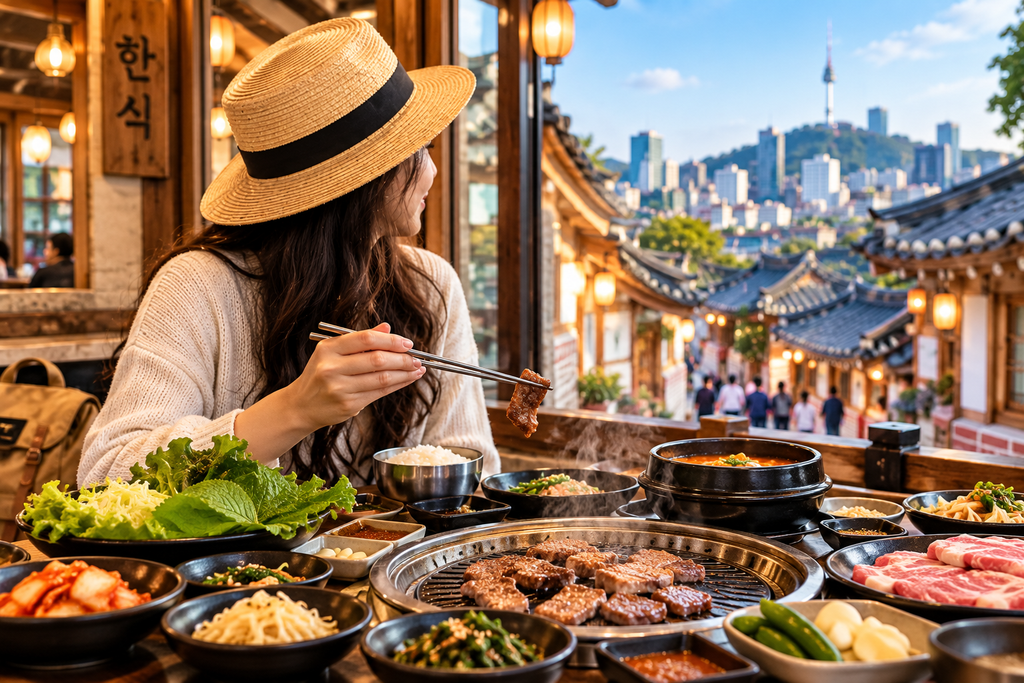
If your first Korean restaurant meal arrives with several small dishes that you did not order, do not panic.
These are called banchan, or side dishes.
Common examples include:
- Kimchi
- Seasoned vegetables
- Pickled radish
- Fish cakes
- Bean sprouts
Banchan are an important part of Korean dining culture.
Depending on the restaurant, additional portions of certain side dishes may sometimes be available.
Meals often involve several flavors and textures rather than one large main dish by itself.
Understanding this before your first trip to South Korea makes restaurant dining much less confusing.
10. Korean BBQ Has Its Own Rhythm
Korean barbecue can be one of the highlights of a trip, but first-time visitors sometimes feel unsure about what to do.
At many restaurants, meat is grilled directly at the table.
Depending on the restaurant, staff may cook the meat for you, or you may grill it yourself.
You may receive:
- Lettuce
- Garlic
- Sauces
- Kimchi
- Pickled vegetables
- Side dishes
A popular way to eat grilled meat is to place a small piece in lettuce with sauce and other ingredients and make a wrap.
Do not worry about doing everything perfectly.
Watch what other diners are doing and follow the staff’s lead.
11. Restaurants May Use Different Ordering Systems
Not every Korean restaurant works the same way.
You may encounter:
- Table service
- Touchscreen ordering
- QR-code menus
- Counter ordering
- Self-service water
- Self-service side dishes
- Pay-first restaurants
- Pay-after restaurants
Some places have English menus, while others may have only Korean menus.
Photo translation tools are extremely helpful.
It is also common for restaurants to have a minimum order requirement for certain shared dishes.
For example, barbecue restaurants may require at least two servings of meat.
12. You Will Probably Walk More Than You Expect
South Korea has excellent public transportation, but traveling still involves a lot of walking.
Subway stations can be large.
Palaces are large.
Markets are large.
Shopping districts can stretch across many blocks.
A day in Seoul can easily involve walking from the subway to a palace, from the palace to a neighborhood, and then through a shopping district at night.
Bring comfortable shoes.
Fashion is fun, but your feet will appreciate practicality after several days of sightseeing.
13. South Korea Has Four Distinct Seasons
Your packing list should depend heavily on when you visit.
Spring
Spring is popular because of mild temperatures and blossoms, but conditions can vary.
Summer
Summer can be hot, humid, and rainy.
Fall
Fall often brings cooler temperatures and colorful leaves.
Winter
Winter can be very cold, especially in Seoul and northern areas.
Do not assume that South Korea has mild weather year-round just because it is in East Asia.
Check the forecast shortly before departure and pack accordingly.
14. Korean Café Culture Is an Experience of Its Own
South Korea has an enormous café culture.
You will find:
- Minimalist cafés
- Traditional hanok cafés
- Rooftop cafés
- Dessert cafés
- Bakery cafés
- Theme cafés
- River-view cafés
- Mountain-view cafés
In neighborhoods such as Seongsu, Ikseon-dong, Hongdae, and parts of Gangnam, visiting cafés can become a sightseeing activity in itself.
Coffee prices may sometimes surprise budget travelers, particularly in highly designed specialty cafés.
You do not have to visit famous social-media cafés every day.
Local neighborhood cafés can be just as enjoyable.
15. Respect Quiet Public-Transportation Etiquette
Korean subways and buses can be crowded, particularly during commuting hours.
Basic courtesy goes a long way.
Avoid:
- Playing loud audio without headphones
- Blocking subway doors
- Standing in the middle of escalator entrances
- Taking up extra seats with bags
- Speaking extremely loudly in quiet spaces
Also pay attention to designated seating areas.
Some seats are reserved or prioritized for elderly passengers, pregnant passengers, or people with mobility needs.
Observe how local passengers behave and follow their lead.
16. You Usually Take Your Shoes Off Inside Korean Homes
If you visit a Korean home, expect to remove your shoes at the entrance.
The same may apply to certain traditional accommodations, guesthouses, restaurants, and cultural spaces.
Korean homes traditionally distinguish clearly between outdoor footwear and indoor living areas.
If you see shoes lined up near an entrance or a raised floor, that is a strong signal that you should remove your shoes.
This simple custom is worth knowing before your trip.
17. Public Restrooms Are Usually Easy to Find in Major Cities
Restrooms can often be found in places such as:
- Subway stations
- Department stores
- Shopping malls
- Attractions
- Airports
- Larger cafés
Still, do not wait until the last possible moment.
Large subway stations can require a long walk to reach the restroom.
Also remember that bathrooms may have slightly different fixtures and controls from those you use at home.
Some toilets have electronic bidet functions with multiple buttons.
If you are unsure, the basic flush function is usually clearly marked or separate.
18. Know the Important Emergency Numbers
Save emergency information in your phone before traveling.
In South Korea:
112 — Police
119 — Fire and medical emergencies
International visitors who need assistance can also use Korea Tourism Organization services. The 1330 Korea Travel Hotline provides tourism information and multilingual assistance. VISITKOREA – Imagine Your Korea
Hopefully you will never need these numbers.
But having them saved before your trip is much better than trying to search for them during an emergency.
19. Do Not Try to See All of South Korea in One Week
One of the most common mistakes first-time visitors make is creating an overly ambitious itinerary.
They may try to fit Seoul, Busan, Jeju, Gyeongju, Nami Island, and several day trips into seven days.
Technically, you can move quickly.
But you may spend more time checking into hotels and traveling than actually experiencing Korea.
For a first trip, consider building the itinerary around two or three areas.
For example:
7 days: Seoul + one day trip
10 days: Seoul + Busan
14 days: Seoul + Gyeongju + Busan + possibly Jeju
Travel more slowly and give yourself time to explore neighborhoods without a strict schedule.
Some of the best memories come from places you did not originally plan to visit.
20. Leave Room for Everyday Korea
Palaces, famous markets, observatories, and museums are worth visiting.
But do not make your entire trip a checklist of tourist attractions.
Spend some time experiencing normal Korean life.
Walk through a residential neighborhood.
Visit a local bakery.
Eat at a neighborhood restaurant.
Ride the subway during ordinary hours.
Visit a supermarket.
Sit in a café.
Explore a riverside park.
Stop at a convenience store late at night.
These experiences often give visitors a better understanding of South Korea than another hour spent rushing between famous landmarks.
Your first trip to South Korea is not only about seeing Korea.
It is about experiencing how the country feels.
How Much Money Should You Budget for Your First Trip to South Korea?
There is no single correct budget.
Your costs depend on your travel style, accommodation, restaurants, shopping habits, and itinerary.
A budget traveler may stay in hostels or simple guesthouses and eat inexpensive local meals.
A mid-range traveler may choose business hotels, restaurants, cafés, and several paid attractions.
A luxury traveler can easily spend significantly more on premium hotels, private tours, shopping, fine dining, and transportation.
When planning your budget, divide expenses into:
- Flights
- Accommodation
- Transportation
- Food
- Attractions
- Shopping
- Travel insurance
- Emergency funds
Keep shopping money separate from your basic travel budget.
This prevents beauty products, fashion, souvenirs, or K-pop merchandise from quietly consuming the money you planned to use for meals and transportation.
Where Should First-Time Visitors Stay in Seoul?
Your neighborhood can significantly affect your first experience of Seoul.
Myeongdong
Convenient for first-time visitors who want shopping, food, central transportation, and easy access to major attractions.
Hongdae
Popular for nightlife, cafés, young crowds, shopping, and entertainment.
Insadong or Jongno
Good for travelers interested in traditional architecture, palaces, history, and cultural attractions.
Gangnam
A good choice for travelers interested in modern Seoul, shopping, restaurants, and nightlife south of the Han River.
Seoul Station Area
Convenient for transportation connections, particularly travelers planning train trips to other cities.
There is no universally perfect neighborhood.
Choose based on what you want to do most.
What Should You Download Before Your First Trip to South Korea?
Before boarding your flight, set up your essential travel apps.
You will likely want apps for:
- Navigation
- Translation
- Subway routes
- Taxi service
- Airline information
- Hotel reservations
- Currency conversion
- Weather
- Emergency information
Download offline language data and hotel information whenever possible.
Technology is extremely helpful in Korea, but your phone becomes much less useful if the battery is dead.
Carry a portable charger.
Is South Korea Difficult for First-Time International Travelers?
For many visitors, the answer is no.
The first day may feel unfamiliar because of the language, transportation system, and different customs.
By the second or third day, many routines become surprisingly simple.
You learn how to use your transportation card.
You understand subway exits.
You become comfortable ordering food.
You recognize convenience stores.
You learn which navigation app works best for you.
South Korea combines an unfamiliar culture with highly developed transportation and digital infrastructure, which makes it an interesting destination for first-time visitors to Asia.
The key is not trying to understand everything before arrival.
Learn the basics and allow yourself to figure out the rest during the trip.
Final Thoughts: Your First Trip to South Korea
Your first trip to South Korea does not need to be perfectly planned.
Prepare the important things first: entry requirements, accommodation, transportation from the airport, money, navigation, and basic safety information.
Then leave some space in your itinerary.
Korea rewards curiosity.
One day you may be walking through a centuries-old palace.
A few hours later, you may be standing inside a futuristic shopping complex.
You might eat a traditional Korean meal for lunch, drink coffee in a modern design café in the afternoon, shop at a night market in the evening, and finish the day eating ramyeon from a convenience store.
That contrast is one of the things that makes traveling in South Korea memorable.
Learn the basics, stay flexible, and do not worry about experiencing everything on your first visit.
There will always be another neighborhood, another meal, another café, and another reason to return.
Frequently Asked Questions
Is South Korea good for first-time international travelers?
Yes. Major Korean cities have extensive public transportation, airports, accommodation options, restaurants, and tourism infrastructure. Learning how transportation cards and navigation apps work will make traveling significantly easier.
Do I need a visa for my first trip to South Korea?
It depends on your nationality, trip length, and travel purpose. Some travelers can enter visa-free, while others require a visa or K-ETA. In 2026, South Korea’s temporary K-ETA exemption for currently exempt countries and regions has been extended through December 31, 2026. Always confirm your passport’s current requirements before departure. K-ETA
Do I need cash in South Korea?
Cards are widely accepted, but carrying some Korean won is useful for traditional markets, small vendors, and certain transportation-related payments.
Is Seoul’s subway difficult for foreigners?
It can look complicated at first, but once you learn line numbers, station names, transfer stations, and exit numbers, it becomes much easier. Rechargeable transportation cards such as Tmoney are widely used. Visit Korea
What are South Korea’s emergency numbers?
Call 112 for police and 119 for fire or medical emergencies. International travelers can also contact the 1330 Korea Travel Hotline for tourism assistance and interpretation-related help. VISITKOREA – Imagine Your Korea
How many days should I spend in South Korea on my first trip?
Seven days works well for Seoul and a nearby day trip. Ten to fourteen days gives you more time to combine Seoul with destinations such as Busan, Gyeongju, or Jeju without rushing.