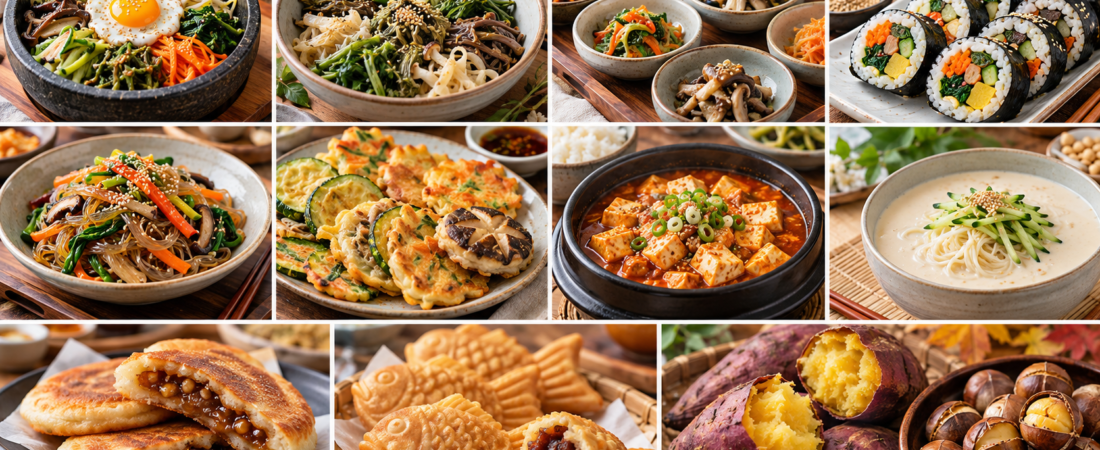
South Korea is often associated with sizzling Korean barbecue, fried chicken, seafood stews, and meat-heavy restaurant menus. Because of this, first-time vegetarian travelers sometimes assume they will have very few options.
The reality is much more interesting.
There are many delicious vegetarian foods in South Korea, especially if you understand how Korean meals are prepared and know what questions to ask before ordering. Rice dishes, vegetable pancakes, tofu, noodles, temple cuisine, street snacks, vegetable side dishes, mushrooms, seaweed, and seasonal produce can all become part of a memorable Korean food experience.
However, vegetarian dining in Korea requires a little more attention than simply choosing something that looks meat-free.
A bowl of vegetable soup may contain anchovy broth. Kimchi may include fish sauce or salted shrimp. A vegetable bibimbap may arrive with beef unless you specifically ask for it to be removed.
That does not mean vegetarian travelers should avoid traditional Korean food. It simply means knowing a few basic ingredients and ordering phrases can make a major difference.
This guide introduces some of the best vegetarian foods in South Korea for first-time visitors, explains which dishes may need modification, and offers practical tips for eating confidently while traveling.
Why Vegetarian Dining in South Korea Can Be Surprisingly Good
Korean cuisine has a long tradition of preparing vegetables in countless ways.
Vegetables may be steamed, fermented, stir-fried, seasoned, pickled, grilled, boiled, or served raw. Mushrooms, soybean products, seaweed, roots, greens, beans, grains, and seasonal vegetables are important parts of traditional Korean meals.
A typical Korean table may include several small side dishes called banchan.
These might include:
- Seasoned spinach
- Bean sprouts
- Pickled radish
- Cucumber salad
- Seaweed
- Braised potatoes
- Mushrooms
- Lotus root
- Zucchini
- Tofu
At first glance, this seems perfect for vegetarians.
The challenge is that ingredients such as anchovy stock, fish sauce, shrimp paste, or meat seasoning may sometimes be added even when no visible meat appears in the finished dish.
For that reason, vegetarian travelers should think about Korean food in two categories:
Naturally vegetarian dishes and dishes that can easily be made vegetarian with a small modification.
Once you understand the difference, eating in Korea becomes much easier.
1. Bibimbap – Korea’s Famous Mixed Rice Bowl
If you are trying vegetarian Korean food for the first time, bibimbap is one of the easiest places to begin.
Bibimbap literally refers to mixed rice and usually includes rice topped with several vegetables such as:
- Spinach
- Bean sprouts
- Carrots
- Mushrooms
- Zucchini
- Radish
- Fernbrake
A fried egg is commonly placed on top, along with Korean red pepper paste called gochujang.
Some versions contain beef, so vegetarians should request the dish without meat.
You can say:
고기 빼 주세요.
Gogi ppae juseyo.
“Please leave out the meat.”
Once the dish arrives, mix the vegetables, rice, egg, and sauce together.
The result is colorful, filling, inexpensive, and easy to find across South Korea.
Vegan travelers
Vegans should also request no egg:
계란도 빼 주세요.
Gyerando ppae juseyo.
“Please leave out the egg too.”
Ask whether the gochujang or accompanying side dishes contain seafood ingredients if you follow a strict vegan diet.
2. Sanchae Bibimbap – Mountain Vegetable Bibimbap
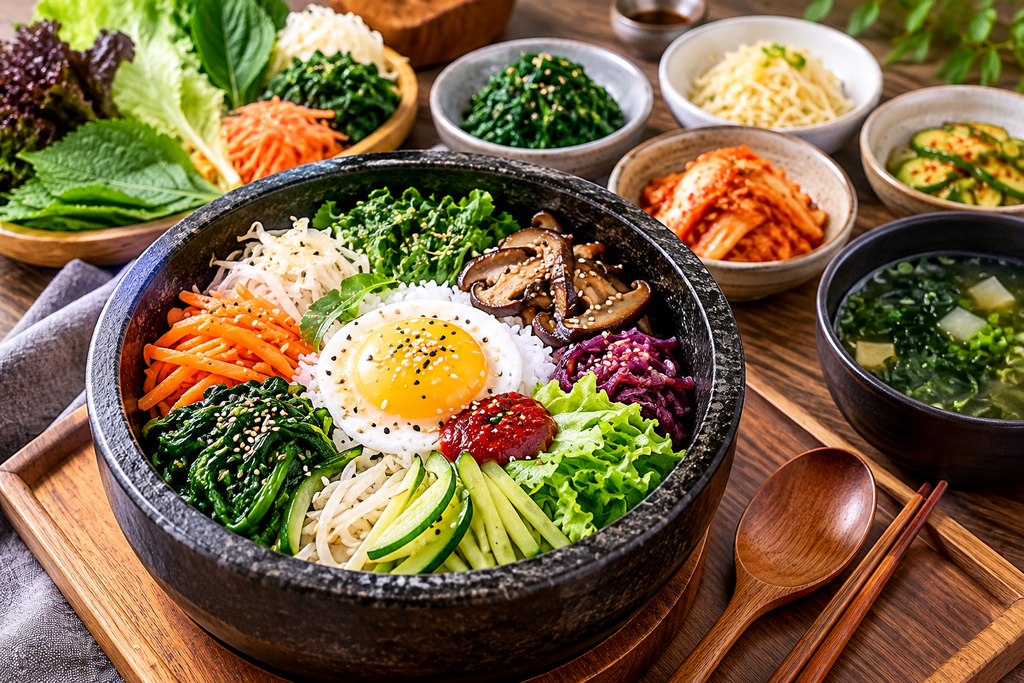
For an even more vegetable-focused version of bibimbap, look for sanchae bibimbap.
“Sanchae” refers to mountain vegetables and wild greens traditionally gathered from Korea’s mountainous regions.
The bowl may contain several kinds of greens, roots, mushrooms, and seasoned vegetables.
Sanchae bibimbap is particularly common around mountain areas and Buddhist temples.
It is one of the most interesting vegetarian foods in South Korea because it introduces visitors to ingredients they may rarely encounter outside Korea.
However, some restaurants still include egg or meat garnish, so confirm before ordering.
3. Korean Temple Food
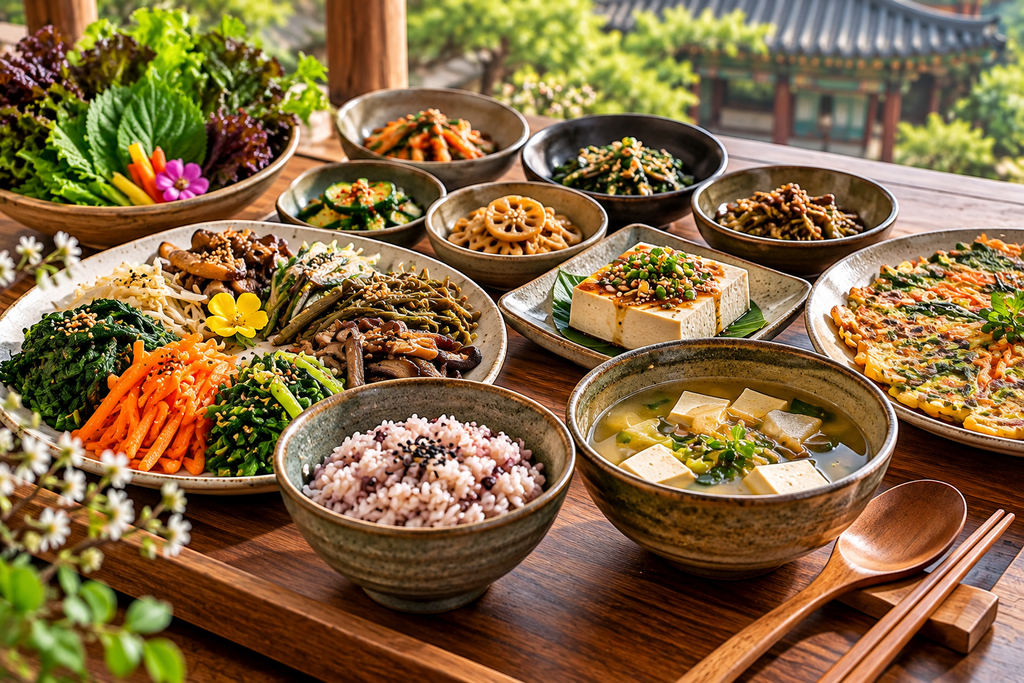
For vegetarians, Korean Buddhist temple cuisine may be one of the highlights of an entire trip.
Known as sachal eumsik, Korean temple food traditionally emphasizes plant-based ingredients and mindful preparation.
Meals often include:
- Tofu
- Mushrooms
- Lotus root
- Mountain vegetables
- Seaweed
- Rice
- Beans
- Fermented vegetables
- Vegetable soups
Many temple dishes are naturally vegan.
Traditional Buddhist cooking often avoids meat and seafood entirely.
Some temple food traditions also avoid five pungent vegetables, including garlic and onions.
As a result, temple cuisine tastes quite different from heavily seasoned restaurant food.
Instead of depending on meat stock or strong sauces, chefs often create flavor using fermented ingredients, mushrooms, vegetables, sesame, perilla, soybeans, and natural broths.
First-time vegetarian visitors who want to experience traditional Korean food should seriously consider trying a temple-food meal at least once.
4. Vegetable Jeon – Korean Savory Pancakes
Jeon refers to Korean-style savory pancakes or pan-fried foods.
Several varieties can work well for vegetarians.
Popular choices include:
Pajeon
A green onion pancake often made with flour batter and scallions.
Gamjajeon
A potato pancake made primarily from grated potatoes.
Hobakjeon
Slices of zucchini lightly coated and pan-fried.
Beoseotjeon
Mushroom-based jeon.
The important thing to remember is that some restaurant versions of pajeon include seafood.
Haemul pajeon, for example, means seafood green-onion pancake.
Instead, look for a vegetable version or ask whether seafood is included.
Jeon is particularly enjoyable on a rainy day and is often served with a soy-based dipping sauce.
5. Japchae – Sweet Potato Glass Noodles
Japchae is one of Korea’s most famous noodle dishes.
The noodles are made from sweet potato starch and have a translucent appearance and pleasantly chewy texture.
Traditional japchae often contains:
- Glass noodles
- Spinach
- Carrots
- Mushrooms
- Onion
- Bell peppers
- Sesame oil
- Soy sauce
Beef is frequently included, but it can often be omitted.
Simply request:
고기 없이 해 주세요.
Gogi eopsi hae juseyo.
“Please make it without meat.”
Vegetable japchae can be an excellent vegetarian meal or side dish.
Because the noodles absorb soy sauce and sesame oil, the dish remains flavorful even without meat.
6. Gimbap Without Meat
Gimbap is one of Korea’s most convenient foods.
It consists of rice and fillings rolled in dried seaweed and sliced into bite-sized pieces.
Traditional gimbap may contain:
- Carrot
- Spinach
- Pickled radish
- Egg
- Ham
- Fish cake
- Cucumber
Vegetarian versions are becoming easier to find, especially in major cities.
Look for vegetable gimbap and check whether ham or fish cake is included.
Vegans should also ask for the egg to be removed.
Gimbap is especially useful for travelers because it is portable and inexpensive. You can eat it on a train, take it on a day trip, or pick it up before visiting tourist attractions.
7. Tofu Dishes
Tofu, known as dubu in Korean, is widely used throughout Korean cuisine.
This sounds ideal for vegetarians, but the broth or seasoning surrounding tofu may contain seafood or meat.
Still, several tofu dishes can be adapted.
Grilled tofu
Simple pan-fried tofu served with soy-based seasoning can be vegetarian.
Dubu jorim
Braised tofu cooked with soy sauce, chili, garlic, and seasonings.
Fresh tofu
Some restaurants specialize in freshly made tofu, especially in regions known for soybean cuisine.
Tofu provides protein and makes an excellent addition to a vegetarian Korean meal.
8. Kongguksu – Soy Milk Noodles
If you visit South Korea during summer, look for kongguksu.
This refreshing dish features noodles in a cold, creamy soybean broth.
The soup is typically made by grinding soybeans into a smooth liquid.
Garnishes may include:
- Cucumber
- Sesame seeds
- Tomato
- Occasionally egg
Kongguksu has a mild, nutty flavor and is especially refreshing during Korea’s hot and humid summer months.
Depending on the restaurant, the basic version can be vegetarian or vegan.
Always confirm the ingredients if you follow a strict diet.
9. Memil Guksu – Buckwheat Noodles
Buckwheat noodles can be another useful option.
Known as memil guksu, they may be served hot or cold.
However, the dipping sauce or broth frequently contains fish stock.
For strict vegetarians, this is an important dish to verify before ordering.
Some vegetarian or vegan restaurants prepare completely plant-based versions.
10. Vegetable Mandu – Korean Dumplings
Korean dumplings are called mandu.
Most traditional mandu contain meat, but vegetable versions are increasingly available.
Vegetarian mandu may contain:
- Tofu
- Glass noodles
- Mushrooms
- Cabbage
- Chives
- Bean sprouts
They can be steamed, boiled, or pan-fried.
Look specifically for vegetable mandu rather than assuming all dumplings without visible meat are vegetarian.
11. Tteokbokki – Spicy Rice Cakes
Tteokbokki is one of South Korea’s most famous street foods.
The dish consists of chewy rice cakes cooked in a spicy red sauce.
Unfortunately, standard tteokbokki is not always vegetarian.
Why?
The sauce may contain anchovy broth, and many servings include fish cakes.
Vegetarian-friendly restaurants sometimes make tteokbokki with vegetable broth and omit fish cake.
When properly prepared, vegetarian tteokbokki can be an excellent way to experience Korean street-food flavors.
12. Hotteok – Sweet Korean Pancakes
Hotteok is one of the easiest Korean street snacks for many vegetarians.
These small fried pancakes are usually filled with a sweet mixture of:
- Brown sugar
- Cinnamon
- Nuts or seeds
When cooked, the filling melts into a warm syrup.
Hotteok is especially popular in colder months.
Some modern versions contain cheese or other ingredients, so check the filling if necessary.
For many travelers, eating hotteok while walking through a traditional market is one of the simplest and most memorable food experiences in Korea.
13. Bungeoppang – Fish-Shaped Pastry Without Fish
The name and appearance confuse many first-time visitors.
Bungeoppang is shaped like a fish, but classic versions usually do not contain fish.
Instead, the pastry is commonly filled with sweet red bean paste.
Other fillings may include custard or sweet potato.
It is particularly popular during winter.
Vegetarians should still verify ingredients if they follow strict dietary rules, but traditional red-bean bungeoppang can be a convenient meat-free street snack.
14. Roasted Sweet Potatoes
One of the simplest vegetarian foods in South Korea is also one of the best.
Korean roasted sweet potatoes, called gun goguma, become especially popular during colder months.
Korean sweet potatoes tend to be dense, naturally sweet, and satisfying.
Convenience stores, supermarkets, markets, and street vendors may sell freshly roasted sweet potatoes.
They make an excellent inexpensive snack when you need something simple and filling.
15. Roasted Chestnuts
During fall and winter, roasted chestnuts are another classic Korean street snack.
They are naturally plant-based and require almost no explanation when ordering.
For travelers who prefer simple ingredients, seasonal street foods such as roasted chestnuts and sweet potatoes can be extremely useful.
16. Vegetable Banchan
One of the pleasures of eating in Korea is receiving several small side dishes with a meal.
Known as banchan, these may include many vegetable-based foods.
Common examples include:
Sigeumchi namul
Seasoned spinach.
Kongnamul
Seasoned soybean sprouts.
Oi muchim
Spicy cucumber salad.
Gamja jorim
Braised potatoes.
Mu saengchae
Seasoned shredded radish.
Beoseot bokkeum
Stir-fried mushrooms.
These dishes are excellent ways to try many Korean flavors in one meal.
But remember that some banchan may contain fish sauce, anchovy stock, or other seafood seasoning.
Strict vegetarians should confirm before eating.
17. Kimchi: Vegetarian or Not?
Kimchi deserves special attention because many travelers assume that vegetables automatically mean vegetarian.
Traditional kimchi often contains seafood ingredients such as:
- Fish sauce
- Salted shrimp
- Seafood extracts
Therefore, regular kimchi should not automatically be considered vegetarian.
However, vegan kimchi is becoming increasingly available.
Temple-food restaurants often prepare kimchi without seafood ingredients.
Vegetarian and vegan restaurants may also make their own plant-based versions.
When buying packaged kimchi from a supermarket, examine the ingredient list carefully.
Hidden Animal Ingredients Vegetarians Should Know
Finding vegetarian foods in South Korea becomes much easier once you recognize a few hidden ingredients.
The most important are:
멸치 – myeolchi
Anchovies
액젓 – aekjeot
Fish sauce
새우젓 – saeujeot
Salted fermented shrimp
육수 – yuksu
Broth or stock, which may contain meat or seafood
사골 – sagol
Beef bone broth
어묵 – eomuk
Fish cake
These ingredients may appear even when a dish looks completely vegetable-based.
Useful Korean Phrases for Vegetarian Travelers
Learning just a few sentences can dramatically improve your dining experience.
“I am vegetarian.”
저는 채식주의자예요.
Jeoneun chaesikjuuijayeyo.
“No meat, please.”
고기 빼 주세요.
Gogi ppae juseyo.
“Please make it without meat.”
고기 없이 해 주세요.
Gogi eopsi hae juseyo.
“Does this contain meat?”
고기 들어가요?
Gogi deureogayo?
“Does this contain fish?”
생선 들어가요?
Saengseon deureogayo?
“Does the broth contain anchovies?”
육수에 멸치 들어가요?
Yuksue myeolchi deureogayo?
“No egg, please.”
계란 빼 주세요.
Gyeran ppae juseyo.
Saving these phrases on your phone can make ordering much easier.
Vegetarian vs. Vegan in South Korea
Vegetarian travelers generally have more flexibility than vegans.
Egg and dairy ingredients appear in various baked goods, sauces, snacks, and restaurant dishes.
Vegans also need to pay close attention to broths and fermented seasonings.
Fortunately, Seoul in particular has seen growing interest in plant-based dining.
Major tourist districts and university neighborhoods tend to offer more vegan cafés and restaurants than smaller towns.
Korean temple cuisine is another important option because many temple meals are completely plant-based.
Where First-Time Visitors Can Find Vegetarian Food
Location makes a major difference.
Seoul
Seoul naturally offers the largest range of vegetarian and vegan restaurants.
Areas popular with international visitors often have menus containing English descriptions.
Neighborhoods such as Itaewon, Hongdae, Insadong, and central Seoul can be convenient starting points.
Traditional Markets
Markets offer numerous simple snacks that may work for vegetarians, including:
- Hotteok
- Sweet potatoes
- Chestnuts
- Fruit
- Certain vegetable pancakes
However, fried foods may share cooking oil with meat or seafood, which strict vegetarians may want to consider.
Buddhist Temple Areas
Restaurants near major temples may serve mountain vegetables and temple-inspired meals.
These can provide some of the most interesting traditional vegetarian experiences in Korea.
Convenience Stores
Korean convenience stores can also help when restaurant options are limited.
Possible choices include:
- Fresh fruit
- Nuts
- Sweet potatoes
- Plain rice
- Salads
- Soy drinks
- Packaged snacks
Always check ingredient labels when dietary restrictions are strict.
How to Read Korean Restaurant Menus More Easily
You do not need to speak fluent Korean to navigate menus.
Start by recognizing a few useful words.
채식 – chaesik: vegetarian food
야채 – yachae: vegetables
두부 – dubu: tofu
버섯 – beoseot: mushrooms
고기 – gogi: meat
소고기 – sogogi: beef
돼지고기 – dwaejigogi: pork
닭고기 – dakgogi: chicken
생선 – saengseon: fish
Translation apps can also help when menus contain no English.
Photographing a menu and translating individual ingredients is often more reliable than simply choosing a dish based on its picture.
Sample Vegetarian Day of Eating in Korea
Wondering what an entire meat-free day could look like?
Here is one example.
Breakfast
Rice, seasoned vegetables, tofu, fruit, and soy milk.
Lunch
Vegetable bibimbap with gochujang.
Afternoon snack
Hotteok or roasted sweet potato.
Dinner
Korean temple-food set meal with rice, tofu, mushrooms, vegetables, and plant-based banchan.
Dessert
Fresh fruit, traditional rice cake, or red-bean dessert.
A vegetarian traveler does not necessarily need to eat Western-style salads throughout the trip.
With a little research, an entire day can consist of Korean dishes.
Common Mistakes First-Time Vegetarian Visitors Make
Assuming Vegetable Dishes Are Automatically Vegetarian
This is probably the biggest mistake.
Broths and seasonings may contain seafood even when the visible ingredients are vegetables.
Assuming Kimchi Is Vegan
Traditional kimchi often contains fish sauce or fermented shrimp.
Ordering Noodles Without Checking the Broth
Many noodle broths use anchovies, seafood, beef, or chicken.
Forgetting About Fish Cake
Fish cake appears frequently in Korean street food.
Relying Only on the Word “Vegetable”
A dish labeled vegetable may still have meat broth or seafood seasoning.
Asking one or two simple questions before ordering prevents most problems.
Is South Korea a Good Destination for Vegetarians?
Yes, especially for travelers who are prepared.
South Korea may not be as automatically vegetarian-friendly as destinations where vegetarianism is deeply embedded in everyday restaurant culture.
However, Korean cuisine contains an enormous variety of vegetables, grains, soybean foods, mushrooms, noodles, and fermented dishes.
Seoul and other major cities also provide a growing range of dedicated vegetarian and vegan options.
Perhaps most importantly, vegetarian visitors do not have to miss Korean culinary culture.
You can still enjoy bibimbap, temple cuisine, jeon, japchae, tofu, street snacks, mountain vegetables, and dozens of banchan.
The key is understanding ingredients rather than simply looking for dishes without visible meat.
Final Thoughts
Exploring vegetarian foods in South Korea can become one of the most interesting parts of your trip.
First-time visitors often arrive expecting Korean food to revolve almost entirely around barbecue and seafood. Yet once they start exploring traditional vegetable dishes, tofu, temple food, rice dishes, noodles, pancakes, and seasonal street snacks, they discover a different side of Korean cuisine.
Start with easy choices such as bibimbap, vegetable japchae, tofu, hotteok, and roasted sweet potatoes.
Then explore Korean temple cuisine or restaurants specializing in mountain vegetables.
Most importantly, learn a few basic Korean phrases and ask about broth, fish sauce, meat, and seafood whenever you are uncertain.
With a little preparation, vegetarian travel in South Korea can be flavorful, affordable, and surprisingly diverse.
And rather than simply finding something you can eat, you may discover Korean dishes that become some of your favorite memories from the trip.