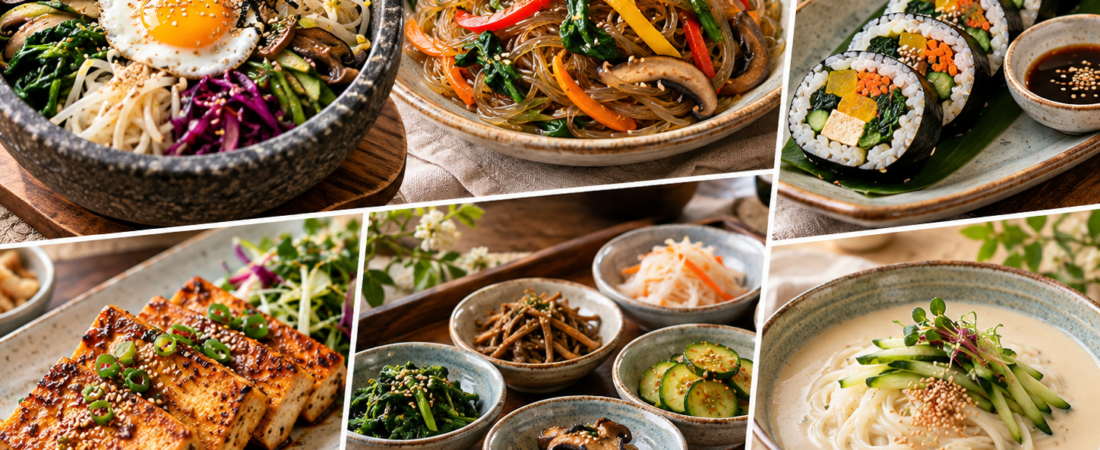
Korean cuisine is famous for its colorful vegetables, flavorful rice dishes, fermented foods, comforting soups, and delicious side dishes. However, finding suitable meals at vegetarian Korean restaurants or traditional Korean dining establishments can sometimes be confusing, especially for first-time visitors.
At first glance, Korean food may seem naturally vegetarian-friendly. Many meals include mushrooms, tofu, spinach, bean sprouts, cabbage, rice, and seaweed. Yet some dishes that appear meat-free contain hidden animal ingredients such as anchovy broth, fish sauce, shrimp paste, or beef stock.
The good news is that vegetarian travelers do not have to miss out on the wonderful flavors of Korean cuisine.
With a little preparation, an understanding of common ingredients, and a few useful Korean expressions, eating vegetarian food in South Korea can become a rewarding culinary experience.
This beginner’s guide explains what vegetarians can eat at Korean restaurants, which dishes require special requests, how to identify hidden ingredients, and how to enjoy traditional Korean meals while following a vegetarian or vegan diet.
Why Korean Food Can Be Both Vegetarian-Friendly and Challenging
Korean cuisine has a long tradition of cooking with vegetables, grains, legumes, mushrooms, and fermented plant foods.
Rice is a staple of everyday meals, while vegetables often appear as side dishes called banchan. Soybeans are transformed into tofu, fermented soybean paste, and soy sauce.
Many traditional recipes also use sesame oil, garlic, ginger, seaweed, and chili peppers to develop complex flavors.
These ingredients create excellent possibilities for vegetarian cooking.
However, there is an important difference between a vegetable-based dish and a completely vegetarian meal.
In many Korean restaurants, animal ingredients contribute flavor even when they are not visible in the finished dish.
For example, a vegetable soup may use dried anchovies to prepare its broth. Kimchi may contain fermented shrimp or fish sauce. A tofu stew may be cooked with seafood stock.
According to the Korea Tourism Organization, vegetarian visitors should explain their dietary requirements clearly because many restaurants do not offer standardized vegetarian ordering procedures.
For this reason, understanding Korean cooking methods is just as important as knowing the names of popular dishes.
Understanding Vegetarian and Vegan Diets in South Korea
Before visiting Korean restaurants, it helps to understand how different dietary preferences affect food choices.
Lacto-Ovo Vegetarians
Lacto-ovo vegetarians avoid meat, poultry, fish, and seafood but consume eggs and dairy products.
They may be able to enjoy vegetable bibimbap with a fried egg, certain Korean pancakes, cheese-containing dishes, and some desserts.
However, they still need to check for fish sauce, shrimp paste, and meat-based broth.
Vegans
Vegans avoid all animal-derived foods, including meat, seafood, eggs, dairy products, and honey.
Finding vegan Korean food requires additional attention because eggs frequently appear in rice dishes and pancakes, while dairy products may appear in modern Korean desserts and café drinks.
Vegan travelers should also check sauces, dressings, soup bases, and prepared side dishes.
Flexitarians
Flexitarians primarily eat plant-based foods but occasionally consume animal products.
They have more flexibility when dining at Korean restaurants, although identifying ingredients remains useful.
One important detail is that the Korean word chaesik (채식) refers broadly to vegetarian eating, but different restaurants may interpret vegetarian preferences differently.
Explaining exactly which ingredients you avoid is more reliable than simply asking whether a restaurant serves vegetarian food.
15 Vegetarian Korean Dishes Worth Trying
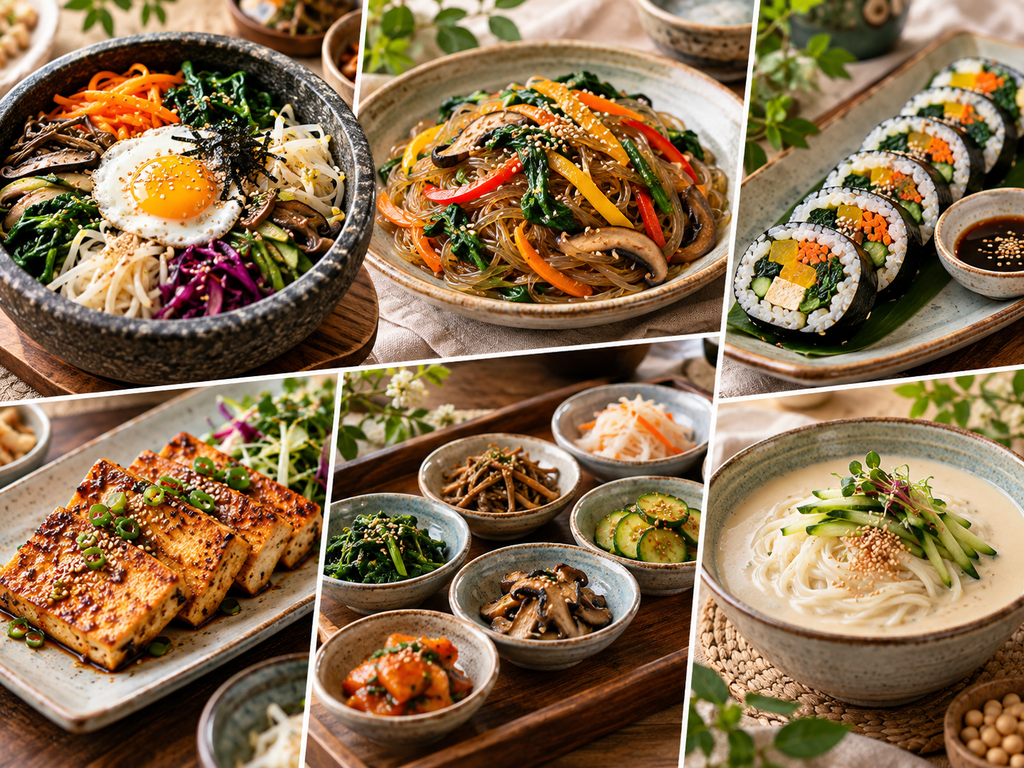
The following dishes are vegetarian-friendly possibilities, not guarantees. Recipes and restaurant preparations vary.
1. Bibimbap (비빔밥) – Korean Mixed Rice Bowl
Bibimbap is one of the most recognizable Korean dishes and a popular starting point for vegetarian visitors.
It typically consists of rice topped with assorted vegetables, such as spinach, carrots, bean sprouts, mushrooms, and zucchini.
The ingredients are mixed with gochujang, a Korean red chili paste, or a soy-based sauce.
Traditional restaurant versions commonly contain beef and a fried egg.
Vegetarians should request bibimbap without meat. Vegans should request it without both meat and egg.
It is also worth checking the sauce and vegetable seasonings for animal-derived ingredients.
Ordering tip: Ask for “Gogi ppaego juseyo” (고기 빼고 주세요), meaning “Please leave out the meat.”
When correctly prepared, bibimbap offers an excellent combination of grains, vegetables, and satisfying Korean flavors.
2. Japchae (잡채) – Korean Glass Noodles
Japchae is a popular Korean noodle dish made with sweet potato starch noodles, vegetables, sesame oil, and soy sauce.
The noodles have a chewy texture and absorb the flavors of the seasonings.
Common vegetables include carrots, onions, mushrooms, spinach, and bell peppers.
Although japchae often contains beef, it can be prepared without meat.
Some recipes also contain egg garnish or meat-based seasonings.
Ask whether the noodles are cooked with meat and whether the restaurant can make a vegetarian version.
Japchae can be enjoyed as a side dish or as part of a larger Korean meal.
3. Yachae Gimbap (야채김밥) – Vegetable Rice Rolls
Gimbap is a Korean rice roll made by wrapping rice and assorted fillings in dried seaweed.
Vegetable gimbap may contain carrots, spinach, cucumber, pickled radish, and seasoned burdock root.
It is convenient, portable, and popular as a quick meal.
However, some vegetable gimbap also contains ham, egg, imitation crab, or other animal products.
When ordering, ask the restaurant to confirm every filling.
For vegans, a customized roll made entirely with rice, seaweed, and plant-based fillings can be a practical option.
4. Kongguksu (콩국수) – Cold Soybean Noodles
Kongguksu is especially popular during Korea’s hot summer months.
The dish features noodles served in a creamy, chilled soybean broth.
The broth is usually made by blending cooked soybeans with water, creating a naturally rich texture without requiring dairy products.
Cucumber slices and sesame seeds are common toppings.
Kongguksu is among the more promising Korean dishes for vegetarians and vegans.
However, travelers should still confirm the noodle ingredients and broth preparation.
Its mild flavor also makes it appealing to visitors who prefer less spicy Korean food.
5. Dubu Gui (두부구이) – Grilled Tofu
Tofu is widely used in Korean cooking and can be prepared in many ways.
Dubu gui typically consists of tofu sliced and grilled or pan-fried until lightly golden.
The tofu may be served with soy sauce, sesame oil, chopped green onions, or other seasonings.
Plain grilled tofu is a useful vegetarian protein option.
However, dipping sauces and prepared toppings should be checked for seafood-based ingredients.
For travelers looking for a relatively simple dish, tofu prepared with plant-based seasonings can be an excellent choice.
6. Dubu Jorim (두부조림) – Braised Tofu
Dubu jorim is a flavorful Korean side dish featuring tofu simmered in a seasoned sauce.
The sauce commonly contains soy sauce, garlic, chili flakes, sesame oil, and other aromatic ingredients.
The dish pairs wonderfully with steamed rice.
Some restaurants may use anchovy broth or other animal-derived flavorings, so it should not automatically be considered vegan or vegetarian.
Ask whether the tofu is braised using water or vegetable broth.
When properly prepared, dubu jorim delivers rich flavor without requiring meat.
7. Pajeon (파전) – Korean Green Onion Pancake
Pajeon is a savory pancake usually made with green onions and a flour-based batter.
Its crispy edges and tender center make it a popular appetizer.
However, many restaurant versions contain egg, and seafood pajeon, called haemul pajeon, includes seafood.
Vegetarians who eat eggs can look for plain vegetable pajeon without seafood or meat-based stock.
Vegans need to confirm that the batter contains no egg or animal-based ingredients.
The dipping sauce should also be checked.
A properly prepared vegetable pancake can be a satisfying addition to a Korean meal.
8. Gamja Jeon (감자전) – Korean Potato Pancake
Gamja jeon is a traditional potato pancake made primarily from grated potatoes.
Simple recipes use potatoes, salt, and oil, producing a golden exterior and soft center.
Some variations contain onions, starch, flour, eggs, or other ingredients.
Although gamja jeon can be vegan-friendly, restaurant preparation methods vary.
Confirm that the pancake contains no egg, meat, or seafood products if you follow a strict vegan diet.
This dish is especially enjoyable with a simple soy-based dipping sauce.
9. Bindaetteok (빈대떡) – Mung Bean Pancake
Bindaetteok is a traditional Korean pancake prepared from ground mung beans.
It often includes vegetables such as bean sprouts, green onions, and kimchi.
Unfortunately, some popular versions also contain pork, seafood, or kimchi made with fish sauce.
Vegetarian visitors should ask for a completely meat-free version and check the kimchi ingredients.
When prepared entirely with plants, mung bean pancakes offer a hearty texture and a pleasant nutty flavor.
They are particularly appealing to travelers interested in traditional Korean market foods.
10. Doenjang Jjigae (된장찌개) – Soybean Paste Stew
Doenjang jjigae is a comforting Korean stew made with fermented soybean paste.
Typical ingredients include tofu, zucchini, onions, mushrooms, and potatoes.
Its deep, savory taste comes partly from fermentation.
However, many restaurant versions include anchovy broth, clams, meat, or other seafood ingredients.
Vegetarians should only order this stew after confirming that it can be prepared with vegetable broth or water.
A plant-based version can be both flavorful and filling.
11. Miyeok Guk (미역국) – Seaweed Soup
Miyeok guk is a traditional Korean seaweed soup often eaten on birthdays.
Seaweed is the central ingredient, but beef and seafood versions are common.
A vegetarian version can be prepared with seaweed, sesame oil, tofu, garlic, and vegetable broth.
When dining out, ask whether the soup contains beef, anchovies, seafood, or animal stock.
Do not assume that a clear-looking seaweed soup is meat-free.
12. Namul (나물) – Seasoned Vegetables
Namul refers to a broad category of seasoned vegetable dishes.
Common examples include:
- Sigeumchi namul – seasoned spinach
- Kongnamul muchim – seasoned soybean sprouts
- Gosari namul – seasoned fernbrake
- Sukju namul – seasoned mung bean sprouts
These dishes often use sesame oil, garlic, salt, soy sauce, and sesame seeds.
They can be excellent vegetarian side dishes.
However, some preparations use fish sauce, anchovy-based seasonings, or other animal ingredients.
Ask about the seasoning rather than judging the dish solely by its appearance.
13. Dotorimuk Muchim (도토리묵무침) – Acorn Jelly Salad
Dotorimuk is a firm Korean jelly made from acorn starch.
It has a smooth texture and is commonly served with vegetables in a savory dressing.
The salad may include cucumbers, lettuce, green onions, soy sauce, sesame oil, and chili flakes.
Acorn jelly itself is plant-based.
The main concern is the dressing, which may vary by restaurant.
A version made with plant-derived ingredients can provide an interesting introduction to a traditional Korean food that many international visitors have never tried.
14. Yachae Juk (야채죽) – Vegetable Rice Porridge
Juk is a Korean rice porridge known for its soft texture and comforting warmth.
Vegetable juk may contain rice, carrots, zucchini, mushrooms, and other finely chopped vegetables.
It is a useful option for travelers who want a mild meal.
However, some restaurants add chicken stock, beef broth, seafood broth, or other animal seasonings.
Ask whether the vegetable porridge uses water or a completely plant-based stock.
This dish is particularly convenient for visitors who prefer soft foods or less heavily seasoned meals.
15. Korean Buddhist Temple Food (사찰음식)
Korean Buddhist temple cuisine is one of the strongest choices for travelers seeking traditional plant-based meals.
Temple food generally avoids meat, fish, seafood, and other animal-derived ingredients.
It emphasizes seasonal vegetables, grains, tofu, mushrooms, roots, and fermented plant foods.
Traditional temple cooking also commonly avoids the five pungent vegetables, including garlic and certain onion-family plants.
Meals may feature beautifully arranged small dishes with delicate flavors and minimal processing.
Unlike ordinary restaurants, establishments specializing in authentic Korean temple cuisine often provide a more clearly plant-based dining experience.
Nevertheless, travelers should confirm the practices of individual establishments, particularly when dining outside dedicated temple-food restaurants.
For those interested in Korean culture, temple cuisine offers both a meal and an introduction to centuries-old culinary traditions.
Official reference:
Korea Tourism Organization – Tips for Vegetarians.
Hidden Animal Ingredients Vegetarians Should Watch For
One of the biggest challenges of dining at traditional Korean restaurants is identifying ingredients that are not immediately visible.
A dish may look completely vegetarian while containing animal products in its soup base, seasoning, or sauce.
Understanding these ingredients can prevent accidental consumption.
Fish Sauce (액젓)
Fish sauce, known as aekjeot, is commonly used in Korean cooking.
It contributes savory flavor to fermented vegetables, sauces, and certain side dishes.
Fish sauce is especially important to check when ordering kimchi.
Even though kimchi is primarily made from vegetables, many traditional recipes contain fish sauce.
Anchovy Broth (멸치육수)
Dried anchovies are frequently simmered to create stock for Korean soups, stews, and noodle dishes.
The anchovies may be removed before serving, making the broth appear vegetarian.
Ask whether a soup uses anchovy broth or vegetable broth.
Salted Shrimp (새우젓)
Salted fermented shrimp, called saeujeot, is another traditional Korean seasoning.
It may appear in kimchi, soups, stews, and sauces.
Because only a small amount is sometimes used, the shrimp may not be visible in the finished dish.
Beef or Chicken Stock
Some Korean restaurants use beef or chicken stock to create rich flavors.
Even when meat is not included as a topping, the broth may still contain animal products.
This is particularly relevant when ordering soups and stews.
Eggs and Dairy Products
Eggs often appear in bibimbap, gimbap, pancakes, and certain noodle dishes.
Dairy products are less prominent in traditional Korean home cooking but are common in modern cafés, bakery products, cheese-based dishes, and desserts.
Vegans should clarify whether a dish includes eggs, milk, butter, cheese, or honey.
Is Korean Kimchi Vegetarian?
Kimchi is one of Korea’s most famous foods.
It is commonly prepared from napa cabbage, Korean radish, chili flakes, garlic, ginger, and other seasonings.
Because its main ingredients are vegetables, many international visitors assume kimchi is vegetarian.
However, this assumption is not always correct.
Traditional kimchi frequently contains fish sauce, salted shrimp, or other seafood-derived seasonings.
Fortunately, vegan kimchi is available.
Some plant-based kimchi recipes use vegetable broth, seaweed, mushrooms, or plant-based seasonings to achieve savory flavors.
When buying packaged kimchi, examine the ingredient list and look for products specifically labeled vegan.
At a restaurant, ask whether the kimchi contains fish sauce or salted shrimp.
Vegetarians should remember that the presence of cabbage or radish alone does not guarantee that a fermented vegetable dish is meat-free.
How to Order Vegetarian Food at Korean Restaurants
Communicating your dietary requirements clearly can make a substantial difference.
Many restaurant employees are willing to answer questions about ingredients, but the ability to modify prepared dishes varies.
For example, a restaurant may be able to remove beef from a freshly assembled bibimbap but may not be able to prepare a different broth for a stew that has been simmering for hours.
The following Korean expressions can help.
| English | Korean | Pronunciation |
|---|---|---|
| I am vegetarian. | 저는 채식주의자예요. | Jeoneun chaesikjuuijayeyo |
| I am vegan. | 저는 비건이에요. | Jeoneun bigeonieyo |
| Please leave out the meat. | 고기 빼고 주세요. | Gogi ppaego juseyo |
| Please leave out the egg. | 계란 빼고 주세요. | Gyeran ppaego juseyo |
| Does it contain fish sauce? | 액젓이 들어가나요? | Aekjeosi deureoganayo? |
| Does it contain anchovy broth? | 멸치 육수가 들어가나요? | Myeolchi yuksuga deureoganayo? |
| Does it contain salted shrimp? | 새우젓이 들어가나요? | Saeujeosi deureoganayo? |
| Does it contain seafood? | 해산물이 들어가나요? | Haesanmuri deureoganayo? |
| Can you make it without meat or seafood? | 고기와 해산물 없이 만들 수 있나요? | Gogiwa haesanmul eopsi mandeul su innayo? |
| Thank you. | 감사합니다. | Gamsahamnida |
A Useful Korean Message for Vegetarians
Visitors can save the following message on their phones and show it to restaurant staff:
저는 채식주의자입니다. 고기, 생선, 해산물을 먹지 않습니다. 멸치 육수, 액젓, 새우젓도 먹지 않습니다. 이런 재료 없이 만들 수 있는 음식이 있나요?
English translation:
“I am vegetarian. I do not eat meat, fish, or seafood. I also do not eat anchovy broth, fish sauce, or salted shrimp. Is there a dish you can prepare without these ingredients?”
Vegans can add:
계란, 우유, 치즈, 버터, 꿀도 먹지 않습니다.
This means:
“I also do not consume eggs, milk, cheese, butter, or honey.”
Showing a written explanation is particularly helpful when restaurant staff do not speak much English.
Choosing the Best Vegetarian Korean Restaurants
Not every Korean restaurant offers the same level of flexibility.
Some specialize in meat-based barbecue or seafood dishes, while others offer vegetable-forward meals and customizable rice bowls.
Understanding the differences can help travelers choose where to eat.
Traditional Korean Restaurants
Traditional Korean restaurants usually serve rice, soups, stews, vegetables, and side dishes.
Vegetarian diners may find possible options, including bibimbap, tofu dishes, and certain pancakes.
However, animal-derived seasonings are common.
Ask how dishes are prepared before ordering.
Korean Buddhist Temple Restaurants
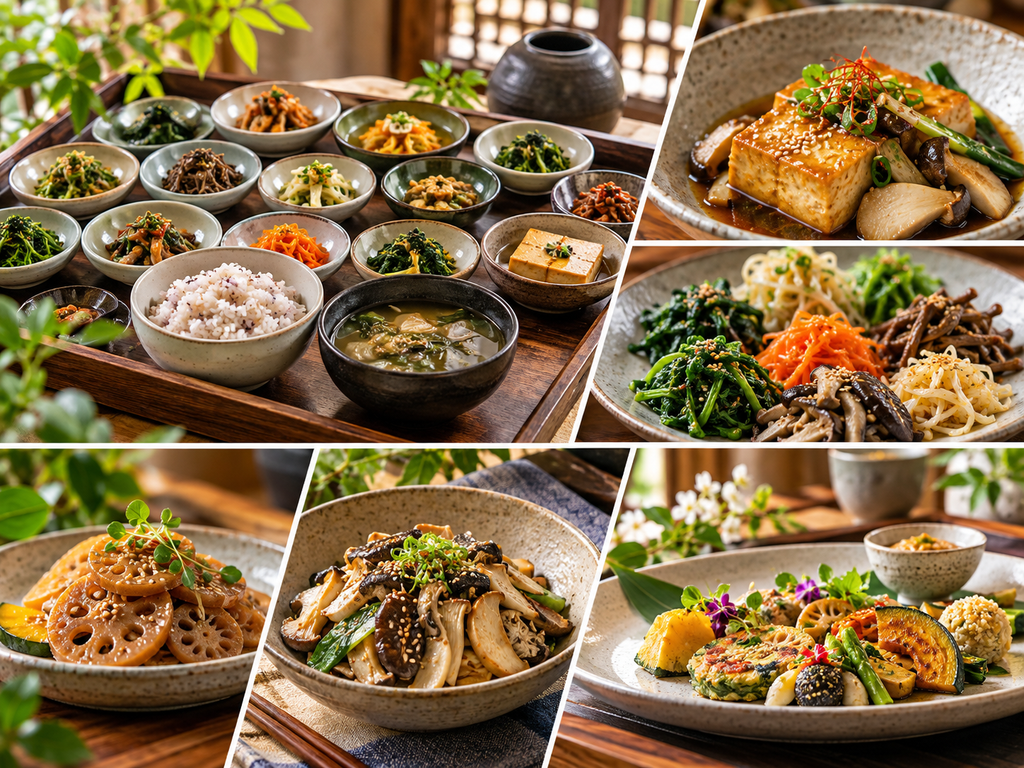
Restaurants specializing in authentic Korean temple food are especially appealing to plant-based diners.
Their menus typically emphasize fresh produce, seasonal ingredients, and traditional preparation methods.
Some offer multi-course meals that showcase an impressive variety of vegetarian Korean dishes.
Temple cuisine is also a wonderful way to learn how vegetables, mushrooms, grains, and fermented ingredients contribute to Korean flavors.
Dedicated Vegan Restaurants
Dedicated vegan restaurants offer a more straightforward dining experience for visitors who avoid all animal products.
Many modern plant-based restaurants in South Korea reinterpret familiar dishes using tofu, mushrooms, soy protein, and plant-based sauces.
Depending on the restaurant, visitors may find vegan versions of bibimbap, Korean fried dishes, noodles, burgers, or desserts.
A dedicated vegan establishment can be especially helpful when traveling with someone who has strict dietary requirements.
Casual Gimbap and Rice Restaurants
Casual Korean eateries often provide relatively inexpensive, convenient meals.
They may offer vegetable gimbap, rice bowls, noodle dishes, and soups.
However, foods are often prepared in advance.
Requesting an ingredient change may not always be possible.
Before ordering, confirm whether meat, fish, eggs, or seafood products are already incorporated into the fillings, sauces, or broth.
Can Vegetarians Eat Korean Street Food?
Korean street food is an important part of the country’s food culture.
Markets and outdoor stalls offer everything from savory pancakes to sweet snacks.
However, street food can be challenging for vegetarians because ingredient information may be limited.
Here are several popular choices and the precautions to take.
Hotteok (호떡)
Hotteok is a sweet Korean pancake commonly filled with brown sugar, cinnamon, and nuts or seeds.
Sweet hotteok may be vegetarian, but some dough recipes contain milk, eggs, butter, or honey.
Some savory versions may contain meat.
Always ask about the specific filling and dough ingredients.
Tteokbokki (떡볶이)
Tteokbokki consists of chewy rice cakes served in a spicy sauce.
Although the rice cakes themselves are often plant-based, the sauce may contain anchovy broth, fish cakes, seafood seasonings, or meat products.
A vegetarian or vegan version requires confirmation of both the sauce and accompanying ingredients.
Some plant-based Korean restaurants offer tteokbokki prepared without seafood stock.
Roasted Sweet Potatoes (군고구마)
Roasted sweet potatoes are a popular Korean snack, especially during colder months.
A plain roasted sweet potato is naturally plant-based.
It offers a simple and satisfying choice for vegetarians and vegans.
Check for any additional butter, toppings, or sauces if the seller serves a modified version.
Roasted Chestnuts (군밤)
Plain roasted chestnuts are another traditional snack.
They have a mildly sweet, nutty flavor and are generally suitable for plant-based diets when served without animal-derived additions.
For travelers who want something simple, roasted chestnuts can be a convenient street snack.
How to Build a Balanced Vegetarian Korean Meal
Eating vegetarian Korean food does not mean relying only on steamed rice and vegetables.
A satisfying meal can include a combination of grains, plant proteins, vegetables, and healthy fats.
Consider the following components.
Start With Rice or Noodles
Steamed rice provides a familiar foundation for many Korean meals.
Brown rice, multigrain rice, and sweet potato noodles are additional options depending on the restaurant.
These foods contribute carbohydrates and energy.
Add Tofu, Soybeans, or Other Plant Proteins
Tofu is especially useful in vegetarian Korean cooking.
It can be grilled, braised, pan-fried, or added to soups.
Soybeans, mung beans, and other legumes provide additional protein options.
Include Several Vegetables
Vegetables are central to the Korean dining experience.
A meal may include spinach, bean sprouts, mushrooms, zucchini, carrots, cabbage, and seaweed.
Choosing a variety of vegetables supports a more diverse nutrient intake.
Use Plant-Based Seasonings
Sesame oil, sesame seeds, soy sauce, garlic, ginger, chili flakes, and mushroom-based sauces can bring considerable flavor to plant-based dishes.
However, packaged sauces should be checked for animal-derived additives.
For a balanced vegetarian meal, combine rice, tofu or beans, several vegetables, and suitable plant-based seasonings rather than relying on vegetables alone.
Common Mistakes Vegetarians Make When Ordering Korean Food
First-time travelers sometimes encounter difficulties because they make assumptions about unfamiliar dishes.
Avoiding a few common mistakes can improve the dining experience.
Mistake 1: Assuming vegetables mean vegetarian.
A dish containing only visible vegetables may still use seafood stock or fish sauce.
Mistake 2: Assuming all kimchi is vegan.
Traditional kimchi may contain salted shrimp or fish sauce.
Mistake 3: Asking only to remove meat.
Removing visible meat does not eliminate animal-derived ingredients already incorporated into the dish.
Mistake 4: Confusing vegetable broth with clear broth.
Clear broth can contain anchovies, beef, or chicken.
Mistake 5: Expecting every restaurant to customize a dish.
Some ingredients are prepared hours in advance, making substitutions difficult.
Mistake 6: Assuming a Korean side dish is automatically safe.
Side dishes can contain seafood seasonings even when their main ingredients are vegetables.
The most effective approach is to communicate your needs clearly and ask about the entire preparation process.
Vegetarian Korean Food for Different Travel Situations
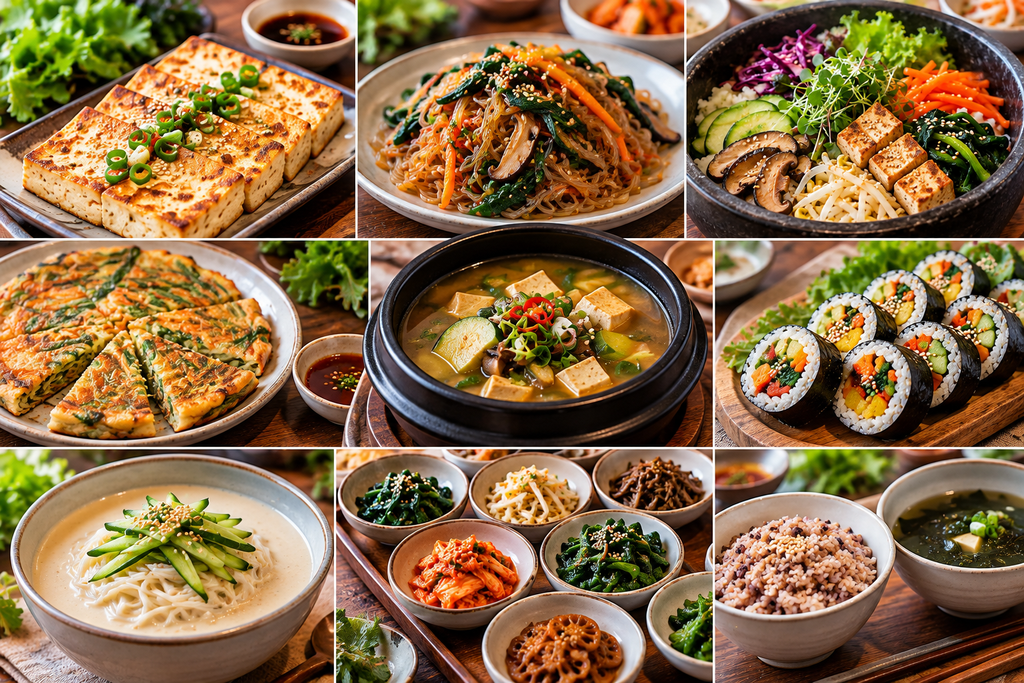
Finding vegetarian meals can become easier when visitors plan according to their daily activities.
Breakfast
Breakfast options may include plain rice, fruit, tofu, plant-based porridge, or soy milk.
At hotels, check whether soups, sauces, and breakfast dishes contain animal products.
Some bakeries and cafés also offer plant-based selections, although ingredient verification is still important.
Lunch
Lunch is a convenient time to enjoy a customized rice bowl or vegetable gimbap.
Bibimbap without meat is a practical possibility when the restaurant can accommodate the request.
A carefully checked tofu dish with rice and vegetable side dishes can also make a satisfying lunch.
Dinner
Dinner provides an opportunity to explore more elaborate Korean food.
Visitors might choose a vegetarian-friendly restaurant serving tofu, mushrooms, pancakes, and traditional vegetable dishes.
For a memorable experience, consider a Korean Buddhist temple-food meal.
Traveling With Meat-Eaters
Dining with friends or family who eat meat can require extra planning.
Restaurants specializing exclusively in barbecue may have limited vegetarian choices, and some side dishes may contain animal seasonings.
A restaurant with customizable rice bowls, tofu dishes, or clearly identified vegetarian options can make shared dining more comfortable.
Check the menu before deciding where the group will eat.
Are Vegetarian Korean Restaurants Expensive?
Vegetarian dining in South Korea can fit different travel budgets.
The cost depends on the city, neighborhood, restaurant type, ingredients, and dining experience.
Casual rice restaurants and gimbap shops may provide affordable options.
Specialized vegan cafés and restaurants may charge more for specialty ingredients or elaborate dishes.
Traditional temple-food restaurants offering multi-course meals may be more expensive than everyday eateries.
However, a more expensive restaurant does not necessarily provide a better vegetarian experience.
A simple tofu dish with rice and correctly prepared vegetable sides can be just as satisfying as an elaborate meal.
Budget-conscious travelers can compare menu prices, choose smaller casual restaurants, and look for places that clearly explain their ingredients.
The best value comes from finding food that meets your dietary requirements while offering a satisfying meal at a reasonable price.
How to Find Vegetarian Korean Restaurants While Traveling
Planning ahead can reduce uncertainty when visiting unfamiliar neighborhoods.
Start by looking for restaurants that explicitly advertise vegetarian or vegan options.
Useful Korean search terms include:
- 채식 식당 – Vegetarian restaurant
- 비건 식당 – Vegan restaurant
- 비건 음식 – Vegan food
- 사찰음식 – Buddhist temple food
- 채식 비빔밥 – Vegetarian bibimbap
- 비건 김치 – Vegan kimchi
Restaurant descriptions can provide useful clues about dietary accommodation.
However, online listings may not always reflect current menus or preparation methods.
Before ordering, confirm whether the restaurant can meet your specific requirements.
Travelers who follow strict vegan diets may prefer establishments with a clearly plant-based menu rather than relying on extensive changes at conventional restaurants.
Frequently Asked Questions About Vegetarian Korean Restaurants
1. Is Korean food suitable for vegetarians?
Yes. Korean cuisine includes many vegetables, grains, soy products, and mushroom dishes. However, some foods contain hidden animal ingredients such as fish sauce, shrimp paste, and anchovy broth. Vegetarians should check ingredients before ordering.
2. What is the easiest Korean dish for a vegetarian to order?
Bibimbap can be a convenient option because restaurants may be able to omit meat. Vegans should also request no egg. Confirm that the vegetables and sauce are prepared without animal-derived ingredients.
3. Can vegans eat kimchi?
Vegans can eat kimchi made without fish sauce, salted shrimp, or other animal products. Traditional kimchi is not always vegan, so checking ingredients or choosing clearly labeled vegan kimchi is important.
4. Is Korean tofu soup vegetarian?
Not necessarily. Many Korean tofu soups and stews use anchovy, seafood, or meat-based broth. A vegetarian version should be prepared with water or plant-based broth and seasonings.
5. Are Korean pancakes vegetarian?
Some Korean pancakes can be vegetarian, but ingredients vary. Vegetable pancakes may include eggs, while seafood pancakes contain seafood. Check both the batter and fillings before ordering.
6. What Korean food can vegans eat?
Possible vegan choices include properly prepared vegetable bibimbap, kongguksu, plain grilled tofu, certain vegetable side dishes, and traditional Buddhist temple food. Always confirm the specific recipe.
7. Can vegetarians eat at Korean barbecue restaurants?
Sometimes, but options may be limited. Certain restaurants serve grilled mushrooms, vegetables, tofu, rice, and other meat-free items. Ask about marinades, broths, sauces, and shared cooking surfaces if cross-contact is a concern.
8. Are Korean side dishes vegetarian?
Some are, but not all. Seasoned vegetables may contain fish sauce or seafood-based seasonings. Kimchi and soups served as side dishes also require attention.
9. Is it difficult to be vegetarian in South Korea?
It can require planning, especially at traditional restaurants where fish-based ingredients are commonly used. However, dedicated vegan restaurants, temple-food establishments, and customizable dishes provide useful alternatives.
10. What should vegetarians say when ordering Korean food?
Start with “저는 채식주의자예요” (I am vegetarian). Then explain that you do not eat meat, fish, seafood, or animal-derived broths and seasonings. Vegans should also mention eggs, dairy, and honey.
Final Thoughts: Enjoying Korean Cuisine as a Vegetarian
Exploring vegetarian Korean restaurants can open the door to an impressive variety of traditional flavors, ingredients, and cooking techniques.
From colorful bibimbap and chewy japchae to creamy soybean noodles, savory tofu dishes, and beautifully prepared temple food, Korean cuisine offers many opportunities for plant-based dining.
The most important lesson is that a dish’s appearance does not always reveal its ingredients.
Fish sauce, anchovy broth, salted shrimp, and meat-based stock can appear in foods that look entirely vegetarian.
By learning a few Korean phrases, checking ingredients carefully, and choosing restaurants that understand your dietary needs, you can enjoy Korean food with greater confidence.
Whether you are visiting Seoul for the first time, exploring Korean restaurants in the United States, or simply becoming interested in plant-based Korean cooking, the experience can be both delicious and culturally enriching.
Vegetarian Korean food is not just about removing meat. It is about discovering the remarkable flavors that vegetables, tofu, grains, mushrooms, and fermented plant ingredients can offer.