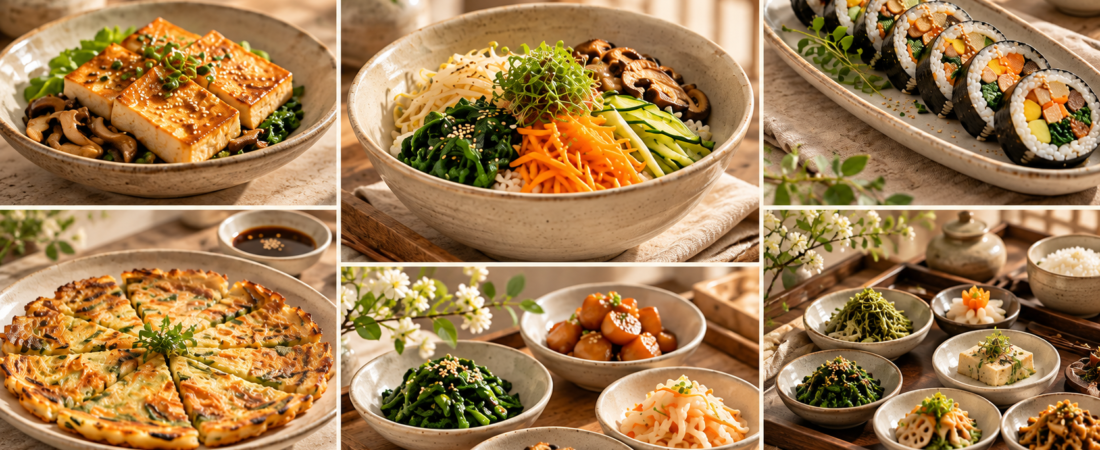
Korean vegetarian food for picky eaters can be surprisingly approachable, even if you dislike spicy meals, unfamiliar textures, fermented vegetables, or complicated combinations of ingredients. Although Korean cuisine is famous for bold flavors, barbecue, and spicy soups, there are also comforting rice dishes, simple vegetable sides, mild pancakes, noodles, and tofu-based meals that can work well for cautious eaters.
If you are visiting South Korea for the first time, exploring Korean restaurants in the United States, or simply trying to add more plant-based meals to your routine, knowing where to begin can make a big difference.
You do not have to start with extremely spicy kimchi, unfamiliar fermented foods, or an elaborate traditional meal. Some of the most accessible Korean dishes feature familiar ingredients such as white rice, carrots, spinach, potatoes, mushrooms, zucchini, and tofu.
However, there is one important detail: a Korean dish that looks vegetarian is not automatically free from meat, seafood, or animal-based broth. Fish sauce, salted shrimp, beef stock, and anchovy broth are common ingredients in foods that may otherwise appear plant-based.
This guide introduces 12 approachable dishes, explains how they taste, identifies ingredients worth checking, and teaches useful Korean phrases for ordering vegetarian food confidently.
Whether you prefer plain rice, mild seasoning, crispy foods, or customizable meals, there is a practical starting point.
Why Korean Vegetarian Food Can Be Good for Picky Eaters
Many picky eaters are hesitant to try unfamiliar cuisines because they worry about three things: flavor, texture, and ingredients.
Korean food can seem intimidating when the first dishes you encounter are spicy stews, strongly fermented side dishes, or meals containing several unfamiliar ingredients.
Fortunately, Korean cuisine is much more varied than those famous examples suggest.
A traditional Korean meal often includes steamed rice, a main dish, and several small side dishes known as banchan. This structure allows diners to experience different flavors without committing to a large serving of something unfamiliar.
For someone who prefers simple foods, steamed rice can provide a familiar base. Mild vegetables or tofu can then be introduced one at a time.
Several characteristics make Korean vegetarian dishes especially worth exploring.
Familiar ingredients
Many Korean vegetable dishes use potatoes, carrots, cucumbers, spinach, mushrooms, cabbage, and rice. These ingredients are recognizable to American diners, even when the preparation methods differ.
Adjustable flavors
Some dishes allow spicy sauces to be served separately. This is particularly helpful if you enjoy food with a little flavor but dislike excessive heat.
Different textures
Korean cuisine offers soft, chewy, crunchy, and crispy foods. A person who dislikes soft tofu might enjoy a crispy vegetable pancake instead.
Flexible meals
Rice bowls, vegetable rolls, and certain noodle dishes can be customized, depending on the restaurant.
The key is choosing a dish based on your individual preferences rather than assuming all Korean vegetarian food tastes similar.
12 Easy Korean Vegetarian Dishes for Picky Eaters
FEATURED IMAGE — Insert immediately before this section or set as the WordPress featured image

1. Vegetable Bibimbap (야채비빔밥)

Flavor: Mild when served without spicy sauce
Best for: People who like rice bowls and familiar vegetables.
Bibimbap is one of the most accessible Korean dishes for beginners because its main ingredient is rice. Vegetable toppings often include carrots, spinach, mushrooms, bean sprouts, and zucchini.
The vegetables may be arranged separately on top of the rice, allowing you to see the ingredients before mixing everything together.
For picky eaters, this is particularly useful. You can taste each vegetable individually or combine only the ingredients you enjoy.
Bibimbap is commonly served with gochujang, a Korean red chili paste. If you dislike spicy food, ask for the sauce on the side and use soy sauce instead when an appropriate vegetarian option is available.
Traditional versions frequently include beef or an egg, so do not assume the dish is vegetarian.
Ordering tip: Ask for no meat, no egg if vegan, and no fish-based ingredients in the seasonings.
2. Vegetable Gimbap (야채김밥)

Flavor: Mild, lightly savory
Best for: People who like rice, wraps, and portable snacks.
Gimbap consists of rice and fillings wrapped in dried seaweed, then sliced into bite-sized pieces.
It may remind American diners of sushi rolls, although its seasonings and fillings are different.
Vegetable gimbap can contain carrots, cucumber, spinach, and pickled radish. The sesame-seasoned rice is generally mild, making it a convenient introduction to Korean flavors.
One advantage is that each slice contains a small portion of food. You can try a single piece without committing to a large meal.
However, gimbap labeled vegetable gimbap may still contain egg, imitation crab, ham, or fish-based ingredients.
Ordering tip: Confirm every filling rather than relying solely on the menu name.
3. Gamja Jeon — Korean Potato Pancake (감자전)

Flavor: Mild and savory
Best for: Potato lovers and fans of crispy foods.
Gamja jeon is a Korean potato pancake typically prepared from grated potatoes and cooked in a pan until golden.
The exterior can become pleasantly crisp while the interior remains soft.
For people who dislike strong seasonings, this dish offers a relatively familiar flavor profile. It can resemble hash browns or a simple potato pancake, depending on how it is prepared.
Some versions are served with a soy-based dipping sauce, which you can request separately.
The basic potato-based recipe can be vegetarian or vegan, but individual restaurants may add other ingredients or use shared cooking equipment.
Ordering tip: Confirm whether the batter and dipping sauce contain seafood, egg, or meat products.
4. Yachae Jeon — Vegetable Pancake (야채전)
Vegetable pancakes are another approachable choice for someone who prefers cooked vegetables over raw salads.
They are commonly made with sliced vegetables mixed into a batter and cooked in a lightly oiled pan.
Possible ingredients include carrots, zucchini, onions, and scallions.
Their texture is usually more appealing to people who enjoy crispy or pan-fried foods than to those who prefer soft dishes.
The vegetables blend into the pancake rather than being presented as several separate side dishes.
However, some Korean pancakes contain seafood, eggs, or animal-based flavorings.
Ordering tip: Request a vegetable-only pancake and confirm that the batter is free from unwanted animal ingredients.
5. Japchae — Korean Glass Noodles (잡채)
Japchae is a popular Korean noodle dish made with sweet potato starch noodles, vegetables, and a savory-sweet seasoning.
The noodles are usually translucent and pleasantly chewy.
Carrots, onions, spinach, and mushrooms are common additions.
People who enjoy pasta or stir-fried noodles may find japchae an appealing introduction to Korean cuisine.
The flavor is generally much milder than many spicy Korean noodle dishes.
One thing to consider is texture. Sweet potato noodles can feel chewier and more slippery than wheat pasta.
Traditional japchae sometimes contains beef, and some versions may use oyster sauce or other animal-derived seasonings.
Ordering tip: Request a meat-free version and verify that the sauce contains no oyster sauce or meat stock.
6. Hobak Bokkeum — Stir-Fried Zucchini (호박볶음)
Hobak bokkeum is a simple Korean vegetable side dish often made with zucchini or Korean summer squash.
The vegetable is sliced and lightly sautéed with oil and seasonings.
It has a soft texture and naturally mild flavor.
For picky eaters who already enjoy sautéed zucchini or summer squash, this can be an easy introduction to Korean vegetable side dishes.
Some recipes include garlic and sesame oil, while others use salted shrimp for seasoning.
Ordering tip: Ask whether salted shrimp, fish sauce, or anchovy broth is used.
7. Gamja Jorim — Braised Potatoes (감자조림)
Gamja jorim is a potato side dish often prepared with soy sauce, sugar or another sweetener, and additional seasonings.
The potatoes absorb the sauce as they cook, creating a savory-sweet flavor.
Depending on the recipe, the texture can range from firm and tender to very soft.
This dish can appeal to eaters who enjoy roasted potatoes, glazed vegetables, or lightly sweetened savory food.
Although potatoes are naturally plant-based, the seasoning liquid may contain anchovy stock or other animal-derived ingredients.
Ordering tip: Ask whether the potatoes are cooked with vegetable-based seasoning only.
8. Sigeumchi Namul — Seasoned Spinach (시금치나물)
Sigeumchi namul is blanched spinach seasoned with ingredients such as sesame oil, sesame seeds, garlic, and salt or soy sauce.
It is usually served as a small side dish.
Unlike raw spinach salad, the leaves are cooked and softened.
People who already eat cooked spinach may find this dish familiar.
Its sesame flavor can be pleasant without being overpowering, although those who dislike garlic may want to ask about the seasoning.
Many versions are vegetarian, but you should still verify sauces and seasonings.
Ordering tip: Ask for mild seasoning if you are sensitive to garlic or salty flavors.
9. Dubu Gui — Pan-Fried Tofu (두부구이)
Pan-fried tofu is a simple Korean preparation that highlights the texture of tofu without necessarily relying on intense seasoning.
Slices of firm tofu are cooked until lightly golden, often with a soy-based dipping sauce.
The interior stays relatively soft while the outside develops a firmer surface.
If you have never enjoyed plain tofu, pan-fried tofu may be a better introduction because cooking changes its texture.
It also pairs easily with steamed rice.
Ordering tip: Request the sauce separately and confirm it does not contain seafood-based seasonings.
10. Kongnamul Muchim — Seasoned Bean Sprouts (콩나물무침)
Kongnamul muchim is a common Korean side dish made with soybean sprouts.
The sprouts are typically cooked briefly and seasoned with sesame oil, salt, garlic, and other ingredients.
The result can be lightly crunchy and fresh-tasting.
Bean sprouts have a distinctive texture, so this dish is more suitable for someone who enjoys crunchy vegetables.
Some versions are spicy, while others are prepared without red chili powder.
Ordering tip: Request a mild version and check whether any seafood-based seasonings are added.
11. Vegetable Juk — Korean Rice Porridge (야채죽)
Korean rice porridge, known as juk, is a soft and comforting dish made by cooking rice with plenty of liquid.
Vegetable versions can include carrots, mushrooms, zucchini, and other finely chopped ingredients.
For someone who prefers soft, simple meals, juk can be one of the gentlest starting points.
Its texture is closer to thick rice porridge than ordinary steamed rice.
The main concern for vegetarians is the cooking liquid. Some porridge recipes contain chicken stock, anchovy broth, seafood, or meat-based seasonings.
Ordering tip: Confirm that the porridge is cooked with water or vegetable broth and contains no meat or seafood.
12. Sanchae Bibimbap — Mountain Vegetable Rice Bowl (산채비빔밥)
Sanchae bibimbap is made with rice and an assortment of mountain greens, herbs, and vegetables.
It is especially associated with traditional Korean dining and certain temple food experiences.
For an adventurous picky eater, this dish can be a useful next step after regular vegetable bibimbap.
The ingredients may include vegetables that are less familiar to American diners, with earthy, herbal, or slightly bitter flavors.
Rather than mixing everything immediately, taste individual components first.
Temple-style versions may be made entirely with plant-based ingredients, but restaurant preparations vary.
Ordering tip: Ask which greens are included and whether the dish contains eggs, meat, seafood, or animal-based stock.
Korean Vegetarian Food Comparison Table
The following table can help you choose your first dish based on flavor, texture, and comfort level.
| Dish | Flavor | Texture | Beginner difficulty | Check before ordering |
|---|---|---|---|---|
| Vegetable bibimbap | Mild if sauce omitted | Soft rice, mixed vegetables | Very easy | Meat, egg, sauce |
| Vegetable gimbap | Mild, savory | Soft and crunchy | Very easy | Ham, egg, crab stick |
| Gamja jeon | Mild, savory | Crispy and tender | Very easy | Batter, dipping sauce |
| Yachae jeon | Lightly savory | Crispy, soft | Easy | Egg, seafood |
| Japchae | Savory-sweet | Chewy noodles | Easy | Beef, oyster sauce |
| Hobak bokkeum | Mild | Soft | Very easy | Salted shrimp |
| Gamja jorim | Savory-sweet | Tender potatoes | Very easy | Broth, seasonings |
| Sigeumchi namul | Sesame, savory | Soft leaves | Easy | Fish-based seasoning |
| Dubu gui | Mild | Firm outside, soft inside | Easy | Sauce |
| Kongnamul muchim | Light, nutty | Crunchy | Moderate | Chili, fish sauce |
| Vegetable juk | Very mild | Soft, creamy | Very easy | Meat or fish broth |
| Sanchae bibimbap | Earthy, herbal | Mixed | Moderate | Egg, broth, toppings |
Difficulty describes how approachable the flavor and texture may be for a cautious eater, not whether a dish is guaranteed vegetarian. Recipes vary by restaurant.
Which Korean Vegetarian Foods Should You Try First?

If you are extremely selective about food, starting with the most familiar ingredients is usually more effective than immediately trying a complicated traditional meal.
Consider these categories.
If you only enjoy plain or simple foods
Start with steamed white rice, vegetable juk, potato pancakes, or pan-fried tofu with sauce on the side.
These choices make it easier to control flavor intensity.
If you enjoy crispy foods
Try gamja jeon or yachae jeon.
Crispy textures can make new vegetables feel more familiar.
If you enjoy pasta and noodles
Try vegetarian japchae.
Its slightly sweet and savory flavor often feels less intimidating than spicy soups or fermented side dishes.
If you enjoy rice bowls
Vegetable bibimbap is a practical starting point.
Ask for all sauces separately and verify the toppings before mixing.
If you dislike vegetables touching each other
Order separate rice and side dishes when available. Alternatively, request a bibimbap bowl without mixing the ingredients.
This way, you can evaluate each food independently.
If you enjoy trying new flavors in small portions
Explore mild banchan such as cooked spinach, potatoes, or zucchini.
A small side dish is often easier to sample than a full entrée.
How to Order Korean Vegetarian Food in South Korea
Ordering vegetarian food in Korea requires more than simply pointing to a vegetable dish.
Many restaurants prepare recipes in advance, and some ingredients may already be incorporated into sauces, broths, and marinades.
The Korea Tourism Organization recommends that vegetarian travelers clearly explain their dietary restrictions and specify ingredients they cannot eat.
Here are useful Korean phrases you can show restaurant staff.
Essential Korean Ordering Phrases

| English | Korean | Approximate pronunciation |
|---|---|---|
| I am vegetarian. | 저는 채식주의자예요. | Jeoneun chaesikju-uijayeyo |
| I do not eat meat. | 저는 고기를 먹지 않아요. | Jeoneun gogireul meokji anayo |
| I do not eat fish or seafood. | 생선이나 해산물도 먹지 않아요. | Saengseonina haesanmuldo meokji anayo |
| Please leave out meat. | 고기는 빼 주세요. | Gogineun ppae juseyo |
| Please leave out eggs. | 계란은 빼 주세요. | Gyeraneun ppae juseyo |
| Is there fish sauce in this? | 여기에 액젓이 들어가나요? | Yeogie aekjeosi deureoganayo |
| Does the broth contain anchovies? | 육수에 멸치가 들어가나요? | Yuksue myeolchiga deureoganayo |
| Please make it less spicy. | 덜 맵게 해 주세요. | Deol maepge hae juseyo |
| Please put the sauce on the side. | 소스는 따로 주세요. | Soseuneun ttaro juseyo |
| Can this be made without meat or seafood? | 고기와 해산물 없이 만들 수 있나요? | Gogiwa haesanmul eopsi mandeul su innayo |
| Please make it without fish sauce or salted shrimp. | 액젓이나 새우젓 없이 만들어 주세요. | Aekjeosina saeujeot eopsi mandeureo juseyo |
| Thank you. | 감사합니다. | Gamsahamnida |
The English-style pronunciations are approximate. Showing the Korean text is often more reliable than relying on pronunciation alone.
A Full Vegetarian Ordering Script
If you want to order vegetable bibimbap without animal ingredients, you can show this sentence:
Korean:
저는 채식주의자예요. 고기, 생선, 해산물, 계란, 액젓, 새우젓, 멸치 육수는 먹지 않아요. 야채비빔밥을 이 재료들 없이 만들 수 있나요? 고추장은 따로 주세요.
English:
I am vegetarian. I do not eat meat, fish, seafood, eggs, fish sauce, salted shrimp, or anchovy broth. Can you make vegetable bibimbap without these ingredients? Please serve the chili paste separately.
Copy Korean
This script is suitable for someone who wants a vegan-style bibimbap, but it is still important to confirm all seasonings and any ingredients not listed.
Restaurants may not be able to modify dishes that are already prepared.
Hidden Animal Ingredients in Korean Vegetable Dishes
One of the biggest mistakes visitors make is assuming that a vegetable-based dish is automatically vegetarian.
In Korea, certain animal-derived ingredients are commonly used to enhance flavor, even in meals that appear to contain only vegetables.
Understanding these ingredients can prevent confusion.
1. Anchovy broth (멸치 육수)
Anchovies are used to make flavorful cooking stock.
This broth may appear in noodle soups, stews, porridge, and some vegetable dishes.
If you avoid fish, ask whether the broth is made with anchovies.
2. Fish sauce (액젓)
Fish sauce is used as a seasoning in certain types of kimchi, vegetable dishes, and sauces.
Its presence may not be obvious from the appearance of the finished food.
3. Salted shrimp (새우젓)
Salted shrimp is another traditional Korean seasoning.
It may be added to kimchi, tofu dishes, or sautéed vegetables.
4. Beef or chicken stock
Some soups and sauces use meat-based stock even when the visible ingredients are vegetables.
Ask about the broth rather than checking only whether the final dish contains meat pieces.
5. Oyster sauce
Oyster sauce is sometimes used in stir-fried noodles and vegetables.
It is not vegetarian unless a specifically plant-based substitute is used.
6. Kimchi and other fermented side dishes
Kimchi is one of Korea’s most recognizable foods, but it is not always vegetarian.
Traditional recipes may contain fish sauce, salted seafood, or other animal-derived ingredients.
Fortunately, vegan kimchi is also available.
According to the Korea Tourism Organization, vegetarian travelers should be particularly careful with kimchi, stews, gimbap, and dishes made with tofu because animal-based ingredients may be present. See its official vegetarian ordering guide.
Vegetarian vs. Vegan Korean Food: What Is the Difference?
Vegetarians generally avoid meat, fish, and seafood, but some eat dairy products or eggs.
Vegans avoid all animal-derived foods, including meat, seafood, eggs, dairy, honey, fish sauce, and shrimp-based seasonings.
This distinction matters when ordering Korean food.
For example, a bibimbap bowl without beef but with an egg may be appropriate for an ovo-vegetarian. It would not be suitable for a vegan.
Likewise, a vegetable pancake containing egg could be vegetarian for some diners but not vegan.
If you follow a strict vegan diet, requesting a vegetable-only dish is not enough. Ask about the batter, broth, sauces, and other seasonings as well.
For more detailed guidance, read our TIPVERO article, Vegetarian vs. Vegan Food in Korea: What Is the Difference When Ordering?
Are Korean Temple Foods a Good Option for Picky Eaters?

Korean temple food offers a different perspective on traditional Korean cuisine.
Rather than relying on meat, seafood, or intense seasoning, traditional Buddhist temple cuisine emphasizes vegetables, grains, mushrooms, tofu, and seasonal ingredients.
The Korea Tourism Organization explains that temple food often highlights the natural flavors of ingredients and uses plant-based seasonings.
Many traditional preparations also avoid five pungent vegetables associated with Buddhist food customs.
For picky eaters, some temple dishes may be especially appealing because their flavors are balanced and their ingredients are often presented clearly.
However, temple food is not necessarily plain.
Mountain herbs, mushrooms, fermented ingredients, and unfamiliar textures can still be challenging for someone who is highly selective.
A cautious beginner might start with steamed rice, tofu, simple vegetables, or a mild rice-based dish before sampling more unusual ingredients.
When choosing a restaurant, check whether it serves traditional temple cuisine or a modern interpretation and confirm the ingredients if your diet is strict.
A Simple Three-Day Korean Vegetarian Food Plan for Beginners
Trying several unfamiliar foods in a single meal can be overwhelming.
A gradual approach makes it easier to identify what you enjoy.
Day 1: Familiar foods
Begin with mild vegetable gimbap for lunch, after checking the fillings.
For dinner, try vegetable bibimbap with the spicy sauce served separately.
Focus on recognizing ingredients rather than trying to enjoy every topping immediately.
Day 2: Different textures
Try a vegetarian potato pancake or vegetable pancake.
Later, order meat-free japchae made without oyster sauce or animal-based seasonings.
This introduces crispy and chewy foods without requiring intense spice.
Day 3: Traditional vegetables
Explore a small selection of mild vegetable side dishes, such as potatoes, spinach, and zucchini.
Pair them with steamed rice and pan-fried tofu.
If you feel more adventurous, consider sanchae bibimbap or a mild temple-style meal.
The purpose of this three-day plan is not to force yourself to enjoy every dish.
Instead, it helps you discover which Korean flavors and textures suit your preferences.
Tips for Eating Korean Vegetarian Food Without Feeling Overwhelmed
Picky eating often involves more than dislike of certain flavors.
Texture, temperature, appearance, smell, and the combination of ingredients can all affect food preferences.
These practical strategies may make Korean dining more comfortable.
Start with recognizable ingredients
Choose dishes containing rice, potatoes, spinach, carrots, or zucchini.
Familiar ingredients reduce uncertainty.
Keep sauces separate
Korean chili paste, soy-based dipping sauces, and spicy seasonings can significantly change a dish’s flavor.
Requesting sauces separately allows you to control how much you use.
Try small portions
Some restaurants serve several banchan dishes alongside a meal.
You can taste a little of a new vegetable without ordering an entire entrée.
Choose the right temperature
Some Korean side dishes are served cold or at room temperature.
If you strongly prefer hot food, ask which dishes are served warm.
Understand unfamiliar textures
Rice cakes can be chewy, tofu may be soft or firm, glass noodles are slippery, and certain vegetables have a crunchy texture.
Knowing what to expect can make a new dish less intimidating.
Avoid assuming that mild means vegetarian
A non-spicy soup may still contain meat or fish broth.
Flavor intensity and vegetarian suitability are separate concerns.
Be realistic about restaurant modifications
Not every restaurant can remove ingredients from prepared food.
For stricter diets, a dedicated vegetarian or vegan restaurant may be a more reliable option than a conventional restaurant that must modify several components.
Where Can Picky Eaters Find Korean Vegetarian Food?
There are several practical places to look for beginner-friendly vegetarian Korean dishes.
Traditional Korean restaurants
These often serve rice bowls, vegetable side dishes, pancakes, and tofu preparations.
However, not every dish is vegetarian, and ingredient substitutions may be limited.
Gimbap restaurants
Gimbap shops may offer a variety of rice rolls and simple rice-based meals.
Their convenient format can make them appealing for casual lunches.
Always confirm the fillings.
Temple food restaurants
These restaurants can be excellent places to experience traditional Korean vegetable-centered cuisine.
Some offer set meals featuring seasonal vegetables, grains, and tofu.
Dedicated vegan restaurants
A fully vegan restaurant eliminates many of the ingredient concerns associated with meat, seafood, dairy, and eggs.
Dedicated vegan establishments may also offer plant-based versions of traditional Korean meals.
Seoul’s official tourism website provides listings for vegan establishments, including Vegan Kitchen and Green Field Restaurant, which feature plant-based dining options. Restaurant menus and availability may change.
Korean grocery stores
If you prefer cooking at home, Korean grocery stores can be a useful introduction.
Look for rice, fresh vegetables, plain tofu, mushrooms, sweet potato noodles, and clearly labeled plant-based sauces.
Cooking familiar ingredients with Korean-inspired seasonings allows you to explore the cuisine gradually.
How to Make Korean Vegetarian Food More Familiar at Home
One of the easiest ways to introduce yourself to Korean vegetarian food is to prepare simplified versions at home.
You can use ingredients you already enjoy while keeping the cooking techniques approachable.
Easy vegetable rice bowl
Start with steamed rice.
Add sautéed carrots, zucchini, and mushrooms.
Season lightly with sesame oil and a little soy sauce that fits your dietary needs.
Serve any spicy seasoning separately.
This is inspired by bibimbap, although it is not intended to reproduce every element of a traditional recipe.
Simple potato pancake
Grate a potato, remove excess liquid if necessary, and cook a small pancake in a lightly oiled nonstick pan.
A little starch can help bind the mixture if needed.
Serve with a mild dipping sauce.
This is a practical introduction to gamja jeon.
Beginner-friendly japchae
Cook sweet potato starch noodles according to the package instructions.
Sauté carrots, onions, and mushrooms.
Combine everything with a small amount of soy sauce, sesame oil, and sugar.
For strict vegetarian or vegan preparation, confirm that all packaged sauces are plant-based.
Pan-fried tofu with rice
Slice firm tofu, pat it dry, and pan-fry it in a little oil.
Serve with rice and a simple vegetable side.
Add a mild soy-based sauce only if desired.
These home versions let you become familiar with Korean ingredients without the pressure of ordering in an unfamiliar restaurant.
Common Mistakes First-Time Vegetarian Visitors Make
Even experienced vegetarians can encounter unexpected challenges in Korea.
One common mistake is assuming that a dish without visible meat must be vegetarian.
A vegetable soup might contain anchovy broth. A plate of sautéed zucchini might be seasoned with salted shrimp. A bowl of rice may come with kimchi prepared using fish sauce.
Another mistake is assuming that English menu descriptions list every ingredient.
Restaurant menus often identify the primary components of a dish rather than every seasoning.
A third mistake is confusing a request for a non-spicy meal with a request for a vegetarian meal.
Spice level does not indicate whether animal ingredients are present.
Finally, some visitors assume that all restaurants can prepare vegan substitutions.
In reality, certain broths and sauces may be prepared ahead of time.
For people who follow a strict vegetarian or vegan diet, the safest practical approach is to ask detailed questions and select establishments that can clearly confirm their ingredients.
Final Thoughts: Start Simple and Discover Your Favorites
Korean vegetarian food for picky eaters does not have to be complicated, intensely spicy, or unfamiliar.
For many beginners, vegetable bibimbap, potato pancakes, vegetable gimbap, mild japchae, and rice porridge are comfortable starting points.
These dishes offer different textures and flavors while relying on recognizable ingredients.
The most important step is to distinguish between a dish that looks vegetable-based and one that is genuinely suitable for your diet.
Always check for meat, seafood, fish sauce, salted shrimp, and animal-based broth when necessary.
Start with foods that match your existing preferences, request mild seasonings when appropriate, and gradually explore new vegetables or traditional preparations.
You may discover that Korean vegetarian cuisine offers far more variety than you initially expected.
And the best part is that you do not need to love every Korean dish to enjoy exploring Korean food.
Even finding two or three dependable favorites can make dining in South Korea much easier and more enjoyable.
3. Frequently Asked Questions (FAQ)
WordPress에서 이 부분은 H2, 질문은 H3로 지정하세요. Rank Math FAQ Block을 사용하면 구조화된 FAQ 콘텐츠를 쉽게 관리할 수 있지만, Google 검색 결과에 FAQ 리치 결과가 표시되는 것은 보장되지 않습니다.
1. What is the easiest Korean vegetarian food for picky eaters?
Vegetable bibimbap, potato pancakes, and vegetable rice porridge are among the easiest Korean vegetarian dishes for beginners. They contain familiar ingredients and can have mild flavors. However, recipes differ, so check that all seasonings and broths are vegetarian.
2. Is Korean vegetarian food always spicy?
No. Many Korean dishes are naturally mild or can be prepared without spicy sauces. Potato pancakes, steamed rice, pan-fried tofu, vegetable porridge, and some vegetable side dishes are good examples. Ask for chili paste and spicy sauces separately if you are sensitive to heat.
3. Can vegetarians eat Korean bibimbap?
Yes, bibimbap can be vegetarian when prepared without meat, seafood, or animal-based seasonings. Vegans should also request no egg. Check whether any sauces or toppings contain fish sauce, meat stock, or other animal-derived ingredients.
4. Is Korean gimbap vegetarian?
Not necessarily. Even rolls labeled vegetable gimbap may contain egg, ham, imitation crab, or seafood-based ingredients. Ask the restaurant to confirm the fillings. Vegetable-only gimbap prepared without animal ingredients can be a convenient option.
5. Can picky eaters enjoy Korean food without eating kimchi?
Absolutely. Kimchi is a famous part of Korean cuisine, but you do not need to eat it to enjoy Korean meals. Rice bowls, potato pancakes, noodles, tofu, and mild vegetable sides offer plenty of alternatives.
6. Is Korean temple food suitable for vegans?
Traditional Korean Buddhist temple cuisine generally emphasizes plant-based ingredients and excludes meat and seafood. However, individual restaurants may adapt traditional recipes or serve modern variations. Strict vegans should confirm that no dairy, honey, eggs, or other animal-derived ingredients are used.
7. What Korean vegetarian foods are best for people who dislike unusual textures?
Potato pancakes, steamed rice, simple sautéed vegetables, and selected rice bowls are practical choices. Avoid ordering unfamiliar chewy or slippery foods until you know whether you enjoy those textures.
8. How do I ask for vegetarian food in Korean?
You can say, “저는 채식주의자예요” (I am vegetarian). For a stricter request, explain that you cannot eat meat, seafood, fish sauce, salted shrimp, or animal-based broth. Showing a written Korean explanation can help avoid misunderstandings.
9. Are Korean vegetable pancakes vegan?
Some are, but not all. Vegetable pancake batter may contain eggs, and certain varieties contain seafood or fish-based flavorings. Ask the restaurant to confirm the ingredients. A vegetable-only pancake made from plant-based ingredients can be suitable for vegans.
10. What should I order at a Korean restaurant for the first time?
Start with vegetable bibimbap with sauce on the side, after verifying that the toppings and seasonings meet your dietary requirements. If you prefer crispy food, a vegetarian potato pancake may be another good choice. These options are approachable without requiring you to begin with intensely spicy or fermented dishes.
4. Official References & Further Reading
1. Korea Tourism Organization – Tips for Vegetarians Visit Korea Vegetarian Travel Guide
Korean vegetarian dishes, ordering suggestions, and ingredient precautions.
2. Korea Tourism Organization – Vegetarian Ordering Tips Official Vegetarian Ordering Advice
Helpful information about bibimbap, gimbap, soups, and hidden animal ingredients.
3. Korea Tourism Organization – Korean Temple Food Korean Temple Food Guide
An introduction to traditional temple cuisine and plant-based dining.
4. Korea Tourism Organization – Korean Vegetable Dishes Korean Vegetable Cuisine
Traditional vegetables, tofu-based foods, and temple-style cooking.
5. Seoul Tourism Organization – Vegan Dining Official Seoul Vegetarian Restaurant Information
Examples of plant-based Korean restaurant dishes in Seoul.