
Busan South Korea Travel Guide 2026
When international travelers plan a trip to South Korea, Seoul is often the first destination that comes to mind. The capital is famous for its palaces, shopping districts, nightlife, and rapidly changing cultural scene. However, an increasing number of visitors are discovering that South Korea offers much more than its capital city.
One destination attracting particular attention is Busan, a beautiful coastal metropolis where mountain scenery, modern skyscrapers, traditional markets, sandy beaches, and colorful hillside neighborhoods come together.
Busan South Korea travel has become especially appealing to visitors who want to experience Korean culture in a setting that feels different from Seoul. Busan offers the energy of a major city alongside opportunities to walk beside the ocean, explore local neighborhoods, enjoy regional seafood, and discover Korea’s maritime history.
But why is Busan becoming a must-visit city in South Korea? What makes it special, and is it worth including in a first-time Korea itinerary?
This comprehensive guide explores Busan’s growing popularity, major attractions, food culture, transportation, costs, neighborhoods, and practical travel advice for 2026.
1. Busan Is Experiencing Remarkable Growth in International Tourism
Busan is no longer a destination that international travelers discover only after visiting Seoul several times. It has become an increasingly important part of South Korea’s tourism industry.
According to tourism statistics published by Korean tourism authorities, Busan welcomed approximately 3.64 million foreign visitors in 2025. During the first eight months of 2026, the city attracted approximately 3.43 million international visitors, according to figures reported in October.
These numbers suggest that Busan’s appeal is expanding beyond traditional regional tourism markets.
Several factors help explain this growth.
First, travelers have become more interested in exploring destinations outside major national capitals. Instead of spending an entire trip in Seoul, visitors increasingly look for regional experiences that reveal different aspects of Korean life.
Second, Busan offers an unusually diverse collection of attractions. Travelers can visit a Buddhist temple overlooking the sea, spend an afternoon at a modern beach district, wander through colorful residential streets, and finish the day enjoying Korean barbecue or seafood.
Third, Korean entertainment, social media, and international cultural events have introduced Busan to audiences who might otherwise know relatively little about the city.
Finally, Busan has invested in tourism services, cultural events, visitor experiences, and transportation connections that help international travelers explore the region.
The result is a city that feels both distinctly Korean and increasingly welcoming to global visitors.
2. Busan Offers a Completely Different Experience from Seoul
One of the strongest reasons to visit Busan is that it provides a different perspective on South Korea.
Seoul is the political, financial, and cultural center of the country. Its neighborhoods are often associated with high-density commercial districts, historic royal architecture, shopping streets, and major entertainment companies.
Busan, by contrast, is closely connected to the ocean.
Its identity has been shaped by its port, coastal geography, fishing traditions, maritime trade, and communities built between mountains and the sea.
Visitors notice the difference almost immediately.
In Busan, modern apartment towers rise behind beaches. Coastal roads connect neighborhoods overlooking the water. Fishing boats, traditional markets, and waterfront restaurants remain part of daily life.
The atmosphere can feel more relaxed in beach districts, although Busan itself is a large and busy metropolitan city.
For travelers, visiting both Seoul and Busan offers a broader understanding of South Korea than visiting either destination alone.
Seoul vs. Busan: Which City Should You Visit?
| Travel Feature | Seoul | Busan |
|---|---|---|
| Main atmosphere | Fast-paced capital city | Coastal metropolitan city |
| Major attractions | Palaces, shopping, nightlife | Beaches, temples, coastal villages |
| Natural scenery | Mountains, parks, river | Ocean, mountains, coastal cliffs |
| Famous foods | Diverse national and international cuisine | Seafood, pork soup, fish cakes |
| Transportation | Extensive subway and bus network | Metro, buses, taxis, coastal transport |
| Ideal experience | Urban culture and history | Urban culture combined with seaside travel |
Neither destination is universally better.
Seoul may appeal more to visitors interested in major shopping districts and royal history. Busan may be particularly attractive to travelers who enjoy ocean scenery, regional cuisine, and outdoor exploration.
A well-planned itinerary can include both cities.
3. Haeundae Beach Combines Ocean Views with Modern City Life
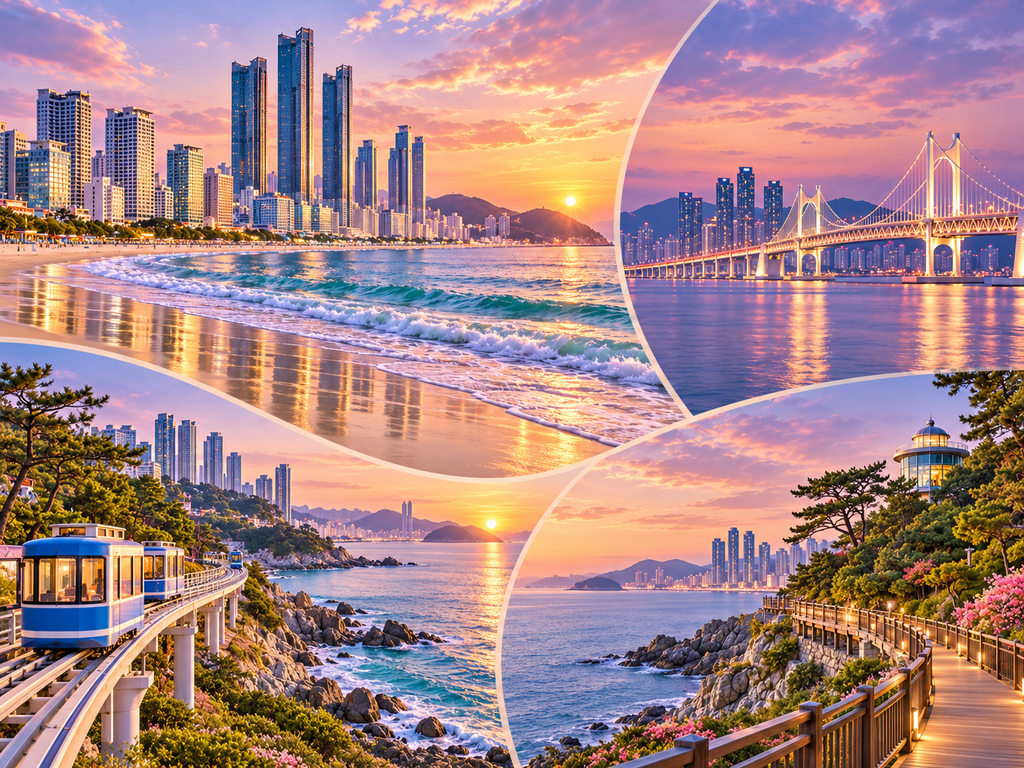
Haeundae Beach is one of Busan’s most recognizable attractions.
Located in a popular coastal district, the beach is known for its wide sandy shoreline, nearby hotels, restaurants, shopping facilities, and distinctive skyline.
For first-time visitors, Haeundae offers an accessible introduction to Busan.
Travelers can walk along the beach in the morning, visit nearby cafés, explore coastal attractions, and enjoy an evening meal without leaving the general area.
The neighborhood also offers accommodation ranging from modest hotels to luxury properties with ocean views.
One reason Haeundae attracts visitors is its combination of urban convenience and coastal scenery.
In many destinations, travelers must travel far outside the city to reach an attractive beach. In Busan, a major beach district is part of everyday metropolitan life.
What Can Visitors Do Around Haeundae?
Popular experiences include walking along Haeundae Beach, exploring Dongbaekseom Island’s coastal paths, visiting local restaurants, photographing the skyline, and enjoying nearby coastal sightseeing experiences.
The Haeundae Blueline Park area is also known for its scenic coastal railway experiences, including the Beach Train and Sky Capsule.
Because these experiences can be popular during weekends and holidays, travelers should check operating schedules and ticket availability before visiting.
Haeundae is especially convenient for travelers who want a comfortable introduction to Busan without planning every hour of their trip.
4. Gwangalli Beach Has One of Korea’s Most Memorable Night Views
While Haeundae is famous for its beach district, Gwangalli is particularly appealing after sunset.
Gwangalli Beach faces the impressive Gwangan Bridge, whose illuminated structure creates a distinctive nighttime scene.
The waterfront is lined with restaurants, cafés, and places where visitors can sit and enjoy the atmosphere.
Rather than rushing through attractions, many travelers spend several hours simply enjoying the view.
This is one of Busan’s greatest strengths: some of its most memorable experiences do not require complicated schedules.
A walk beside the sea, a coffee overlooking the bridge, or a casual dinner near the beach can become a highlight of the trip.
Why Is Gwangalli Popular with Younger Travelers?
Gwangalli combines photogenic scenery with a lively urban neighborhood.
Its cafés, restaurants, and waterfront atmosphere make it attractive to couples, friends, solo travelers, and content creators.
The area is also associated with organized drone-light performances, although event schedules can change because of weather or operational conditions.
Visitors interested in a particular performance should verify the schedule in advance.
For photographers, the bridge and waterfront provide especially appealing opportunities around sunset and after dark.
5. Gamcheon Culture Village Reveals Busan’s History and Creativity
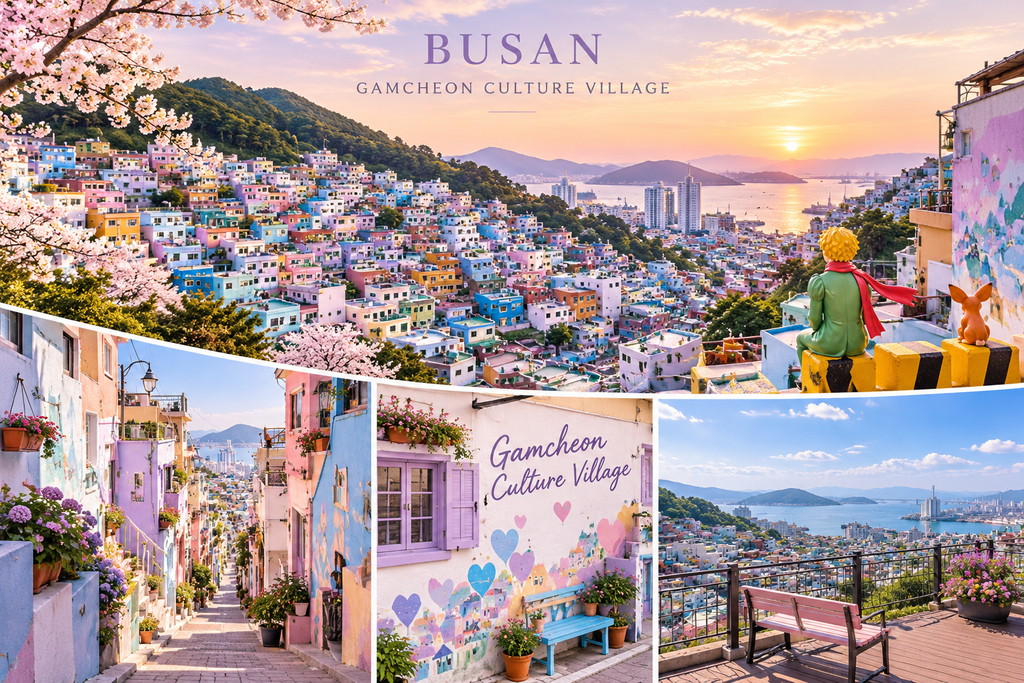
Gamcheon Culture Village is one of the city’s most distinctive neighborhoods.
Located on a hillside, the village is known for its colorful houses, narrow stairways, murals, small galleries, and creative shops.
However, Gamcheon is much more than an attractive photography destination.
Its history is connected to settlement and displacement during the Korean War, when refugees sought places to live in Busan.
Over time, the neighborhood developed into a residential community.
Later cultural initiatives introduced public art, colorful building exteriors, and visitor attractions that helped transform the area’s reputation.
Today, Gamcheon provides an opportunity to see how historical communities, artistic projects, and tourism can intersect.
Tips for Visiting Gamcheon Culture Village
Visitors should remember that Gamcheon remains a residential neighborhood.
Avoid entering private property, speaking loudly near homes, or blocking narrow streets for photographs.
Wear comfortable walking shoes because the village contains steep hills and stairs.
It is also worth slowing down rather than visiting only the most famous photo locations.
Small alleyways, independent shops, and scenic viewpoints can provide a richer experience than rushing from one popular spot to another.
For travelers interested in photography, urban history, and community-based tourism, Gamcheon offers a side of Busan that feels very different from its beaches.
6. Haedong Yonggungsa Temple Offers a Rare Coastal Setting
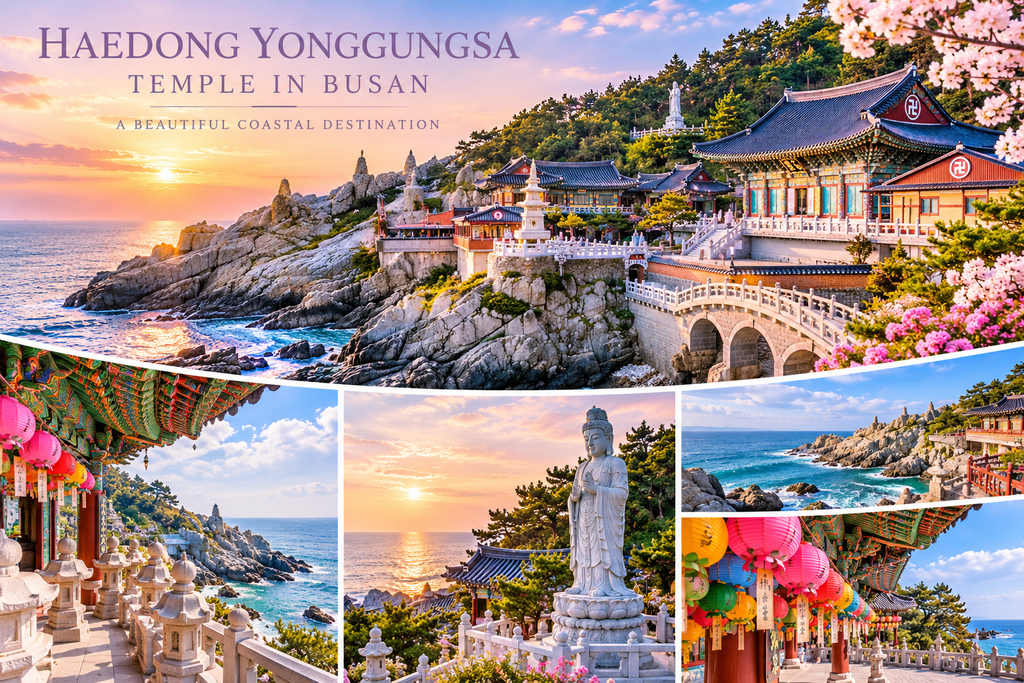
Many Korean Buddhist temples are located in mountainous settings.
Haedong Yonggungsa Temple is especially memorable because it stands along Busan’s rocky coastline.
The temple’s location allows visitors to experience Buddhist architecture together with sweeping ocean views.
Walking toward the temple, travelers encounter stone steps, statues, traditional architectural features, and views of waves reaching the shore.
The experience can feel peaceful and reflective, particularly outside the busiest visitor periods.
For international travelers interested in Korean religion and traditional architecture, the temple provides a meaningful cultural experience.
What Should Visitors Know Before Going?
Haedong Yonggungsa is an active religious site rather than simply a tourist attraction.
Visitors should dress respectfully, follow posted instructions, and avoid disturbing worshippers.
Some walking routes include stairs or uneven surfaces, which may be challenging for visitors with limited mobility.
Because the temple is outside Busan’s most central districts, travel time should be included when planning a visit.
Combining it with nearby coastal attractions may make the day’s itinerary more practical.
7. Busan’s Food Culture Is a Major Reason to Visit
Food is one of the most compelling reasons to explore Busan.
Although visitors can find familiar Korean dishes such as bibimbap, bulgogi, and Korean barbecue, Busan is particularly associated with regional specialties that reflect its history and coastal location.
Trying local food can make a trip feel more connected to the city.
Dwaeji Gukbap: Busan’s Famous Pork Soup
Dwaeji gukbap is a comforting pork-and-rice soup strongly associated with Busan.
Restaurants serve variations featuring slices of pork, broth, rice, and side dishes.
Diners can often adjust the flavor using condiments, fermented shrimp, or seasoning according to preference.
It is a filling dish that appeals to travelers looking for everyday Korean comfort food.
Milmyeon: Cold Noodles with a Regional Identity
Milmyeon is another well-known Busan specialty.
It generally consists of wheat noodles served in a chilled broth or mixed with a spicy sauce.
The dish is especially refreshing during warm weather.
Milmyeon also reflects aspects of Busan’s twentieth-century history and the development of regional food traditions.
Eomuk: Korean Fish Cakes
Busan is famous for its fish cakes, known as eomuk.
Travelers can find them in markets, food shops, and restaurants.
Some versions are served on skewers in broth, while others are sold as packaged products or incorporated into dishes.
Fish cakes offer an approachable introduction to Korean street food, although ingredients differ by manufacturer and preparation.
Seafood and Traditional Markets
Busan’s coastal identity is strongly reflected in its seafood culture.
Jagalchi Market is one of the best-known places to observe the city’s relationship with the fishing industry.
Visitors can explore market stalls, see different seafood products, and experience an atmosphere distinct from modern shopping centers.
Before ordering seafood, it is wise to confirm the total price, preparation charges, and any additional restaurant fees.
What About Vegetarian Travelers?
Busan also offers options for visitors who do not eat meat or seafood, including selected vegetable dishes, tofu-based meals, cafés, and restaurants catering to different dietary preferences.
However, dishes that appear vegetarian may contain anchovy stock, fish sauce, shrimp paste, or other animal-derived ingredients.
Travelers following strict vegetarian or vegan diets should verify ingredients rather than relying only on the dish’s appearance.
This is especially important with soups, kimchi, broths, and traditional side dishes.
8. Busan Is Becoming a Destination for Korean Culture and Entertainment
South Korea’s global cultural influence is often discussed through K-pop, television dramas, beauty products, and cinema.
Busan contributes its own important cultural identity.
One of its most internationally recognized cultural events is the Busan International Film Festival, which has helped establish the city as a major destination for Asian cinema.
The Busan Cinema Center in Centum City is closely associated with the festival and serves as an important cultural venue.
The city was also recognized by UNESCO as a Creative City of Film in 2014.
Beyond formal events, Busan attracts visitors interested in Korean films, television locations, independent cafés, creative neighborhoods, and contemporary cultural experiences.
Why Does This Matter for International Tourism?
Entertainment can introduce audiences to places they have never visited.
Someone who first encounters Busan through a Korean television production or travel video may become interested in seeing the city in person.
However, the appeal often extends beyond a particular filming location.
Visitors discover local food, coastal scenery, cultural festivals, and neighborhoods that offer their own independent reasons to travel.
This combination helps Busan develop an identity that is connected to Korean popular culture without being limited to it.
9. Busan Is Ideal for Travelers Who Enjoy Photography
Busan offers a remarkable variety of photographic subjects.
Unlike cities where major attractions are concentrated in historic districts, Busan combines dense urban neighborhoods with mountains, harbors, beaches, and coastal cliffs.
Photographers can capture dramatically different scenes within the same trip.
For example, sunrise at a coastal temple creates a different mood from a colorful hillside neighborhood in the afternoon.
A sunset photograph at Gwangalli Beach may emphasize bridge lights and city reflections, while a walk through older streets can reveal ordinary details of Korean urban life.
Memorable Photography Locations
Haeundae is suitable for beach scenery and modern architecture.
Gwangalli offers waterfront compositions featuring Gwangan Bridge.
Gamcheon Culture Village provides colorful rooftops and steep hillside streets.
Huinnyeoul Culture Village is popular for its coastal alleys, ocean viewpoints, and cafés.
Songdo offers coastal scenery and elevated sightseeing experiences.
Photographers should also pay attention to changing weather and seasonal lighting.
A cloudy day can be excellent for soft portraits and detailed street photography, while clear conditions may be better for expansive ocean views.
Respecting local residents and avoiding restricted areas is essential, especially in residential villages.
10. Busan Offers Excellent Experiences Beyond Its Famous Beaches
Although the beaches receive much of the attention, Busan’s appeal extends far beyond the coastline.
Visitors can explore shopping streets, traditional markets, museums, public parks, and older commercial districts.
Nampo-dong is a popular area for shopping, restaurants, and access to nearby markets.
BIFF Square reflects the city’s film culture and provides a lively street environment.
Gukje Market is associated with Busan’s postwar commercial history and remains a recognizable shopping destination.
Yongdusan Park offers opportunities to explore central Busan and enjoy city views.
Travelers interested in books and quieter urban exploration may enjoy Bosu-dong Book Street.
These attractions reveal another important side of Busan.
The city is not merely a beach resort with hotels and restaurants. It is a complex metropolitan area whose commercial streets, neighborhoods, and markets tell stories about trade, migration, and daily life.
Exploring these places helps visitors understand why Busan has such a distinctive identity within South Korea.
11. Busan Can Be a Good Choice for Budget-Conscious Travelers
A trip to Busan can fit a variety of travel budgets.
The city offers accommodations ranging from budget guesthouses and modest business hotels to luxury beachfront properties.
Visitors who prioritize economical travel can reduce costs by using public transportation, eating at casual restaurants, and visiting free public spaces.
Many memorable experiences, including walking along major beaches and exploring public neighborhoods, do not require expensive admission tickets.
However, Busan should not automatically be described as cheaper than Seoul in every category.
Hotel rates can rise during beach season, public holidays, large festivals, and major international events.
Coastal accommodation with panoramic views may be significantly more expensive than hotels in less tourist-oriented neighborhoods.
Sample Travel Budget Categories
| Expense | Budget Approach | Higher-Comfort Approach |
|---|---|---|
| Accommodation | Guesthouse or simple hotel | Beachfront or luxury hotel |
| Meals | Local restaurants and markets | Specialty restaurants and fine dining |
| Transportation | Metro and public buses | Taxis and private transfers |
| Activities | Beaches, parks, neighborhoods | Cable cars, cruises, guided tours |
| Shopping | Local souvenirs | Department stores and premium boutiques |
Actual costs vary by season, exchange rate, booking date, and individual travel preferences.
The most effective strategy is to decide which experiences matter most and build the budget around them.
For example, travelers who love ocean views may choose to spend more on accommodation while saving money through public transportation and casual dining.
12. Getting to Busan Is Relatively Convenient
Busan is connected to other major Korean destinations by rail, bus, air, and road.
For many visitors arriving in Seoul, high-speed rail is a practical option.
KTX services connect Seoul and Busan, with many journeys taking roughly two and a half to three hours, depending on the train and route.
The SRT network also connects the Seoul metropolitan area with Busan.
Travelers should confirm departure stations carefully because different services use different terminals.
Arriving by Plane
Gimhae International Airport serves the Busan metropolitan area.
Depending on their departure country and airline, travelers may find routes to Gimhae through Korean or international connecting airports.
Visitors arriving at Incheon International Airport can continue to Busan using domestic connections, intercity transportation, or high-speed rail.
The best option depends on arrival time, luggage, ticket availability, and overall travel plans.
Getting Around the City
Busan has a metro network, public buses, taxis, and tourist-oriented transportation services.
Metro services are useful for traveling between many major commercial districts.
However, not every attraction is directly beside a subway station.
Some coastal temples, hillside villages, and sightseeing destinations require a bus ride, taxi, or additional walking.
Travelers should consider geography when planning daily itineraries.
Grouping nearby attractions together can reduce unnecessary travel and make the trip more enjoyable.
13. Where Should First-Time Visitors Stay in Busan?
Choosing accommodation is one of the most important decisions when planning a Busan trip.
Because the city is geographically spread out, the best neighborhood depends on travel priorities.
Haeundae: Best for a Beach-Focused Vacation
Haeundae is suitable for travelers who want beach access, a wide choice of hotels, modern facilities, and nearby restaurants.
It can be particularly convenient for couples and families seeking a comfortable seaside experience.
Seomyeon: Best for Urban Convenience
Seomyeon is an important commercial and transportation district.
Visitors who prioritize shopping, restaurants, nightlife, and metro connections may find it a practical base.
Its central urban atmosphere is very different from the beaches.
Nampo-dong: Best for Markets and Older Busan
Nampo-dong appeals to travelers interested in traditional markets, shopping streets, and historical commercial neighborhoods.
It can be a good choice for people who want to explore the city’s older urban identity.
Gwangalli: Best for Evening Waterfront Atmosphere
Gwangalli is particularly attractive to travelers who enjoy cafés, nighttime photography, and views of Gwangan Bridge.
Accommodation choices vary, and rooms with direct bridge views can carry a premium.
No single neighborhood is ideal for every visitor.
Reviewing a map of the attractions you want to visit can help you choose a hotel that reduces daily travel time.
14. What Is the Best Time of Year to Visit Busan?
Busan is a year-round destination, but each season offers a different experience.
Spring: Comfortable Weather and Blossoms
Spring is a popular time for city exploration, coastal walks, and seasonal flowers.
Mild conditions can make outdoor sightseeing comfortable, although weather remains changeable.
Travelers interested in photography often appreciate the combination of spring blossoms and coastal scenery.
Summer: Beaches and Marine Activities
Summer is associated with swimming, beach tourism, and a lively coastal atmosphere.
However, visitors should prepare for heat, humidity, rain, and potentially crowded beaches.
Beach operating periods and safety rules should be checked locally.
Autumn: Sightseeing and Cultural Events
Autumn is an appealing season for walking, neighborhood exploration, and cultural experiences.
Temperatures are often more comfortable than in midsummer.
The city also hosts important cultural events during the autumn season, making accommodation planning particularly important around major festivals.
Winter: A Different Coastal Atmosphere
Winter in Busan can offer a quieter sightseeing experience in some districts.
Although swimming is generally not the focus, visitors can still enjoy ocean views, food markets, cafés, museums, and waterfront walks.
Weather conditions vary, and coastal wind can make temperatures feel colder than expected.
For many first-time visitors who want to combine outdoor sightseeing with city exploration, spring and autumn are particularly attractive choices.
15. A Three-Day Busan Itinerary for First-Time Visitors
Three days allows travelers to experience several sides of Busan without trying to visit every attraction.
Day 1: Central Busan and Local History
Start near Busan Station and explore the Nampo-dong area.
Visit Gukje Market or BIFF Square, enjoy a casual Korean lunch, and spend time exploring nearby streets.
If time and energy permit, add Gamcheon Culture Village during the afternoon.
Because Gamcheon contains stairs and hills, comfortable footwear is essential.
Finish the evening with a traditional regional dish.
Day 2: Haeundae and Coastal Scenery
Begin the day at Haeundae Beach.
Walk beside the water, explore nearby coastal paths, and enjoy a café break.
Depending on your interests, consider a scenic railway experience or additional sightseeing along the eastern coastline.
Plan extra time for transportation rather than assuming that every attraction is nearby.
In the evening, enjoy dinner in Haeundae or travel to another waterfront neighborhood.
Day 3: Temple, Culture, and Gwangalli
Visit Haedong Yonggungsa Temple earlier in the day.
Explore nearby coastal attractions if your schedule allows.
Later, head toward Gwangalli for dinner and evening views of Gwangan Bridge.
This itinerary combines urban history, coastal landscapes, traditional culture, and modern city life.
Travelers with mobility limitations or those who prefer a slower pace may benefit from adding an extra day.
16. Practical Travel Tips for Americans Visiting Busan
American travelers visiting Busan for the first time should prepare for a few practical differences.
Use Reliable Navigation Apps
Local mapping services such as Naver Map and KakaoMap can be useful for public transportation routes and walking directions.
Download essential apps before the trip and check whether they support your preferred language.
Carry a Payment Card and Some Korean Won
International credit and debit cards are commonly accepted at many hotels, restaurants, and stores.
However, having some Korean currency may be useful at certain markets or smaller businesses.
Travelers should also check their card issuer’s foreign transaction fees.
Allow Extra Travel Time
Busan is a large city, and its geography can make travel times longer than expected.
Mountains, coastline, bridges, and neighborhoods spread across different districts mean that seemingly nearby attractions may not be convenient to combine.
Build a realistic schedule instead of visiting too many places in a single day.
Learn a Few Korean Expressions
Although English assistance may be available at major tourist facilities, some smaller restaurants and neighborhood businesses primarily operate in Korean.
Knowing phrases such as annyeonghaseyo (hello) and gamsahamnida (thank you) can make interactions more comfortable.
A translation app can also help with menus and basic communication.
Respect Local Communities
Busan’s colorful villages and coastal neighborhoods are not all purpose-built tourist attractions.
Many are living communities.
Respecting quiet areas, avoiding private spaces, and supporting local businesses helps create a more positive experience for both residents and visitors.
17. Is Busan Worth Visiting If You Have Already Seen Seoul?
Absolutely—especially for travelers interested in discovering how different Korean cities can feel.
Seoul offers an extraordinary concentration of attractions, cultural experiences, and transportation connections.
However, visiting only Seoul can leave travelers with a limited perspective on South Korea’s regional diversity.
Busan introduces maritime traditions, coastal communities, distinctive foods, local history, and an urban environment closely connected to the ocean.
Even visitors who have traveled to Seoul multiple times may discover experiences that feel entirely new in Busan.
For example, strolling through Jagalchi Market provides a different cultural perspective from shopping in Seoul’s major retail districts.
Watching the evening lights at Gwangalli Beach feels different from exploring Seoul’s central nightlife areas.
Visiting Haedong Yonggungsa offers a coastal temple experience that contrasts with the country’s many mountain temples.
These differences make Busan especially valuable for repeat visitors who want to explore beyond familiar attractions.
18. Why Busan Deserves a Place on Your South Korea Travel Itinerary
Busan’s appeal comes from the way its different experiences complement one another.
The beaches attract travelers who love coastal destinations.
The markets appeal to people interested in regional food and everyday local life.
The hillside villages provide opportunities to learn about urban history and community creativity.
The temples offer cultural experiences, while contemporary cafés, shopping streets, and film-related attractions introduce modern Busan.
Importantly, travelers do not need to choose between city sightseeing and enjoying nature.
Busan provides both.
This combination is increasingly relevant to modern travel preferences.
Many visitors want vacations that include cultural discovery, memorable meals, scenic landscapes, and opportunities to explore at their own pace.
Busan can provide all these experiences within one metropolitan destination.
Its rising international visibility is not based on a single attraction. Rather, it reflects the growing recognition that Busan offers a diverse and rewarding South Korean travel experience.
Frequently Asked Questions About Busan South Korea Travel
1. Is Busan worth visiting for first-time travelers to South Korea?
Yes. Busan is an excellent addition to a first-time South Korea itinerary, especially for travelers who enjoy beaches, local cuisine, coastal scenery, and urban culture. Combining Busan with Seoul provides a broader perspective on the country.
2. How many days should you spend in Busan?
Three days is a reasonable starting point for first-time visitors. It allows time for major beaches, traditional markets, cultural neighborhoods, and a coastal temple. Four or five days is better for travelers who prefer a relaxed schedule.
3. Is Busan cheaper than Seoul?
Busan can offer affordable accommodation, dining, and sightseeing, but prices depend on season and location. Popular beachfront hotels may be expensive during peak travel periods. Comparing actual hotel rates is more useful than assuming one city is always cheaper.
4. Can you visit Busan without speaking Korean?
Yes. Many tourists explore Busan without speaking Korean fluently. Major transportation facilities and tourist attractions often provide multilingual information. Translation and navigation apps can make travel more convenient.
5. What food is Busan famous for?
Busan is particularly associated with dwaeji gukbap, milmyeon, eomuk, and seafood. Visitors can also enjoy many other Korean dishes and international cuisines throughout the city.
6. Is Busan good for solo travelers?
Busan can be a rewarding destination for solo travelers who enjoy exploring independently. The city has public transportation, varied accommodation, cafés, and many public attractions. Standard travel precautions remain important.
7. Is Busan better than Seoul for beach lovers?
Busan is generally more suitable for travelers seeking a beach-centered urban vacation. Seoul has riverside parks and numerous city attractions, but Busan offers established coastal districts such as Haeundae and Gwangalli.
8. Can you visit Busan as a day trip from Seoul?
A day trip is possible using high-speed rail, but it can feel rushed. With several hours of round-trip travel plus transportation within Busan, an overnight stay or a two- to three-day visit is usually more comfortable.
9. What is the best month to visit Busan?
There is no single best month for everyone. Spring and autumn often appeal to travelers who prioritize comfortable sightseeing weather. Summer is better for beach activities, while winter may suit visitors interested in quieter urban exploration.
10. Why is Busan becoming more popular internationally?
Busan offers a distinctive combination of coastal scenery, regional food, cultural events, creative neighborhoods, and convenient connections to other parts of South Korea. Increased international exposure and growing interest in regional Korean travel have contributed to its popularity.
Final Thoughts: Why Busan Should Be on Your Travel List
Busan is becoming one of South Korea’s most appealing destinations because it offers something genuinely different from the country’s capital.
Its beaches, coastal temples, traditional markets, colorful hillside neighborhoods, contemporary cultural attractions, and regional cuisine create an experience that is both diverse and memorable.
For travelers planning their first trip to South Korea, Busan can provide a valuable contrast to Seoul.
For returning visitors, it offers an opportunity to discover another side of Korean culture.
And for travelers who simply want a vacation that combines city life with ocean scenery, Busan is a destination worth serious consideration.
Whether you visit for the beaches, the food, the history, or the atmosphere, Busan deserves a place on your South Korea travel itinerary in 2026.