
An In-Depth 2026 Travel Guide to South Korea’s Ancient Silla Capital
Gyeongju Museum Without Walls is one of South Korea’s most fascinating historical destinations. Known as the ancient capital of the Silla Kingdom, Gyeongju offers visitors an extraordinary journey through royal tombs, Buddhist temples, UNESCO World Heritage sites, and centuries-old cultural treasures. Discover why this remarkable city is called Korea’s Museum Without Walls and why it deserves a place on your South Korea travel itinerary in 2026.
South Korea is famous for its modern cities, advanced technology, Korean dramas, and vibrant pop culture. Yet beyond the skyscrapers of Seoul and the beaches of Busan lies a destination where ancient history remains remarkably visible in everyday life.
That destination is Gyeongju.
Located in southeastern South Korea, Gyeongju is widely known as Korea’s Museum Without Walls because temples, royal tombs, stone pagodas, palace ruins, and archaeological treasures are spread throughout the city rather than confined to a single museum building.
For travelers interested in history, architecture, Buddhism, traditional Korean culture, and beautiful landscapes, Gyeongju offers an experience unlike almost anywhere else in the country.
The city’s history dates back more than two thousand years, and it served as the capital of the Silla Kingdom for nearly a millennium.
Today, visitors can walk beside enormous grassy royal tombs, explore UNESCO World Heritage sites, admire ancient astronomical architecture, and discover peaceful temple grounds surrounded by mountains.
But what exactly makes Gyeongju so special? Why has it earned the nickname “Museum Without Walls,” and is it worth including in a South Korea travel itinerary?
This comprehensive guide explains the fascinating history, major cultural landmarks, hidden treasures, and practical travel experiences that make Gyeongju one of South Korea’s most important historical destinations.
1. Why Is Gyeongju Called Korea’s Museum Without Walls?
The nickname “Museum Without Walls” describes a city where historical heritage exists throughout the surrounding environment.
Unlike a conventional museum, where artifacts are collected inside galleries, Gyeongju allows visitors to experience many historical monuments in their original geographical settings.
A walk through central Gyeongju can reveal enormous royal burial mounds beside modern streets, stone structures dating back to the Silla period, and archaeological areas connected to ancient palaces.
The contrast between past and present is especially striking.
A visitor might begin the morning in a contemporary café, walk several minutes to a historic royal tomb complex, and continue toward one of East Asia’s best-known ancient astronomical monuments.
The historical landscape is not separated from the modern city.
Instead, it remains part of Gyeongju’s identity.
The nickname also reflects the extraordinary concentration of cultural heritage associated with the Silla Kingdom.
Much of that heritage can be explored outdoors, making the city feel like an extensive archaeological park.
For travelers who enjoy learning through observation and exploration, Gyeongju provides an opportunity to experience history beyond the walls of a traditional museum.
2. Gyeongju Was the Capital of the Silla Kingdom for Nearly 1,000 Years
To understand Gyeongju, it is essential to understand the ancient Silla Kingdom.
Silla traditionally traces its foundation to 57 BCE and continued until 935 CE.
For much of this period, Gyeongju served as its political and cultural center.
During the Three Kingdoms period, the Korean Peninsula was divided among several powerful states, including Goguryeo, Baekje, and Silla.
These kingdoms competed for territory, political influence, and military power.
In the seventh century, Silla formed an alliance with Tang China and played a central role in defeating Baekje and Goguryeo.
The period that followed is commonly known as Unified Silla, although its political control did not include all territories that had belonged to Goguryeo.
Gyeongju developed into a major center of royal authority, Buddhism, artistic production, and architecture.
Its rulers commissioned temples, pagodas, ceremonial buildings, and other projects that demonstrated political power and religious devotion.
Skilled artisans created gold crowns, Buddhist sculptures, decorative objects, and stone monuments of remarkable sophistication.
Even after the Silla Kingdom ended, many traces of its capital remained.
These surviving structures and archaeological sites form the foundation of Gyeongju’s present-day reputation.
Why Does Silla History Matter Today?
The Silla Kingdom played an important role in the development of Korean Buddhist art, architecture, and political traditions.
Its surviving monuments help historians understand religious beliefs, social hierarchy, burial practices, craftsmanship, and international cultural exchange.
For visitors, Gyeongju offers an opportunity to see how those historical developments shaped the Korean Peninsula long before the emergence of modern South Korea.
3. Gyeongju Has Several UNESCO World Heritage Sites
One of the strongest reasons Gyeongju is called an outdoor museum is the international recognition of its historical landmarks.
The city contains important UNESCO World Heritage properties.
Seokguram Grotto and Bulguksa Temple were inscribed together on the UNESCO World Heritage List in 1995.
The Gyeongju Historic Areas were inscribed in 2000.
In addition, Yangdong Village forms part of the Historic Villages of Korea UNESCO property, inscribed in 2010 together with Hahoe Village.
These designations recognize the exceptional historical, architectural, artistic, and cultural significance of the sites.
The Five Areas of Gyeongju’s Historic Heritage
The UNESCO-listed Gyeongju Historic Areas consist of five distinct zones.
| Heritage Area | Main Historical Significance |
|---|---|
| Namsan Belt | Buddhist sculptures, temple ruins, stone pagodas |
| Wolseong Belt | Royal palace remains and astronomical heritage |
| Tumuli Park Belt | Ancient royal burial mounds |
| Hwangnyongsa Belt | Important Buddhist temple sites |
| Sanseong Belt | Ancient defensive fortifications |
Together, these areas help explain how the Silla capital functioned politically, religiously, and socially.
Rather than preserving only one famous building, Gyeongju preserves parts of an entire historical landscape.
This is what makes the city especially valuable for heritage tourism.
4. Bulguksa Temple Is One of Korea’s Greatest Architectural Treasures
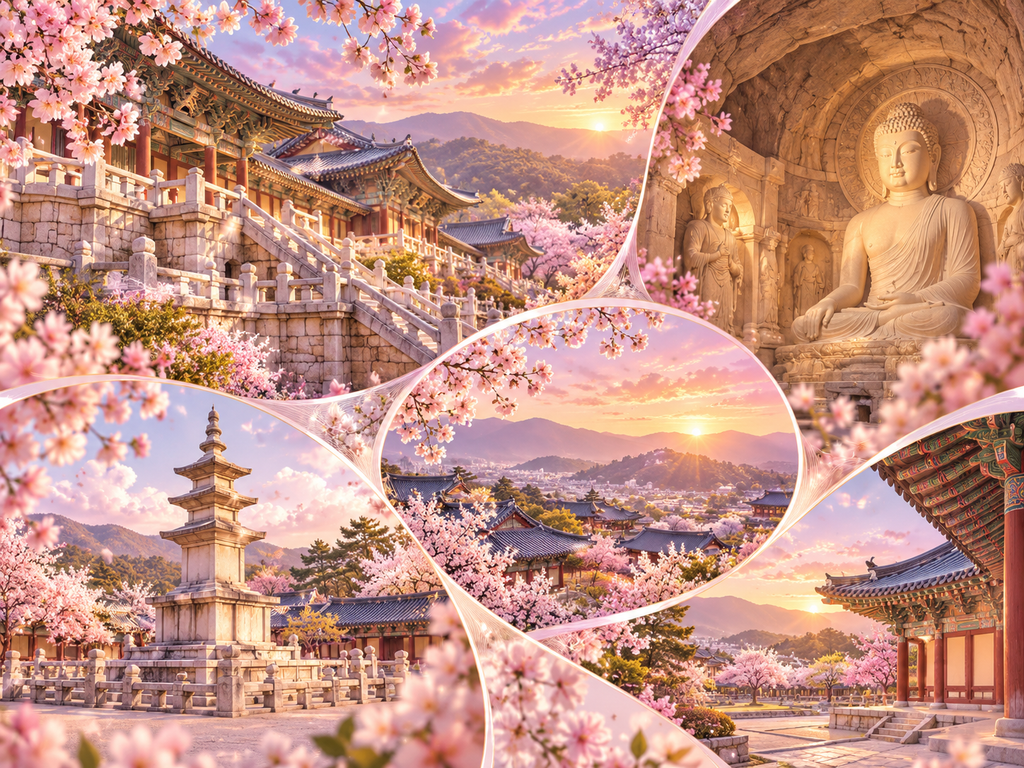
Bulguksa Temple is among the most important cultural landmarks in Gyeongju.
Situated on the slopes of Mount Tohamsan, the temple is celebrated for its Buddhist architecture, stone terraces, stairways, and pagodas.
Its historical development is closely associated with the Silla Kingdom and the flourishing of Buddhist culture.
The present complex contains structures representing different periods of construction and restoration.
Visitors can admire the relationship between traditional wooden buildings, carefully designed stone foundations, and the surrounding mountain landscape.
Two particularly famous stone pagodas are Dabotap and Seokgatap.
Although they stand within the same temple complex, their designs are notably different.
Dabotap is known for its elaborate architectural composition, while Seokgatap demonstrates a more restrained and balanced design.
Together, they reveal the artistic sophistication of Silla Buddhist architecture.
Why Is Bulguksa Important?
Bulguksa represents more than religious devotion.
Its stonework, spatial arrangement, and architectural symbolism demonstrate the technical knowledge and artistic traditions of ancient Korean craftspeople.
The temple also illustrates how Buddhist ideas influenced the cultural identity of Silla.
Visitors interested in architecture can study the structure of the buildings and terraces.
Those interested in religion can learn about Buddhist symbolism and temple traditions.
Even travelers without a strong historical background often appreciate the peaceful setting and craftsmanship.
Because Bulguksa remains a religious destination, visitors should observe posted rules, avoid disturbing worshippers, and treat sacred spaces respectfully.
5. Seokguram Grotto Is a Masterpiece of Buddhist Sculpture
Not far from Bulguksa Temple is Seokguram Grotto, another outstanding landmark of Silla Buddhist culture.
Seokguram is particularly famous for its sophisticated stone construction and its central Buddha sculpture.
The grotto was created using carefully shaped granite elements assembled into an artificial stone chamber.
Inside, the arrangement of Buddhist figures reflects a highly developed understanding of religious iconography and spatial design.
The central Buddha is admired for its serene expression, balanced proportions, and detailed craftsmanship.
The monument is a significant example of eighth-century Buddhist art.
What Makes Seokguram Different from an Ordinary Temple?
Seokguram is not simply a conventional temple hall.
Its architecture combines an artificial grotto, sculptural decoration, and religious symbolism.
The result is a carefully planned sacred environment.
Its construction demonstrates the technical skill required to work with large granite components while achieving an intricate interior design.
Today, preservation is a major concern.
Visitors generally view the interior through protective barriers rather than walking freely among the sculptures.
Photography and access restrictions may apply, so current visitor rules should be respected.
A visit to Seokguram is particularly rewarding when combined with Bulguksa.
Together, the sites provide a deeper appreciation of how religion, art, and architecture were connected during the Silla period.
6. Daereungwon Reveals the Secrets of Ancient Royal Tombs

One of Gyeongju’s most memorable sights is Daereungwon Ancient Tomb Complex.
At first glance, its enormous grass-covered mounds may resemble unusually shaped hills.
However, these mounds are ancient burial monuments associated with Silla royalty and the aristocracy.
Their appearance is one reason Gyeongju feels so different from other Korean cities.
Instead of seeing ancient graves only as photographs or exhibits, visitors encounter monumental burial structures integrated into the landscape.
What Was Discovered Inside the Tombs?
Archaeological excavations have revealed gold crowns, jewelry, pottery, weapons, horse equipment, and other valuable objects.
These discoveries provide evidence of Silla craftsmanship, social status, burial customs, and international connections.
One of the most famous tombs is Cheonmachong, often translated as the Heavenly Horse Tomb.
Its name comes from an image of a horse discovered on a birch-bark artifact associated with the burial.
The tomb has become particularly important for public understanding of Silla archaeology.
Why Should Tourists Visit Daereungwon?
Daereungwon offers a chance to explore ancient burial culture in an accessible and memorable setting.
Its walking paths, distinctive grassy mounds, and nearby cultural attractions make it a popular destination.
Visitors should stay on designated paths and avoid climbing protected tombs.
The burial mounds are not simply decorative landscape features; they are irreplaceable archaeological monuments.
7. Cheomseongdae Is a Symbol of Ancient Korean Astronomy
Cheomseongdae is one of Gyeongju’s most recognizable historical structures.
Traditionally dated to the seventh century during the reign of Queen Seondeok, it is widely described as one of the oldest surviving astronomical observatories in Asia.
The stone structure has a distinctive cylindrical form built from carefully arranged stones.
Its shape and construction have inspired extensive scholarly discussion.
Although researchers continue to examine its exact historical functions and symbolic meanings, Cheomseongdae remains an important landmark associated with astronomy and scientific knowledge during the Silla period.
Why Is Cheomseongdae Important?
Its significance extends beyond its relatively modest physical size.
Cheomseongdae represents the relationship between astronomical observation, governance, calendars, and scientific understanding in ancient Korea.
For modern visitors, the structure provides an opportunity to reflect on the role of astronomy in historical societies.
It is also located near other major heritage attractions, making it convenient to include in a walking itinerary.
The surrounding landscape is particularly appealing in spring and autumn.
Visitors should remember that Cheomseongdae is a protected historical monument and follow all site boundaries.
8. Donggung Palace and Wolji Pond Are Especially Beautiful at Night
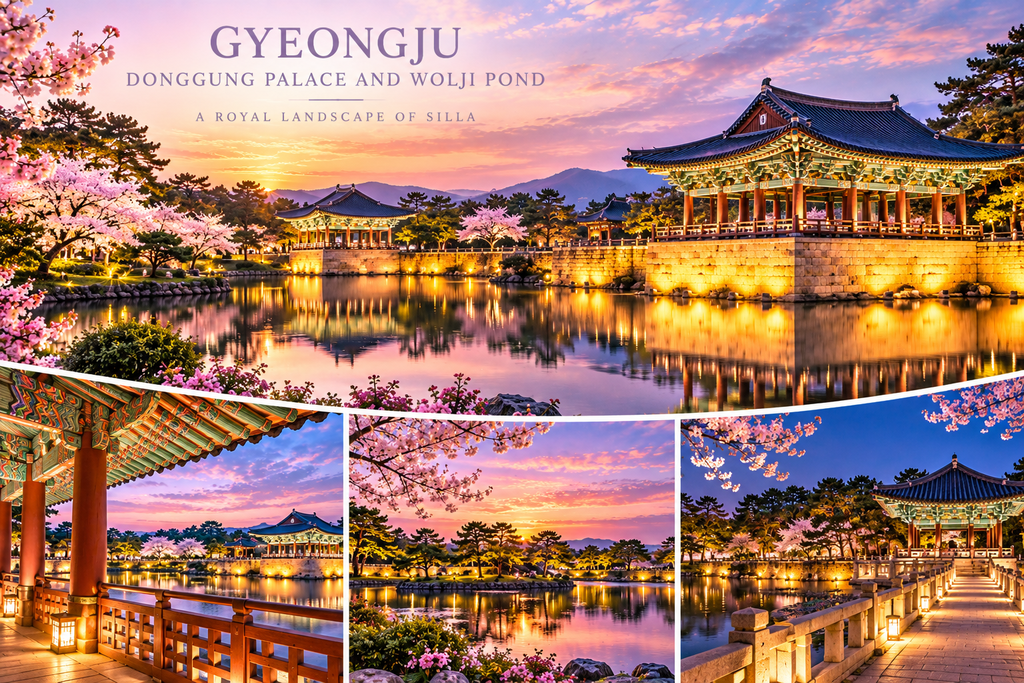
Among Gyeongju’s most atmospheric attractions is Donggung Palace and Wolji Pond.
The site is associated with the royal palace complex of the Unified Silla period.
Today, reconstructed buildings, historical foundations, and a carefully maintained pond create an impressive setting.
The site was formerly widely known as Anapji Pond.
Archaeological investigation has contributed to a deeper understanding of the palace area’s historical name and function.
One reason Donggung Palace and Wolji Pond attracts visitors is its evening appearance.
Illuminated buildings reflected in the water create beautiful photographic compositions.
Is Donggung Palace and Wolji Pond Worth Visiting After Sunset?
For many travelers, yes.
The combination of traditional architecture, water reflections, and evening lighting makes the site memorable.
However, it is also important to appreciate its historical significance.
This was part of a royal environment rather than simply a decorative garden.
The ruins and excavated materials help researchers understand life at the Silla court.
Visitors planning an evening trip should check current admission requirements, lighting schedules, and closing times.
During busy travel periods, the site may attract large crowds.
Arriving earlier can provide more time to appreciate the surroundings.
9. Gyeongju National Museum Helps Explain the Outdoor Heritage
Although Gyeongju is famous for being a museum without walls, its actual museums remain essential to understanding the city.
The Gyeongju National Museum provides historical context for the monuments visible throughout the surrounding region.
Its collections include artifacts associated with the Silla Kingdom, including metalwork, pottery, Buddhist art, and objects recovered from archaeological sites.
One of the major benefits of visiting the museum is the opportunity to connect physical landmarks with the people who created and used them.
For example, after seeing the royal burial mounds at Daereungwon, visitors can explore objects that illustrate elite burial traditions and craftsmanship.
After visiting Bulguksa and Seokguram, museum collections can help explain the development of Buddhist artistic traditions.
Should You Visit the Museum Before or After the Historic Sites?
Both approaches have advantages.
Visiting first can provide historical background, making the outdoor monuments easier to understand.
Visiting afterward allows travelers to recognize objects, themes, and architectural details connected to places they have already explored.
For first-time visitors who have limited time, even a relatively short museum visit can substantially enrich the trip.
10. Namsan Mountain Is an Outdoor Gallery of Buddhist Heritage
Namsan Mountain is one of Gyeongju’s most historically significant landscapes.
The mountain contains numerous Buddhist sculptures, pagodas, temple remains, and stone carvings associated with the Silla period.
Rather than entering a single enclosed museum, visitors can explore trails that connect natural scenery with historical monuments.
This close relationship between landscape and religion is one of the reasons Namsan is especially distinctive.
For centuries, mountains held spiritual significance in Korean religious traditions.
Buddhist monuments built into Namsan’s landscape reflect this connection.
What Can Visitors See on Namsan?
Depending on their route, hikers may encounter stone pagodas, Buddhist reliefs, carved figures, and temple foundations.
Different trails offer different levels of difficulty and historical interest.
Some monuments are located in areas requiring sustained walking or climbing.
Because these structures are valuable cultural heritage, visitors should avoid touching fragile carvings or leaving designated routes.
Comfortable walking shoes, water, and appropriate seasonal clothing are important.
Travelers should also consider weather conditions before attempting mountain hikes.
Namsan is especially rewarding for visitors interested in combining outdoor activity with historical exploration.
11. Hwangnidan-gil Connects Traditional Architecture with Modern Korean Culture
Gyeongju is not only about ancient ruins.
Hwangnidan-gil has become one of the city’s popular contemporary cultural districts.
The neighborhood is known for its cafés, restaurants, boutiques, and buildings inspired by traditional Korean architectural styles.
Many visitors enjoy the contrast between modern businesses and the historical atmosphere of the surrounding area.
A walk along Hwangnidan-gil might include visiting a traditional-style café, browsing local shops, photographing architectural details, or sampling regional food.
Why Is Hwangnidan-gil Popular with Younger Travelers?
The neighborhood offers an accessible combination of cultural identity and contemporary lifestyle.
Visitors can experience traditional visual elements without sacrificing modern conveniences.
Its location near central heritage sites also makes it easy to combine with sightseeing.
However, travelers should remember that commercial popularity can bring crowds.
Visiting outside peak weekend hours may provide a more relaxed experience.
Rather than treating the neighborhood only as a photography location, consider exploring its small businesses and observing how traditional aesthetics have been adapted for modern everyday life.
12. Gyeongju’s Traditional Food Adds Another Layer to Its History
Food is an important part of understanding any destination, and Gyeongju has several recognizable specialties.
One of the most famous is Hwangnam bread, often called Gyeongju bread.
This baked pastry is typically filled with sweet red bean paste.
It is commonly purchased as a gift or snack and is closely associated with the city’s identity.
Another traditional dining experience is ssambap, a Korean meal involving rice and side dishes wrapped in leafy vegetables.
Restaurants may serve different combinations of vegetables, sauces, and accompanying dishes.
Gyeongju also offers Korean barbecue, noodle dishes, traditional sweets, and modern café desserts.
Can Vegetarian Travelers Eat Well in Gyeongju?
Vegetarian travelers can find suitable choices, but ingredient verification is important.
Vegetable dishes may contain fish sauce, anchovy broth, shrimp paste, or meat-based seasonings.
Some traditional temple-inspired meals may offer plant-based options, but not every meal marketed as traditional Korean food is vegetarian.
Learning a few Korean phrases about dietary restrictions or carrying a translated ingredient card can be helpful.
For travelers interested in culinary culture, exploring the city’s food scene adds another dimension to a heritage-focused trip.
Vegetarian travelers planning a trip to Korea may also enjoy our guide, Is South Korea Vegetarian-Friendly?, for practical tips on finding suitable meals.
13. Yangdong Village Preserves a Different Chapter of Korean History
Although Gyeongju is especially famous for the ancient Silla Kingdom, nearby Yangdong Village represents a later period of Korean cultural history.
Yangdong is a traditional village associated with the Joseon dynasty.
It forms part of the UNESCO-listed Historic Villages of Korea, together with Hahoe Village.
The village is known for traditional architecture, residential compounds, and a historic settlement pattern reflecting Korean social and family traditions.
Visiting Yangdong offers an important contrast to the Silla heritage found in central Gyeongju.
The royal tombs and Buddhist monuments tell stories about ancient rulers and religious culture.
Yangdong, by comparison, provides insight into traditional village life and the architectural ideals of later Korean society.
Tips for Visiting Yangdong Village
Remember that parts of the village remain residential.
Respect private property, keep noise levels low, and follow designated walking routes.
Traditional buildings may be fragile, so visitors should avoid entering restricted spaces.
Because the village is outside central Gyeongju, allow additional travel time.
Yangdong is particularly appealing to travelers interested in architecture, traditional communities, and Korean social history.
14. How Is Gyeongju Different from Seoul and Busan?
Visitors planning a multi-city South Korea trip often wonder whether Gyeongju offers enough unique experiences to justify an additional stop.
The answer depends on personal interests, but Gyeongju has a clearly different identity.
Seoul emphasizes the modern capital alongside royal palaces, shopping districts, and contemporary cultural attractions.
Busan is particularly recognized for its coastal neighborhoods, beaches, port heritage, and regional food culture.
Gyeongju is deeply connected to the ancient Silla Kingdom.
Comparing Three Popular Korean Destinations
| Feature | Seoul | Busan | Gyeongju |
|---|---|---|---|
| Main appeal | Capital city culture | Coastal urban experience | Ancient Korean heritage |
| Historical focus | Mainly Joseon-era landmarks and broader history | Maritime and regional history | Silla Kingdom |
| Famous attractions | Royal palaces, shopping districts | Beaches, markets, temples | Royal tombs, temples, ruins |
| Travel atmosphere | Fast-paced metropolis | Large coastal city | Heritage-focused destination |
| Ideal visitors | Shopping and city lovers | Beach and food lovers | History and culture enthusiasts |
Travelers interested in seeing different aspects of South Korea may find that all three cities complement one another.
Instead of replacing Seoul or Busan, Gyeongju adds an important historical dimension.
If you are comparing Korea’s major destinations, read our detailed guide, Seoul vs. Busan: Which City Should You Visit?, to explore the differences in attractions, food, and travel experiences.
15. When Is the Best Time to Visit Gyeongju?
Gyeongju can be visited throughout the year, but seasonal conditions influence the experience.
Spring: Blossoms and Historical Landscapes
Spring brings seasonal flowers and comfortable opportunities for outdoor sightseeing.
Cherry blossoms can create beautiful scenery around parks, streets, and heritage areas, although bloom timing varies.
Spring is particularly attractive for walking itineraries and photography.
Summer: Greenery and Warm Weather
Summer brings lush landscapes and longer daylight hours.
However, temperatures can be hot and humid, with periods of heavy rainfall.
Travelers should plan breaks, carry water, and pay attention to weather forecasts.
Autumn: Comfortable Walking and Colorful Scenery
Autumn is often particularly appealing for exploring temples, historic districts, and mountain trails.
Colorful foliage can complement traditional architecture and outdoor monuments.
The season may also attract additional visitors during weekends and holidays.
Winter: Quiet Historical Atmosphere
Winter provides a different visual experience, with bare trees, cooler temperatures, and occasional snow.
Some outdoor destinations may feel quieter outside major holiday periods.
However, cold weather and shorter daylight hours require more careful planning.
For many visitors, spring and autumn provide a comfortable balance of outdoor sightseeing and seasonal scenery.
16. How to Get to Gyeongju from Seoul or Busan
Gyeongju is accessible through South Korea’s transportation network.
Travelers arriving from Seoul often use high-speed rail services to reach Gyeongju Station.
The station serving high-speed rail lies outside the central historical sightseeing area.
Visitors generally need a local bus, taxi, or other ground transportation to continue toward major attractions.
Busan also has rail and road connections to Gyeongju.
Because routes and schedules vary, travelers should check the appropriate station, departure time, and travel conditions when planning a trip.
Is Gyeongju Easy to Explore Without a Car?
Many central attractions are accessible on foot, particularly when grouped into a walking itinerary.
However, destinations such as Bulguksa, Seokguram, Yangdong Village, and some mountain heritage areas are farther away.
Public buses and taxis can help connect these locations.
Travelers should avoid assuming that every famous attraction is within walking distance.
A practical itinerary divides sightseeing into central historical areas and more distant excursions.
Before continuing to Gyeongju, discover Busan’s famous beaches, coastal temples, and local culture in our article, Why Is Busan Becoming a Must-Visit City in South Korea?
17. A Two-Day Gyeongju Travel Itinerary
Two days can provide a rewarding introduction to Gyeongju.
Travelers who want to explore more archaeological sites or travel slowly may prefer three days.
Day 1: Royal Tombs and Ancient City Landmarks
Begin at Daereungwon Ancient Tomb Complex.
Spend time exploring the burial mounds and learning about Silla royal culture.
Continue toward Cheomseongdae and the surrounding historic landscape.
Enjoy lunch near Hwangnidan-gil, where traditional-style buildings and contemporary cafés create a pleasant atmosphere.
In the afternoon, visit Gyeongju National Museum to learn more about the artifacts and historical events connected to the outdoor monuments.
Finish the day at Donggung Palace and Wolji Pond if evening access is available.
Day 2: Bulguksa and Seokguram
Start with Bulguksa Temple, allowing enough time to appreciate its architectural details.
Continue to Seokguram Grotto, keeping travel conditions and visitor access in mind.
If your schedule allows, explore another nearby attraction or return to central Gyeongju for a relaxed afternoon.
Travelers particularly interested in outdoor heritage may choose a Namsan trail instead of additional commercial sightseeing.
This two-day itinerary combines archaeology, Buddhist art, traditional architecture, and modern local culture.
18. Practical Tips for Visiting Gyeongju in 2026
A little preparation can make visiting Gyeongju significantly more enjoyable.
Wear comfortable shoes. Many historical sites involve walking on paths, stone surfaces, or uneven ground.
Check opening hours. Museums, temples, archaeological attractions, and night-view sites may have different schedules.
Use reliable transportation apps. Naver Map and KakaoMap can be useful for local navigation.
Respect cultural heritage. Avoid climbing monuments, entering restricted areas, or touching vulnerable historic structures.
Allow time for travel. Not every famous attraction is located in the city center.
Consider staying overnight. Spending at least one night allows visitors to enjoy the city’s evening atmosphere and explore without rushing.
Plan around weather. Much of Gyeongju’s heritage is outdoors, so rain, heat, or cold can influence the experience.
Learn basic cultural etiquette. Religious buildings and residential heritage areas require respectful behavior.
These practical considerations help travelers appreciate the historical environment while minimizing inconvenience.
19. Why Gyeongju Is More Than an Ordinary Tourist Destination
One of the most meaningful aspects of Gyeongju is that its heritage is not limited to isolated monuments.
The city preserves traces of political authority, religious beliefs, burial practices, craftsmanship, scientific knowledge, and everyday life across different historical periods.
The great royal tombs communicate the importance of hierarchy and ceremonial traditions.
Bulguksa and Seokguram reveal the artistic and spiritual achievements of Buddhist culture.
Cheomseongdae raises questions about science, astronomy, and ancient methods of understanding the natural world.
Palace remains and archaeological landscapes provide evidence of how the Silla capital was organized.
Later heritage, including Yangdong Village, expands the story beyond the Silla period.
Together, these sites encourage visitors to see history as an interconnected experience rather than a collection of unrelated attractions.
This is precisely why the nickname “Museum Without Walls” is so appropriate.
Gyeongju invites people to walk through the landscape and discover traces of the past in the places where history unfolded.
20. Why Gyeongju Deserves a Place on Your South Korea Itinerary
For travelers who have already experienced Seoul’s palaces and Busan’s coastline, Gyeongju provides another important perspective.
It reveals the cultural achievements of a kingdom that shaped the history of the Korean Peninsula long before the establishment of the modern nation.
The city’s combination of UNESCO World Heritage sites, open-air monuments, traditional architecture, contemporary cafés, and accessible walking routes makes it appealing to many types of visitors.
History enthusiasts can spend days examining archaeological sites.
Photographers can explore royal tombs, traditional buildings, scenic gardens, and ancient stone monuments.
Families can introduce younger travelers to Korean history through real places rather than textbooks alone.
Solo travelers can enjoy reflective walks and discover cultural landmarks at their own pace.
Perhaps most importantly, visiting Gyeongju encourages travelers to look beyond the most internationally famous images of South Korea.
Modern Korean culture is fascinating, but it is part of a much longer historical story.
Gyeongju helps tell that story.
Gyeongju Museum Without Walls offers travelers a unique opportunity to explore Korea’s ancient history through its remarkable temples, royal burial sites, astronomical landmarks, and cultural heritage.
Frequently Asked Questions About Gyeongju
1. Why is Gyeongju called Korea’s Museum Without Walls?
Gyeongju earned the nickname because ancient royal tombs, temples, pagodas, palace ruins, and historical monuments are located throughout the city. Visitors can experience much of this heritage outdoors rather than only inside traditional museums.
2. Was Gyeongju really the capital of Korea?
Gyeongju was the capital of the ancient Silla Kingdom, which existed from 57 BCE to 935 CE according to traditional historical chronology. It was not the capital of modern South Korea, but it played a major role in the history of the Korean Peninsula.
3. Is Gyeongju a UNESCO World Heritage city?
Gyeongju contains several UNESCO-recognized heritage properties, including Seokguram Grotto and Bulguksa Temple, the Gyeongju Historic Areas, and Yangdong Village as part of the Historic Villages of Korea.
4. How many days should you spend in Gyeongju?
Two days is a good starting point for first-time visitors. Travelers who want to explore Namsan Mountain, Yangdong Village, additional museums, or more distant temples may prefer three days or longer.
5. Is Gyeongju worth visiting after Seoul and Busan?
Yes. Gyeongju offers a different experience centered on ancient Korean history, Silla architecture, archaeological sites, and Buddhist art. It complements rather than duplicates the major attractions of Seoul and Busan.
6. What is the most famous attraction in Gyeongju?
Bulguksa Temple is one of the city’s most internationally recognized landmarks. Other major attractions include Seokguram Grotto, Daereungwon, Cheomseongdae, and Donggung Palace and Wolji Pond.
7. Can you visit Gyeongju without a car?
Yes. Central historical areas can be explored on foot, and buses or taxis connect visitors with more distant attractions. However, transportation planning is useful because some major destinations are spread across the region.
8. Is Gyeongju suitable for family travel?
Gyeongju can be an excellent destination for families interested in history, cultural education, museums, and outdoor sightseeing. Families should consider walking distances, weather, and the accessibility of individual attractions.
9. What food is Gyeongju famous for?
Gyeongju is particularly known for Hwangnam bread, a sweet red bean-filled pastry. Visitors can also enjoy ssambap meals, traditional Korean dishes, local restaurants, and modern café culture.
10. What is the best time to visit Gyeongju?
Spring and autumn are especially popular because they often provide comfortable conditions for outdoor sightseeing. Summer can be hot and humid, while winter offers a quieter atmosphere but colder temperatures.
11. Are Gyeongju’s historical attractions free?
Admission policies vary. Some outdoor areas can be explored without a ticket, while museums, temples, tomb interiors, and other attractions may have specific admission requirements. Visitors should confirm current information before traveling.
12. Can Gyeongju be visited as a day trip from Busan?
Yes. Gyeongju can be visited as a day trip from Busan, but an overnight stay allows more time to explore multiple historical sites and enjoy evening attractions without rushing.
Final Thoughts: Experience Korea’s Living History in Gyeongju
Gyeongju is called Korea’s Museum Without Walls because the city’s history extends far beyond museum galleries.
Ancient royal tombs, Buddhist temples, archaeological landscapes, and traditional architecture remain part of its physical environment.
Visitors can encounter remarkable evidence of the Silla Kingdom while exploring a modern Korean city that continues to preserve its cultural identity.
From the architectural achievements of Bulguksa Temple to the serene atmosphere of Seokguram Grotto, the enormous burial mounds of Daereungwon, and the astronomical heritage of Cheomseongdae, Gyeongju offers a journey through centuries of Korean history.
For travelers who want to understand South Korea beyond its contemporary entertainment and technology, Gyeongju is an essential destination.
A visit to Gyeongju is more than a sightseeing trip. It is an opportunity to experience Korea’s past in the landscapes where its history was made.