
Tiny computer chips are among the most important inventions behind modern life. They power the smartphones Americans use every morning, the cars they drive to work, the medical equipment used in hospitals, and the artificial intelligence systems transforming businesses worldwide.
Table of Contents
Why Are Tiny Computer Chips So Important to Modern Life?
1. What Are Tiny Computer Chips?
2. Why Are Tiny Computer Chips Essential to Everyday Life?
3. How Do Computer Chips Make Modern Cars Work?
4. Why Are Tiny Computer Chips Important for Artificial Intelligence?
5. How Do Computer Chips Support Healthcare?
6. What Types of Computer Chips Do We Use?
7. How Important Are Semiconductors to the U.S. Economy?
8. Why Are Computer Chips a Global Supply-Chain Issue?
9. How Do Tiny Computer Chips Affect Household Expenses?
10. What Will Computer Chips Make Possible in the Future?
11. What Should Americans Understand About the Semiconductor Industry in 2026?
12. Frequently Asked Questions
13. Conclusion
Tiny computer chips are the foundation of modern electronics because they allow billions of microscopic electronic operations to take place inside compact devices.
Most people rarely see these tiny electronic components. Yet their availability, performance, and cost can influence the price of a new vehicle, the speed of a laptop, the reliability of household appliances, and even the growth of the American economy.
A computer chip may be smaller than a fingernail, but it can contain billions of microscopic electronic switches working together to process information.
As artificial intelligence, electric vehicles, connected homes, and digital healthcare continue expanding, these components are becoming increasingly important.
Understanding computer chips is no longer just a subject for engineers. It helps ordinary consumers make better purchasing decisions and understand why global technology developments can affect their everyday lives.
1. What Are Tiny Computer Chips?
Tiny computer chips are miniature electronic components made using semiconductor materials, most commonly silicon.
They contain electronic circuits that process information, store data, manage electrical power, or communicate with other devices.
The terms computer chip, microchip, integrated circuit, and semiconductor chip are often used interchangeably in everyday conversation, although they do not always describe precisely the same thing.
A semiconductor is a material whose electrical behavior can be controlled. Engineers use that property to create transistors and other tiny electronic components.
1.1 How Do Computer Chips Actually Work?
Think of a computer chip as an extremely small control center.
Inside many chips are transistors, microscopic switches that regulate electrical signals.
By organizing transistors into circuits, engineers create devices capable of performing mathematical calculations, following instructions, remembering information, and controlling electronic equipment.
A computer processes information using binary values, commonly represented as zeros and ones.
Modern processors manipulate enormous numbers of these binary signals to perform useful tasks, including displaying videos, opening applications, recognizing speech, and processing financial transactions.
According to the https://www.semiconductors.org/2025-state-of-the-u-s-semiconductor-industry/?utm_source=chatgpt.comSemiconductor Industry Association’s 2025 State of the Industry report, modern smartphone processors can contain more than 15 billion transistors.
That illustrates how dramatically computing technology has advanced.
1.2 Why Are Chips So Small?
Miniaturization allows engineers to place increasingly complex electronic circuits inside compact devices.
Smaller transistors can improve computing density and, depending on the design, contribute to better performance and energy efficiency.
However, smaller manufacturing dimensions do not automatically mean every chip is cheaper or more efficient.
Advanced manufacturing requires expensive equipment, sophisticated materials, and extremely precise production processes.
Chips also differ in their physical dimensions and complexity. Some are designed for inexpensive household electronics, while others support enormous data centers.
The important achievement is not simply making chips smaller. It is making sophisticated electronic functions practical at a scale that can fit inside everyday products.
2. Why Are Tiny Computer Chips Essential to Everyday Life?
Computer chips are embedded in far more products than personal computers.
They operate quietly in the background, making modern devices convenient, responsive, and increasingly automated.
From morning alarms to online banking, tiny computer chips support countless activities that Americans depend on every day.
2.1 Smartphones and Mobile Communication
A smartphone contains several different types of semiconductor components.
Its central processor runs applications and coordinates general operations. Graphics processors help display images and videos. Memory chips temporarily hold information, while storage chips preserve photos, messages, and applications.
Communication chips allow the phone to connect to mobile networks, Wi-Fi, Bluetooth, and satellite navigation systems.
Camera sensors convert incoming light into digital information.
Without these components working together, even the most expensive smartphone would be little more than a collection of glass, metal, and plastic.
2.2 Computers and Laptops
Desktop computers and laptops depend on processors, memory, storage, graphics components, and power-management circuits.
A fast processor helps complete calculations and execute instructions.
RAM provides temporary working space for active programs, while SSD storage preserves files when the device is switched off.
These parts perform different tasks, which explains why upgrading computer memory is not the same as purchasing more storage capacity.
For consumers, understanding these differences can prevent unnecessary spending.
Someone who primarily reads email, browses websites, and edits documents may not need the most expensive processor available.
A video editor, software developer, or designer working with large projects may benefit from additional memory, faster storage, or stronger graphics performance.
2.3 Household Appliances and Smart Homes

Tiny computer chips also appear in washing machines, refrigerators, televisions, air conditioners, microwave ovens, and smart thermostats.
They help regulate temperatures, control motors, interpret sensor readings, and manage user settings.
In a washing machine, a microcontroller can coordinate water levels, drum speed, cycle timing, and safety checks.
A smart thermostat uses sensors and control circuits to regulate heating and cooling.
Not every household appliance needs internet connectivity or artificial intelligence. Many products rely on relatively inexpensive, specialized chips designed to perform a limited set of dependable tasks.
This is an important distinction because even older semiconductor technologies remain essential to modern manufacturing.
3. How Do Computer Chips Make Modern Cars Work?
Modern automobiles are increasingly dependent on electronic systems.
Tiny computer chips help modern vehicles manage safety systems, engine performance, digital displays, and increasingly sophisticated electronic features.
Vehicles use chips to control engine functions, braking assistance, lighting, entertainment systems, airbags, battery management, and safety technology.
The Semiconductor Industry Association’s overview of chip applications notes that some modern cars contain up to 3,000 chips, depending on their design and features.
3.1 Chips in Gasoline-Powered Vehicles
Even traditional gasoline vehicles depend on electronic control units.
These systems coordinate fuel injection, ignition timing, emissions controls, transmission behavior, and numerous sensors.
Other chips support electronic stability control, anti-lock braking systems, and dashboard displays.
A single malfunctioning component can sometimes affect an entire electronic system.
That is why technicians frequently use diagnostic scanners to identify problems.
3.2 Chips in Electric Vehicles
Electric vehicles require sophisticated power electronics and battery-management systems.
Specialized semiconductors help regulate electricity flowing between batteries, motors, and charging systems.
Power semiconductor materials such as silicon carbide can be particularly useful in high-voltage applications because they can support efficient electrical conversion.
However, actual improvements in driving range, charging speed, and efficiency depend on the entire vehicle design rather than one semiconductor alone.
3.3 Why Chip Shortages Affect Car Prices
When manufacturers cannot obtain necessary electronic components, vehicle assembly can slow down or stop.
Even an inexpensive component can become a critical bottleneck if there is no qualified replacement.
A semiconductor shortage does not automatically cause every vehicle price to increase. However, reduced vehicle availability can place upward pressure on prices, especially when demand remains strong.
For American households, this is one of the clearest examples of how an invisible electronic component can affect a major financial decision.
4. Why Are Tiny Computer Chips Important for Artificial Intelligence?
Artificial intelligence depends heavily on specialized computing hardware.
As artificial intelligence becomes more advanced, tiny computer chips provide the processing capabilities required for demanding AI applications.
When people ask an AI assistant to answer a question, generate an image, translate a document, or analyze a complicated dataset, that request ultimately involves calculations performed by processors.
4.1 CPUs, GPUs, and AI Accelerators
Different chips serve different computing needs.
Central processing units, or CPUs, perform general-purpose computing tasks.
Graphics processing units, or GPUs, can perform many calculations in parallel, making them useful for graphics and numerous AI workloads.
Specialized AI accelerators are designed to execute particular mathematical operations efficiently.
Modern AI infrastructure combines these processors with high-speed memory, networking equipment, and sophisticated software.
4.2 Why Memory Chips Matter to AI
AI systems must process substantial amounts of information.
Memory bandwidth—the speed at which data moves between memory and computing units—is often crucial to performance.
High-bandwidth memory, commonly called HBM, is designed to provide rapid data transfer for demanding computing applications.
South Korean companies have an important role in supplying advanced memory technology to the global electronics industry.
However, AI performance also depends on processors, software, networking, storage, power supply, and cooling.
Memory alone does not determine whether an AI system is fast or capable.
4.3 How AI Chip Demand Affects Ordinary Consumers
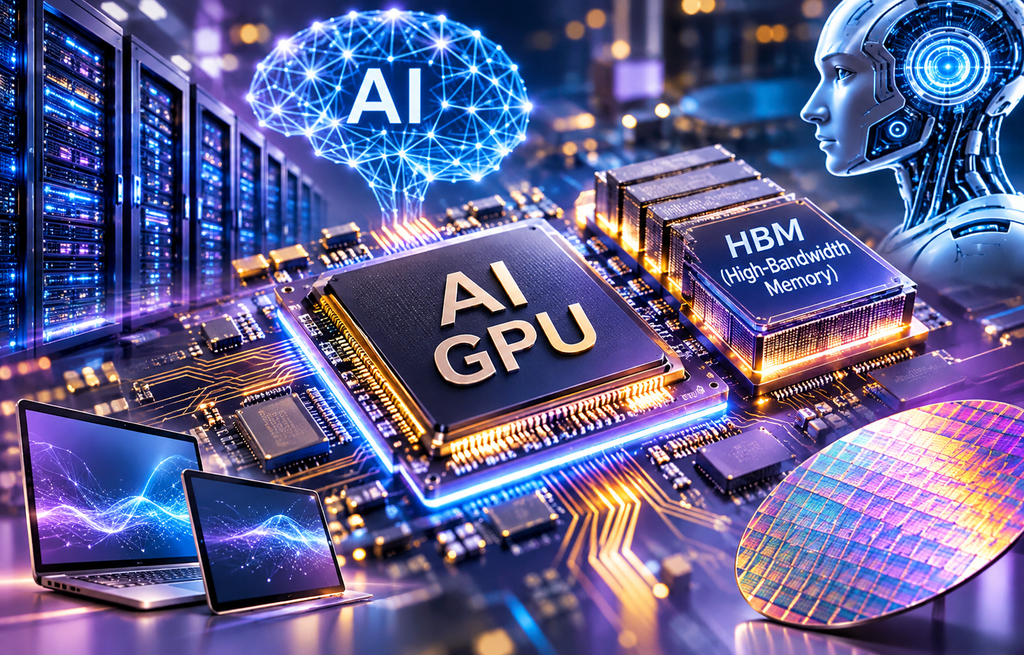
Growing demand for AI infrastructure encourages companies to invest heavily in semiconductors and data centers.
This can create new jobs and technology opportunities.
At the same time, competition for manufacturing capacity, advanced memory, energy, and infrastructure can influence industry costs.
Consumers may eventually experience some of those costs through products or subscription services, although the relationship is not always direct.
Higher semiconductor demand does not mean every laptop or smartphone will become more expensive.
Prices also depend on competition, production capacity, product design, and economic conditions.
5. How Do Computer Chips Support Healthcare?
Modern healthcare relies on electronic monitoring, imaging, testing, and communication systems.
Semiconductors are important components in many of these technologies.
In healthcare, tiny computer chips help medical devices monitor patients, process information, and support important diagnostic technologies.
5.1 Medical Monitoring Devices
Digital thermometers, blood glucose meters, heart monitors, and wearable health devices use electronic sensors and processing circuits.
Some systems measure physical or chemical signals and convert them into information that patients or medical professionals can interpret.
The reliability of these systems depends on many factors, including sensor accuracy, software, calibration, and appropriate medical use.
5.2 Medical Imaging and Diagnostics
Modern medical imaging equipment requires sophisticated electronics.
Chips help capture signals, process digital images, and support the operation of ultrasound systems, CT scanners, and MRI equipment.
Advanced computing can also support medical image analysis and clinical research.
However, a more powerful processor does not automatically produce a better diagnosis. Medical outcomes also depend on equipment design, validated software, trained clinicians, and proper interpretation.
5.3 Remote Healthcare and Accessibility
Connected medical devices and telehealth systems can allow patients to communicate with healthcare teams without visiting a clinic for every interaction.
Semiconductors help enable the cameras, communications equipment, sensors, and computers used in these services.
For people in rural communities or those with transportation difficulties, dependable electronic healthcare technology can improve access and convenience.
6. What Types of Computer Chips Do We Use?
Not all chips perform the same job.
Some execute instructions, others store information, and many manage communication, sensing, or electrical power.
Although tiny computer chips may look similar from the outside, different semiconductor designs perform very different functions.
| Chip type | Primary function | Common examples |
|---|---|---|
| CPU | General computing | Laptops, desktops, servers |
| GPU | Parallel computing and graphics | Gaming, video editing, AI |
| RAM | Temporary working memory | Phones, computers |
| NAND flash | Long-term data storage | SSDs, smartphones |
| Microcontroller | Device control | Appliances, vehicle systems |
| Power semiconductor | Electrical power conversion | EVs, chargers |
| Sensor chip | Detecting physical signals | Cameras, health devices |
6.1 Processor Chips Versus Memory Chips
Memory supplies information to the processor or stores information for later use.
A powerful processor can be limited if it cannot access data quickly enough.
Similarly, increasing memory capacity does not automatically make a weak processor faster.
Well-designed systems balance processing ability, memory bandwidth, storage performance, and energy consumption.
6.2 Why Older Chips Still Matter
The newest manufacturing technology receives considerable attention, but many industries depend on established semiconductor designs.
Cars, industrial equipment, home appliances, and medical devices frequently use chips that do not require the most advanced production process.
Manufacturers value these components for reliability, cost, availability, and suitability for specific functions.
A chip manufactured using a mature process can be just as essential to a finished product as a cutting-edge processor.
This helps explain why semiconductor policy must consider both advanced AI chips and foundational components.
7. How Important Are Semiconductors to the U.S. Economy?
Semiconductors are central to American economic competitiveness because they support many other industries.
Their economic importance extends beyond the companies that manufacture chips.
Tiny computer chips contribute to American economic competitiveness by supporting innovation across transportation, manufacturing, healthcare, and information technology.
7.1 Global Semiconductor Sales
The Semiconductor Industry Association reported on February 6, 2026, that worldwide semiconductor sales reached $791.7 billion in 2025, representing a 25.6% increase over 2024.
These are industry sales figures, not the value of every product containing semiconductors.
The distinction matters because chips enable a much larger ecosystem of smartphones, vehicles, computers, industrial equipment, and services.
7.2 American Jobs and Innovation
The semiconductor industry supports careers in engineering, materials science, manufacturing, equipment design, construction, software, logistics, and research.
Investments in domestic production can also create opportunities for suppliers and nearby communities.
However, semiconductor factories require substantial capital, specialized workers, water, electricity, and supporting infrastructure.
Their economic impact depends on project execution, long-term demand, and local conditions.
7.3 Why the United States Wants More Domestic Production
For decades, chip design and manufacturing have become increasingly specialized and international.
The United States remains important in semiconductor design and research, while manufacturing capabilities are distributed across several regions.
This creates efficiencies but also exposes businesses to shipping disruptions, geopolitical tensions, natural disasters, and unexpected changes in demand.
The U.S. CHIPS for America program was established to strengthen semiconductor manufacturing and research capabilities.
Greater domestic production may improve supply-chain resilience, but no single country can easily reproduce every stage of the global semiconductor ecosystem.
8. Why Are Computer Chips a Global Supply-Chain Issue?
Making a modern semiconductor is an international process.
Different companies may design the chip, manufacture the silicon wafer, produce specialized machinery, supply materials, package the finished semiconductor, and test its reliability.
Because tiny computer chips depend on complex international supply chains, manufacturing disruptions can affect companies and consumers across multiple countries.
8.1 The Global Semiconductor Supply Chain
| Country or region | Important industry strengths | Why they matter |
|---|---|---|
| United States | Chip design, software, equipment, research | Advanced computing and innovation |
| South Korea | Memory manufacturing and advanced chip production | DRAM, NAND, HBM |
| Taiwan | Contract semiconductor manufacturing | Advanced processor fabrication |
| Japan | Materials, equipment, electronic components | Precision manufacturing inputs |
| Europe | Equipment, automotive and industrial semiconductors | Specialized manufacturing technologies |
This table summarizes major strengths rather than exclusive national capabilities. Semiconductor production remains highly interconnected.
8.2 What Happens When Supply Chains Break?
A chip shortage can have consequences far beyond semiconductor manufacturers.
If a factory cannot receive a necessary controller or sensor, a finished product may remain incomplete.
A vehicle manufacturer might have nearly every component required to assemble a car but still be unable to deliver it.
Retailers can experience inventory shortages, while consumers may face limited product choices or longer delivery schedules.
The global chip shortages associated with the COVID-19 pandemic demonstrated these vulnerabilities.
8.3 Why Diversification Matters
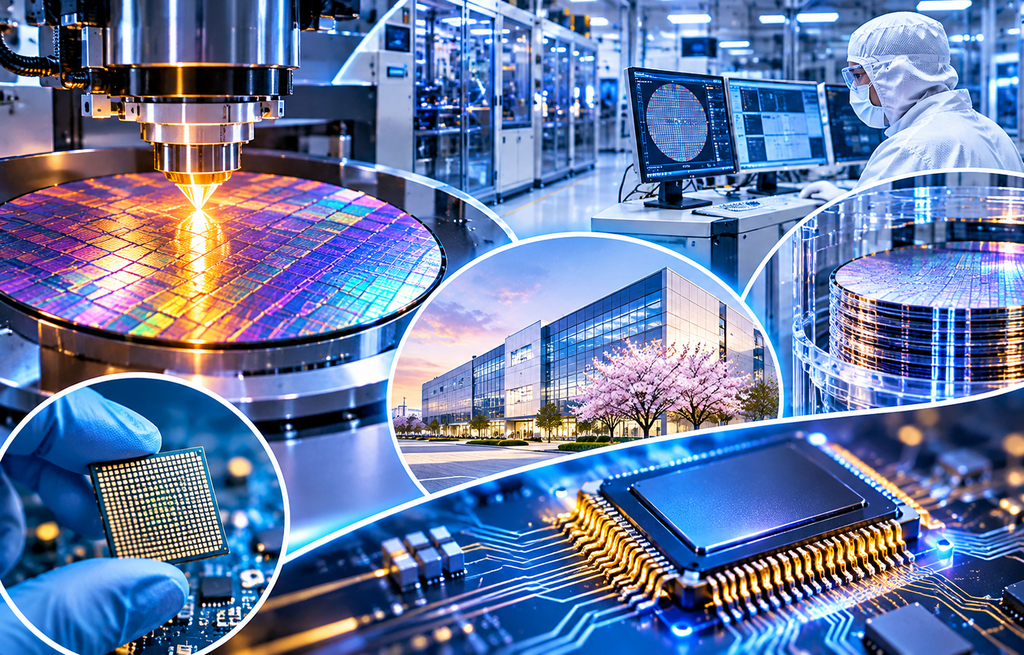
Companies can reduce some supply risks by using multiple qualified suppliers, maintaining appropriate inventory, and diversifying manufacturing locations.
Nevertheless, developing an alternative supplier is not always simple.
A replacement chip may require extensive testing, redesign, software changes, or safety certification.
For critical equipment, reliability can be more important than the lowest initial price.
9. How Do Tiny Computer Chips Affect Household Expenses?
Although semiconductor prices are usually invisible to consumers, their effects can appear in major household purchases.
The availability and cost of tiny computer chips can influence consumer electronics prices, vehicle production, and the affordability of everyday technology.
9.1 Smartphone and Laptop Prices
The cost of a phone or laptop depends on displays, batteries, processors, memory, manufacturing, software, distribution, and branding.
Chip costs represent only part of the final retail price.
When memory or processor prices rise, manufacturers may adjust product specifications, margins, or prices.
However, competition and inventory levels can offset some of these pressures.
9.2 Vehicle Ownership Costs
Semiconductors influence the availability of modern vehicles and electronic replacement parts.
Vehicles with increasingly complex electronics may also require specialized diagnostic tools and trained technicians.
This does not mean newer technology always increases maintenance expenses.
Electronic systems can improve efficiency, reliability, and safety, and some may reduce other operating costs.
9.3 Home Energy and Utility Costs
Efficient power-management semiconductors help electronic devices regulate electricity.
They contribute to technologies such as variable-speed motors, efficient chargers, and modern power-conversion systems.
But electricity savings depend on the complete appliance or system, how frequently it operates, and local energy rates.
Consumers should compare independent efficiency ratings and actual energy use rather than assuming that more advanced chips always mean lower electric bills.
9.4 Making Smarter Purchasing Decisions
Before replacing electronics, consumers can ask practical questions.
Does the device meet current needs? Is more memory necessary? Will the manufacturer provide adequate software updates? Can the battery or storage be repaired or replaced economically?
For many households, maintaining a dependable device for another year may offer better financial value than purchasing an expensive upgrade.
The most advanced semiconductor is not always the most economical choice.
10. What Will Computer Chips Make Possible in the Future?
Semiconductor innovation continues in several important directions.
Future advances in tiny computer chips could make artificial intelligence, connected devices, and energy-efficient computing more practical and accessible.
10.1 More Efficient Artificial Intelligence
Engineers are working to improve AI performance while controlling electricity consumption and operating costs.
Better chip architectures, memory technologies, packaging techniques, and software optimization can all contribute.
Efficiency may become as important as raw computing power as AI adoption expands.
10.2 Smarter Transportation and Infrastructure
Transportation systems increasingly use sensors, communications, and control electronics.
These technologies can help with traffic monitoring, vehicle safety, electricity distribution, and equipment maintenance.
Successful deployment also requires dependable infrastructure, cybersecurity, appropriate regulation, and responsible system design.
10.3 Advanced Semiconductor Packaging
Improving computing performance does not always require placing every function on a single monolithic chip.
Advanced packaging techniques can combine multiple chip components within one system.
This approach can provide design flexibility and improve connections between processors and memory.
10.4 Energy Efficiency and Sustainability
Semiconductor manufacturing consumes substantial resources, including electricity and water.
At the same time, semiconductor technologies can help improve the efficiency of electrical systems and equipment.
The industry faces an important challenge: developing increasingly powerful technology while reducing resource use and environmental impacts across production and operation.
Future progress must consider both sides of that equation.
11. What Should Americans Understand About the Semiconductor Industry in 2026?
The semiconductor industry is no longer a distant technical subject.
It affects employment, consumer electronics, transportation, healthcare, national infrastructure, and the development of artificial intelligence.
Three lessons are especially useful for everyday consumers.
First, semiconductor components are not interchangeable. A processor, memory chip, sensor, and power controller each perform different jobs.
Second, global supply chains influence product availability. A shortage of a relatively inexpensive component can disrupt production of a much more expensive finished product.
Third, technological progress should be evaluated according to practical benefits rather than marketing claims alone.
A more powerful processor may be valuable to someone editing high-resolution video but unnecessary for someone primarily browsing the internet.
Understanding the difference can help consumers save money.
Frequently Asked Questions
1. What is a tiny computer chip?
A tiny computer chip is a miniature electronic component containing circuits that process information, store data, control devices, or manage electrical signals.
2. Why are tiny computer chips so important?
They allow modern electronics to perform sophisticated functions in compact, affordable, and often energy-efficient designs. They support computers, cars, medical devices, and communication networks.
3. Are computer chips and semiconductors the same thing?
In everyday language, the terms are often used interchangeably. Technically, semiconductors are materials with controllable electrical properties, while chips are electronic components manufactured using semiconductor technologies.
4. How many chips are inside a modern car?
The number varies substantially by vehicle design and features. According to the Semiconductor Industry Association, some modern vehicles contain up to approximately 3,000 chips.
5. Why does artificial intelligence need computer chips?
AI systems perform large numbers of mathematical operations. CPUs, GPUs, specialized accelerators, and memory chips work together to process information and execute AI workloads.
6. Can computer chip shortages make products more expensive?
Yes. Shortages can restrict production and reduce product availability, potentially placing upward pressure on prices. The actual effect depends on demand, inventory, competition, and other costs.
7. Which countries are important in semiconductor manufacturing?
The United States, South Korea, Taiwan, Japan, and several European countries play major roles in different parts of the semiconductor supply chain.
8. Are the newest chips always better?
Not necessarily. The best chip depends on the intended application, performance requirements, reliability, power consumption, and price. Mature semiconductor designs remain essential to many products.
9. Do computer chips affect electricity consumption?
Yes. Chips both consume electricity and help regulate power in electronic systems. Their overall energy impact depends on the design and use of the complete device.
10. Will computer chips become more important in the future?
Very likely. Expanding AI infrastructure, connected devices, transportation electronics, industrial automation, and digital healthcare all rely on semiconductor technologies.
Conclusion: Small Chips, Enormous Influence
Tiny computer chips have become one of the foundations of modern civilization.
They connect the digital world with the physical world, enabling everything from everyday communication and entertainment to complex industrial processes and advanced medical technologies.
Their importance is not measured simply by physical size or processing speed.
It lies in how many essential activities depend on them.
For American consumers, understanding semiconductor technology provides useful insight into product prices, technology choices, supply-chain disruptions, and the direction of the economy.
For businesses and governments, reliable semiconductor access is increasingly connected to economic resilience and technological competitiveness.
The next time you unlock your smartphone, start your car, use a household appliance, or interact with artificial intelligence, remember that countless sophisticated electronic operations are taking place behind the scenes.
The chips may be tiny, but their influence on modern life is extraordinary.
TIPVERO — Exploring Technology, Economics, and Everyday Life.