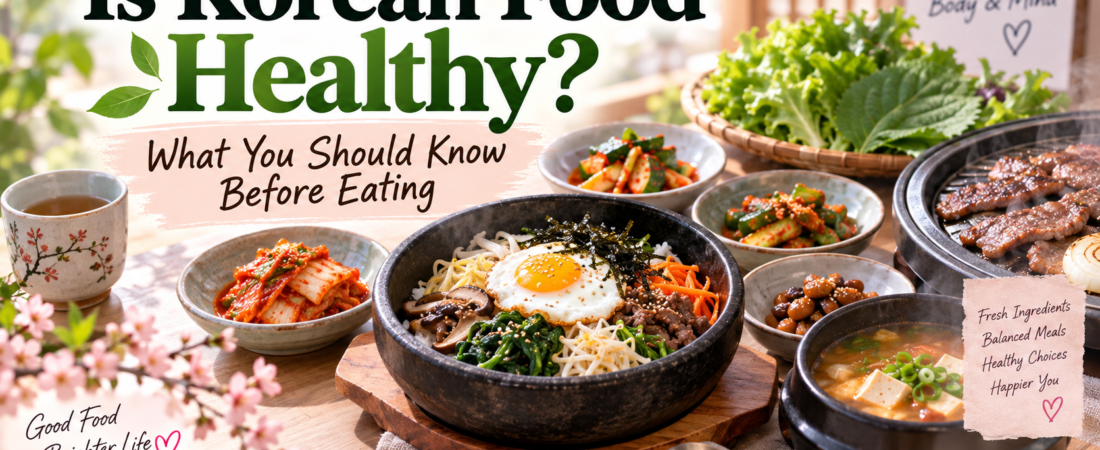
Is Korean food healthy? If you are discovering Korean cuisine for the first time, you may have wondered about this while looking at a table filled with kimchi, vegetables, rice, soup, grilled meat, and colorful side dishes.
The short answer is that Korean food can be part of a healthy, balanced way of eating, but it depends greatly on what you order, how the food is prepared, and how much you eat.
Traditional Korean meals often contain vegetables, fermented foods, legumes, seafood, lean proteins, soups, and relatively small side dishes known as banchan. At the same time, some Korean dishes can contain substantial amounts of sodium, refined carbohydrates, added sugar, or fatty meat.
That means it is difficult to label the entire cuisine simply “healthy” or “unhealthy.”
For someone eating Korean food in the United States, understanding these differences can make the experience both more enjoyable and more balanced.
In this TIPVERO guide, we’ll look at the strengths and weaknesses of Korean food, the dishes worth knowing, and simple ways to make smarter choices at a Korean restaurant or at home.
Table of Contents
- What Makes Korean Food Different?
- Why Korean Food Can Be Healthy
- Vegetables and Banchan
- What About Kimchi and Fermented Foods?
- Protein in Korean Meals
- The Sodium Question
- Is Korean BBQ Healthy?
- Rice, Noodles, and Carbohydrates
- Korean Soups and Stews
- Fried and Sweet Korean Foods
- How to Build a Balanced Korean Meal
- Healthy Korean Foods for Beginners
- What Americans Should Know Before Eating Korean Food
- Frequently Asked Questions
1. What Makes Korean Food Different?
One of the first things newcomers notice about Korean cuisine is the number of dishes on the table.
A typical meal might include rice, soup, a protein dish, kimchi, and several vegetable side dishes. Rather than receiving one large plate containing everything, diners often share several dishes.
This structure can create considerable variety in a single meal.
You might eat spinach, radish, cabbage, mushrooms, tofu, seaweed, fish, meat, and rice during the same meal.
This variety is one reason traditional Korean meals can provide a broad range of foods and nutrients.
But there is an important distinction.
Traditional Korean home cooking is not necessarily the same as every Korean restaurant meal.
Modern Korean fried chicken, heavily seasoned barbecue, cheese-covered dishes, instant noodles, and sweet drinks are also part of today’s Korean food culture.
Therefore, asking whether Korean food is healthy requires looking at the individual meal rather than judging an entire cuisine.
2. Why Korean Food Can Be Healthy
Several characteristics commonly found in traditional Korean meals can support a balanced diet.
🥬 Plenty of Vegetables
Vegetables appear frequently in Korean cooking.
Common examples include:
- Napa cabbage
- Radish
- Spinach
- Bean sprouts
- Cucumber
- Mushrooms
- Zucchini
- Green onions
- Seaweed
The U.S. Dietary Guidelines encourage eating a variety of vegetables as part of a healthy dietary pattern.
A Korean table can make eating different vegetables surprisingly easy because vegetables are often served in several small preparations rather than as one large salad.
🫘 Legumes and Soy Foods
Tofu and soybeans also appear regularly in Korean cuisine.
For example, doenjang jjigae commonly contains tofu and fermented soybean paste, while tofu can also be served grilled, braised, or as a side dish.
🐟 Different Protein Choices
Korean meals are not limited to beef barbecue.
Fish, seafood, chicken, pork, eggs, tofu, and legumes can all provide protein.
The overall nutritional profile of the meal therefore depends heavily on which dishes you choose.
3. Vegetables and Banchan: A Major Strength
2
If you have visited a Korean restaurant, you probably remember the little plates that suddenly appeared before your main dish arrived.
These are called banchan, or Korean side dishes.
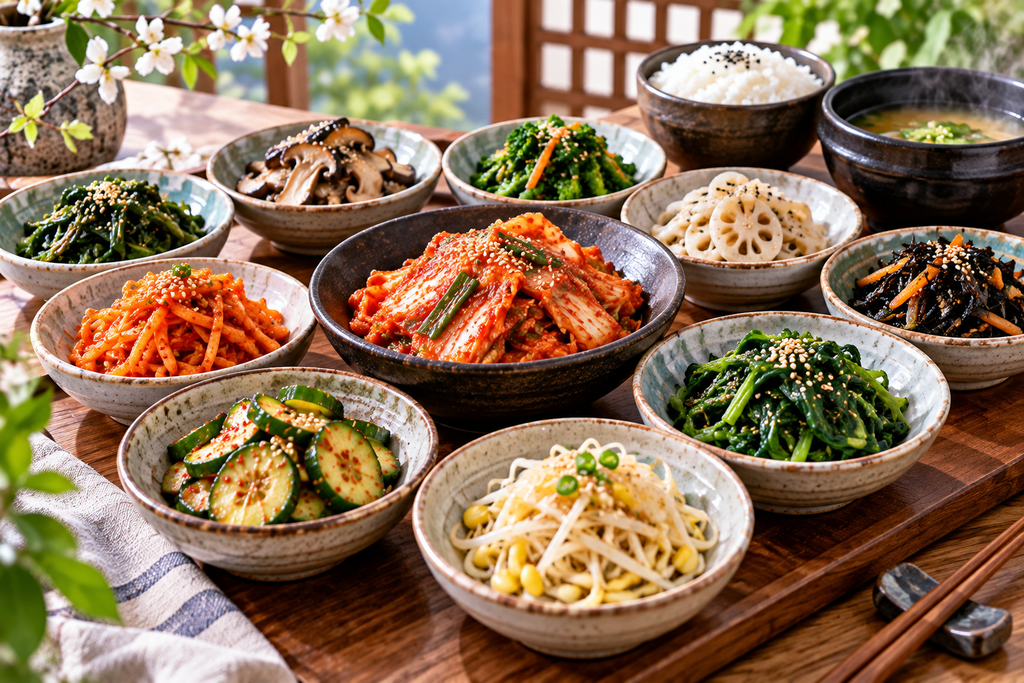
Banchan might include seasoned spinach, bean sprouts, cucumber, radish, seaweed, mushrooms, tofu, or kimchi.
This can be one of the best features of Korean dining.
Instead of treating vegetables as an afterthought, Korean meals frequently place them directly in the center of the dining experience.
However, don’t assume that every vegetable banchan is automatically low in sodium, sugar, or oil.
Seasonings vary considerably.
The practical approach is simple: enjoy the variety while paying attention to portions and seasoning.
4. What About Kimchi and Fermented Foods?
Kimchi may be the best-known Korean food in the world.
It is usually made by fermenting vegetables such as napa cabbage or radish with ingredients that can include chili pepper, garlic, ginger, and salt.
Because kimchi is vegetable-based and fermented, it has attracted considerable scientific interest.
Research has examined fermented foods and their relationship with the gut microbiome, although health effects can depend on the food, individual, and overall dietary pattern.
That doesn’t mean kimchi should be treated as a miracle food.
Kimchi can also contain significant sodium because salt plays an important role in its preparation and fermentation.
So a more reasonable conclusion is:
Kimchi can be a flavorful way to eat fermented vegetables, but more is not automatically better.
A modest serving alongside other vegetables, protein, and grains is a sensible way to enjoy it.
5. Protein in Korean Meals
Protein choices can dramatically change the nutritional balance of a Korean meal.
Consider the difference between:
Grilled fish + vegetables + rice
and
Large portions of fatty barbecue + rice + salty sauces
Both are Korean meals, but they aren’t nutritionally identical.
Korean cuisine offers many protein options, including:
Fish and Seafood
Grilled fish is common in traditional Korean cooking.
Seafood can also appear in soups, stews, pancakes, and side dishes.
Tofu
Tofu is especially useful for diners looking for a plant-based protein source.
Dubu appears in dishes ranging from mild tofu preparations to spicy sundubu jjigae.
Eggs
Eggs can appear in steamed egg (gyeran-jjim), rolled omelets, bibimbap, and numerous other dishes.
Meat
Beef and pork are important parts of Korean cuisine, especially Korean BBQ.
The key is portion and cut selection.
6. The Sodium Question: The Biggest Thing to Watch
This is probably the most important nutritional issue for many people eating Korean food regularly.
Korean cuisine relies heavily on flavoring ingredients such as:
- Soy sauce
- Doenjang
- Gochujang
- Salted seafood
- Kimchi
- Soup bases
- Marinades
These ingredients create the deep savory flavors people love, but they can also add sodium.
The U.S. Food and Drug Administration uses less than 2,300 mg of sodium per day as the Daily Value for adults and children age four and older.
This doesn’t mean you need to avoid Korean food.
Instead, pay attention to where sodium can accumulate during one meal.
Imagine eating kimchi, several seasoned banchan, soup, dipping sauce, and heavily marinated meat together.
Each serving might seem small, but the sodium can add up.
A simple strategy
You don’t have to finish all the soup broth.
Use dipping sauces lightly.
Balance salty banchan with fresh or lightly seasoned vegetables.
And remember that banchan can usually be refilled at Korean restaurants—so there is no need to eat everything simply because it is on the table.
7. Is Korean BBQ Healthy?
3
Korean BBQ deserves its own discussion because it is one of the most popular introductions to Korean cuisine in America.
A Korean BBQ meal can include beef, pork, chicken, lettuce, garlic, kimchi, vegetables, rice, sauces, and numerous side dishes.
So is Korean BBQ healthy?
It depends on how you build the meal.
A meal centered around very large amounts of fatty meat, sweet marinades, rice, alcohol, and salty dipping sauces is different from a meal built around moderate portions of meat, lettuce wraps, vegetables, and smaller portions of rice.
Try the lettuce-wrap method
Koreans often eat grilled meat inside a lettuce or perilla leaf.
This is called ssam.
You can add a small piece of meat, garlic, vegetables, and a little ssamjang before wrapping everything in the leaf.
It is delicious and naturally encourages you to combine meat with vegetables.
Watch the sauces
Ssamjang and other dipping sauces are flavorful, which means you generally don’t need much.
Don’t make meat the entire meal
One of the pleasures of Korean BBQ is eating meat together with banchan and vegetables.
Use that variety.
8. Rice, Noodles, and Carbohydrates
Rice is central to Korean food culture.
A traditional Korean meal is often built around bap, meaning cooked rice.
White rice provides carbohydrates and energy, but portion size matters—particularly when a meal already contains noodles, sweet sauces, fried foods, or other carbohydrate-rich dishes.
You don’t necessarily need to eliminate rice.
Instead, think about the meal as a whole.
For example:
Rice + vegetables + tofu + grilled fish
has a different balance from:
Rice + noodles + fried chicken + sweet sauce + sugary drink.
Some restaurants may also offer mixed-grain or multigrain rice.
That can be another option when available.
9. Korean Soups and Stews
Korean soups and stews are comforting, especially in cold weather.
Popular examples include:
Doenjang jjigae — fermented soybean paste stew
Sundubu jjigae — soft tofu stew
Kimchi jjigae — kimchi stew
Miyeok-guk — seaweed soup
Seolleongtang — ox-bone soup
These dishes can contain vegetables, tofu, seafood, or protein, but broth-based dishes can also contribute significant sodium.
Here’s one simple habit that can make a difference:
You don’t have to drink every drop of broth.
Enjoy the ingredients and flavor without automatically finishing the entire bowl.
10. Fried and Sweet Korean Foods
Traditional Korean food gets much of the attention when people discuss health, but modern Korean cuisine has changed enormously.
Korean fried chicken is a perfect example.
Crispy chicken covered in sweet and spicy sauce can be wonderful food, but it shouldn’t be confused with a vegetable-heavy traditional meal simply because both are Korean.
The same applies to foods such as:
- Corn dogs
- Fried dumplings
- Some street foods
- Sweetened café drinks
- Desserts
- Cheese-heavy dishes
- Instant ramyeon
There is nothing wrong with enjoying these foods occasionally.
The useful distinction is between everyday food and treat food.
A food does not need to be nutritionally perfect to have a place in your life.
11. How to Build a More Balanced Korean Meal
Here is an easy method for beginners.
Step 1 — Start with vegetables
Look at the banchan.
Choose several vegetable dishes instead of focusing immediately on the meat.
Step 2 — Pick a protein
Consider tofu, fish, seafood, chicken, eggs, or a moderate portion of meat.
Step 3 — Add rice
Rice doesn’t need to disappear from a balanced Korean meal.
Adjust the amount based on the rest of your meal.
Step 4 — Watch sauces and broth
This is one of the easiest ways to reduce unnecessary sodium without sacrificing Korean flavors.
Step 5 — Eat slowly
Korean meals often contain numerous small dishes.
Try a little of each rather than treating every plate as something you must finish.
12. Healthy Korean Foods for Beginners
If you are visiting a Korean restaurant for the first time and want a balanced meal, consider dishes such as:
🥗 Bibimbap
Bibimbap combines rice with assorted vegetables and often an egg or meat.
The sauce is usually added separately or can sometimes be controlled, making it easier to adjust the amount.
🐟 Grilled Fish
Grilled fish served with rice and vegetable banchan can create a relatively simple Korean meal.
🥬 Vegetable Banchan
Try spinach, bean sprouts, cucumber, mushrooms, radish, and other vegetable preparations.
🍲 Tofu Dishes
Tofu can provide a satisfying protein source, although stews and sauces may still contain substantial sodium.
🌯 Ssam
Wrapping grilled protein in lettuce or perilla leaves is an easy way to incorporate more vegetables into a barbecue meal.
13. What Americans Should Know Before Eating Korean Food
3
For Americans discovering Korean food, there is one particularly useful lesson:
Don’t judge Korean cuisine by Korean BBQ or Korean fried chicken alone.
Those foods are popular for good reason, but Korean cuisine is much broader.
A traditional table can contain vegetables, seaweed, tofu, beans, fish, fermented foods, soups, rice, and modest portions of meat.
At the same time, don’t fall into the opposite trap of believing that everything labeled “Korean” is automatically healthy.
The best approach is the same one that works with almost any cuisine:
Look at the whole meal.
How many vegetables are present?
What is the protein source?
How much rice or noodles are you eating?
Is the food fried?
How much sauce are you using?
How salty is the meal?
FDA — Sodium in Your Diet https://www.fda.gov/food/nutrition-education-resources-materials/sodium-your-diet?utm_source=chatgpt.com
USDA — Dietary Guidelines for Americans:https://www.dietaryguidelines.gov/?utm_source=chatgpt.com
14. So, Is Korean Food Healthy?
Let’s return to our original question.
Is Korean food healthy?
It certainly can be.
Traditional Korean cuisine offers many features that can fit comfortably into a balanced diet: vegetables, fermented foods, tofu, seafood, varied proteins, soups, and numerous small side dishes.
But Korean cuisine also includes salty stews, fatty barbecue cuts, refined rice and noodles, fried foods, sugary marinades, and modern highly processed foods.
Therefore, the healthiest way to enjoy Korean food isn’t to search for one magical Korean dish.
It is to build a balanced meal.
Choose plenty of vegetables.
Enjoy reasonable portions of protein.
Use sauces thoughtfully.
Be aware of sodium.
And enjoy the food rather than turning every meal into a nutritional calculation.
That balance is probably the most useful lesson Korean food can teach a newcomer.
Frequently Asked Questions
Is Korean food healthier than American food?
Neither cuisine can be classified as universally healthier. Both include highly nutritious foods as well as foods high in sodium, added sugar, saturated fat, or refined carbohydrates. The individual meal and overall eating pattern matter more.
Is kimchi healthy?
Kimchi is a fermented vegetable food and can contribute vegetables to a meal. However, it can also contain substantial sodium, so portion and overall dietary context matter.
Is Korean BBQ unhealthy?
Not necessarily. The nutritional profile depends on meat selection, portion size, marinades, sauces, vegetables, rice, and accompanying dishes. Combining moderate amounts of meat with lettuce wraps and vegetable banchan can produce a more balanced meal.
Is bibimbap a healthy Korean food?
Bibimbap can provide vegetables, carbohydrates, and protein in one dish. Its overall nutritional profile depends on the portion of rice, meat, oil, and sauce used.
What is the healthiest Korean food for beginners?
There isn’t one universally healthiest dish. Vegetable banchan, grilled fish, tofu dishes, bibimbap with plenty of vegetables, and lettuce wraps can all be useful options depending on preparation.
Is Korean food high in sodium?
Some Korean foods can be high in sodium because soy sauce, fermented pastes, kimchi, marinades, soups, and dipping sauces are frequently used. People who need to monitor sodium should pay particular attention to portions and broth.
Final Thoughts
Is Korean food healthy? The most accurate answer is that Korean cuisine provides plenty of opportunities to create nutritious, balanced meals, but your choices still matter.
Don’t be afraid of rice, kimchi, Korean BBQ, or traditional sauces simply because you’ve heard conflicting health claims online.
Instead, learn how the meal works.
Try the vegetable banchan. Explore tofu and seafood. Wrap barbecue in lettuce. Use strong sauces in smaller amounts. And remember that you don’t need to finish every spoonful of salty broth.
Korean cuisine is not a single food—it is a diverse food culture.
Understanding that diversity will help you enjoy it while making choices that fit your own dietary needs.
This article is for general educational purposes and is not individualized medical or nutritional advice. People with specific medical conditions or dietary restrictions should follow guidance from an appropriate healthcare professional.