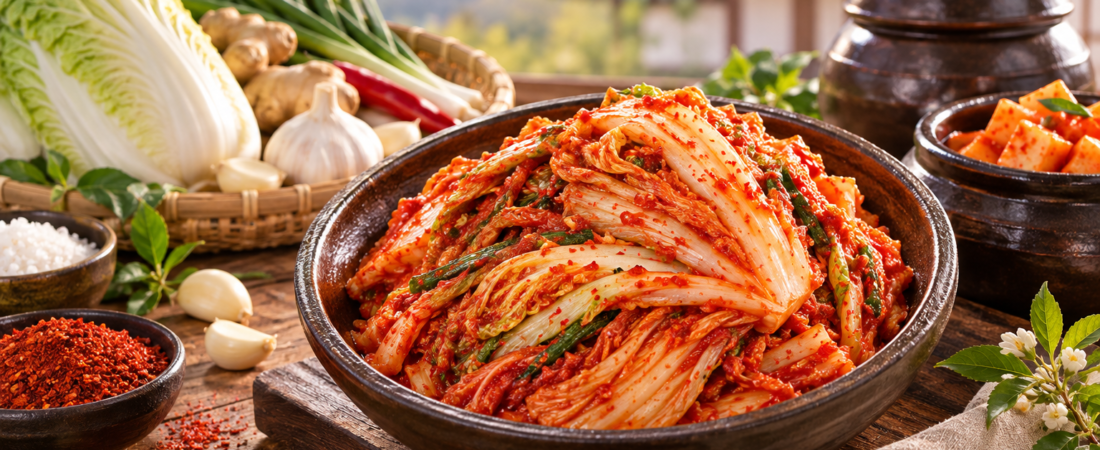
If you have ever eaten at a Korean restaurant, watched a Korean drama, or walked through the refrigerated section of a Korean grocery store, you have probably encountered kimchi. But what is kimchi, exactly?
Kimchi is one of Korea’s best-known foods, but describing it simply as “spicy fermented cabbage” does not really capture what makes it special. Kimchi can be spicy or mild, fresh or deeply fermented, crunchy or soft, and made from many different vegetables. Napa cabbage may be the variety most familiar to Americans, but radishes, cucumbers, green onions, mustard greens, and other vegetables can also become kimchi.
For Koreans, kimchi is not merely a condiment added occasionally to a meal. It has traditionally been an everyday part of the table and an important element of Korean food culture.
For someone trying Korean food for the first time, however, that little red side dish can raise plenty of questions.
Why is it fermented? Is all kimchi spicy? What does it taste like? Why does the flavor change after opening the container? Do Koreans really eat it every day? And perhaps most importantly for a beginner: how are you supposed to eat it?
This beginner-friendly guide answers those questions and explains how to start enjoying one of Korea’s most recognizable foods.
Table of Contents
- What Is Kimchi?
- Where Did Kimchi Come From?
- What Is Kimchi Made Of?
- How Is Kimchi Made?
- Why Is Kimchi Fermented?
- What Does Kimchi Taste Like?
- Is All Kimchi Spicy?
- Popular Types of Kimchi
- How Koreans Eat Kimchi
- How Beginners Can Try Kimchi
- Fresh Kimchi vs. Fermented Kimchi
- Is Kimchi Healthy?
- How to Buy Kimchi
- How to Store Kimchi
- What to Do With Sour Kimchi
- Common Beginner Mistakes
- Why Kimchi Matters in Korean Culture
- Frequently Asked Questions
What Is Kimchi?
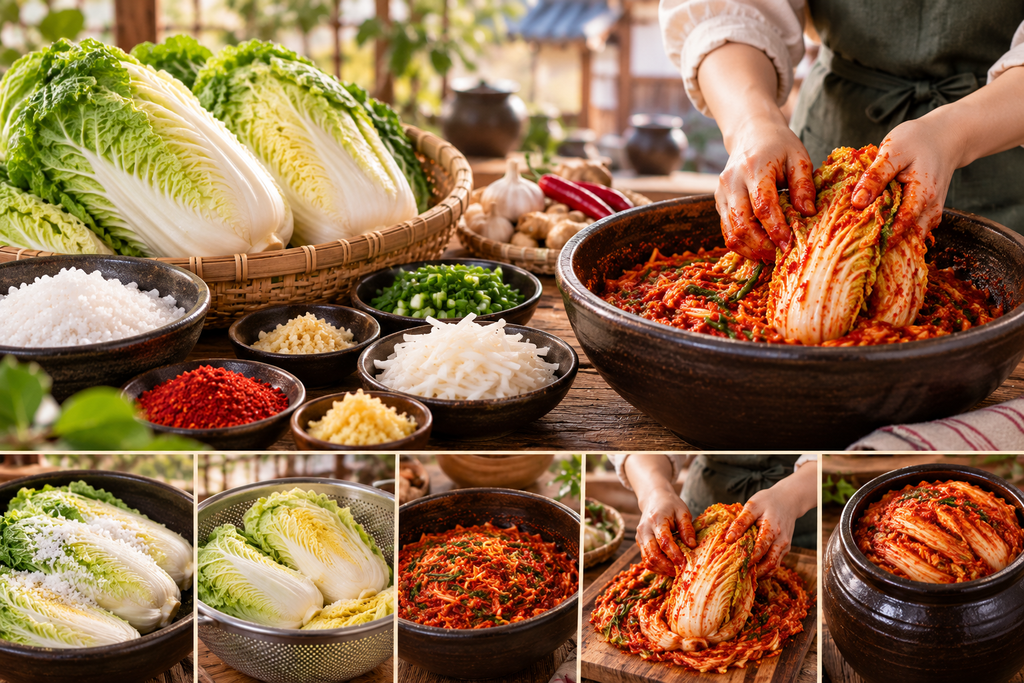
At its simplest, kimchi is a Korean preparation of vegetables that are salted and fermented with seasonings.
Napa cabbage kimchi is probably the version most people outside Korea recognize. Its characteristic red appearance commonly comes from Korean red pepper flakes known as gochugaru.
However, kimchi is not a single recipe.
Think of the word “kimchi” as describing a large family of foods rather than one particular dish. Different vegetables, seasoning mixtures, fermentation periods, seasons, regions, and family traditions can produce very different results.
A cabbage kimchi may be spicy, garlicky, savory, tangy, and crunchy. A radish kimchi may have a firmer, juicier bite. Cucumber kimchi can taste fresh and refreshing. White kimchi may contain no red pepper at all.
This variety is one of the reasons kimchi is worth exploring rather than judging after trying only one type.
Where Did Kimchi Come From?
Kimchi developed in Korea over a long period as methods of preserving vegetables evolved.
Long before modern refrigeration, preserving vegetables was especially important for surviving seasons when fresh produce was less readily available. Salting and fermentation allowed vegetables to be kept for longer periods.
The kimchi familiar to many people today did not appear all at once. Recipes and ingredients changed throughout Korean history.
One particularly important misconception is that Korean kimchi has always looked bright red.
It hasn’t.
Chili peppers reached Korea only after the Columbian Exchange, and their use in Korean cuisine developed over time. Earlier forms of fermented vegetables therefore looked and tasted different from many modern red kimchi varieties.
Today, kimchi remains deeply connected with Korean food traditions while continuing to evolve both in Korea and around the world.
Official External Link #1 — place here
Immediately after this section, add a link to UNESCO’s information about Kimjang, making and sharing kimchi in the Republic of Korea.
UNESCO added Kimjang to the Representative List of the Intangible Cultural Heritage of Humanity in 2013.
Anchor text:
UNESCO’s description of Korea’s kimjang tradition
Today, kimchi remains deeply connected with Korean food traditions while continuing to evolve both in Korea and around the world.
This cultural importance extends beyond the food itself. UNESCO recognizes Kimjang, the making and sharing of kimchi in the Republic of Korea, as part of the Representative List of the Intangible Cultural Heritage of Humanity.
What Is Kimchi Made Of?
There is no universal ingredient list because there are so many varieties.
For classic napa cabbage kimchi, common ingredients can include:
- Napa cabbage
- Salt
- Korean red pepper flakes (gochugaru)
- Garlic
- Ginger
- Green onions
- Radish
- Fish sauce or salted seafood
- A small amount of sugar or another sweetening ingredient in some recipes
Recipes vary significantly.
Some families use more garlic. Others prefer more ginger or red pepper. Certain recipes include Asian pear, onion, chives, mustard greens, or a rice-flour mixture.
And not every kimchi contains seafood ingredients.
Vegetarian and vegan kimchi can be made without fish sauce or salted seafood, using alternative ingredients to create savory flavor.
That distinction matters when purchasing packaged kimchi. A product made mostly from vegetables is not automatically vegetarian or vegan.
Kimchi is also one of the easiest side dishes to enjoy with grilled meat. If Korean barbecue is new to you, see our Korean BBQ guide for beginners to learn what to order and how to eat it.
How Is Kimchi Made?
Although recipes vary, traditional napa cabbage kimchi generally follows several basic stages.
1. The cabbage is salted
The cabbage is salted to draw out moisture and change its texture.
This step helps prepare the vegetable for seasoning and fermentation.
2. The cabbage is rinsed and drained
After salting, excess salt is removed and the cabbage is allowed to drain.
3. The seasoning is prepared
A seasoning mixture may contain gochugaru, garlic, ginger, green onions, radish, fish sauce, and other ingredients.
4. The cabbage is seasoned
The seasoning mixture is distributed throughout the cabbage leaves.
5. Fermentation begins
The prepared kimchi is placed into a container and allowed to ferment under controlled conditions before or during refrigerated storage, depending on the recipe and desired flavor.
The microorganisms naturally associated with the ingredients participate in fermentation.
As fermentation progresses, the flavor changes.
And that leads to one of the most important things beginners should understand about kimchi:
Kimchi is alive with change.
A container you open today may taste noticeably different after additional time in the refrigerator.
Why Is Kimchi Fermented?
Fermentation is what gives many kinds of kimchi their characteristic acidity and complex flavor.
Lactic acid bacteria play an important role in kimchi fermentation. As fermentation progresses, chemical and microbial changes influence acidity, aroma, texture, and flavor.
This explains why freshly prepared kimchi and older kimchi can seem almost like different foods.
Fresh kimchi tends to taste brighter and more vegetable-forward.
More fermented kimchi develops stronger sourness and deeper flavors.
Neither is necessarily “better.” Koreans may choose different stages of kimchi for different dishes.
What Does Kimchi Taste Like?
This may be the hardest question to answer because kimchi combines several sensations at once.
Depending on the variety and fermentation stage, you might notice:
Sourness: Fermentation creates the tangy flavor associated with mature kimchi.
Spiciness: Gochugaru provides heat in many red varieties, although the intensity varies.
Saltiness: Salt is fundamental to the preparation process.
Savory flavor: Garlic, fermented ingredients, seafood seasonings, and fermentation can contribute substantial umami.
Sweetness: Some recipes have a subtle sweetness that balances salt, spice, and acidity.
Crunchiness: Good cabbage or radish kimchi can retain a satisfying bite.
For someone expecting ordinary pickles, the combination can be surprising.
Instead of trying a large amount by itself for your first taste, start with a small piece alongside warm rice.
That contrast makes kimchi much easier to understand.
Is All Kimchi Spicy?
No.
This is one of the biggest misconceptions about Korean food.
Many famous kimchi varieties are red because they contain gochugaru, but Korea also has non-spicy kimchi.
Baek-kimchi — White Kimchi
Baek means white.
White kimchi is made without the large quantity of red pepper associated with typical red cabbage kimchi. It tends to be milder and can be an excellent introduction for people who do not enjoy spicy food.
Dongchimi
Dongchimi is a watery radish kimchi traditionally associated with a refreshing, clean, tangy flavor.
If spicy napa cabbage kimchi seems too intense, don’t conclude that you dislike kimchi altogether.
Try another variety.
Popular Types of Kimchi Every Beginner Should Know
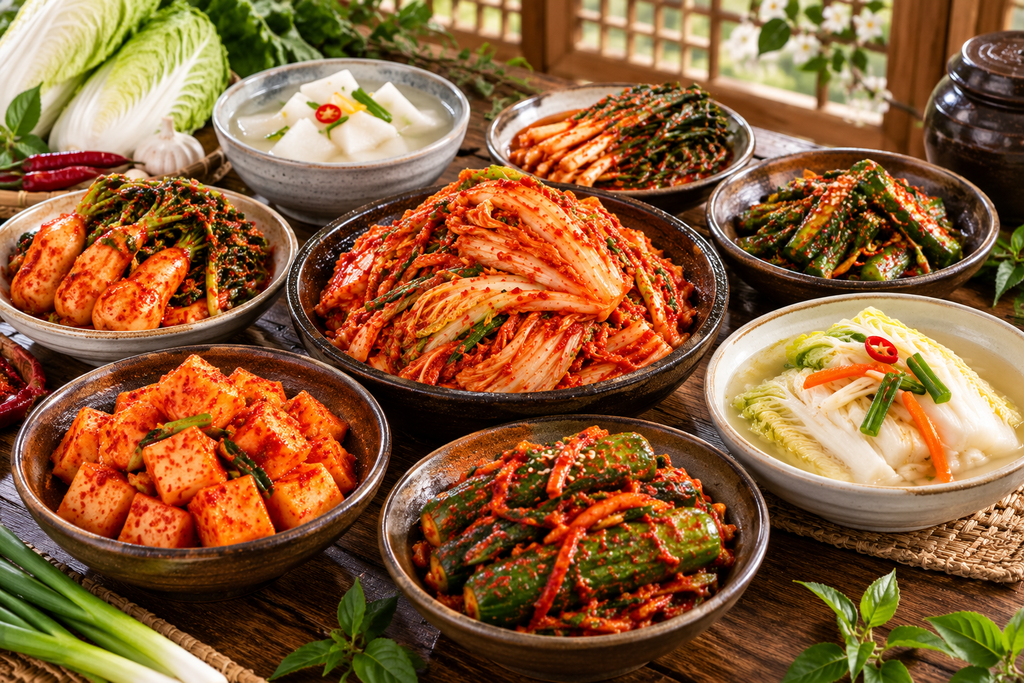
There are numerous kimchi varieties, but a beginner does not need to learn them all at once.
Start with these.
1. Baechu Kimchi — 배추김치
This is the classic napa cabbage kimchi that many Americans picture when they hear “kimchi.”
It is typically seasoned with a red mixture containing gochugaru, garlic, and other ingredients.
Beginner level: Excellent starting point
2. Kkakdugi — 깍두기
Kkakdugi is made from cubed Korean radish.
Its texture is one of its biggest attractions: juicy, firm, and crunchy.
It is frequently served with Korean soups.
Beginner level: Very approachable
3. Oi Sobagi — 오이소박이
This cucumber kimchi provides a fresher vegetable texture and can be particularly appealing in warmer weather.
Beginner level: Excellent for cucumber lovers
4. Baek-kimchi — 백김치
White kimchi is an excellent option for people who want fermented flavor without substantial chili heat.
Beginner level: One of the easiest choices
5. Chonggak Kimchi — 총각김치
This kimchi uses small radishes, often with their greens attached.
It has a distinctive crunchy texture and stronger character.
Beginner level: Try after cabbage and cubed-radish kimchi
6. Dongchimi — 동치미
A refreshing watery radish kimchi with a clear, tangy broth.
It demonstrates just how different one kimchi can be from another.
How Do Koreans Actually Eat Kimchi?
One of the easiest mistakes newcomers make is thinking kimchi should be eaten like a salad.
Usually, it is part of a larger meal.
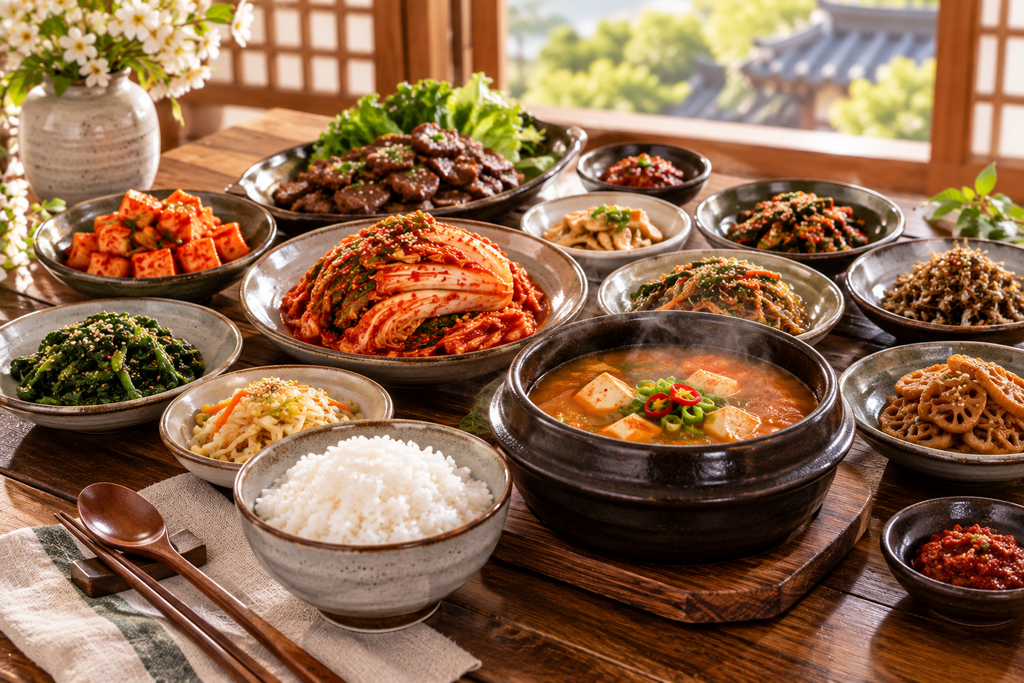
A typical Korean table may include rice, soup or stew, a main dish, and several small side dishes known as banchan. Kimchi commonly appears among those side dishes.
You might take a bite of rice, then a small piece of kimchi.
Or eat kimchi alongside grilled meat.
Or combine it with soup.
The acidity and spice can cut through richer foods, while rice softens kimchi’s stronger flavors.
Internal Link #1 — place here
After this paragraph, link to your existing TIPVERO article:
What Do Koreans Really Eat Every Day?
Suggested sentence:
To understand where kimchi fits into an everyday Korean meal, read our guide to what Koreans really eat every day.
The Easiest Way to Try Kimchi for the First Time
If you are completely new to kimchi, don’t begin with the strongest fermented jar you can find and eat several pieces alone.
Try this instead.
Put a bowl of freshly cooked white rice on the table.
Take one small piece of napa cabbage kimchi.
Eat it with a spoonful of rice.
Then notice what happens.
The rice reduces the intensity of the salt, spice, garlic, and acidity. Suddenly the kimchi begins functioning as part of a meal rather than as an isolated fermented vegetable.
Next, try it with:
- Korean barbecue
- Grilled pork
- Fried rice
- Eggs
- Tofu
- Dumplings
- Noodles
- Soup
You may discover that you prefer kimchi with another food rather than by itself.
Internal Link #2 — place here
Link to:
Korean BBQ for Beginners: What to Order and How to Eat It
Suggested anchor text:
our Korean BBQ beginner’s guide
This is a particularly strong internal link because kimchi and Korean barbecue naturally belong in the same reader journey.
Fresh Kimchi vs. Sour Kimchi
Here’s something that surprises many first-time buyers.
Kimchi doesn’t maintain exactly the same flavor after you open it.
As fermentation progresses, acidity generally increases and flavors continue developing.
Younger Kimchi
Younger kimchi generally has:
- A fresher vegetable flavor
- More noticeable crunch
- Less acidity
- Brighter seasoning
It can be particularly enjoyable directly as banchan.
More Fermented Kimchi
Older kimchi can become:
- More sour
- Softer
- More aromatic
- More complex
Some beginners assume sour kimchi has simply “gone bad.”
Not necessarily.
Properly stored fermented kimchi naturally becomes more acidic over time. In Korean cooking, strongly fermented kimchi can actually become more useful for cooked dishes.
What Can You Make With Sour Kimchi?
Don’t immediately throw away kimchi merely because it has become more sour than you enjoy as a cold side dish.
Korean cooks frequently use mature kimchi for cooking.
Kimchi Jjigae
Kimchi stew may include mature kimchi along with tofu, pork, tuna, or other ingredients.
The heat of cooking transforms its strong fermented flavor into a rich broth.
Kimchi Bokkeumbap
Kimchi fried rice is one of the easiest ways to use leftover mature kimchi.
Chopped kimchi is cooked with rice and other ingredients, often topped with an egg.
Kimchi Jeon
Kimchi can also be incorporated into savory pancakes.
These dishes demonstrate an important feature of Korean home cooking: kimchi is both a side dish and an ingredient.
Is Kimchi Healthy?
Kimchi is made primarily from vegetables and fermented ingredients, and researchers have studied it extensively for its nutritional composition and microorganisms associated with fermentation.
Depending on the recipe, kimchi can provide vegetables, dietary fiber, vitamins, and fermentation-derived microorganisms.
However, it is better to avoid treating kimchi as a miracle food.
Its nutritional composition varies by recipe and serving size, and kimchi can also contain substantial sodium because salting is central to its preparation.
The practical takeaway is simple:
Think of kimchi as a flavorful fermented vegetable food, not as medicine.
It can be one component of a varied diet.
Does Kimchi Contain Probiotics?
You will frequently see kimchi described as a “probiotic food.”
Fermented kimchi can contain various lactic acid bacteria, but what is present in a particular product depends on factors such as preparation, fermentation, storage, and processing.
Products that have undergone heat treatment will differ from refrigerated products containing live microorganisms.
Therefore, don’t assume every package labeled “kimchi” provides exactly the same microbial characteristics.
If this is important to you, read the manufacturer’s label and storage instructions.
How to Buy Kimchi at a Korean Grocery Store
Walking into a Korean supermarket for the first time can be overwhelming.
You may find an entire refrigerated section filled with containers that appear similar.
Don’t worry about choosing the “perfect” kimchi.
For your first purchase, look for napa cabbage kimchi.
Then check four things:
1. The vegetable
Look for napa cabbage if you want the classic experience.
2. Spice level
Some brands provide information about heat level.
If you are sensitive to spicy food, consider white kimchi.
3. Ingredients
Check for fish sauce, shrimp, or other seafood ingredients if you follow a vegetarian or vegan diet or have relevant dietary restrictions.
4. Package size
Start small.
There is little reason for a first-time eater to purchase a huge container.
Internal Link #3 — place here
This is the ideal place to link to your existing:
Korean Grocery Shopping for Beginners
Suggested sentence:
If the kimchi aisle is your first experience with a Korean supermarket, our Korean grocery shopping guide for beginners explains what to look for in the rest of the store.
How Should You Store Kimchi?
Once opened, kimchi should generally be kept refrigerated according to the product’s storage instructions.
A few practical habits make a big difference.
Keep the container properly closed.
Use clean utensils when removing kimchi.
Avoid leaving the container sitting at room temperature unnecessarily.
And remember that kimchi has a strong aroma.
Many Korean households use specialized kimchi refrigerators, but beginners certainly do not need one for a small container.
A tightly sealed container in a regular refrigerator is the practical starting point.
Also leave appropriate space in containers when fermenting homemade kimchi, since fermentation can produce gas.
Why Does My Kimchi Smell So Strong?
Because kimchi contains ingredients such as garlic, fermented vegetables, and sometimes seafood-based seasonings, its aroma can be powerful.
Fermentation can intensify that aroma.
For someone raised around kimchi, the smell may be completely familiar. For a first-time eater, opening a well-fermented container can be surprising.
A strong aroma alone does not tell you whether a product is unsafe.
Follow the manufacturer’s refrigeration and use-by guidance and pay attention to abnormal signs rather than assuming all strong fermented aromas mean spoilage.
Kimchi and Banchan: What’s the Difference?
This is another useful distinction.
Banchan refers broadly to the small side dishes served with Korean meals.
Kimchi is one category of food that commonly appears as banchan.
So:
Kimchi can be banchan.
But not every banchan is kimchi.
Other banchan might include seasoned spinach, bean sprouts, braised potatoes, fish cakes, or other prepared foods.
Internal Link #4 — place here
Link directly to your existing TIPVERO:
Banchan Guide
Suggested anchor text:
beginner’s guide to Korean banchan
This creates another strong Korean Food content cluster for Google.
Can Vegetarians and Vegans Eat Kimchi?
Sometimes—but always check the ingredients.
Traditional recipes may contain:
- Fish sauce
- Salted shrimp
- Other seafood products
These ingredients may not be obvious simply by looking at the cabbage.
Fortunately, vegan kimchi has become widely available, and kimchi can also be made without seafood.
Look specifically for products labeled vegan when that distinction matters.
Is Kimchi Very Spicy?
It depends entirely on the variety and recipe.
The brilliant red color can make kimchi appear hotter than it actually is.
Gochugaru provides both color and flavor, but different products use different amounts and different pepper characteristics.
Some kimchi is quite spicy.
Some provides only moderate heat.
Some contains essentially no chili heat at all.
For spice-sensitive beginners, try:
Baek-kimchi → mild cabbage kimchi → regular baechu kimchi
That progression lets your palate adjust gradually.
Common Kimchi Mistakes Beginners Make
Beginners can enjoy kimchi much faster by avoiding a few assumptions.
Assuming all kimchi tastes alike: Cabbage, radish, cucumber, and white kimchi can be dramatically different.
Eating too much by itself: Kimchi often makes more sense alongside rice or another dish.
Throwing it away as soon as it becomes sour: Mature kimchi can be excellent for cooking.
Assuming every kimchi is vegan: Some recipes contain seafood ingredients.
Thinking red always means extremely hot: Color alone is not a reliable indicator of spice level.
Buying the largest container first: Try several small varieties until you discover your preference.
The biggest lesson is simple:
There is no need to force yourself to like the first kimchi you try.
Finding your favorite type is part of discovering Korean food.
Why Kimchi Matters in Korean Culture
Kimchi is significant not merely because Koreans eat it.
The traditions surrounding its preparation also matter.
Historically, families and communities prepared large quantities of kimchi for winter through a tradition called kimjang.
Kimjang involved much more than food preservation. Preparing large amounts of vegetables required cooperation, shared labor, recipes, knowledge, and community relationships.
That cultural importance is reflected in UNESCO’s recognition of kimjang as Intangible Cultural Heritage.
Modern life has changed the way many people obtain kimchi. Plenty of households purchase packaged kimchi, while others continue making it at home.
Yet kimchi remains one of the clearest symbols of Korean food culture.
A Beginner’s First Kimchi Meal
If I were introducing kimchi to someone who had never eaten Korean food, I would keep the first meal very simple.
Start with warm white rice.
Add a small portion of mild napa cabbage kimchi.
Then include something familiar such as grilled meat, tofu, or a fried egg.
Take a bite of rice and kimchi together.
After that, try the kimchi with the main dish.
Only then taste a small piece by itself.
This progression allows you to experience what kimchi is designed to do at the table: provide contrast.
The rice is mild.
The main dish may be rich.
The kimchi is acidic, salty, crunchy, savory, and sometimes spicy.
Together, those contrasts create the balance characteristic of many Korean meals.
Final Thoughts: Don’t Stop at One Kimchi
So, what is kimchi?
It is a Korean tradition of preparing and fermenting seasoned vegetables—but that definition is only the beginning.
Kimchi can be red or white, spicy or mild, fresh or sour, crunchy or tender. It can accompany a simple bowl of rice, balance Korean barbecue, or become the central ingredient in fried rice, pancakes, and stew.
For a beginner, the best approach is not to ask whether you “like kimchi” after tasting one spoonful.
Instead, try a few varieties.
Begin with napa cabbage kimchi. Try crunchy kkakdugi next. If chili bothers you, look for white kimchi. And when the kimchi in your refrigerator becomes too sour for your taste, try cooking with it.
You may eventually discover that the most interesting thing about kimchi isn’t one particular flavor.
It is how many different flavors can exist under one name.
And once you understand kimchi, you have taken an important first step toward understanding the Korean table.
FAQ
What is kimchi made from?
Kimchi is made from salted vegetables combined with seasonings and fermented. Napa cabbage is the best-known base, but radish, cucumber, green onion, and other vegetables can also be used.
Is kimchi always spicy?
No. Many red varieties contain Korean chili flakes, but white kimchi and certain watery kimchi varieties can be mild or non-spicy.
What does kimchi taste like?
Depending on the type and fermentation stage, kimchi can taste tangy, salty, spicy, savory, garlicky, slightly sweet, and refreshing.
Is kimchi vegetarian?
Not always. Traditional recipes may contain fish sauce, salted shrimp, or other seafood ingredients. Check the label or choose a product specifically marked vegan.
Why does kimchi get sour?
Its flavor changes as fermentation progresses. Increasing acidity contributes to the sour flavor of mature kimchi.
What can I do with sour kimchi?
Mature kimchi works especially well in kimchi stew, kimchi fried rice, and savory kimchi pancakes.
Do I need to cook kimchi?
No. Kimchi is commonly eaten directly as a side dish, but it is also widely used as a cooking ingredient.
How should beginners eat kimchi?
Try a small amount with warm white rice first. Then experiment with Korean barbecue, eggs, tofu, soups, noodles, and other foods.