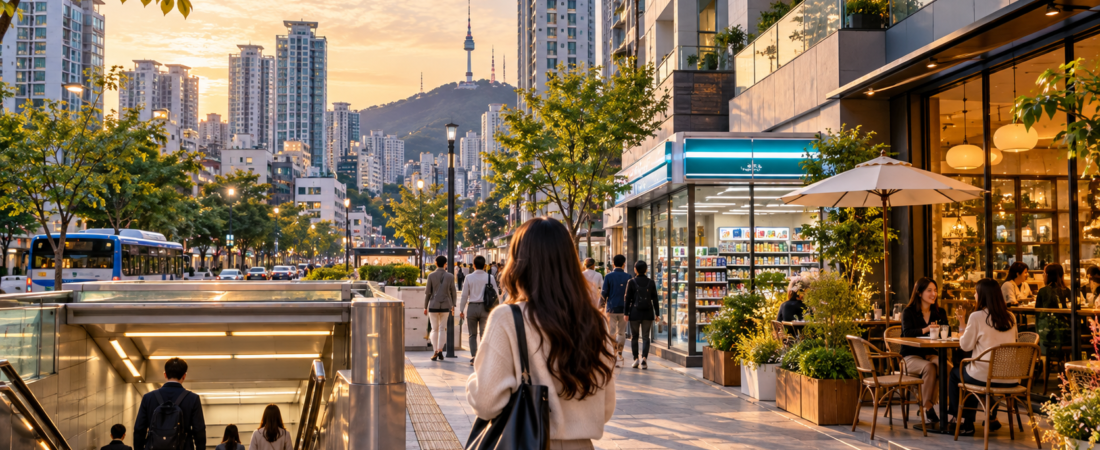
Moving to South Korea can be exciting, convenient, and surprisingly different from everyday life in the United States.
Some differences are immediately noticeable. Others only become clear after you have lived in Korea for a few weeks or months.
The things that surprise Americans after moving to South Korea are not necessarily good or bad. They are simply different from what many people are accustomed to in the United States.
You may discover that you no longer need a car for everyday life. You may be surprised by how much can be accomplished through a smartphone. You may find apartment living very different from what you expected. Even simple activities such as taking out the trash, visiting a doctor, ordering dinner, or buying groceries can involve habits that feel unfamiliar at first.
If you are considering moving from the United States to South Korea, here are ten everyday differences that may surprise you most.
1. Transportation After Moving to South Korea
For many Americans, one of the biggest surprises after moving to South Korea is discovering how practical daily life can be without owning a car.
In much of the United States, driving is part of almost everything.
You drive to work.
You drive to the grocery store.
You drive to restaurants.
You may even drive to a gym or coffee shop that is only a few miles away.
Life in major Korean cities can feel completely different.
Public Transportation Becomes Part of Everyday Life
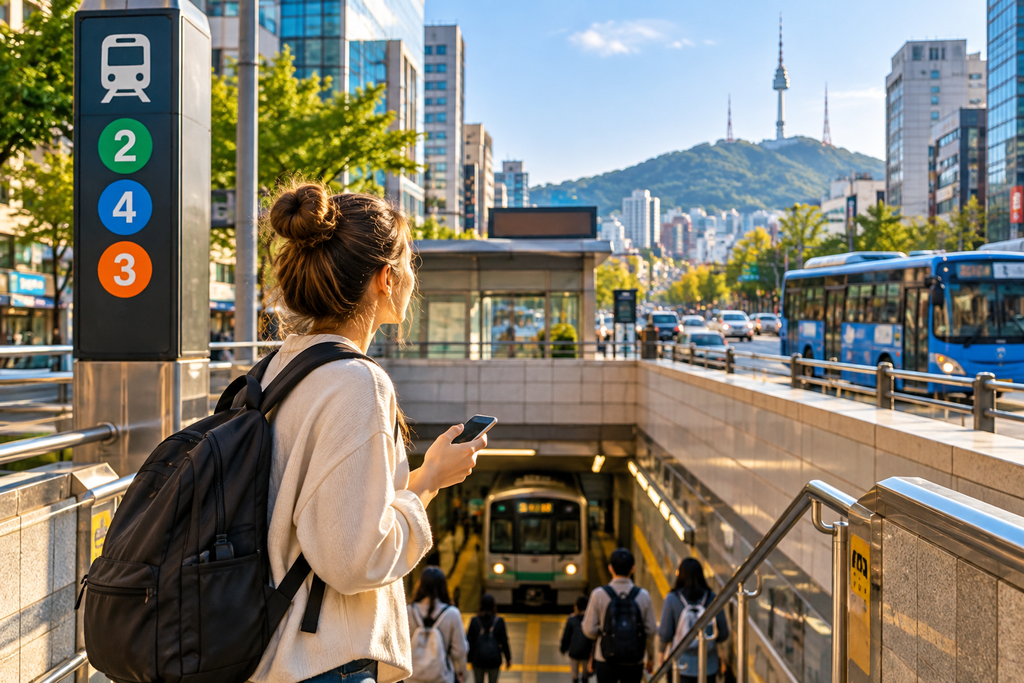
Cities such as Seoul, Busan, Incheon, and Daegu have extensive public transportation networks.
Subways and buses connect residential neighborhoods with shopping districts, universities, business areas, hospitals, and entertainment districts.
Instead of thinking,
“Where should I park?”
you may begin thinking,
“Which subway exit should I use?”
That sounds like a small difference, but it can completely change your daily routine.
In Seoul, buses and subways are integrated into a large transportation system, and transportation cards are widely used for travel. The Seoul Metropolitan Government also publishes English-language information explaining how foreign residents and visitors can use public transportation.
Walking Becomes Normal
Americans who previously drove almost everywhere may suddenly find themselves walking thousands of steps each day.
A normal evening might involve:
walking to the subway,
taking a train,
walking several blocks to a restaurant,
stopping at a convenience store,
and walking home.
For some Americans, this becomes one of their favorite parts of living in Korea.
2. Convenience Stores Are Much More Important Than You Expect
Americans are familiar with convenience stores, but Korean convenience stores often play a much bigger role in everyday life.
Stores such as CU, GS25, 7-Eleven, and emart24 can appear almost everywhere in dense residential areas.
They are not simply places to buy soda and snacks.
You can often find:
instant meals,
ramyeon,
rice dishes,
sandwiches,
coffee,
drinks,
toiletries,
phone accessories,
household items,
and basic medicine or health-related products.
Some locations even provide seating areas where customers eat meals.
Late-Night Convenience
Imagine coming home late and realizing you have nothing for breakfast.
Instead of driving to a large supermarket, you may simply walk downstairs or around the corner.
Within minutes, you can buy milk, eggs, coffee, rice, snacks, or a ready-to-eat meal.
For Americans accustomed to weekly supermarket trips, this kind of neighborhood convenience can change shopping habits surprisingly quickly.
3. Apartment Living Feels Very Different
One of the biggest adjustments after moving to South Korea is learning how Korean apartment living differs from housing in the United States.
One of the biggest adjustments for Americans moving to South Korea is housing.
American homes tend to emphasize space.
Korean urban housing often emphasizes efficiency.
Many people living in Seoul and other major cities live in apartments, officetels, villas, or smaller studio-style units.
Smaller Spaces Can Be Surprisingly Functional
An apartment may be smaller than what an American is used to, but the layout can be extremely efficient.
You may find:
built-in storage,
shoe cabinets,
digital door locks,
floor heating,
compact kitchens,
and multipurpose spaces.
One feature that surprises many newcomers is Korea’s traditional underfloor heating system, known as ondol.
Instead of relying primarily on warm air blowing through vents, many Korean homes heat the floor.
On a cold winter morning, stepping onto a warm floor can feel luxurious.
Shoes Usually Stay at the Door
Another adjustment involves shoes.
In most Korean homes, shoes are removed at the entrance.
There is often a small entrance area specifically designed for outdoor shoes.
Walking around the apartment wearing outdoor shoes can feel uncomfortable or even rude in many households.
After living in Korea for a while, some Americans find themselves adopting the same habit permanently.
For international residents in Seoul, the city provides foreign-resident information covering areas including immigration, housing, employment, healthcare, education, and transportation.https://english.seoul.go.kr/service/living/?utm_source=chatgpt.com
4. Food Delivery Can Feel Incredibly Fast and Convenient
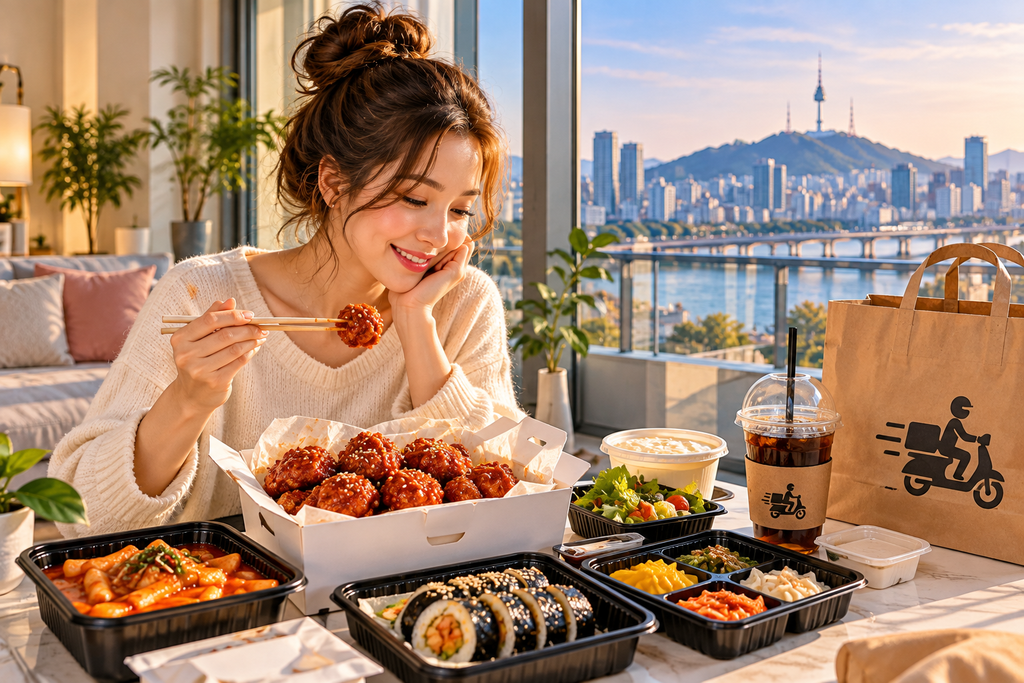
Americans are familiar with delivery apps, but Korea’s delivery culture can still be surprising.
Food delivery is deeply integrated into everyday urban life.
People order:
Korean fried chicken,
pizza,
jajangmyeon,
tteokbokki,
burgers,
coffee,
desserts,
and full Korean meals.
In densely populated areas, restaurants may be located only minutes away.
That density helps make delivery extremely practical.
Delivery Goes Beyond Restaurant Food
The surprising part is not only restaurant delivery.
Depending on the location and service, groceries and everyday goods can also arrive quickly.
For someone accustomed to planning grocery trips several days ahead, the ability to order something shortly before needing it can change how you manage your household.
However, newcomers may encounter one challenge: certain apps or online services may require Korean-language interfaces, Korean phone verification, or local payment methods.
That can make the first few weeks more complicated than expected.
Once your phone, banking, and identification systems are properly established, everyday digital services generally become much easier to use.
5. Korean Recycling Rules Are Much More Detailed
One of the less glamorous things that surprise Americans after moving to South Korea is trash disposal.
In many parts of the United States, trash is simple.
You may have one container for garbage and another for recycling.
In Korea, disposal systems can require more sorting.
Depending on where you live, you may separate:
general waste,
plastic,
glass,
cans,
paper,
cardboard,
food waste,
and sometimes additional recyclable materials.
Food Waste Is Especially Different
Food waste may need to be disposed of separately from ordinary garbage.
For newcomers, this can take time to understand.
Even seemingly simple questions become important:
Does this go in food waste?
Should I wash this container?
Where does this plastic tray go?
Which garbage bag am I supposed to buy?
Rules vary somewhat by local government and building, so residents should check instructions for their specific neighborhood or apartment complex.
After several weeks, however, the process becomes routine.
Many newcomers eventually become much more conscious about how much waste they produce.
6. Eating Alone Is Easier Than You Might Expect — But Not Everywhere
Korean food culture is highly social.
Many famous dishes are designed to be shared.
Korean barbecue, hot pot, large stews, and communal side dishes are often associated with groups.
This can make Americans moving alone wonder:
“Can I eat at restaurants by myself?”
The answer is usually yes, but the experience depends on the type of restaurant.
Solo Dining Has Become Common
In busy Korean cities, eating alone is increasingly normal.
You can easily find restaurants serving:
gimbap,
ramyeon,
bibimbap,
noodles,
soups,
rice bowls,
pork cutlets,
and many other single-person meals.
You may see office workers, students, and travelers eating by themselves.
Some restaurants are even designed around solo diners.
Korean Barbecue Can Be Different
Traditional Korean barbecue restaurants may still expect customers to order enough meat for two people or may structure menus around group dining.
That doesn’t mean solo barbecue is impossible.
It simply means you may need to look for restaurants that welcome single diners.
Once you understand which restaurant types work well for solo dining, eating alone in Korea becomes very easy.
7. Visiting a Doctor May Feel Surprisingly Efficient
Healthcare is another area that can feel very different from the United States.
A new resident may expect every medical visit to involve long scheduling delays or complicated procedures.
The reality can vary by hospital and specialty, but many clinics are located throughout residential and commercial neighborhoods.
Korea has both neighborhood clinics and large university or general hospitals.
For routine health issues, local clinics may be an important part of everyday healthcare.
International Services Are Available
Large hospitals in Seoul and other major cities may offer international clinics or interpretation assistance.
Seoul also provides information aimed specifically at international residents regarding medical facilities and healthcare services.
Foreign residents who meet applicable requirements can also participate in Korea’s National Health Insurance system.
Exactly how coverage applies depends on visa and residency circumstances, so newcomers should confirm the rules that apply to their own status.
Pharmacies Are Easy to Spot
Pharmacies are also common near clinics and hospitals.
After seeing a doctor, patients may receive a prescription and take it to a nearby pharmacy.
For Americans accustomed to large pharmacies located inside supermarkets or big retail stores, this neighborhood clinic-and-pharmacy system may initially feel different.
8. Your Smartphone Becomes Even More Important
After moving to South Korea, your smartphone quickly becomes one of the most important tools for transportation, banking, shopping, and everyday communication.
Americans already rely heavily on smartphones.
In South Korea, your phone can become even more central to everyday life.
You may use it for:
navigation,
public transportation,
banking,
restaurant reservations,
shopping,
food delivery,
government services,
mobile payments,
translation,
taxi services,
and communication.
Google Maps May Not Be Your Main Navigation App
One surprise for American newcomers is that navigation habits can change.
Many residents use Korean services such as Naver Map or KakaoMap for local transportation, walking directions, restaurants, and addresses.
Downloading useful Korean apps before moving can make your first few weeks significantly easier.
Korean Phone Verification Matters
Certain online services may require verification through a Korean mobile number.
This can surprise Americans who are used to simply creating accounts with an email address.
Getting your Korean phone service properly established is therefore one of the most important early steps after moving.
9. Cafés Are Everywhere — And They’re Used for More Than Coffee
Korea’s café culture can surprise even Americans who are accustomed to Starbucks and independent coffee shops.
In Korean cities, cafés can appear everywhere.
Some neighborhoods seem to have multiple cafés on a single block.
But coffee is only part of their purpose.
People use cafés to:
meet friends,
study,
work on laptops,
go on dates,
read,
hold casual meetings,
or simply spend time alone.
Café Design Can Be an Experience
Many Korean cafés place significant emphasis on atmosphere.
You may find cafés built around themes such as:
traditional hanok architecture,
minimalist interiors,
rooftop views,
gardens,
industrial design,
art exhibitions,
or elaborate desserts.
Entire neighborhoods have become known for café hopping.
For an American who normally buys coffee and leaves, spending two hours in a beautifully designed café can become a new routine.
10. Everyday Life Can Feel Both Extremely Modern and Deeply Traditional

Perhaps the most interesting surprise is the contrast.
Korea can feel highly technological and traditional at the same time.
You might:
unlock your apartment with a digital keypad,
order dinner through an app,
ride a modern subway,
and pay without cash.
Then twenty minutes later you may walk past:
a centuries-old palace,
a Buddhist temple,
a traditional market,
or a neighborhood restaurant that has been operated by the same family for decades.
That contrast is part of what makes living in South Korea interesting.
Social Customs Still Matter
Technology may be modern, but social customs remain important.
Age can influence how people speak to each other.
Language contains formal and informal speech levels.
People may bow slightly when greeting someone.
Items may be given or received using two hands in more formal situations.
You do not need to understand every custom immediately.
Most foreigners learn gradually.
Knowing a few basic Korean phrases and showing respect will usually make everyday interactions much easier.
Bonus Surprise: You May Feel Safer Walking Around at Night
Another commonly discussed difference involves late-night city life.
Busy neighborhoods in major Korean cities can remain active well into the evening.
Restaurants, cafés, convenience stores, and public transportation may keep streets busy after dark.
That can create a different feeling from some American cities where commercial areas become quiet after business hours.
Still, normal precautions are important wherever you live.
Keep track of your belongings, understand your neighborhood, avoid unsafe situations, and know emergency contact information.
In Korea, 112 is the police emergency number and 119 is used for fire and emergency medical assistance.
What Is the Hardest Part of Moving to South Korea?
Interestingly, the biggest challenges are often not the dramatic cultural differences.
They are small administrative tasks.
New residents may need time to understand:
residency paperwork,
bank accounts,
mobile phone registration,
online identity verification,
housing contracts,
garbage rules,
health insurance,
and Korean-language applications.
Individually, none of these tasks may seem overwhelming.
When they happen during your first few weeks, however, they can feel exhausting.
The good news is that life becomes much easier once these basic systems are established.
For international residents in Seoul, the city provides foreign-resident information covering areas including immigration, housing, employment, healthcare, education, and transportation.
What Americans Usually Learn After a Few Months
The first month in Korea can feel exciting and confusing at the same time.
By the third or fourth month, many things that initially seemed strange begin to feel completely normal.
You stop wondering which subway exit to take.
You automatically remove your shoes when entering a home.
You know which garbage bag to buy.
You recognize the difference between food waste and general waste.
You find favorite restaurants.
You know where your nearest pharmacy is.
And you may wonder how you ever lived without a convenience store around the corner.
That is one of the most interesting parts of living abroad.
You are not simply learning about another country.
You are gradually changing your own definition of what “normal life” looks like.
Is Moving to South Korea Right for Every American?
Not necessarily.
Some Americans love the density, convenience, transportation, food, and fast-paced urban lifestyle.
Others may miss:
larger homes,
private yards,
driving,
American-style customer service,
certain foods,
or being close to family.
South Korea can also feel crowded to someone who previously lived in a suburban or rural American community.
The experience depends heavily on where you live.
Living in central Seoul is very different from living in a smaller Korean city or rural area.
Your job, income, Korean-language ability, family situation, and visa status will also shape your experience.
Instead of asking whether Korea is universally better or worse than the United States, a more useful question is:
Does the Korean lifestyle match the kind of daily life you want?
Before Moving to South Korea: Prepare for the Small Things
People often spend months thinking about major decisions such as jobs, visas, and housing.
Those are important.
But everyday preparation can make your transition much easier.
Before moving, learn:
how public transportation works,
which navigation apps are useful,
how Korean addresses work,
basic Korean phrases,
how trash and recycling work,
where to buy groceries,
how healthcare works,
and what documentation you may need for banking and mobile services.
These details rarely appear in glamorous travel videos.
Yet they are the things that determine whether your first month feels stressful or manageable.
Final Thoughts
The biggest things that surprise Americans after moving to South Korea are often not tourist attractions or famous cultural traditions.
They are ordinary moments.
It is realizing you can cross a huge city without driving.
It is discovering that dinner can arrive quickly at your apartment.
It is learning how seriously recycling is taken.
It is sitting in a café late at night.
It is taking off your shoes without even thinking about it.
It is walking past an ancient palace while checking a mobile app on your phone.
Moving to South Korea requires adjustment, and some differences can be frustrating at first.
But understanding those differences before you arrive can make the transition much easier.
Instead of expecting Korea to function like the United States, approach your new life with curiosity.
The habits that surprise you during your first month may eventually become the things you miss most when you leave.
Frequently Asked Questions
Is South Korea a good place for Americans to live?
South Korea offers excellent public transportation, dense urban conveniences, extensive dining options, modern infrastructure, and many services for international residents. Whether it is a good fit depends on your lifestyle, employment, visa situation, budget, location, and personal preferences.
Can Americans live in South Korea without speaking Korean?
It is possible to manage many everyday activities in major cities without fluent Korean, particularly in international areas. However, learning basic Korean can make banking, medical visits, housing, shopping, and social interactions much easier.
Do Americans need a car in South Korea?
Many residents of Seoul and other major Korean cities live comfortably without owning cars because buses, subways, taxis, and intercity transportation are widely available. People living in smaller cities or rural areas may have different transportation needs.
What should Americans prepare before moving to South Korea?
Important preparations include confirming the appropriate visa, arranging housing, preparing essential documents, researching health insurance, understanding mobile phone and banking requirements, and learning how local transportation and waste disposal systems work.
Public Transportation Becomes Part of Everyday Life
What is the biggest culture shock for Americans in Korea?
It varies by person. Common adjustments include smaller living spaces, extensive public transportation, recycling rules, digital verification systems, social etiquette, food culture, and the amount of everyday life handled through smartphones.