If you are planning your first trip to Korea, one of the biggest questions is simple: How much money do you need for 7 days in South Korea?
The answer depends heavily on how you travel. Someone staying in hostels, eating at local restaurants, and riding the subway can spend surprisingly little. A traveler who prefers comfortable hotels, cafés, shopping, taxis, and nicer restaurants can easily spend two or three times as much.
For most travelers, a realistic South Korea travel budget for 7 days is approximately:
- Budget traveler: $500–$800
- Mid-range traveler: $1,100–$1,700
- Comfortable traveler: $2,100–$3,300+
These estimates do not include international airfare or major shopping purchases.
For easy calculation, this guide uses an approximate exchange rate of US$1 = ₩1,350. Currency rates change every day, so treat the dollar conversions as estimates rather than fixed prices.
This guide breaks down accommodation, food, transportation, attractions, cafés, shopping, and hidden costs so you can build a realistic budget before arriving in Korea.
South Korea Travel Budget for 7 Days at a Glance
Here is a simple estimate for a seven-day trip.
| Expense | Budget | Mid-Range | Comfortable |
|---|---|---|---|
| Accommodation | $210–$360 | $480–$840 | $1,020–$1,560 |
| Food | $140–$245 | $315–$490 | $560–$910 |
| Transportation | $35–$55 | $50–$90 | $120–$220 |
| Attractions | $30–$60 | $80–$150 | $150–$300 |
| Cafés & Extras | $50–$100 | $100–$200 | $200–$350 |
| Estimated Total | $465–$820 | $1,025–$1,770 | $2,050–$3,340 |
For easier trip planning, I would round those numbers to approximately $500–$800 for budget travel, $1,100–$1,700 for a mid-range trip, and $2,100–$3,300 for a more comfortable week.
These calculations assume roughly seven days and six nights. If your itinerary includes seven hotel nights, add one additional night of accommodation.
Is South Korea Expensive for American Travelers?
South Korea can feel inexpensive in some areas and surprisingly expensive in others.
Public transportation is affordable compared with many major American cities. Local meals can also offer excellent value. However, hotel prices in popular neighborhoods, specialty cafés, nightlife, imported products, and shopping can raise your daily spending quickly.
A traveler who eats Korean food, uses public transportation, and chooses moderately priced accommodations can enjoy Korea without needing a luxury-level budget.
The important thing is understanding where your money is likely to go.
For most visitors, accommodation will be the largest expense, followed by food and shopping.
1. Accommodation: $35 to $260+ Per Night
Where you sleep will have the biggest impact on your South Korea travel budget.
Budget Accommodation: $35–$60 Per Night
Budget travelers can find:
- Hostels
- Guesthouses
- Small private rooms
- Basic motels
- Capsule-style accommodations
- Simple hotels outside the busiest tourist districts
For six nights, you may spend approximately:
$210–$360
You can often save money by staying slightly outside central areas such as Myeongdong, Hongdae, or Gangnam.
Because Seoul’s subway system connects neighborhoods efficiently, staying a few stations away from major attractions may reduce hotel costs without making sightseeing difficult.
Mid-Range Hotels: $80–$140 Per Night
Many American travelers will probably feel most comfortable in this category.
You can often find:
- Modern three-star hotels
- Business hotels
- Boutique hotels
- Private bathrooms
- Air conditioning
- Wi-Fi
- Convenient subway access
Six nights at approximately $80–$140 per night would cost:
$480–$840
Prices vary significantly by neighborhood, season, weekends, holidays, and major events.
Booking early can make a noticeable difference.
Comfortable Hotels: $170–$260+ Per Night
Travelers wanting larger rooms, premium locations, upscale facilities, or four- and five-star hotels can expect considerably higher prices.
Six nights could cost:
$1,020–$1,560 or more
Luxury hotels can easily exceed this range.
2. Food: How Much Should You Budget Per Day?
Food is one of the best parts of visiting South Korea, and fortunately, delicious meals do not always require a large budget.
A realistic daily food budget is:
- Budget: $20–$35
- Mid-range: $45–$70
- Comfortable: $80–$130+
That gives us approximately:
| Travel Style | 7-Day Food Budget |
|---|---|
| Budget | $140–$245 |
| Mid-range | $315–$490 |
| Comfortable | $560–$910+ |
What Does a Budget Day of Eating Look Like?
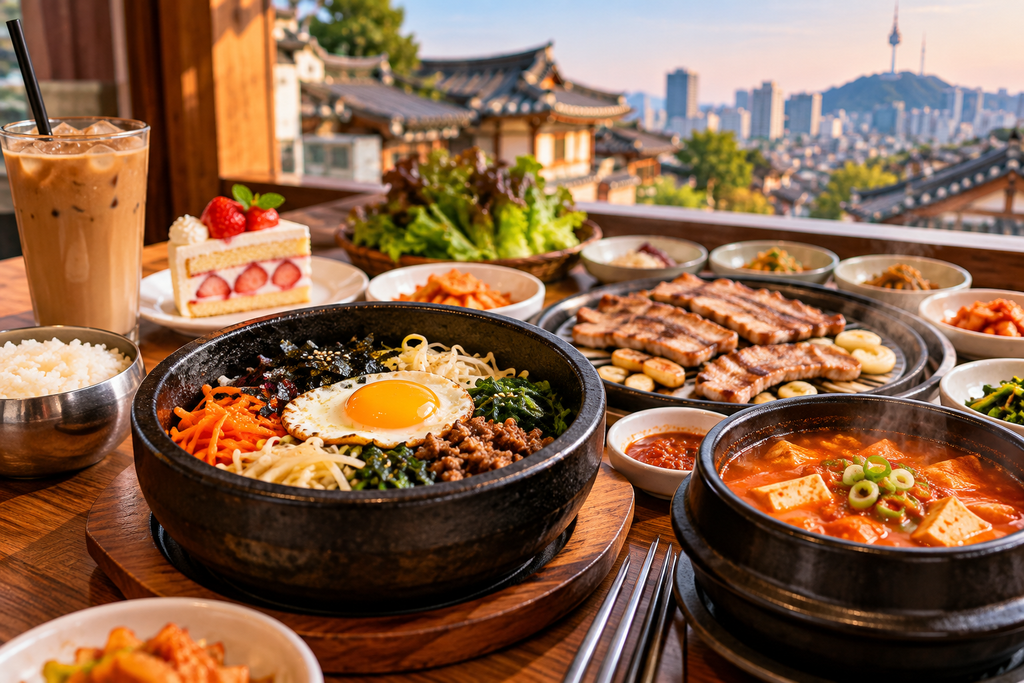
A budget-conscious traveler might eat:
Breakfast
Convenience store breakfast:
- Kimbap
- Sandwich
- Banana
- Coffee
- Milk or juice
Approximate cost:
₩4,000–₩8,000
Lunch
A local restaurant meal might include:
- Bibimbap
- Kalguksu
- Kimchi jjigae
- Gimbap
- Ramyeon
- Mandu
Approximate cost:
₩7,000–₩15,000
Dinner
A casual Korean dinner might cost:
₩10,000–₩20,000
Add snacks or coffee and a careful traveler may still keep food spending around ₩30,000–₩45,000 per day.
Korean BBQ Can Change Your Food Budget
Korean barbecue is one expense first-time travelers sometimes underestimate.
Prices vary depending on the meat, neighborhood, and restaurant.
Premium beef restaurants can become expensive very quickly, while pork barbecue is often much more affordable.
If you plan to eat Korean BBQ several times during your seven-day trip, adding an extra $50–$150 to your food budget may be wise.
Street Food Is Fun but Not Always the Cheapest Meal
Many visitors assume Korean street food is extremely cheap.
Individual items may be affordable, but ordering several can cost as much as a full restaurant meal.
For example, you might buy:
- Tteokbokki
- Hotteok
- Fish cake
- Mandu
- Fried snacks
- Korean corn dogs
- Drinks
Individually, each purchase feels small. Together, they can easily become a ₩15,000–₩30,000 snack stop.
That does not mean you should avoid Korean street food. It simply deserves its own place in your budget.
Internal Link Opportunity: Link here to your TIPVERO article about Myeongdong on a Budget: 10 Meals.
3. Transportation: Korea Is Surprisingly Affordable
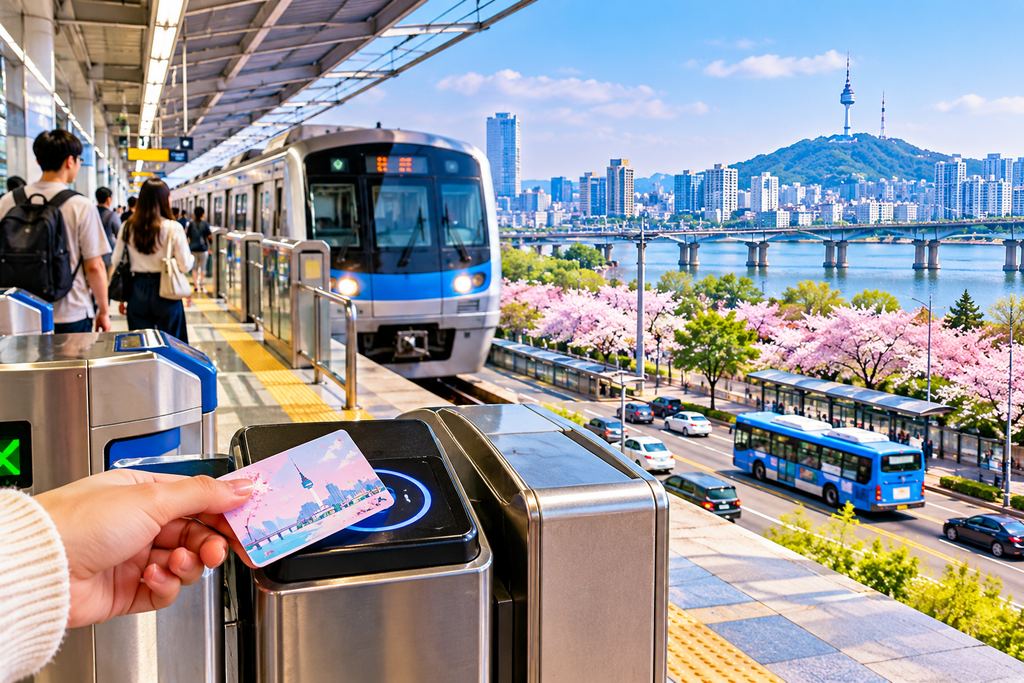
Transportation is one category where South Korea can be very budget-friendly.
Seoul has an extensive subway and bus network, so most tourists do not need to rent a car.
The Seoul Metropolitan Government currently lists the adult subway base fare using a transportation card at ₩1,550, with additional charges depending on distance.
For ordinary sightseeing around Seoul, a traveler might spend approximately:
₩5,000–₩10,000 per day
depending on the number and length of trips.
For an entire week, you might budget:
$35–$55
for mostly public transportation.
Should You Use Taxis in Korea?
Taxis can be convenient when:
- Returning late at night
- Traveling with luggage
- Going somewhere poorly connected by subway
- Traveling with several people
- You are tired after a long sightseeing day
Using taxis occasionally will not necessarily destroy your travel budget.
However, relying on taxis for most trips can increase transportation costs considerably.
A mid-range traveler might budget:
$50–$90 for the week
while someone frequently using taxis may want:
$120–$220 or more.
Airport Transportation Should Be Included
Do not forget the trip between Incheon International Airport and Seoul.
Depending on your transportation choice, you might use:
- Airport Railroad
- All-stop train
- Express train
- Airport limousine bus
- Taxi
- Private transfer
Budget travelers will usually save the most with rail or public transportation.
Travelers arriving after a long international flight may decide the convenience of an airport bus or taxi is worth the extra cost.
Include both your arrival and departure transportation in your total budget.
4. Attractions: You Can See Korea Without Spending Much
Many of Korea’s attractions are surprisingly affordable.
Your sightseeing budget depends heavily on what interests you.
You may want to visit:
- Gyeongbokgung Palace
- Changdeokgung Palace
- Bukchon Hanok Village
- N Seoul Tower
- Museums
- Observation decks
- Theme parks
- K-pop attractions
- Traditional experiences
- Guided tours
- Day trips
The good news is that walking through neighborhoods, markets, parks, traditional areas, and many cultural spaces may cost very little or nothing.
Budget Sightseeing: $30–$60 for the Week
A budget traveler could visit mostly:
- Traditional neighborhoods
- Markets
- Parks
- Affordable museums
- Palaces
- Free viewpoints
- Shopping districts
You could easily fill several days without paying expensive admission fees.
Mid-Range Sightseeing: $80–$150
This gives you more freedom for:
- Observation decks
- Guided experiences
- Museums
- Cultural activities
- Special exhibitions
- Occasional paid tours
Comfortable Sightseeing: $150–$300+
The budget increases if you add:
- Theme parks
- Premium guided tours
- DMZ tours
- Day trips outside Seoul
- Cooking classes
- Performances
- Professional photo experiences
- Private transportation
5. Coffee and Cafés: The Expense Americans Often Forget
Korea’s café culture is a major part of the travel experience.
Seoul is filled with:
- Rooftop cafés
- Hanok cafés
- Bakery cafés
- Theme cafés
- Luxury cafés
- Instagram-style dessert shops
One coffee might not seem expensive.
But coffee plus dessert several times during a seven-day trip can become a meaningful expense.
For example:
Coffee: approximately ₩4,000–₩7,000
Dessert: approximately ₩6,000–₩15,000+
One café visit could therefore cost roughly:
₩10,000–₩20,000
Visiting one every day could add another $50–$100+ to your trip.
6. Shopping: The Most Difficult Expense to Predict
Shopping is deliberately excluded from my basic seven-day budget because everyone’s spending habits are different.
Korea can be extremely tempting for shoppers.
Popular purchases include:
- Korean skincare
- Cosmetics
- Clothing
- K-pop merchandise
- Stationery
- Snacks
- Souvenirs
- Traditional crafts
- Electronics
Someone might spend only $50.
Another traveler could easily spend $500 or $1,000.
If shopping is an important part of your trip, create a separate shopping budget before leaving home.
For example:
Light shopping: $50–$150
Moderate shopping: $200–$400
Serious shopping: $500+
Keeping shopping separate prevents you from accidentally spending money needed for transportation, meals, or your hotel.
Internal Link Opportunity: Link here to your TIPVERO article Why Is Korean Skincare So Popular in America?
Can Tourists Get Tax Refunds in South Korea?
Certain purchases may qualify for Korea’s tourist tax refund system.
VISITKOREA states that qualifying foreign travelers may receive tax refunds on eligible purchases, with purchases generally needing to be at least ₩15,000. Some participating stores can provide an immediate tax refund after verifying the traveler’s eligibility.
This can be especially useful if you plan to buy:
- Cosmetics
- Clothing
- Shoes
- Bags
- Accessories
- Certain electronics
- Other eligible taxable goods
VISITKOREA notes that the actual refund is generally around 5–8% of the purchase price after processing costs, rather than automatically returning the full VAT amount.
Keep your passport available when shopping at participating stores.
7. Convenience Stores Can Help Control Your Budget
Korean convenience stores such as CU, GS25, and 7-Eleven are useful for travelers trying to control costs.
You can buy:
- Bottled water
- Coffee
- Kimbap
- Ramyeon
- Sandwiches
- Fruit
- Snacks
- Drinks
- Simple meals
Having breakfast or a late-night snack from a convenience store can reduce food expenses significantly.
It also gives travelers a fun look at everyday Korean food culture.
Just remember that repeated small purchases can add up.
8. Do You Need Cash in Korea?
Credit cards are widely accepted throughout South Korea, especially in cities.
However, carrying some Korean won is still useful.
Cash may be convenient for:
- Traditional markets
- Small street-food vendors
- Transportation card reloading
- Certain older machines
- Small independent businesses
- Emergency backup
You probably do not need to carry your entire seven-day budget in cash.
Instead, consider carrying enough for small daily purchases while using a credit card for hotels, larger restaurants, and shopping.
9. How Much Emergency Money Should You Bring?
Always leave some space in your budget for unexpected expenses.
For a seven-day trip, I would include at least:
$100–$200 in emergency flexibility
This does not necessarily mean carrying that amount as physical cash.
It simply means having access to extra money if necessary.
Unexpected costs might include:
- Taxi rides
- Medicine
- Lost transportation card
- Luggage storage
- Extra baggage fees
- Weather-related changes
- Missed transportation
- Replacement chargers
- Additional meals
- Hotel changes
A travel budget should give you flexibility rather than forcing you to calculate every dollar during your vacation.
Three Realistic 7-Day Korea Budgets
Let’s put everything together.
Budget Traveler: About $500–$800
This traveler:
- Stays in hostels or inexpensive hotels
- Uses buses and subways
- Eats mostly casual Korean meals
- Uses convenience stores occasionally
- Visits inexpensive attractions
- Limits taxis
- Does little shopping
Example:
Accommodation: $300
Food: $200
Transportation: $45
Attractions: $40
Cafés and extras: $75
Total: approximately $660
This style of trip is very possible, especially for someone comfortable with simple accommodations.
Mid-Range Traveler: About $1,100–$1,700
This is probably the most realistic budget for many first-time American visitors.
This traveler:
- Stays in a comfortable hotel
- Eats restaurant meals every day
- Enjoys Korean BBQ
- Visits cafés
- Takes occasional taxis
- Pays for several attractions
- Has room for small unexpected expenses
Example:
Accommodation: $650
Food: $400
Transportation: $70
Attractions: $120
Cafés and extras: $150
Total: approximately $1,390
This budget provides considerably more flexibility without requiring luxury spending.
Comfortable Traveler: About $2,100–$3,300+
This traveler:
- Stays in upscale hotels
- Eats at nicer restaurants
- Frequently visits cafés
- Uses taxis more often
- Books premium activities
- Takes guided tours
- Prioritizes convenience
Example:
Accommodation: $1,300
Food: $750
Transportation: $175
Activities: $225
Extras: $300
Total: approximately $2,750
Luxury hotels and premium dining can push the total much higher.
Sample Daily Budget for an American Visitor
Suppose you want a comfortable but not luxurious vacation.
Your average day might look like this:
Breakfast: $8
Lunch: $12
Coffee: $6
Dinner: $25
Transportation: $8
Attractions: $15
Snacks: $6
Daily spending outside your hotel:
About $80
For seven days:
About $560
Add a $100-per-night hotel for six nights:
$600
Your total becomes approximately:
$1,160
Add some flexibility for extra cafés, transportation, or shopping, and a realistic goal becomes approximately:
$1,300–$1,500 for one week.
That is why I think this range works well for many travelers who want comfort without luxury.
How to Save Money During 7 Days in South Korea
You do not need to sacrifice the experience to lower your costs.
Use Public Transportation
Seoul’s subway and bus system can take you almost everywhere a first-time visitor is likely to go.
Using public transportation instead of taxis can save a significant amount over seven days.
Stay Near a Subway Station
A hotel does not need to be directly inside the most famous tourist district.
Being close to a convenient subway station can sometimes be more valuable.
Eat Where Locals Eat
Restaurants one or two streets away from major tourist areas may offer better prices than businesses directly beside major attractions.
Look for simple restaurants serving:
- Soups
- Noodles
- Rice dishes
- Dumplings
- Korean set meals
Mix Restaurants With Convenience-Store Meals
You do not need restaurant food three times every day.
A simple breakfast can make room in your budget for a memorable dinner.
Watch Café Spending
A ₩6,000 coffee does not look expensive individually.
Seven coffees plus desserts can become a surprisingly large expense.
Set a Separate Shopping Budget
Decide before your trip how much you are willing to spend on cosmetics, clothes, K-pop merchandise, and souvenirs.
When your shopping budget is separate from your travel budget, managing money becomes much easier.
Is $1,000 Enough for 7 Days in South Korea?
Yes, $1,000 can be enough for seven days in South Korea, particularly if international airfare is already paid and you control accommodation costs.
However, the amount becomes tight if you choose expensive hotels, take many taxis, dine at premium restaurants, or shop heavily.
A traveler with a low-cost hotel may have plenty of flexibility with $1,000.
A traveler paying $150 per night for accommodation could spend almost the entire amount on the hotel alone.
Is $1,500 Enough for a Week in Korea?

For many visitors, $1,500 is a comfortable one-week budget excluding international airfare and major shopping.
It can cover:
- A good mid-range hotel
- Restaurant meals
- Public transportation
- Several attractions
- Cafés
- Occasional taxis
- Some extra spending
This is a useful planning target for travelers who do not want to monitor every purchase closely.
Is $2,000 Enough for 7 Days in South Korea?
For most travelers, $2,000 provides considerable flexibility if international airfare is already paid.
You can generally choose nicer accommodations, eat well, take taxis occasionally, visit paid attractions, and still have room for additional experiences.
Shopping can still change the equation quickly, especially if you plan to purchase designer goods, electronics, or large amounts of Korean cosmetics.
What Is Not Included in This Budget?
The estimates in this article do not include:
- International airfare
- Large shopping purchases
- Travel insurance
- Medical expenses
- Luxury hotels
- Premium nightlife
- Extensive alcohol purchases
- Domestic flights
- High-speed train trips across Korea
- Multiple guided day tours
If your seven-day itinerary includes Seoul plus Busan, Jeju, Gyeongju, or another destination, increase your transportation budget.
Final Answer: How Much Money Do You Need for 7 Days in South Korea?
For most travelers, the answer is:
Budget trip: $500–$800
Mid-range trip: $1,100–$1,700
Comfortable trip: $2,100–$3,300+
These estimates exclude international airfare and major shopping.
For a first-time American traveler who wants a comfortable hotel, good Korean food, cafés, public transportation, a few taxis, and several attractions, around $1,300–$1,500 is a practical target for seven days.
South Korea does not have to be an expensive destination.
Public transportation is efficient, casual Korean food can be affordable, and many interesting neighborhoods and cultural areas cost little or nothing to explore.
The biggest decision is not whether Korea is expensive.
It is how you want to travel.
Set separate budgets for your hotel, food, transportation, attractions, and shopping before you arrive, and you can enjoy your week without constantly worrying about money.
Frequently Asked Questions
How much spending money do I need for 7 days in South Korea?
Excluding accommodation, many travelers can plan on approximately $50–$100 per day for food, transportation, attractions, cafés, and miscellaneous expenses. Budget travelers may spend less, while travelers using taxis and eating at premium restaurants may spend considerably more.
Is South Korea cheaper than the United States?
Some everyday travel expenses, particularly public transportation and many casual Korean meals, can feel inexpensive compared with major U.S. cities. Hotels, premium restaurants, trendy cafés, and shopping can still be expensive.
Should I bring cash or use a credit card in Korea?
Using both is convenient. Cards are widely accepted, but carrying some Korean won is useful for markets, street-food vendors, transportation card top-ups, and small purchases.
Is $100 a day enough in Korea?
If your hotel is already paid, $100 per day can provide a comfortable budget for food, public transportation, attractions, and cafés for many travelers.
Is $500 enough for one week in Korea?
It can be possible for an extremely careful budget traveler if affordable accommodation has been secured. For most first-time visitors, however, having more than $500 provides much greater flexibility.
How much Korean won should I carry each day?
There is no need to carry your entire travel budget as cash. Many tourists may find approximately ₩50,000–₩100,000 in available cash useful while paying larger expenses by card.
Does this budget include airfare to Korea?
No. International airfare is excluded because flight prices vary dramatically depending on your departure city, travel dates, airline, and booking time.
Does this budget include shopping?
No. Shopping is best treated as a separate category because spending on Korean cosmetics, clothing, souvenirs, K-pop merchandise, and electronics varies greatly from traveler to traveler.