
Updated: November 11, 2026 | Everyday Life & Insights
Iran Oil Prices can affect American families and farmers in 2026 by influencing gasoline prices, transportation expenses, agricultural fuel costs, fertilizer markets, and household budgets. Although U.S. energy prices depend on several economic factors, uncertainty surrounding Iran and global oil supplies can create additional financial pressure for consumers and agricultural producers.
The Iran situation has raised concerns about global oil prices and their effects on American families, farmers, and retirees in 2026.
Iran oil prices have become an important concern for American households in 2026, but the real story extends far beyond international energy markets.
When geopolitical tensions disrupt the transportation of crude oil, the consequences can eventually reach gas stations, farms, grocery stores, delivery companies, and family budgets across the United States.
For people already struggling with expensive groceries, housing, utilities, and transportation, additional energy costs can make an already difficult financial situation even more challenging.
The pressure is especially noticeable when household income does not keep pace with rising expenses.
Workers may worry about employment stability. Farmers must pay for fuel and other supplies before they can sell their harvests. Retirees living alone may depend on limited monthly income while facing essential expenses that continue to change.
These financial difficulties are connected, although they do not all have the same cause.
According to the U.S. Energy Information Administration (EIA), petroleum shipments through the Strait of Hormuz fell sharply during the first half of 2026, demonstrating how disruptions in one region can influence global energy markets.
At the same time, official U.S. inflation and agricultural reports show that many households and farms face broader financial pressures involving food, shelter, fuel, and production expenses.
This guide examines the relationship between international oil markets and everyday American life, with particular attention to working families, farmers, and adults over 60 who live alone.
It also explains practical ways to manage essential expenses without relying on uncertain predictions about future oil prices.
Table of Contents
1. Why Iran Oil Prices Matter to American Households
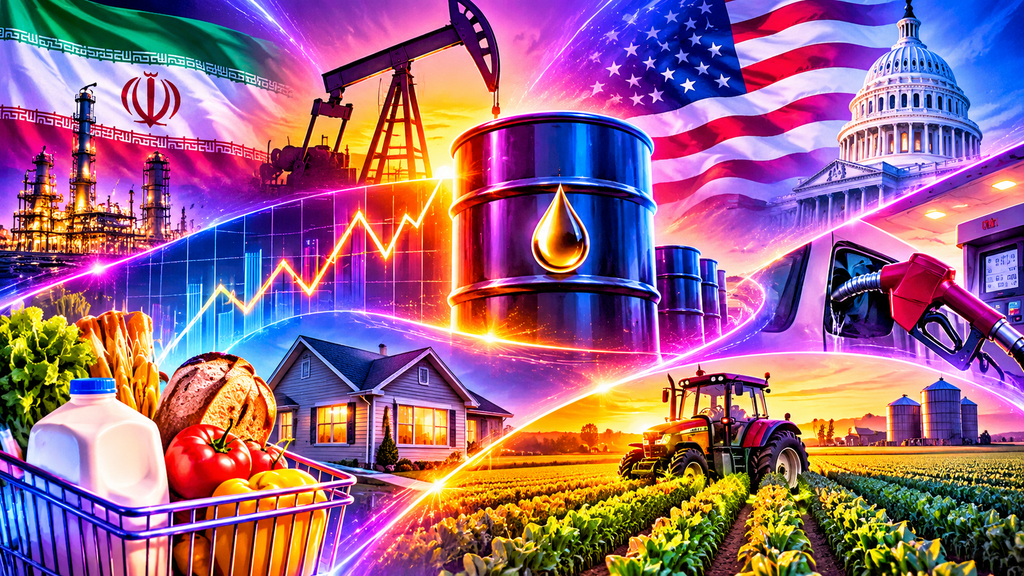
Iran is an important petroleum-producing country located beside one of the world’s most strategically significant shipping routes.
The Strait of Hormuz connects the Persian Gulf to international maritime transportation networks.
Several major oil-producing countries depend on this waterway to deliver crude oil and petroleum products to global customers.
When shipping conditions become unstable, energy buyers may face greater uncertainty about when oil will arrive and how much it will cost to transport.
These risks can affect international crude oil prices.
1.1 The Strait of Hormuz and Global Oil Transportation
According to the EIA’s August 2026 energy security analysis, approximately 21.6 million barrels of petroleum liquids passed through the Strait of Hormuz each day during the fourth quarter of 2025.
That amount decreased to approximately 4.9 million barrels per day during the second quarter of 2026.
The decline illustrates the scale of the transportation disruption affecting this important energy corridor.
It does not mean the entire difference represented permanently lost production. Oil shipments can be delayed, redirected, replaced through other routes, or affected by inventory and production adjustments.
Nevertheless, disrupted transportation can make global energy supplies more difficult to manage.
1.2 Why U.S. Oil Production Does Not Eliminate Global Price Risks
The United States produces large quantities of petroleum domestically.
However, American crude oil producers and refiners participate in interconnected international markets.
When global crude oil prices change, the effects can reach American refineries even when they purchase domestically produced oil.
Refineries also need access to crude oil grades that are suitable for their equipment and operations.
Transportation limitations, refinery maintenance, and regional demand can influence which supplies are available.
Consequently, domestic oil production provides an important source of energy but does not completely isolate Americans from international petroleum disruptions.
1.3 The Difference Between Oil Prices and Gasoline Prices
Crude oil is processed into gasoline, diesel, jet fuel, and other petroleum products.
A change in crude oil costs can influence the price of those fuels, but the relationship is not perfectly proportional.
Retail gasoline prices also include refining costs, distribution expenses, taxes, and retailer operating costs.
A global crude oil increase may place upward pressure on gasoline prices without producing an identical increase in every state.
Understanding this distinction helps consumers avoid assuming that international events are responsible for every change at the gas pump.
2. How the Iran Situation Affects U.S. Oil Prices
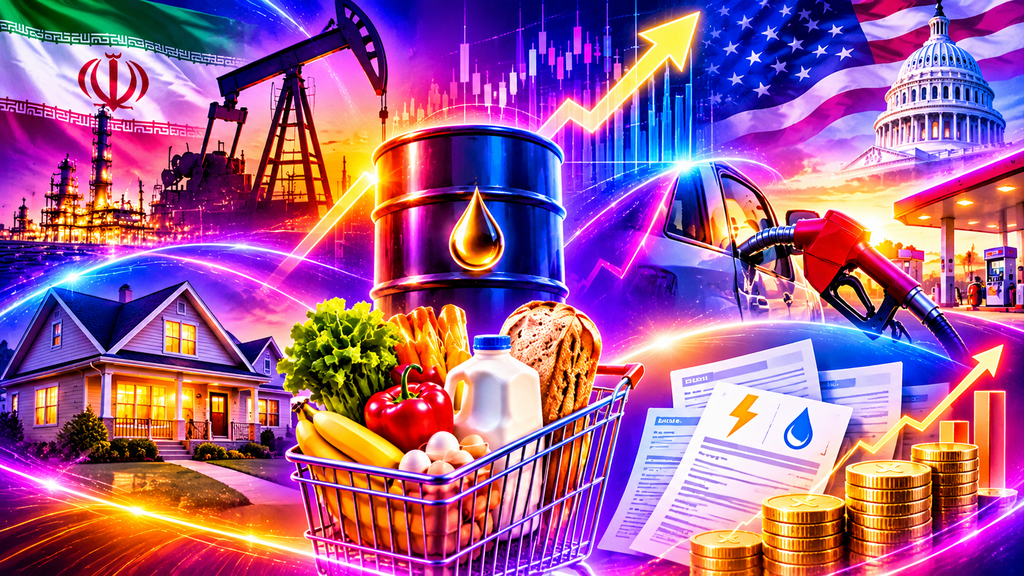
The Iran conflict that began in February 2026 created significant uncertainty for petroleum transportation.
Oil tankers, shipping companies, refiners, and international buyers had to respond to disruptions affecting established trade routes.
To understand why developments involving Iran can influence international energy markets, read our detailed guide, How the Iran Situation Can Affect Global Oil Prices, which explains global supply risks and the importance of the Strait of Hormuz.
The Strait of Hormuz plays a critical role in global energy security because a substantial share of internationally traded oil passes through this narrow waterway near Iran. According to the U.S. Energy Information Administration’s analysis of world oil transit chokepoints, approximately 20.9 million barrels of petroleum liquids passed through the strait daily during the first half of 2025. This helps explain why disruptions in the region can affect global oil markets and potentially increase energy costs for American households.
2.1 Why Shipping Disruptions Can Increase Costs
Transporting oil requires vessels, port facilities, insurance, fuel, and reliable delivery schedules.
When a shipping route becomes dangerous or restricted, some companies may face higher operating expenses or need alternative transportation arrangements.
Longer journeys can increase fuel consumption and delivery times.
Even when oil remains available, transporting it to the correct destination may become more expensive.
These additional expenses can influence the delivered cost of crude oil and petroleum products.
2.2 Why Oil Markets React to Expectations
Oil prices reflect both current conditions and expectations about future supply.
If buyers believe that petroleum shipments may become more difficult to obtain, they may be willing to pay more for available supplies.
This uncertainty can create a geopolitical risk premium.
However, a risk premium can decrease when transportation conditions improve or markets become more confident about future supply.
Therefore, international tensions do not guarantee that energy prices will rise continuously.
2.3 Why American Consumers Should Avoid Short-Term Predictions
Energy markets respond to numerous factors simultaneously.
These include production levels, inventories, transportation constraints, refinery operations, economic activity, and changing consumer demand.
A temporary disruption can produce a different outcome from a prolonged interruption.
For households, tracking actual gasoline spending and preparing for reasonable price fluctuations is generally more useful than attempting to predict every movement in crude oil markets.
3. Seven Ways Oil Disruptions Can Affect the U.S. Economy
Changes in Iran oil prices can influence several areas of American economic activity.
Some effects are immediate, while others may develop gradually through transportation and production costs.
Table 1. Seven Potential Economic Effects of Oil Disruptions
| Area | Potential Effect | Why It Matters |
|---|---|---|
| 1. Gasoline | Higher crude oil costs may affect pump prices | Increases driving expenses |
| 2. Diesel | Transportation fuel becomes more expensive | Raises some freight costs |
| 3. Agriculture | Fuel-powered equipment costs more to operate | Pressures farm budgets |
| 4. Groceries | Transportation and production expenses may rise | Adds potential food-price pressure |
| 5. Airlines | Jet fuel expenses may increase | Affects airline operating costs |
| 6. Small businesses | Delivery and equipment costs may rise | Reduces operating flexibility |
| 7. Household finances | Essential expenses consume more income | Makes budgeting more difficult |
These are possible economic effects, not guarantees.
3.1 Gasoline and Transportation
Many Americans depend on private vehicles to reach workplaces, medical appointments, grocery stores, and essential services.
When gasoline prices rise, households that drive frequently can experience an immediate increase in transportation expenses.
The effect depends on vehicle efficiency, driving distance, and local fuel prices.
3.2 Freight and Product Distribution
Trucks transport food, household products, industrial materials, and other goods across the country.
Higher diesel costs can increase expenses for transportation companies.
Some companies may absorb those costs, while others may adjust freight rates or delivery charges.
The effect on final consumer prices depends on competition, business contracts, and other operating expenses.
3.3 Agriculture and Food Production
Farms depend on fuel-powered machinery and transportation.
Higher fuel costs can increase the expense of producing and distributing agricultural products.
However, retail grocery prices also depend on labor, weather, processing, packaging, and market conditions.
The agricultural effects deserve separate attention because farmers may face financial pressure even when retail food prices remain high.
3.4 Small Businesses and Employment
Small businesses often operate with limited financial flexibility.
A landscaping company may depend on fuel-powered equipment, while a delivery business may operate several vehicles.
Higher operating costs can affect profitability and future investment decisions.
Employment conditions involve many economic influences, so job losses should not be automatically attributed to international oil prices.
Nevertheless, rising business costs can add pressure during periods of uncertainty.
4. What Recent Government Data Reveals About Household Costs
Understanding Iran oil prices requires distinguishing between changes in energy markets and broader inflation.
Official data provides useful context.
4.1 Gasoline Prices Can Change Even During International Conflict
The EIA publishes weekly national and regional gasoline prices.
These reports show that retail gasoline prices do not necessarily move in the same direction every week as geopolitical risks.
For example, the national average regular gasoline price was approximately $3.995 per gallon for the week of November 9, 2026.
Retail fuel prices reflect crude oil costs, gasoline supply, seasonal demand, taxes, and regional conditions.
A change in one factor may be offset by another.
4.2 October 2026 Consumer Price Data
The U.S. Bureau of Labor Statistics reported that consumer prices increased 0.4% in October 2026 on a seasonally adjusted basis.
During the same month:
- Grocery prices increased 0.4%.
- Shelter costs increased 0.3%.
- The overall energy index increased 0.7%.
These figures are national averages.
They do not mean every product became more expensive or that every household experienced the same increase.
They do, however, help explain why many Americans remain concerned about the affordability of essential goods and services.
4.3 Why Slower Inflation Does Not Automatically Mean Lower Prices
One common source of confusion is the difference between lower inflation and lower prices.
When inflation decreases, prices may still be rising, but at a slower pace.
Households do not automatically regain purchasing power simply because the inflation rate becomes smaller.
For people whose income has remained relatively stable, the cumulative increase in expenses can remain difficult to manage.
This distinction is particularly important when discussing the financial experiences of working families and retirees.
5. The Human Cost of Rising Living Expenses
Economic reports describe inflation through statistics, price indexes, and national averages.
These measurements are necessary, but they cannot fully capture the experience of trying to manage a household budget when essential expenses consume an increasing share of available income.
For many Americans, the challenge is not about maintaining an expensive lifestyle.
It is about affording food, housing, clothing, utilities, transportation, and healthcare.
Higher fuel expenses are only one part of the financial challenges facing American households. For a broader examination of housing, groceries, transportation, and other essential expenses, see our article, How Rising U.S. Living Costs Are Affecting Everyday American Families.
For American families, higher global crude oil prices may translate into increased gasoline expenses, leaving less money available for groceries, housing, and other necessities. The U.S. Energy Information Administration’s guide to factors affecting gasoline prices explains that retail gasoline prices reflect crude oil costs, refining expenses, distribution and marketing, and taxes. Therefore, developments involving Iran can influence gasoline prices, although the final price paid by American consumers also depends on domestic and regional market conditions.
5.1 When Grocery Shopping Becomes a Financial Calculation
I have personally experienced how discouraging it can be to watch everyday living expenses increase while household income remains relatively unchanged.
A routine trip to the grocery store can become an exercise in careful planning.
Instead of simply selecting the food I need, I find myself comparing prices, reconsidering purchases, and calculating how much I can reasonably spend.
Ordinary products such as eggs, milk, bread, vegetables, and meat can quickly increase the total grocery bill.
It is not that every item becomes more expensive every day.
Rather, the cumulative cost of purchasing essential groceries has become increasingly difficult to manage.
A difference of a few dollars may not appear significant when considering one product.
But when higher costs affect many purchases throughout the month, the combined pressure can become substantial.
For people living on limited incomes, these decisions are not merely about finding a bargain.
They are about making available money last until the next paycheck or retirement payment.
5.2 When Income Fails to Keep Pace With Essential Expenses
A major difficulty arises when household income remains relatively stable while necessary expenses continue increasing.
People may receive wages, pensions, Social Security benefits, or other income that does not always grow at the same rate as their living costs.
Over time, this imbalance can reduce purchasing power.
A household may eliminate unnecessary subscriptions, reduce restaurant meals, and avoid expensive purchases.
Yet rent, groceries, electricity, insurance, and essential transportation still need to be paid.
There are limits to how much someone can reduce spending on necessities.
For some households, nearly every dollar already has a purpose before the month begins.
Unexpected expenses can make the situation more difficult.
A vehicle repair, dental appointment, or unusually high utility bill may require money that was intended for groceries or savings.
5.3 The Added Pressure of Employment Uncertainty
Rising living expenses become especially challenging when employment is unstable.
Workers who experience layoffs, reduced hours, or interruptions in income may find that previously manageable expenses suddenly exceed their financial resources.
For a household with more than one income, another worker may temporarily help cover essential bills.
Someone living alone may not have that financial backup.
Employment uncertainty can also create pressure before an actual job loss occurs.
A worker concerned about future layoffs may postpone necessary purchases or reduce spending to preserve savings.
It is important to recognize that employment conditions have multiple causes.
Business demand, technology, interest rates, and industry-specific developments all influence hiring decisions.
Higher energy expenses are only one possible source of additional business pressure.
For the individual worker, however, the immediate concern is whether income will remain sufficient to meet basic needs.
5.4 The Emotional Burden That Economic Statistics Cannot Measure
Financial hardship is not limited to the amount of money missing from a household budget.
It can also create ongoing anxiety.
There is the frustration of returning an item to a grocery shelf because the total is too high.
There is the worry of opening another utility bill.
There is the exhaustion of constantly calculating how much money will remain after paying essential expenses.
Some people postpone home repairs, dental treatment, or activities that support their quality of life.
Others reduce spending on nutritious food or social activities in an attempt to preserve enough money for housing and transportation.
These choices may appear small individually, but they can affect daily well-being over time.
For someone who has worked responsibly for decades, it can be particularly discouraging to discover that maintaining a basic standard of living requires increasingly difficult sacrifices.
Behind every grocery receipt is a person making decisions. Behind every household budget is someone trying to maintain financial stability and personal dignity.
5.5 Why Financial Security Means More Than Economic Growth
National economic indicators provide valuable information about employment, prices, and overall production.
However, household financial stability deserves attention alongside those measurements.
A person may hear that inflation has slowed while still struggling with grocery prices that remain much higher than they remember.
A worker may have a job yet find that income barely covers essential expenses.
An older adult may have carefully prepared for retirement but still face unexpected financial pressure from housing, insurance, or transportation costs.
These experiences help explain why broad economic improvements do not always translate immediately into household relief.
For many Americans, financial security does not mean becoming wealthy.
It means being able to purchase nutritious food, maintain housing, access medical care, and manage necessary expenses without constant fear of falling behind.
The connection between international energy markets and these everyday costs is one part of a much larger affordability challenge.
6. American Farmers Under Pressure: Rising Fuel Costs, Shrinking Margins, and the Human Cost of Farming in 2026
6.1. Why Rising Oil Prices Create Serious Challenges for American Farmers
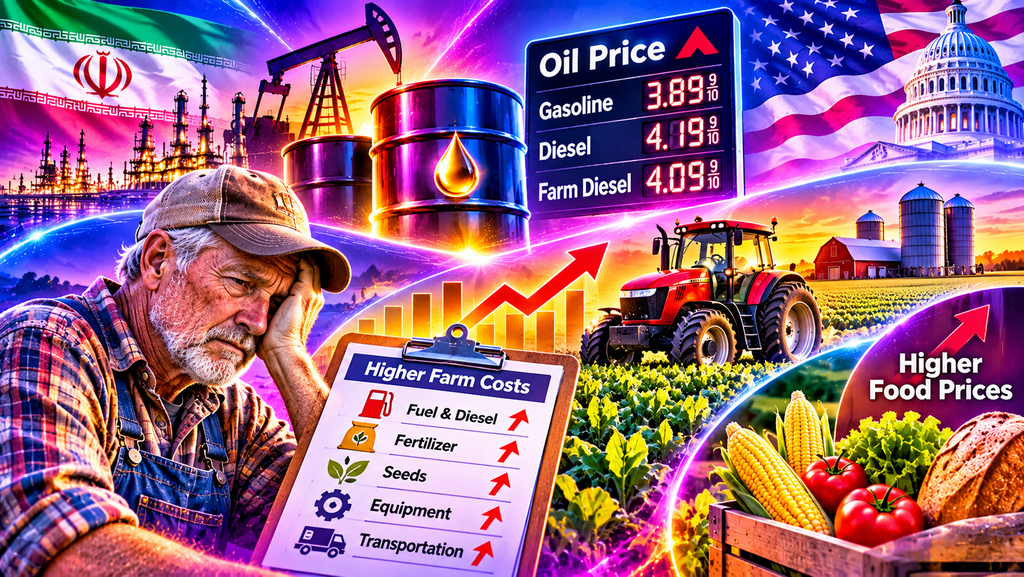
For millions of Americans, rising oil prices mean paying more at the gas station. For farmers, however, higher energy costs can threaten the financial stability of an entire growing season.
American agriculture depends on reliable and affordable energy. Tractors require diesel to prepare fields, irrigation systems need electricity or fuel, harvesting equipment consumes substantial amounts of energy, and trucks transport agricultural products across the country.
When international tensions involving Iran create uncertainty in global oil markets, American farmers can face additional financial pressure long before consumers notice higher grocery prices.
For agricultural producers, Iran Oil Prices represent one potential source of uncertainty in an already challenging economic environment.
Unlike many businesses, farmers cannot simply stop production when expenses rise. Crops must be planted during specific seasons, livestock must be fed every day, and harvested products must reach markets before they spoil.
These responsibilities continue regardless of what happens to international oil prices.
6.2. USDA Data Reveals the Financial Pressure Facing Farmers in 2026
The financial difficulties facing American farmers are supported by official government projections.
According to the U.S. Department of Agriculture’s Farm Sector Income Forecast, updated September 3, 2026, total U.S. agricultural production expenses are projected to reach approximately $492.8 billion in 2026, an increase of $21.2 billion, or 4.5%, compared with 2025.
Some of the most significant expected increases involve fuel and agricultural inputs.
| Agricultural expense | USDA forecast change in 2026 |
|---|---|
| Total farm production expenses | +4.5% |
| Fuel and oil | +28.8% |
| Fertilizer, lime, and soil conditioners | +15.3% |
| Livestock and poultry purchases | +11.4% |
Source: USDA Economic Research Service, September 3, 2026. Changes are forecasts compared with 2025 in nominal dollars.
Fuel and oil expenses are projected to increase by approximately $4.8 billion, while fertilizer-related expenses are expected to increase by $5.3 billion.
These figures are particularly concerning because fuel and fertilizer are essential inputs rather than optional purchases.
A farmer may postpone buying new equipment, but cannot indefinitely postpone fueling a tractor or providing the nutrients necessary for crop production.
The USDA also forecasts inflation-adjusted net farm income to decline by 5.5% in 2026 compared with 2025.
Although national farm income is projected to remain above its long-term historical average, that aggregate figure does not describe the financial situation of every individual farm. Profitability varies considerably by farm size, region, commodity, debt burden, and operating structure.
For farms already operating with narrow margins, unexpected expenses can make a difficult financial year substantially harder.
6.3. The Human Cost Behind Rising Agricultural Expenses
Behind every agricultural cost estimate are individuals and families whose lives depend on the success of their farms.
For many farming households, agricultural work is more than a business. It represents years of physical labor, accumulated knowledge, financial investment, and responsibility for land that may have been cultivated across generations.
A farming family may begin its day before sunrise, managing equipment, livestock, irrigation, or fields while trying to anticipate weather conditions and market prices.
Even after a long day of work, financial decisions continue.
There are equipment payments to consider, insurance premiums to manage, operating loans to repay, and household expenses that cannot be postponed indefinitely.
Higher fuel prices create another uncertainty in an occupation where the weather, harvest yields, and commodity markets are already unpredictable.
For a financially vulnerable operation, the decision to repair an aging tractor, purchase additional fertilizer, or finance next season’s planting can become increasingly difficult.
And unlike salaried employees, farmers generally cannot rely on a fixed paycheck arriving at the end of every month.
Income may depend on successful production, the timing of sales, market conditions, and expenses accumulated over many months.
This means a productive harvest does not automatically guarantee a profitable year.
A farmer can work tirelessly, produce a substantial crop, and still struggle financially if production costs rise faster than the prices received for agricultural products.
That is one of the most difficult realities of modern farming: hard work alone cannot eliminate exposure to economic risks beyond a farmer’s control.
6.4. Why Fertilizer and Transportation Costs Matter
The effects of global energy markets extend beyond diesel fuel.
Agricultural fertilizers, particularly nitrogen-based products, depend heavily on natural gas as a manufacturing input. International energy disruptions can therefore affect fertilizer production costs and trade, although the relationship between crude oil and fertilizer prices is not direct.
The price of fertilizer also depends on global manufacturing capacity, natural gas markets, international trade, transportation, and seasonal agricultural demand.
For crop producers, higher fertilizer expenses can increase the cost of growing corn, wheat, and other agricultural commodities.
Transportation creates another challenge.
Once crops are harvested, they must move through storage facilities, processing centers, distribution networks, and retail markets.
Diesel price increases can raise the cost of transporting agricultural products, although the amount ultimately passed along to consumers depends on competition, contracts, supply conditions, and other costs.
These interconnected expenses help explain why disruptions affecting energy markets can create economic consequences far beyond the oil industry.
6.5. Why Smaller Farms May Be Especially Vulnerable
Financial pressures do not affect every agricultural operation equally.
Large farms may have greater purchasing power, access to financing, storage capacity, or opportunities to manage price risks.
Smaller operations may have fewer resources to absorb sudden increases in operating expenses.
For a family farm with limited financial reserves, higher diesel and fertilizer costs may mean postponing equipment repairs, reducing discretionary purchases, or reconsidering investments intended to improve productivity.
The consequences can extend into household life.
Farm income may support mortgage payments, medical expenses, children’s education, and retirement savings.
When farm finances become strained, those personal priorities can come under pressure as well.
However, farm size alone does not determine financial vulnerability. Some small operations are financially resilient, while larger businesses may carry substantial debt or face significant exposure to commodity-price changes.
What matters is whether the farm can maintain sufficient cash flow to meet its obligations while continuing production.
USDA’s 2026 Farm Business Income analysis demonstrates that income projections differ substantially across farm types and geographic regions.
This variation is important when discussing the struggles of American farmers. There is no single financial experience that represents every agricultural household.
6.6. How Iran-Related Oil Market Uncertainty Can Compound Existing Problems
It is important to distinguish between higher agricultural expenses and their underlying causes.
Not every increase in farm fuel or fertilizer costs can be attributed to Iran.
Domestic supply conditions, weather, transportation bottlenecks, refining capacity, natural gas prices, global agricultural demand, and other economic factors also influence production costs.
However, disruptions involving Iran or shipping through the Strait of Hormuz can introduce additional volatility into international energy markets.
When global crude oil prices increase, diesel and transportation expenses may also rise, creating additional pressure for agricultural producers.
For farmers planning months in advance, uncertainty itself can be costly.
A producer deciding whether to purchase fuel in advance, lock in fertilizer prices, or finance equipment must make those decisions without knowing exactly how energy markets will evolve.
Iran Oil Prices are therefore relevant to American agriculture not because they explain every financial challenge farmers face, but because global energy uncertainty can intensify existing vulnerabilities.
6.7. Supporting the People Who Produce America’s Food
Farmers play an essential role in the American economy.
Their work supports food production, agricultural processing, transportation businesses, rural employment, and communities across the country.
Yet the economic importance of farming does not guarantee individual financial security.
A household may depend on agricultural income even when that income fluctuates dramatically from year to year.
Maintaining financially sustainable farms requires attention to production costs, access to financing, market conditions, risk-management tools, and the long-term resilience of rural economies.
For consumers, understanding agricultural expenses provides valuable context for changes in food prices.
For policymakers and agricultural institutions, reliable economic data can help identify where financial pressures are concentrated and which forms of support may be most useful.
For farmers themselves, the challenge remains immediate: keeping their operations viable while continuing to produce the food and agricultural products that communities depend on.
The true cost of rising energy prices is measured not only in dollars per gallon or billions in national expenses, but also in the financial decisions, uncertainty, and sacrifices faced by the families who work the land.
Their work deserves to be understood not simply as an economic statistic, but as an essential contribution to everyday American life.
7. The Growing Cost-of-Living Challenge for Americans Over 60 Living Alone
For Americans over 60 who live alone, managing rising expenses can involve a different set of financial challenges.
A working-age household may have the opportunity to increase earnings, change jobs, or share expenses with another wage earner.
An older adult who has retired or is preparing for retirement may have fewer options.
Many rely on a combination of Social Security, retirement savings, pensions, or part-time employment.
The amount and reliability of that income can vary considerably.
Living independently also means paying household expenses without necessarily having another person available to share them.
7.1 Why Living Alone Can Be More Expensive Per Person
A person living alone generally bears the full cost of maintaining a household.
Rent or mortgage payments, utilities, insurance, internet service, transportation, and essential household supplies may need to be covered by one income.
Although one person may use less food or electricity than a larger household, many expenses do not decline proportionally with household size.
For example, a one-bedroom apartment still has a full monthly rent payment.
A person who owns a vehicle still needs insurance, maintenance, and registration.
A home may require repairs regardless of whether one person or several people live there.
These fixed expenses can make independent living particularly challenging when income is limited.
7.2 What the Statistics Say About Older Adults Living Alone
The Administration for Community Living’s 2023 Profile of Older Americans reported that approximately 28% of adults age 65 and older who lived in the community were living alone.
That represented approximately 16.2 million people.
The percentage was higher among older women.
These figures are for adults age 65 and older in 2023, not all Americans over 60 in 2026.
Nevertheless, they demonstrate that living alone is an important reality for millions of older Americans.
Some individuals live alone by choice and maintain comfortable financial circumstances.
Others may face challenges following retirement, widowhood, divorce, or changes in health and employment.
Living alone should not automatically be equated with poverty.
However, it can increase the importance of financial planning and dependable access to essential services.
7.3 Why Social Security May Not Cover Every Expense
Social Security provides important retirement income for millions of Americans.
However, benefits vary based on a person’s earnings history, the age at which benefits are claimed, and other eligibility factors.
Not everyone receives the same monthly amount.
According to the Social Security Administration’s January 2026 statistical snapshot, the average monthly benefit for retired workers was approximately $2,075.
This is an average, not a guaranteed payment.
Some retirees receive considerably less.
Others receive more.
A person with limited employment history or lower lifetime covered earnings may have a substantially different benefit.
For an older adult living alone, monthly Social Security income may be insufficient to cover expensive housing, transportation, food, and healthcare without additional resources.
The challenge is particularly significant in high-cost communities.
7.4 An Illustrative Monthly Budget for One Older Adult
Consider a hypothetical person living alone with monthly income of $2,100.
The following figures illustrate how essential expenses might consume that income.
They are not national averages or recommended spending amounts.
| Expense | Illustrative Monthly Amount |
|---|---|
| Rent and basic housing costs | $1,100 |
| Groceries | $300 |
| Utilities and phone | $160 |
| Transportation | $170 |
| Healthcare and prescriptions | $180 |
| Household and personal essentials | $90 |
| Total Expenses | $2,000 |
| Amount Remaining | $100 |
This example leaves only $100 for unexpected costs, savings, repairs, and other needs.
A single vehicle repair or medical expense could exceed that amount.
Someone paying higher rent might face an even tighter budget.
The example illustrates why retirement income needs to be considered alongside actual local living costs.
7.5 The Financial Importance of Housing Stability
Housing is often one of the largest monthly expenses for people living alone.
An older adult may have lived in the same community for decades but find that rent increases have made the neighborhood less affordable.
Moving may seem like a possible solution, but relocation can involve deposits, transportation expenses, application fees, and the loss of familiar support networks.
Older adults may also need accessible housing or convenient transportation to healthcare providers.
The lowest-priced housing option is not always the safest or most practical.
Housing decisions should consider affordability, accessibility, stability, and proximity to essential services.
7.6 Healthcare Expenses and Unexpected Illness
Health-related expenses can be unpredictable.
Even people with insurance may face premiums, deductibles, copayments, prescription costs, dental care, or services that are not fully covered.
For an older adult living alone, illness may also create additional transportation and household support needs.
A temporary inability to drive can make grocery shopping or medical appointments more difficult.
Preparing for these possibilities does not require assuming that a serious illness will occur.
It means identifying practical arrangements before an emergency happens.
Useful preparations may include keeping important contact information accessible, reviewing insurance coverage, identifying transportation options, and maintaining a list of medications and healthcare providers.
7.7 Practical Assistance Programs for Older Adults
Some older Americans may qualify for programs that reduce essential expenses.
Eligibility depends on age, income, household circumstances, location, and program-specific rules.
Possible resources include:
SNAP food assistance: The Supplemental Nutrition Assistance Program helps eligible households purchase food. Certain special rules apply to households with members who are age 60 or older or disabled.
Medicare Savings Programs: Eligible Medicare beneficiaries may receive assistance with certain Medicare expenses, depending on income, resources, and state rules.
Extra Help: This program may help eligible Medicare beneficiaries with prescription drug costs.
Housing assistance: Some income-qualified older adults may qualify for subsidized housing or rental assistance, although availability and waiting periods vary.
Energy assistance: Eligible households may qualify for assistance with certain home energy expenses through state-administered programs.
Receiving Social Security does not automatically establish eligibility for these programs.
Likewise, reaching age 60 does not automatically qualify someone for Medicare.
Eligibility requirements must be considered separately for each program.
7.8 Maintaining Independence Without Ignoring Financial Reality
For many older adults, living alone represents independence, privacy, and the ability to make personal decisions.
That independence deserves respect.
The objective of financial planning should not be to discourage older people from living independently.
It should be to make independent living more sustainable.
A practical plan can begin with calculating essential expenses, reviewing available income, and identifying costs that can be managed without sacrificing health or safety.
For some people, this may involve exploring senior transportation programs or food assistance.
For others, it may involve reducing discretionary expenses, reviewing insurance options, or arranging reliable help for emergencies.
Small improvements can provide meaningful financial flexibility.
Older Americans who have spent decades working and contributing to their communities deserve the opportunity to maintain independence without constant anxiety about basic necessities.
8. Practical Ways to Reduce Household Financial Pressure
The effects of Iran oil prices are outside the control of individual consumers, but households can take practical steps to manage expenses.
8.1 Monitor Actual Gasoline Spending
A useful starting point is calculating the total amount spent on gasoline each month.
Tracking gallons purchased and dollars spent provides a clearer picture than relying on news reports about national prices.
A household using 60 gallons per month would spend an additional $30 if gasoline increased by 50 cents per gallon.
Understanding this relationship helps households estimate their exposure to price changes.
8.2 Combine Essential Trips
Planning grocery shopping, pharmacy visits, and other errands around the same trip may reduce unnecessary mileage.
This strategy may be particularly helpful for older adults and people living alone.
However, essential medical appointments should not be postponed simply to save gasoline.
8.3 Protect Food Spending Without Sacrificing Nutrition
Meal planning, checking unit prices, choosing suitable store brands, and reducing food waste may help manage grocery expenses.
Purchasing larger packages is only economical when the food can be used before it spoils.
For a one-person household, smaller quantities may sometimes provide better overall value.
8.4 Review Essential and Discretionary Expenses
Households can divide spending into necessary and optional categories.
Housing, food, utilities, essential healthcare, and necessary transportation should receive priority.
Optional subscriptions, convenience purchases, and other discretionary expenses may offer opportunities for adjustment.
The goal is not to eliminate everything enjoyable from daily life.
It is to preserve enough flexibility for important expenses.
8.5 Prepare for Unexpected Expenses
A small emergency reserve can help households manage vehicle repairs, medical bills, or temporary income interruptions.
The appropriate amount depends on income and financial circumstances.
For someone with limited resources, saving a modest amount consistently may be more realistic than attempting to establish a large reserve immediately.
8.6 Review Available Community Resources
Older adults, people with disabilities, and lower-income households may qualify for assistance programs.
These may help with food, healthcare, housing, energy expenses, or transportation.
The programs differ by state, and eligibility is not guaranteed.
Reviewing available assistance can be an important part of maintaining financial stability.
9. How to Monitor Energy Markets and Household Costs
Consumers do not need to follow every international headline to understand economic conditions.
Several official sources provide more useful information.
The U.S. Energy Information Administration publishes gasoline and diesel price data.
The Bureau of Labor Statistics provides consumer price information.
The U.S. Department of Agriculture publishes farm income and production expense forecasts.
The Social Security Administration publishes benefit statistics.
These sources help distinguish personal experiences, measurable economic trends, and uncertain predictions.
Understanding the difference is essential for responsible financial planning.
10. Frequently Asked Questions
FAQ 1. Why do Iran oil prices affect American consumers?
International petroleum markets are interconnected. Disruptions involving Iran or major shipping routes can affect crude oil costs, transportation expenses, and the availability of energy supplies. These changes may influence gasoline and other petroleum-based products in the United States.
FAQ 2. Can higher oil prices make groceries more expensive?
Potentially. Higher fuel expenses can increase costs associated with agricultural production, trucking, and food distribution. However, grocery prices also depend on labor, weather, processing, supply conditions, and retailer competition.
FAQ 3. Why are American farmers vulnerable to rising fuel costs?
Farmers depend on fuel-powered machinery, irrigation systems, and transportation. These expenses often must be paid before crops are sold. Rising costs can reduce profit margins when expected revenue does not increase enough to offset them.
FAQ 4. Are American farms closing because of Iran-related oil disruptions?
The effect varies among farms. Fuel expenses may add pressure, but farm closures cannot be attributed to international oil disruptions alone without specific evidence. Crop prices, debt, weather conditions, and other business factors also matter.
FAQ 5. Why is living alone after 60 financially challenging?
People living alone generally pay household expenses without another resident sharing the costs. Housing, utilities, transportation, insurance, and healthcare can consume a significant portion of monthly income, especially when earnings or retirement benefits are limited.
FAQ 6. Does every retiree receive approximately $2,000 in Social Security?
No. Social Security benefits vary according to earnings history, claiming age, and eligibility circumstances. The average retired worker benefit in January 2026 was approximately $2,075, but individual payments may be substantially higher or lower.
FAQ 7. What assistance programs may help older adults living alone?
Depending on eligibility, some older adults may qualify for SNAP, Medicare Savings Programs, Extra Help, housing assistance, and energy assistance. Each program has separate requirements, and benefits are not automatic.
FAQ 8. What is the most practical way to prepare for higher living costs?
Begin by identifying essential monthly expenses, tracking gasoline and grocery spending, reviewing available income, reducing avoidable costs, and considering assistance programs where appropriate. A modest emergency reserve may provide additional stability.
Conclusion: The Real Cost of Energy Uncertainty Is Measured in Everyday Lives
International energy disruptions are often discussed through crude oil prices, shipping routes, and financial market forecasts.
These measurements are important, but they do not fully describe the experience of ordinary Americans.
The consequences become more personal when someone stands in a grocery aisle calculating how much food they can afford.
They become more serious when a worker worries about losing income, when a farmer questions whether another growing season will be financially sustainable, or when an older adult living alone struggles to cover rent, groceries, utilities, and medical expenses.
These situations have multiple causes.
Not every increase in living expenses can be attributed to Iran, and not every agricultural or employment problem results from higher energy prices.
Nevertheless, international oil disruptions can add pressure to households and businesses that already face difficult financial circumstances.
For American consumers, the most useful response combines accurate information with realistic financial planning.
Monitoring reliable government data, understanding monthly expenses, maintaining transportation efficiency, and reviewing available assistance programs can help households manage uncertainty.
For farmers, sustainable operations depend on balancing production costs with revenue while managing risks that often lie outside their control.
For older Americans living alone, economic stability involves more than receiving a monthly retirement payment. It requires enough resources to maintain housing, nutrition, healthcare, transportation, and independence.
Behind every economic statistic is a person trying to live with security and dignity.
The most meaningful question is not simply whether international oil prices will rise or fall.
It is how families, workers, farmers, and older adults can continue meeting their essential needs when economic conditions become increasingly difficult.
Understanding Iran oil prices is one part of understanding that larger challenge.
Editorial Note: Updated November 11, 2026. This article uses U.S. government data and illustrative household examples. Personal observations are distinguished from official statistics. The examples are educational and do not predict future energy prices or guarantee eligibility for assistance programs.