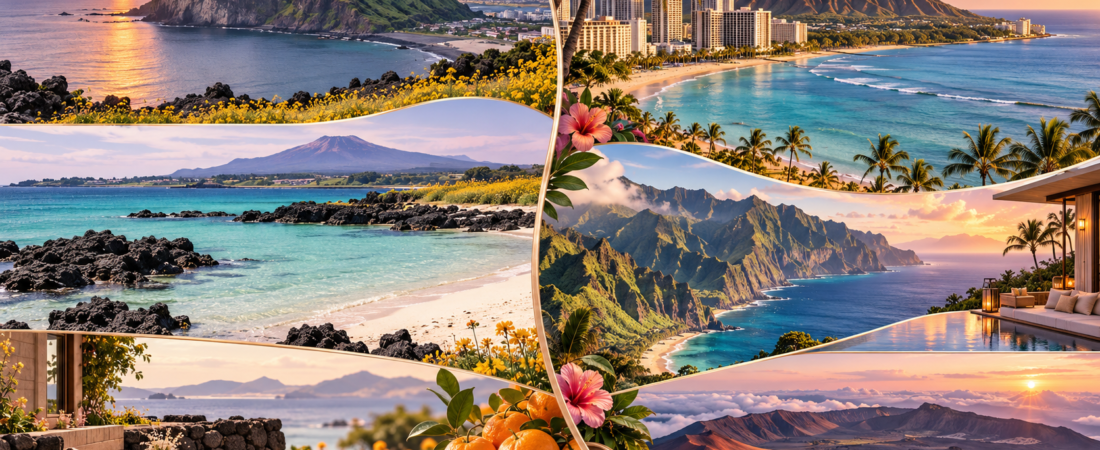
Jeju Island vs Hawaii is an increasingly interesting comparison for American travelers looking for beautiful beaches, volcanic landscapes, memorable food, and a relaxing island vacation. Both destinations offer extraordinary natural scenery, but they provide surprisingly different travel experiences.
Hawaii is one of America’s most recognizable tropical vacation destinations. Its islands are known for warm ocean waters, spectacular beaches, surfing, luxury resorts, and distinctive Native Hawaiian culture.
Jeju Island, located off the southern coast of South Korea, offers a different combination of volcanic mountains, turquoise coastlines, traditional villages, Korean cuisine, coastal walking trails, and welcoming cafes.
For American travelers, the decision involves more than choosing the most beautiful beach. Vacation costs, flight connections, transportation, language, accommodation, activities, and personal travel preferences all matter.
So, is Jeju Island better than Hawaii for your next vacation?
The answer depends on what you want from your trip.
This detailed 2026 comparison explores the major differences between Jeju Island and Hawaii, including their advantages, potential drawbacks, and the types of travelers who may enjoy each destination most.
1. Jeju Island vs Hawaii: Quick Comparison
Before exploring the details, it helps to understand how the two destinations compare.
| Travel Feature | Jeju Island, South Korea | Hawaii, United States |
|---|---|---|
| Location | South Korea | United States |
| Island geography | One main island with nearby small islands | Multiple major islands |
| Currency | Korean won (KRW) | US dollar (USD) |
| Languages | Korean; some English in tourist areas | English and Hawaiian |
| General vacation style | Nature, culture, cafes, road trips | Beaches, resorts, ocean adventures |
| Hotel costs | Often more budget-friendly | Often more expensive |
| Restaurants | Korean dishes, seafood, local specialties | Hawaiian regional food, seafood, international cuisine |
| Transportation | Rental cars, buses, taxis | Rental cars, buses and tours depending on island |
| Best for beach swimming | Summer and warmer periods | Many locations throughout the year |
| Hiking | Hallasan, oreum hills, Olle trails | Volcanoes, mountain ridges, coastal trails |
| Cultural experiences | Korean and distinctive Jeju traditions | Native Hawaiian and multicultural traditions |
| Ideal trip length | Approximately 4–6 days | Approximately 5–10 days |
| Accessibility from mainland USA | Usually requires connecting flights | Direct flights from many US gateways |
These are general comparisons, not guarantees. Hawaii consists of several islands with different prices and experiences, while Jeju’s conditions also vary considerably by season and location.
Quick verdict: Jeju is especially appealing to travelers interested in Korean culture, affordable local experiences, and scenic drives. Hawaii may be the easier choice for Americans who want a traditional tropical beach vacation without international travel.
2. Where Are Jeju Island and Hawaii Located?
Jeju Island: South Korea’s Famous Volcanic Destination
Jeju Island lies south of the Korean Peninsula, separated from mainland South Korea by the sea.
Its best-known natural feature is Hallasan, a volcanic mountain rising near the center of the island.
Jeju’s landscape includes black volcanic rocks, coastal cliffs, beaches, green fields, waterfalls, and smaller volcanic hills known as oreum.
Many visitors arrive by plane through Jeju International Airport. Flights connect Jeju with major Korean cities and selected international destinations, depending on airline schedules.
Travelers visiting Seoul can often add Jeju as a separate portion of a longer South Korean vacation.
Jeju is not simply a smaller version of Hawaii. Its geography, seasons, food, architecture, and cultural history make it a distinctly Korean island experience.
Hawaii: An Island Chain in the Pacific Ocean
Hawaii is a US state located in the central Pacific Ocean.
Unlike Jeju, Hawaii is an archipelago made up of multiple islands. Its six major visitor destinations are Oahu, Maui, Kauai, the Island of Hawaii, Lanai, and Molokai.
Each island has a different character.
Oahu combines Honolulu’s urban attractions with famous beaches and cultural landmarks.
Maui offers resort areas, scenic drives, beaches, and the landscapes of Haleakala.
Kauai is known for lush valleys, dramatic cliffs, and natural scenery.
The Island of Hawaii features volcanic terrain, diverse climate zones, and Hawaii Volcanoes National Park.
As a result, choosing Hawaii also means choosing which Hawaiian island best matches your interests.
3. Which Destination Has More Beautiful Beaches?
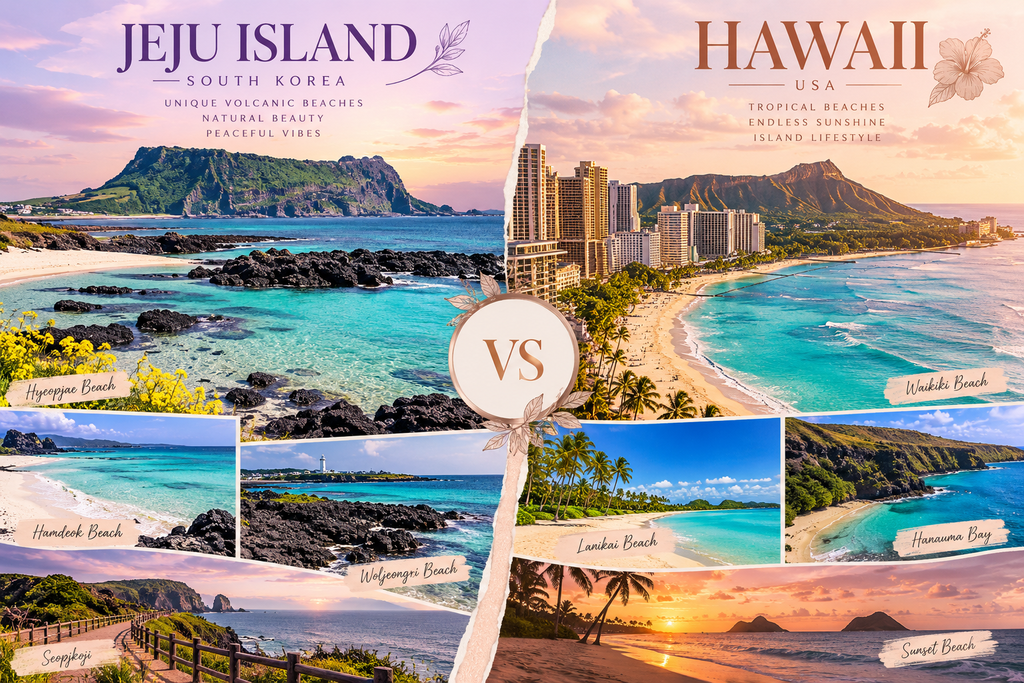
Beaches in Jeju Island
Jeju’s beaches can surprise travelers who imagine South Korea only as a place of skyscrapers and busy cities.
Some Jeju beaches feature clear turquoise water, pale sand, and dark volcanic rocks.
Hyeopjae Beach is well known for its light-colored sand, shallow-looking turquoise shoreline, and views toward Biyangdo Island.
Hamdeok Beach attracts visitors with beautiful coastal scenery, nearby cafes, and accessible tourist facilities.
Woljeongri Beach combines blue ocean views with a popular cafe-lined coastal road.
Gimnyeong Beach provides another opportunity to enjoy Jeju’s combination of volcanic rock and colorful water.
However, Jeju is not a year-round tropical swimming destination.
Water temperatures become considerably cooler outside summer. Swimming areas, lifeguard services, and beach facilities may operate seasonally.
For many visitors, Jeju’s coast is as enjoyable for photography, peaceful walks, and coffee overlooking the sea as it is for swimming.
Beaches in Hawaii
Hawaii is an internationally famous beach destination.
Waikiki Beach on Oahu is one of the most recognizable resort beaches in the world.
Wailea Beach on Maui attracts visitors interested in upscale oceanfront vacations.
Poipu Beach on Kauai and Hapuna Beach on the Island of Hawaii are other well-known destinations.
Many Hawaiian beaches offer opportunities for swimming, snorkeling, surfing, paddleboarding, and other water activities.
However, ocean conditions vary widely. Strong shore breaks, powerful currents, seasonal waves, and restricted areas mean not every beach is safe for swimming.
Travelers should follow local ocean safety warnings rather than assuming that calm-looking water is harmless.
Beach Comparison Verdict
For a traditional tropical beach vacation, Hawaii generally has the advantage.
Its warmer year-round conditions and extensive beach resort infrastructure make it particularly attractive to travelers who want to spend much of their vacation by the ocean.
Jeju is an excellent alternative for travelers who prefer combining beaches with scenic drives, Korean cafes, cultural attractions, and seasonal adventures.
Winner for classic tropical beaches: Hawaii.
Winner for Korean coastal scenery and cafe culture: Jeju Island.
4. Jeju Island vs Hawaii: Which Is More Affordable?
Vacation costs are one of the most important considerations for American travelers.
The price difference between Jeju and Hawaii can be substantial once travelers arrive, but airfare can change the entire comparison.
Accommodation Costs
Jeju offers a wide variety of accommodation options.
Travelers can choose affordable guesthouses, small hotels, pension-style lodging, boutique properties, upscale resorts, and luxury hotels.
Hawaii also offers accommodations at different price levels, including vacation rentals, hotels, and luxury resorts.
However, major Hawaiian resort areas can be expensive, especially when lodging taxes, resort fees, and parking charges are included.
Jeju often has an advantage in everyday accommodation value, particularly outside major holidays and popular vacation periods.
Estimated Daily Vacation Budgets
The following figures are illustrative planning ranges, not live hotel quotes or official average prices. They are shown in US dollars per person, assuming two travelers share a room, and exclude flights. Actual prices depend on season, booking date, location, and travel style.
| Expense Per Person, Per Day | Jeju Island | Hawaii |
|---|---|---|
| Shared accommodation | $35–$110 | $90–$250 |
| Food and drinks | $20–$55 | $40–$95 |
| Local transportation | $15–$55 | $25–$85 |
| Activities and attractions | $10–$45 | $20–$100 |
| Illustrative daily total | $80–$265 | $175–$530 |
Some travelers will spend less, while visitors booking luxury resorts, private excursions, premium restaurants, or peak-season lodging may spend much more.
Hawaii accommodations can also include mandatory charges that are not immediately obvious in an advertised nightly rate.
Jeju visitors should account for rental-car insurance, fuel, parking, and possible international driving permit requirements.
How Airfare Changes the Comparison
For travelers flying from Los Angeles, San Francisco, Seattle, or another US West Coast gateway, Hawaii may be much easier to reach.
Direct flights are available from many mainland US cities to selected Hawaiian airports.
Traveling to Jeju usually requires one or more connections, often through South Korea or another Asian hub.
This can mean more travel time and a higher airfare, even if Jeju’s food and accommodation are less expensive.
A useful way to evaluate the total cost is:
Total vacation cost = airfare + accommodation + meals + transportation + activities + taxes and fees.
A traveler already visiting Seoul may find adding Jeju comparatively economical.
Someone planning a short, five-day vacation from California may find that Hawaii is more convenient and potentially less expensive overall after accounting for international flights.
Budget verdict: Jeju often offers better everyday value, while Hawaii can have an advantage in flight convenience for mainland American travelers.
5. Which Island Has Better Natural Scenery?
Both destinations are shaped by volcanic activity, but their landscapes feel different.
Jeju’s Hallasan Mountain and Volcanic Landforms
Hallasan National Park is among Jeju’s most important natural attractions.
Hallasan is South Korea’s highest mountain and features trails that pass through changing vegetation and landscapes.
Depending on the route, hikers can encounter forests, rocky slopes, seasonal flowers, and expansive mountain views.
Some summit routes require reservations or have strict entry and turnaround times, so visitors should confirm the current rules.
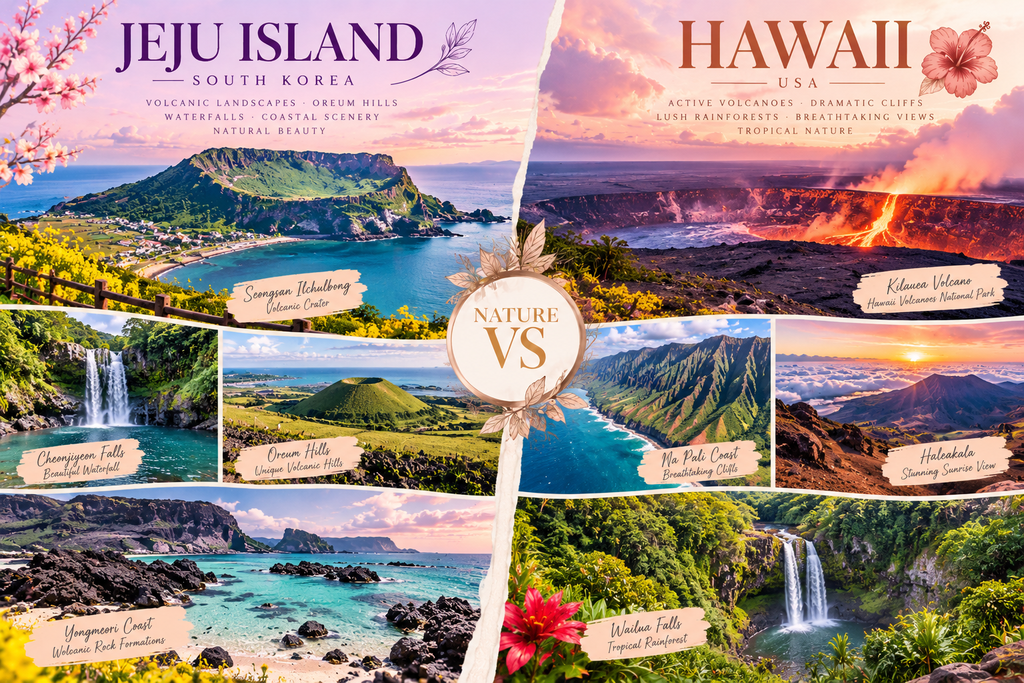
Another highlight is Seongsan Ilchulbong, commonly called Sunrise Peak.
This distinctive volcanic formation rises dramatically near Jeju’s eastern coastline.
The surrounding sea and sunrise views make it one of the island’s most popular landmarks.
Jeju is also known for lava tubes, waterfalls, volcanic rock formations, and the smaller hills called oreum.
Together, these landscapes make the island rewarding for visitors interested in geology and nature photography.
Hawaii’s Volcanoes, Cliffs, and Rainforests
Hawaii offers an extraordinary variety of landscapes across its islands.
On the Island of Hawaii, Hawaii Volcanoes National Park protects volcanic environments associated with Kilauea and Mauna Loa.
Depending on current volcanic activity and park restrictions, visitors may encounter impressive craters, lava fields, steam vents, and designated viewing areas.
Active lava is never guaranteed.
The National Park Service recommends checking current conditions and keeping alternative plans because weather, volcanic gases, and changing activity can affect access.
Kauai’s Na Pali Coast is famous for steep green cliffs overlooking the Pacific Ocean.
Maui’s Haleakala presents a striking high-elevation volcanic landscape.
Oahu has dramatic mountain ridges, while different Hawaiian islands contain rainforests, waterfalls, and rugged shorelines.
Nature Comparison Verdict
Jeju offers an appealing concentration of volcanic scenery and cultural experiences on one island.
Hawaii provides greater geographic diversity when travelers are willing to visit more than one island.
For travelers who love long coastal walks and smaller volcanic hills, Jeju is particularly rewarding.
For those dreaming of enormous ocean cliffs, tropical valleys, and diverse volcanic environments, Hawaii is difficult to beat.
Winner: Tie, depending on the kind of landscape you prefer.
6. Food Comparison: Korean Island Cuisine vs Hawaiian Cuisine
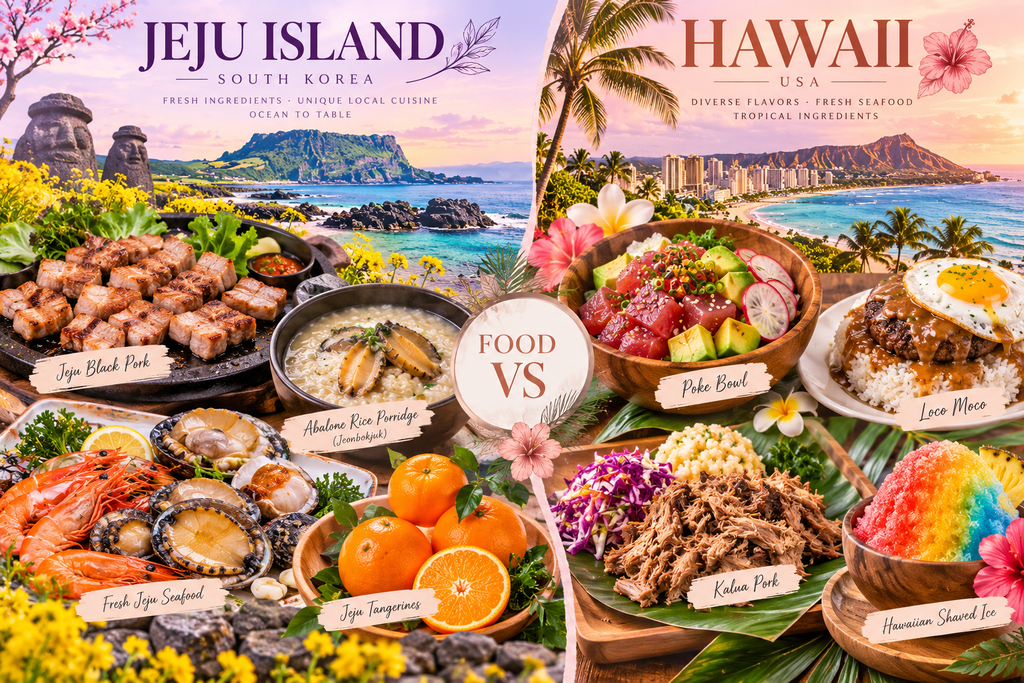
Food may be one of the most memorable differences between the two destinations.
Traditional Food on Jeju Island
Jeju has distinctive regional food traditions influenced by fishing, farming, and island life.
One popular specialty is Jeju black pork.
Restaurants often serve the pork grilled at the table, accompanied by Korean side dishes, vegetables, and sauces.
Another local dish is gogi-guksu, a noodle soup commonly prepared with pork broth and meat.
Jeju is also famous for fresh seafood, including abalone dishes and seafood soups.
Travelers may encounter jeonbokjuk, a comforting abalone rice porridge, and other regional seafood specialties.
Jeju mandarins and citrus products appear in desserts, beverages, and souvenir shops.
Traditional markets provide opportunities to sample local snacks, casual meals, and seasonal produce.
For American travelers, exploring Jeju’s restaurants may feel like a food-focused cultural adventure.
Vegetarian and vegan travelers should confirm broth and seasoning ingredients because dishes that appear vegetable-based may contain fish sauce, seafood stock, or meat broth.
Hawaiian Food Culture
Hawaiian cuisine reflects Native Hawaiian traditions and generations of cultural exchange.
Poke is one of the islands’ most internationally recognizable dishes, generally featuring seasoned pieces of fish or other ingredients.
Plate lunches are popular casual meals commonly served with rice, macaroni salad, and a protein.
Other familiar foods include loco moco, kalua pork, and shaved ice.
Visitors can also explore foods connected with Native Hawaiian traditions, such as poi and laulau.
Hawaii’s food scene incorporates influences from Japanese, Filipino, Chinese, Portuguese, Korean, and other communities.
Restaurants range from casual roadside eateries to expensive resort dining experiences.
Which Destination Has Better Food?
Travelers who already enjoy Korean cuisine may find Jeju especially exciting.
Those interested in a broad multicultural Pacific food scene may prefer Hawaii.
Jeju may also offer better value for casual restaurant meals, depending on the area and restaurant.
Winner for exploring distinctive Korean regional cuisine: Jeju.
Winner for a familiar yet diverse American-Pacific dining experience: Hawaii.
7. Transportation: Is Jeju or Hawaii Easier to Explore?
Transportation can determine how relaxing an island vacation feels.
Getting Around Jeju Island
Jeju is best explored with a flexible transportation plan.
Rental cars are especially useful for travelers who want to visit multiple coastal areas, waterfalls, small villages, and mountain attractions in one day.
South Korea drives on the right side of the road, which may make driving more familiar for visitors from the United States.
However, foreign visitors generally need to confirm whether their driving documents, including an international driving permit, meet the rental company’s requirements.
Jeju also has public buses connecting major areas of the island.
Buses can be practical for travelers staying near well-served routes, but reaching several distant attractions in one day can take more time.
Taxis and guided day tours are alternatives for visitors who do not want to drive.
Navigation apps such as Naver Map and KakaoMap are useful for planning routes in South Korea.
Getting Around Hawaii
Transportation in Hawaii depends heavily on the island.
On Oahu, visitors staying in Waikiki can use public buses, organized excursions, and selected tourist transportation services.
On Maui, Kauai, and the Island of Hawaii, rental cars are often helpful for exploring destinations outside resort areas.
Some scenic roads and remote attractions have limited public transportation.
National parks may also require advance planning. For example, Hawaii Volcanoes National Park does not provide a general shuttle service throughout the park.
Travelers should always review local road restrictions, parking requirements, and driving conditions.
Transportation Verdict
Neither destination is completely car-free for visitors who want to see everything.
Hawaii may feel more familiar for many Americans because road signs, payments, and transportation rules follow US systems.
Jeju offers a manageable driving environment, but language differences and international rental requirements create additional planning steps.
Winner for familiarity to American travelers: Hawaii.
Winner for exploring Korean island communities with a rental car: Jeju.
8. Best Time to Visit Jeju Island vs Hawaii
One major difference is climate.
Jeju’s Four Seasons
Jeju experiences noticeably different seasons.
Spring brings flowers, mild temperatures, and pleasant conditions for sightseeing.
Summer is warm, humid, and suitable for many beach activities, although periods of heavy rain and storms are possible.
Autumn is often attractive for hiking, scenic drives, and comfortable outdoor exploration.
Winter is cooler and windier than many first-time visitors expect. Snow can fall in higher elevations, especially around Hallasan.
This seasonal variety makes Jeju appealing to travelers who want to experience different colors, landscapes, and weather.
However, anyone expecting tropical beach conditions in January may be disappointed.
Hawaii’s Tropical and Regional Climate
Hawaii generally experiences warmer conditions throughout the year.
However, its weather is not identical across all islands or even within the same island.
Coastal areas may be sunny while nearby mountain regions receive rain.
Higher elevations can become cold, and certain beaches experience powerful seasonal surf.
The wetter and drier periods differ by location, and tropical weather can change quickly.
Travelers planning snorkeling, hiking, surfing, or boat tours should consider the specific island and season rather than relying on statewide averages.
Seasonal Comparison
| Season | Jeju Island | Hawaii |
|---|---|---|
| Spring | Flowers and comfortable sightseeing | Warm coastal activities |
| Summer | Popular beach season; hot and humid | Tropical vacation conditions |
| Fall | Excellent for walking and hiking | Warm weather with regional variation |
| Winter | Cool weather and mountain scenery | Warmer coastal weather; seasonal surf |
Best for a warm winter escape: Hawaii.
Best for experiencing four distinct seasons: Jeju Island.
9. Cultural Experiences: What Makes Each Island Unique?
Jeju’s Distinctive Korean Island Culture
Jeju has an identity that is different from mainland South Korea.
Its traditional stone walls, villages, folk practices, and local dialect reflect the island’s history and geography.
The haenyeo, Jeju’s traditional female divers, are especially important to the island’s cultural heritage.
For generations, these women have collected marine products while practicing specialized diving skills.
Their culture represents knowledge passed down through communities and families.
Visitors can learn more at the Jeju Haenyeo Museum and through appropriate educational experiences.
Jeju also has traditional markets, folk villages, temples, local crafts, and regional celebrations.
Travelers may find that Jeju provides an opportunity to understand Korean life beyond Seoul’s modern shopping districts.
Hawaii’s Native Hawaiian Heritage
Hawaii is more than a collection of beautiful resorts.
Native Hawaiian history, language, traditional knowledge, and cultural practices remain central to the islands’ identity.
Visitors can learn about hula, navigation, agriculture, traditional foods, and the relationship between communities and the natural environment.
Hawaii’s multicultural population also contributes to its contemporary culture.
Visitors should approach sacred places, cultural performances, and protected environments with respect.
An island vacation becomes more meaningful when travelers appreciate the communities that live there rather than treating every destination as a backdrop for photographs.
Cultural Comparison Verdict
Jeju offers a chance to explore a distinctive Korean island identity.
Hawaii provides opportunities to learn about Native Hawaiian heritage and the wider multicultural history of the Pacific.
Neither culture can reasonably be ranked as better.
The best choice depends on what travelers hope to learn.
10. Which Destination Is Better for Couples?
Jeju and Hawaii are both attractive destinations for couples, but they offer different atmospheres.
Romantic Experiences in Jeju
Jeju is well suited to couples who enjoy quiet scenic drives, cozy cafes, coastal walks, and boutique accommodations.
A romantic day might begin with a sunrise view near Seongsan Ilchulbong.
The couple could then visit a coastal cafe, explore a local village, and finish with a seafood dinner overlooking the ocean.
During spring, flowering landscapes create beautiful settings for photographs.
In autumn, the cooler weather can make long walks especially enjoyable.
Jeju may appeal to couples who prefer exploring together rather than spending every day at a large resort.
Romantic Experiences in Hawaii
Hawaii offers a more familiar tropical honeymoon atmosphere.
Couples can enjoy beachfront resorts, sunset dinners, swimming, snorkeling, spa treatments, and scenic drives.
Maui and Kauai are particularly associated with romantic nature-focused vacations, although excellent experiences are available throughout the islands.
Some travelers appreciate the convenience of staying at an oceanfront resort with restaurants and activities nearby.
Hawaii may be preferable for couples who want a relatively effortless luxury beach vacation.
Romantic getaway verdict: Jeju for intimate Korean island experiences; Hawaii for tropical resort romance.
11. Which Island Is Better for Families?
Families should think about the ages of their children, flight duration, and planned activities.
Family Activities in Jeju
Jeju offers educational and recreational experiences, including volcanic attractions, museums, beaches, scenic walks, and family-oriented accommodations.
Children can learn about volcanic geology and Korean island history while experiencing a different culture.
The island also offers plenty of casual restaurants and cafes.
However, families traveling from the continental United States should consider the effects of long flights and time-zone changes.
Younger children may need additional recovery time after international travel.
Family Activities in Hawaii
Hawaii offers beaches, marine-life experiences, family resorts, cultural programs, and outdoor activities.
American families may find travel logistics relatively straightforward because Hawaii is part of the United States.
Domestic travel requirements are generally simpler than international entry procedures.
Families can also choose accommodations designed for children, although resort fees, activities, and dining can add significantly to the vacation budget.
Family verdict: Hawaii may be more convenient for short US-based family vacations, while Jeju offers an excellent cultural experience for families already traveling in South Korea.
12. Is Jeju Island Better Than Hawaii for Travelers Over 50?
Travelers over 50 may prioritize comfort, relaxation, scenery, accessibility, and manageable daily activities.
Both destinations offer excellent possibilities.
Relaxed Travel on Jeju
Jeju is attractive for slower travel.
Visitors can spend mornings at cafes, take short coastal walks, enjoy scenic drives, and visit traditional markets.
A relaxed itinerary does not need to include strenuous mountain hikes.
Many of Jeju’s best experiences involve appreciating natural scenery without rushing.
However, some viewpoints have stairs, uneven ground, or limited accessibility.
Travelers with mobility concerns should check the details of individual attractions and accommodations.
Relaxed Travel in Hawaii
Hawaii offers a wide selection of resort experiences, accessible visitor facilities, organized tours, and oceanfront accommodations.
Staying in one convenient resort area can reduce the need for daily driving.
Travelers who enjoy warm weather and familiar English-speaking services may find Hawaii especially comfortable.
On the other hand, Jeju’s cafes, affordable dining options, and quiet coastal scenery can be very appealing to visitors who want to travel slowly.
Verdict for travelers over 50: Hawaii for convenient resort relaxation; Jeju for scenic and culturally rich slow travel.
13. Safety, Language, and Travel Convenience
Safety and communication are practical considerations when traveling internationally.
Language Differences
Korean is the primary language used in Jeju.
Some hotels, tourism offices, and popular attractions provide English-language assistance.
However, visitors may encounter restaurants, bus stops, and smaller businesses where English is limited.
Translation apps and advance planning can make these situations easier.
In Hawaii, English is widely spoken, and American visitors generally do not face international language barriers.
Healthcare and Travel Insurance
American travelers visiting Jeju should consider international medical coverage and understand their insurance policy’s overseas benefits.
Travel insurance can also help protect against certain unexpected interruptions, depending on the policy.
In Hawaii, US travelers remain within the domestic healthcare system, but medical bills and insurance network restrictions can still matter.
Visitors should confirm coverage before departure.
Weather and Outdoor Safety
In Jeju, strong winds, heavy rain, seasonal typhoons, and mountain weather can affect travel plans.
In Hawaii, ocean currents, shore breaks, intense sun, flash floods, and volcanic hazards can create risks.
Respecting posted closures and checking official forecasts are essential in both destinations.
A destination being popular with tourists does not make all outdoor activities automatically safe.
14. How Many Days Should You Spend on Each Island?
The ideal number of days depends on travel distance and vacation goals.
Recommended Jeju Itinerary: Five Days
Day 1: Arrival and Jeju City
Explore a local market, enjoy a traditional Korean meal, and settle into your accommodation.
Day 2: Eastern Jeju
Visit Seongsan Ilchulbong, scenic coastal roads, and cafes near the eastern coastline.
Day 3: Southern Jeju
Discover Seogwipo, waterfalls, coastal scenery, and local restaurants.
Day 4: Western Jeju
Explore Hyeopjae Beach, nearby villages, cafes, and additional natural attractions.
Day 5: Relaxed Morning and Departure
Enjoy a final breakfast, purchase local specialties, and travel to the airport.
This itinerary offers a balanced introduction without attempting to visit every attraction.
Recommended Hawaii Itinerary: Seven Days on Oahu
Day 1: Arrival in Honolulu
Check into your hotel and enjoy an easy evening near Waikiki.
Day 2: Waikiki
Spend time by the beach and explore nearby restaurants and shops.
Day 3: Cultural Attractions
Visit cultural and historical sites and learn about Hawaiian heritage.
Day 4: Scenic Coastal Drive
Explore appropriate coastal viewpoints and nearby communities.
Day 5: Ocean Activities
Choose snorkeling, an organized marine excursion, or another activity suitable for current conditions.
Day 6: Relaxation
Enjoy a quieter beach day, a scenic walk, or an organized island experience.
Day 7: Departure
Finish with breakfast and any final sightseeing that fits your flight schedule.
Hawaii visitors who want to experience multiple islands should consider extending the trip rather than rushing between airports.
15. Can You Combine Jeju Island With a South Korea Vacation?
One major advantage of Jeju is the opportunity to combine it with a broader Korean itinerary.
For example, travelers might spend several days in Seoul exploring cultural attractions, neighborhoods, shops, and restaurants.
They could then fly to Jeju for a quieter island vacation.
This type of trip creates a contrast between urban South Korea and its natural landscapes.
A traveler could also combine Jeju with Busan, allowing time for an additional coastal city experience.
For Americans interested in Korean culture, this flexibility makes Jeju particularly appealing.
Hawaii can also be combined with a mainland US trip, but the cultural experience is different.
If you are already planning a trip to South Korea, Jeju may be a natural addition to the itinerary.
If your main goal is a beach vacation with limited international travel logistics, Hawaii may be more practical.
16. Responsible Tourism: Protecting Both Island Destinations
Tourism has an environmental and cultural impact on island communities.
Jeju and Hawaii both contain fragile natural areas, important cultural sites, and residential neighborhoods.
Travelers can support responsible tourism by staying on designated trails, respecting protected areas, and avoiding damage to natural habitats.
Visitors should not remove rocks, sand, plants, or other natural materials from protected locations.
Using local businesses and respecting residents can also make travel more beneficial to the communities involved.
In Hawaii, visitors should learn about Native Hawaiian cultural sites and observe local guidance regarding sacred places.
In Jeju, travelers should treat traditional villages, stone walls, and cultural spaces with care.
Travel should enrich the visitor’s understanding of a place while helping preserve what makes that destination special.
17. Jeju Island vs Hawaii: Advantages and Disadvantages
Advantages of Jeju Island
- Often more affordable lodging and casual dining.
- Unique Korean cuisine and island culture.
- Volcanic landscapes, walking trails, and scenic drives.
- Excellent addition to a Seoul or Busan vacation.
- Distinct seasonal experiences.
- Numerous coastal cafes and traditional markets.
Potential Disadvantages of Jeju Island
- Longer and more complicated flights from much of the United States.
- Cooler winters and a shorter prime beach-swimming season.
- Language differences in less tourist-oriented locations.
- Rental-car documentation requirements.
- Limited convenience when relying only on buses for a packed itinerary.
Advantages of Hawaii
- Direct flights from many mainland US airports.
- Warm coastal weather during much of the year.
- Extensive resort and beach vacation options.
- Familiar language, currency, and travel systems for Americans.
- Diverse landscapes across multiple islands.
- Excellent opportunities for ocean-based activities.
Potential Disadvantages of Hawaii
- Accommodation and resort-related expenses can be high.
- Dining, transportation, and organized activities may increase total costs.
- Popular beaches and attractions can become crowded.
- Visiting multiple islands requires additional transportation.
- Ocean and weather conditions require careful planning.
18. Final Verdict: Is Jeju Island Better Than Hawaii?
There is no universal winner in the Jeju Island vs Hawaii comparison.
The best destination depends on your expectations, budget, interests, and travel plans.
Choose Jeju Island if you:
- Want to discover Korean culture beyond Seoul.
- Enjoy trying distinctive regional foods.
- Prefer scenic drives and coastal cafes.
- Love volcanic landscapes and peaceful walking trails.
- Are already traveling to South Korea.
- Want a potentially lower-cost stay once you arrive.
Choose Hawaii if you:
- Want a classic tropical beach vacation.
- Prefer direct flights from the United States.
- Enjoy snorkeling, surfing, and resort activities.
- Want familiar American travel conveniences.
- Prefer warmer winter beach conditions.
- Are planning a special resort vacation or honeymoon.
Jeju is particularly rewarding for travelers who see a vacation as an opportunity to discover a different culture.
Hawaii may be better for travelers whose ideal vacation involves warm water, easy beach access, and a comfortable tropical resort.
Both destinations deserve recognition for their natural beauty and their distinctive cultural identities.
For Americans who have already visited Hawaii and want a different kind of island adventure, Jeju provides a compelling opportunity to explore South Korea from a fresh perspective.
Ultimately, the most memorable vacation is not necessarily the most expensive or the most famous.
It is the destination that best matches your interests and encourages you to experience something meaningful.
Frequently Asked Questions About Jeju Island vs Hawaii
1. Is Jeju Island cheaper than Hawaii?
Jeju is often more affordable for accommodation, casual restaurants, and some everyday activities. However, airfare from the United States may be higher, so total vacation costs should be compared before booking.
2. Is Jeju Island as beautiful as Hawaii?
Both destinations have remarkable natural scenery. Jeju is known for volcanic hills, coastal villages, and seasonal landscapes, while Hawaii offers tropical beaches, dramatic cliffs, rainforests, and diverse volcanic environments.
3. Can Americans visit Jeju Island?
Yes. American travelers can visit Jeju subject to applicable South Korean entry and immigration rules. Passport validity, permitted stay, transit arrangements, and any current entry requirements should be checked before traveling.
4. Does Jeju Island have tropical beaches like Hawaii?
Jeju has beautiful beaches with clear blue water, but its climate is more seasonal. Hawaii generally provides warmer beach conditions throughout more of the year.
5. Is Jeju Island worth visiting without a car?
Yes, particularly with a flexible itinerary using buses, taxis, and organized tours. However, renting a car can make it easier to visit multiple attractions across the island.
6. Which is better for a honeymoon, Jeju or Hawaii?
Jeju is well suited to couples interested in boutique hotels, Korean cuisine, quiet cafes, and scenic exploration. Hawaii may be preferable for couples looking for beachfront resorts and tropical activities.
7. Is Hawaii better than Jeju for families?
Hawaii may be more convenient for many American families because of domestic flights, familiar travel systems, and resort facilities. Jeju offers valuable cultural and educational experiences, particularly for families already visiting South Korea.
8. Can you swim at Jeju beaches all year?
Swimming is most appealing during warmer periods, especially summer. Outside the main beach season, cooler water temperatures and changing conditions can make swimming less comfortable or unsuitable.
9. How long should Americans spend on Jeju Island?
Four to six days is a reasonable starting point for a first visit. Travelers who prefer a slower pace, extensive hiking, or visits to lesser-known villages may appreciate a longer stay.
10. Which destination is better for travelers over 50?
Both can be excellent. Hawaii offers familiar resort facilities and warm-weather relaxation, while Jeju appeals to travelers interested in cultural experiences, gentle coastal walks, scenic drives, and relaxed cafe visits.
Official Travel Resources
For accurate trip planning, consult these official resources:
- Visit Jeju — Official Jeju Tourism Portal
- VISITKOREA — Korea Tourism Organization
- Go Hawaii — Official Hawaiian Islands Travel Guide
- Hawaii Volcanoes National Park — National Park Service
- US Department of State — South Korea Travel Information
Travel note: Costs in this article are illustrative planning estimates rather than live prices. Verify current flights, hotel rates, local rules, attraction reservations, and weather advisories before making reservations.