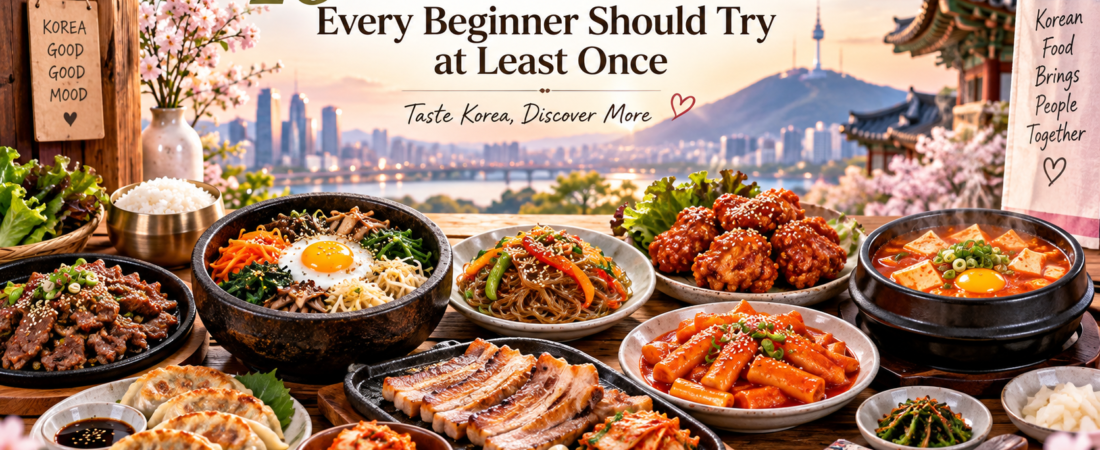
Trying Korean food for the first time can feel like stepping into an entirely new world of flavors. There are sizzling grills, colorful rice bowls, bubbling stews, fermented side dishes, crispy fried chicken, chewy rice cakes, and countless small plates arriving at the table.
But where should you begin?
If you are completely new to Korean cuisine, you do not need to start with the hottest dish or the most unusual item on the menu. There are plenty of approachable Korean foods for beginners that introduce the essential flavors of Korean cooking without making your first experience overwhelming.
Some are sweet and savory. Others are comforting, crispy, smoky, or mildly spicy. Together, they show why Korean cuisine has attracted so much attention around the world.
This guide introduces 10 Korean foods worth trying at least once, explains what each dish tastes like, and gives first-time diners practical tips for ordering and eating them.
Whether you are visiting South Korea, exploring Koreatown in the United States, or simply walking into a Korean restaurant for the first time, these dishes are an excellent place to begin.
Why Is Korean Food So Different?
Before choosing your first dish, it helps to understand that a Korean meal is often structured differently from a typical American meal.
In many American restaurants, each person orders an individual entrée accompanied by one or two side dishes.
Korean dining can be much more communal.
Several dishes may be placed in the center of the table and shared. Small side dishes called banchan may accompany the meal, and rice, soup, grilled meat, vegetables, sauces, and fermented foods can all appear together.
This creates variety.
Instead of eating one flavor from beginning to end, you might alternate between rice, meat, kimchi, vegetables, soup, and other side dishes.
That combination is part of the experience.
If you have never encountered Korean side dishes before, TIPVERO’s guide to What Is Banchan? A Beginner’s Guide to Korean Side Dishes is a useful companion to this article.
[INTERNAL LINK → What Is Banchan? A Beginner’s Guide to Korean Side Dishes]
Now, let’s look at 10 excellent Korean foods for beginners.
1. Bulgogi — A Perfect First Korean Dish
If someone told me they had never eaten Korean food and wanted one easy place to start, bulgogi would be near the top of my list.
Bulgogi typically consists of thin slices of beef marinated in a sweet and savory mixture that can include soy sauce, garlic, sesame oil, sugar or another sweetener, and other seasonings.
The result is flavorful without necessarily being spicy.
For many American diners, this makes bulgogi immediately approachable.
The meat can have a slightly sweet flavor combined with garlic, sesame, and savory notes. Depending on how it is prepared, it may also develop delicious caramelized edges.
What Does Bulgogi Taste Like?
Think tender beef with a balance of:
- savory soy sauce
- mild sweetness
- garlic
- toasted sesame
- rich beef flavor
If spicy Korean food makes you nervous, bulgogi is a great starting point.
How Should Beginners Eat Bulgogi?
Try it with steamed rice.
Depending on the restaurant, you may also eat the meat with lettuce or other greens and add a small amount of sauce.
Don’t feel that you need to combine everything perfectly.
Start with meat and rice, then experiment with the banchan on your table.
Beginner friendliness: 10/10
2. Bibimbap — Korea in a Bowl
Few dishes demonstrate the colorful side of Korean cuisine as well as bibimbap.
The name refers to a mixed rice dish. A bowl usually contains rice topped with an assortment of vegetables and other ingredients. Depending on the version, it may include beef, egg, mushrooms, bean sprouts, spinach, carrots, and other vegetables.
A red pepper-based sauce is commonly served with it.
But here’s an important beginner tip:
You control how much sauce goes into your bowl.
You do not have to make your bibimbap extremely spicy.
Why Is Bibimbap Good for Beginners?
You can see many of the ingredients before mixing them.
That makes the dish less intimidating for someone unfamiliar with Korean food.
Start with a small amount of sauce, mix everything together thoroughly, taste it, and add more sauce if desired.
What Is Dolsot Bibimbap?
You may also see dolsot bibimbap on the menu.
This version is served in a hot stone bowl. The heat can create a crispy layer of rice at the bottom.
That crunchy rice is one of the best parts.
Beginner friendliness: 9/10
3. Korean BBQ — Food and Experience Together
Korean BBQ is more than a dish.
It is an experience.
At many Korean BBQ restaurants, meat is grilled directly at the table. Depending on the restaurant, you may cook it yourself or a server may handle the grill.
Common choices can include beef and pork, both marinated and unmarinated.
The table may also fill with lettuce, sauces, garlic, kimchi, vegetables, and other side dishes.
For someone trying Korean cuisine for the first time, Korean BBQ provides an excellent introduction because you can experiment with many combinations during one meal.
What Should a Beginner Order?
Starting with familiar meats makes the experience easier.
Bulgogi and certain beef preparations are approachable choices. Pork belly is another popular option if you enjoy richer meat.
You can eat grilled meat with rice or wrap it in lettuce with small amounts of sauce and other ingredients.
TIPVERO already has a complete beginner’s guide explaining what to order and how to eat it.
[INTERNAL LINK → Korean BBQ for Beginners: What to Order and How to Eat It]
That article is a natural next read if Korean BBQ is the food on this list that interests you most.
Beginner friendliness: 10/10
4. Japchae — Sweet, Savory and Easy to Love
Japchae is another excellent choice for people who are hesitant about spicy food.
The dish is made with glass noodles, typically combined with vegetables and seasonings. Versions can also include meat.
The noodles have a pleasantly chewy texture and a glossy appearance.
Japchae tends to lean toward savory and slightly sweet flavors rather than intense heat.
What Does Japchae Taste Like?
Expect flavors such as:
- sesame
- soy sauce
- mild sweetness
- vegetables
- savory seasoning
Because the flavors are relatively gentle, japchae is one of the easiest Korean foods for beginners to enjoy.
It can appear as a side dish, a shared dish, or part of a larger Korean meal.
Beginner friendliness: 10/10
5. Korean Fried Chicken — Familiar but Very Korean
Fried chicken may not sound like an adventurous introduction to Korean cuisine.
That’s exactly why it works so well for beginners.
Korean fried chicken takes something familiar and gives it a distinctive Korean identity.
Depending on where you order it, chicken may be available plain and crispy or coated in various sauces.
Some sauces are sweet, savory, spicy, garlicky, or combinations of those flavors.
Why Is Korean Fried Chicken So Popular?
Texture is a major attraction.
A well-prepared piece can have a crisp exterior while remaining juicy inside.
For beginners, ordering multiple flavors to share can be especially fun.
If you do not tolerate spicy food well, ask about the heat level before choosing a sauce.
Do not assume every red sauce is mild.
Beginner friendliness: 10/10
6. Mandu — Korean Dumplings
If you already enjoy dumplings, potstickers, or similar foods, mandu is an easy bridge into Korean cuisine.
Mandu are Korean dumplings that can contain combinations of meat, vegetables, tofu, and other ingredients.
Preparation methods vary.
You may encounter them:
- steamed
- boiled
- pan-fried
- deep-fried
- served in soup
The exact filling and flavor depend on the restaurant and type.
Why Should Beginners Try Mandu?
The format is familiar.
You have dough on the outside and flavorful filling inside, which makes mandu less intimidating than an unfamiliar stew or fermented dish.
Fried mandu can be particularly approachable for someone completely new to Korean cuisine.
Beginner friendliness: 10/10
7. Tteokbokki — Your Introduction to Korean Spice
Now we move into something more adventurous.
Tteokbokki is famous for its chewy rice cakes, often served in a bold red sauce.
The texture may surprise Americans trying it for the first time.
Korean rice cakes are not cakes in the American dessert sense. They can be dense, soft, and extremely chewy.
Is Tteokbokki Spicy?
Often, yes.
The level varies considerably by recipe and restaurant.
The sauce can combine spicy, sweet, and savory flavors.
If you have very little tolerance for heat, do not make an extremely spicy tteokbokki your first Korean meal.
But once you have tried several milder dishes, tteokbokki is an excellent way to experience the spicy side of Korean street food.
Beginner friendliness: 7/10
8. Kimchi — The Flavor You Need to Experience
You cannot make a list of Korean foods without discussing kimchi.
Kimchi refers broadly to fermented vegetables prepared with various seasonings. There are many varieties, and they do not all taste identical.
For many international diners, napa cabbage kimchi is the version they encounter most frequently.
What Does Kimchi Taste Like?
That is difficult to answer with one word.
Depending on the type and fermentation stage, you may notice:
- sourness
- saltiness
- spice
- garlic
- fermentation
- freshness or crunch
The flavor can be powerful when you are not accustomed to fermented food.
Therefore, beginners do not need to eat a large portion immediately.
Try a small bite with rice or another part of your meal.
Kimchi Is Not Just One Food
This is important.
Trying one kimchi and deciding you dislike all kimchi would be like trying one cheese and deciding you dislike every cheese.
Different vegetables, seasoning methods, regional traditions, and fermentation levels produce different results.
Give yourself time to explore.
Beginner friendliness: 7/10
9. Samgyeopsal — Korean Pork Belly
Samgyeopsal is thick-cut pork belly commonly associated with Korean grilling.
Unlike some marinated Korean meats, samgyeopsal can let the flavor of the pork itself take center stage.
After grilling, pieces may be eaten with lettuce, garlic, sauces, vegetables, or rice.
Why Is Samgyeopsal Fun?
It demonstrates the communal nature of Korean dining.
Rather than receiving one finished plate from the kitchen, you participate in the meal.
Meat cooks on the grill while everyone shares side dishes and builds different bites.
Because pork belly contains a significant amount of fat, the flavor is rich.
If you enjoy bacon or other fatty cuts of pork, the texture and richness may be appealing, although the seasoning and preparation are quite different.
Beginner friendliness: 9/10
10. Sundubu Jjigae — Korean Comfort Food in a Bubbling Pot
Once you are ready to explore Korean soups and stews, sundubu jjigae is worth trying.
It is a soft tofu stew commonly served hot and bubbling.
Depending on the version, it may contain soft tofu along with vegetables, seafood, meat, egg, or other ingredients.
Many versions are spicy, although heat levels vary.
What Makes Sundubu Jjigae Special?
Texture.
The soft tofu is dramatically different from grilled meat or chewy noodles.
The hot broth, soft tofu, rice, and side dishes together create a comforting meal, especially on a cold day.
If you are sensitive to spice, ask whether a milder version is available.
Beginner friendliness: 8/10
Which Korean Food Should You Try First?
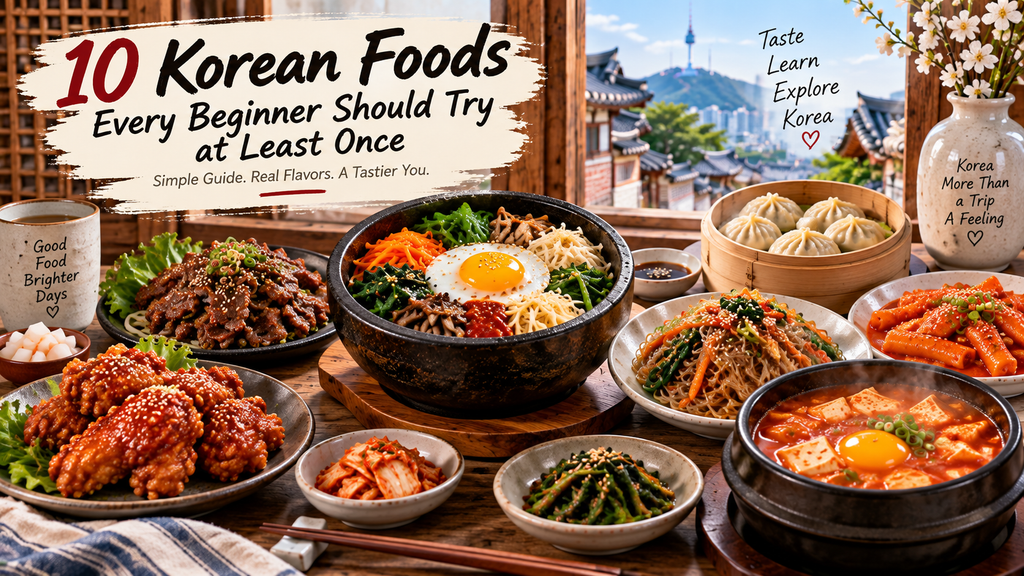
If you have never eaten Korean food before, you do not need to start with the most adventurous option.
Here is an easy progression.
Level 1 — Very Easy
Start with:
Bulgogi → Japchae → Mandu → Korean Fried Chicken
These dishes contain textures and flavors that many Americans will find relatively familiar.
Level 2 — Experience a Korean Meal
Next try:
Bibimbap → Korean BBQ → Samgyeopsal
Now you begin experiencing not only individual flavors but also Korean dining customs and shared meals.
Level 3 — Explore Stronger Flavors
Then move toward:
Kimchi → Tteokbokki → Sundubu Jjigae
These introduce fermentation, stronger spice, chewy rice cakes, and Korean stew culture.
There is no rule saying you must follow this order.
Food is personal.
The point is simply that Korean cuisine has many entry points. You do not have to love extremely spicy food to enjoy Korean cooking.
Understanding Banchan at Your First Korean Restaurant
One thing frequently surprises first-time diners.
You order one or two dishes, and suddenly several small plates arrive.
These are banchan, or Korean side dishes.
Depending on the restaurant and meal, they may include kimchi, seasoned vegetables, pickled foods, and other small dishes.
Banchan are meant to accompany the meal rather than function as ten separate appetizers.
Try small amounts alongside your rice and main dishes.
For a detailed explanation, read:
[INTERNAL LINK → What Is Banchan? A Beginner’s Guide to Korean Side Dishes]
Understanding banchan before your first restaurant visit makes the meal much less confusing.
Is All Korean Food Spicy?
No.
This is one of the biggest misconceptions about Korean cuisine.
Some Korean foods can be very spicy, but many are mild.
Bulgogi, japchae, mandu, and many grilled meats can be excellent choices for people who avoid hot peppers.
Even dishes that are traditionally spicy can vary substantially between restaurants.
If you are unsure, ask.
Learning a dish’s spice level before ordering is better than assuming.
How to Order Korean Food for the First Time
Walking into a Korean restaurant can feel intimidating if the menu contains unfamiliar names.
Keep your first order simple.
If two people are dining together, consider choosing a familiar main dish plus something new.
For example, you might order bulgogi and japchae, then sample the banchan.
At Korean BBQ, ask the staff for recommendations if you are unfamiliar with the meat selections.
Do not worry about performing every dining custom perfectly.
Be respectful, observe what others are doing, and enjoy learning.
Korean Food Is About More Than One Dish
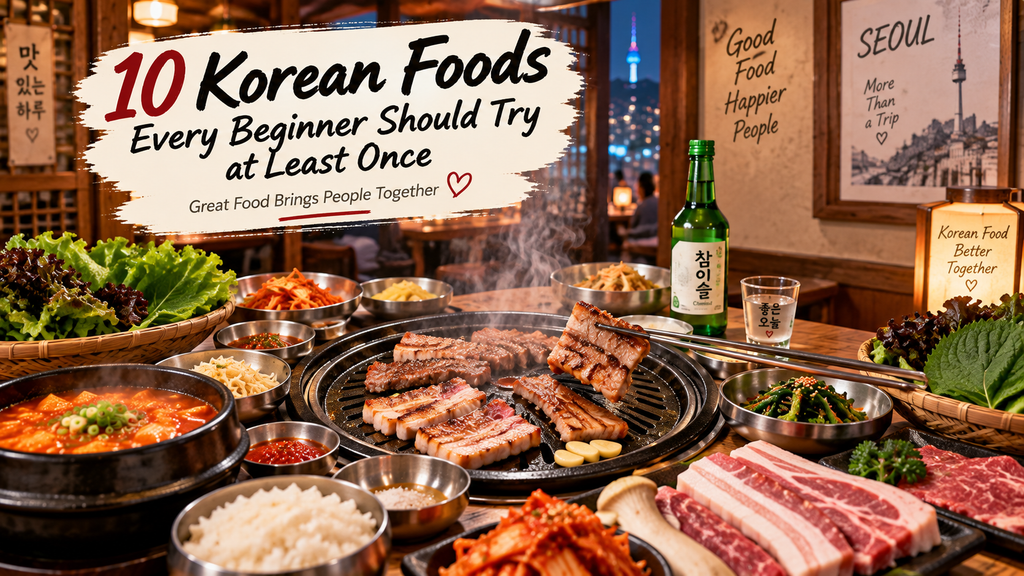
One reason Korean cuisine is fascinating is the interaction between different foods.
Rice can balance a salty or spicy dish.
Kimchi can add acidity and crunch.
A grilled meat can be combined with vegetables and sauce.
Soup may accompany rice.
Banchan introduce several additional textures.
This means judging Korean cuisine from one isolated dish misses much of what makes the food interesting.
Try combinations.
You may discover that a food you find intense by itself becomes delicious when eaten with rice or another component of the meal.
Korean Foods for Beginners: Quick Comparison
| Food | Main Flavor | Spicy? | Beginner Level |
|---|---|---|---|
| Bulgogi | Sweet & savory | Usually mild | Excellent |
| Bibimbap | Savory & fresh | Adjustable | Excellent |
| Korean BBQ | Smoky & savory | Depends | Excellent |
| Japchae | Sweet & savory | Usually mild | Excellent |
| Korean Fried Chicken | Crispy & savory | Depends | Excellent |
| Mandu | Savory | Usually mild | Excellent |
| Tteokbokki | Sweet & spicy | Often | Moderate |
| Kimchi | Sour, savory & spicy | Varies | Moderate |
| Samgyeopsal | Rich & savory | Mild | Excellent |
| Sundubu Jjigae | Rich & spicy | Often | Good |
Final Thoughts
The best way to discover Korean cuisine is not to worry about finding the single “perfect” dish.
Start with something that sounds appealing.
If you enjoy beef, try bulgogi or Korean BBQ.
If you like noodles, start with japchae.
If you enjoy dumplings, order mandu.
If crispy chicken sounds irresistible, Korean fried chicken is an easy introduction.
Then become a little more adventurous.
Try kimchi. Taste tteokbokki. Order a bubbling bowl of sundubu jjigae.
The wonderful thing about Korean foods for beginners is that there is no single starting point. Korean cuisine contains mild dishes, spicy dishes, grilled foods, soups, noodles, dumplings, vegetables, fermented foods, and countless combinations.
Your first Korean meal does not have to teach you everything about Korean food.
It only has to make you curious enough to try the next one.
FAQ
What is the best Korean food for a beginner?
Bulgogi is one of the easiest choices because it combines tender beef with familiar sweet and savory flavors and is generally not intensely spicy.
What Korean foods are not spicy?
Bulgogi, japchae, many types of mandu, some Korean BBQ meats, and several other dishes can be mild. Recipes vary, so ask the restaurant when necessary.
Is bibimbap good for beginners?
Yes. Bibimbap is particularly beginner-friendly because you can see the ingredients and control how much spicy sauce you add.
Is Korean BBQ difficult for first-time diners?
Not necessarily. Restaurant staff can often assist with grilling, and beginners can start with familiar beef or pork options.
Do I have to eat kimchi with every Korean meal?
No. Kimchi is an important part of Korean food culture, but you can explore Korean cuisine at your own pace.
What should two beginners order at a Korean restaurant?
A combination such as bulgogi, japchae, rice, and the accompanying banchan provides a gentle introduction to several Korean flavors and textures.