
Understanding the Tiny Chips Powering Computers, Smartphones, Artificial Intelligence, and the Global Economy
What Is a Semiconductor, and why does South Korea manufacture so many of the chips that power modern technology? A semiconductor is a material whose ability to conduct electricity can be carefully controlled. Engineers use semiconductor materials to build tiny electronic components, including transistors, that form the foundation of modern computer chips.
These chips are essential to smartphones, laptops, automobiles, appliances, medical equipment, and artificial intelligence systems. Although most consumers rarely see them, semiconductors influence the prices, performance, and availability of products used every day.
South Korea has become one of the world’s most important semiconductor manufacturing centers, particularly in memory chips. Companies such as Samsung Electronics and SK hynix supply technologies used by computer manufacturers, cloud computing companies, and AI developers around the world.
For Americans, understanding the semiconductor industry offers practical insights into electronics prices, international trade, supply chain reliability, and the economic relationship between the United States and South Korea.
Table of Contents
1. What Is a Semiconductor and How Does It Work?
A semiconductor is a material that conducts electricity under certain conditions while resisting electrical flow under others.
This controllable behavior makes it extremely useful in electronic circuits.
Silicon is the most widely recognized semiconductor material. It is commonly used to manufacture integrated circuits, often called chips or microchips.
Inside these chips are enormous numbers of microscopic electronic structures designed to process, store, or control information.
To understand what is a semiconductor and how it works, we first need to examine how engineers control electrical current inside tiny electronic components.
1.1 How Does a Semiconductor Work?
Semiconductors can be engineered so that electrical current behaves predictably.
One important manufacturing technique is called doping, which introduces carefully controlled impurities into a semiconductor material.
These impurities change how electrical charges move through the material.
Engineers combine different semiconductor regions to create useful electronic components, including diodes and transistors.
A transistor can function as a switch or amplifier. In digital chips, enormous collections of transistors perform logical operations that allow computers to carry out instructions.
1.2 Why Is Silicon So Important?
Silicon is useful because its electrical properties can be engineered and because it can form a high-quality insulating layer of silicon dioxide.
It is also abundant in the Earth’s crust, although semiconductor manufacturing requires exceptionally pure material.
Producing electronic-grade silicon and transforming it into advanced chips involves sophisticated industrial processes.
Other semiconductor materials, including silicon carbide and gallium nitride, are also important for specialized applications such as power electronics.
2. What Do Semiconductor Chips Actually Do?
When exploring what is a semiconductor, it helps to understand that different chips are designed for processing information, storing data, and controlling electronic systems.
Semiconductors perform several functions depending on their design.
Some process information, while others store data, control power, amplify signals, or interact with sensors.
2.1 Processing Information
Processors contain circuits that perform calculations and execute instructions.
Central processing units, or CPUs, handle many general computing tasks.
Graphics processing units, or GPUs, are designed for highly parallel processing and are important for gaming, scientific computing, and artificial intelligence.
2.2 Storing Information
Memory semiconductors hold information needed by electronic devices.
DRAM temporarily stores information for active applications.
NAND flash retains digital files when the device is turned off.
High-bandwidth memory, known as HBM, provides extremely high data-transfer bandwidth for demanding computing environments.
2.3 Controlling Electronic Systems
Not every semiconductor is a processor or memory chip.
Power semiconductors help manage electricity in electric vehicles, chargers, and industrial equipment.
Sensors detect changes in light, temperature, pressure, or movement.
Communications chips help devices connect to wireless networks.
This diversity explains why the semiconductor industry supports nearly every sector of the modern economy.
The Semiconductor Industry Association describes semiconductors as fundamental components of communications, computing, transportation, health care, and emerging technologies in its industry impact overview.
3. What Are the Main Types of Semiconductors?
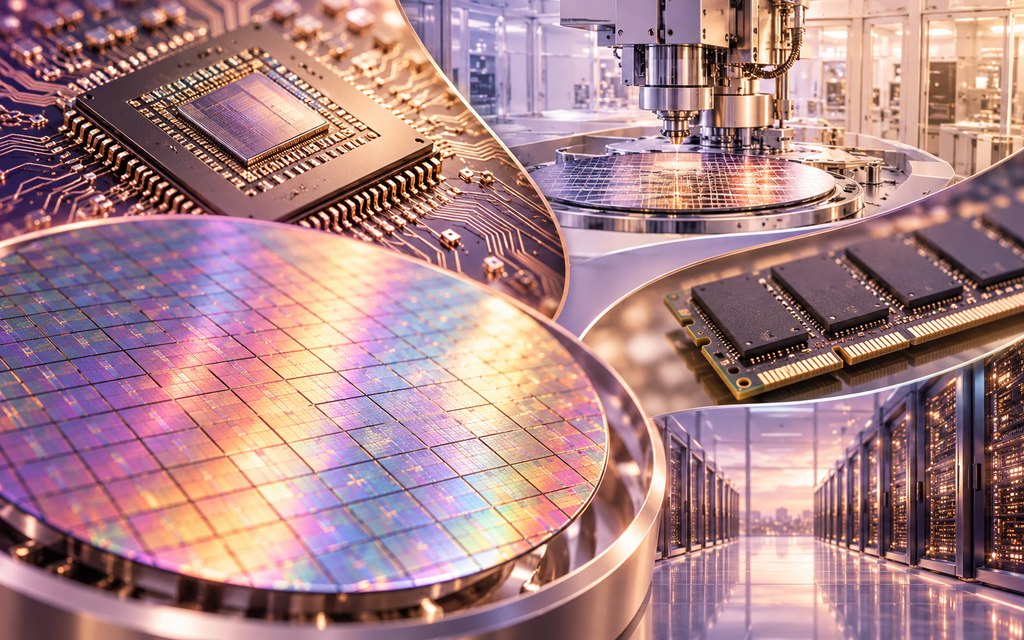
The semiconductor industry contains several major product categories.
Understanding these differences is especially important when discussing South Korea’s manufacturing strength.
Another important part of understanding what is a semiconductor is recognizing the differences between memory chips, logic processors, and power semiconductors.
3.1 Memory Semiconductors
Memory chips store digital information.
DRAM and NAND flash are two major categories.
HBM is an advanced form of stacked DRAM used in bandwidth-intensive computing applications.
South Korean manufacturers are particularly important in this segment.
3.2 Logic Semiconductors
Logic chips perform calculations and control operations.
Examples include CPUs, GPUs, application processors, and specialized AI accelerators.
The leading companies involved in logic chip design and manufacturing operate across several countries.
3.3 Analog and Power Semiconductors
Analog chips work with signals such as voltage, sound, temperature, and radio frequencies.
Power semiconductors regulate or convert electrical energy.
Both categories are essential in modern vehicles, industrial systems, and consumer electronics.
Table 1. Major Types of Semiconductor Chips
| Chip Type | Primary Function | Common Applications |
|---|---|---|
| DRAM | Temporary working memory | Computers, smartphones, servers |
| NAND Flash | Persistent digital storage | SSDs, phones, USB drives |
| HBM | High-bandwidth working memory | AI accelerators, advanced computing |
| CPU | General-purpose processing | PCs, servers, electronic systems |
| GPU | Parallel processing | Graphics, AI, scientific computing |
| Power Semiconductor | Electrical power control | EVs, chargers, industrial equipment |
| Analog Chip | Real-world signal processing | Sensors, communications, medical devices |
The most advanced chip is not automatically the best choice for every application. Each category is optimized for particular functions.
4. Why Does South Korea Make So Many Semiconductors?
The question of what is a semiconductor is closely connected to South Korea’s economic development, because the country has invested heavily in advanced chip manufacturing.
South Korea’s semiconductor leadership developed over several decades.
Its success did not result from a single invention or government program. Instead, it reflects sustained investment, industrial specialization, manufacturing expertise, and the growth of globally competitive companies.
4.1 Decades of Industrial Investment
South Korean companies began expanding semiconductor operations during the late twentieth century.
Over time, manufacturers invested in production facilities, equipment, engineering talent, and research capabilities.
Memory production became a particularly important area of specialization.
As companies improved their production processes and expanded manufacturing capacity, they developed expertise that was difficult and expensive for competitors to replicate quickly.
4.2 Specialization in Memory Chips
Memory manufacturing requires sophisticated technology, massive capital investments, and consistent production quality.
Successful producers need to manufacture enormous quantities of chips while maintaining competitive costs.
This combination rewards companies that can operate advanced factories efficiently and invest continuously in future technologies.
South Korea developed a strong position in this industry through Samsung Electronics and SK hynix.
4.3 Government Support and Industrial Infrastructure
Government policy has also helped shape South Korea’s semiconductor ecosystem.
Infrastructure development, research support, education, investment incentives, and industrial coordination can influence where manufacturers build facilities.
According to the U.S. International Trade Administration’s South Korea digital economy guide, the South Korean government expanded its semiconductor support package to approximately 33 trillion won in April 2025.
The package reflects continuing efforts to strengthen manufacturing competitiveness, infrastructure, research, and supply chain capabilities.
4.4 Concentrated Manufacturing Expertise
Semiconductor factories depend on more than the company operating the production line.
They also require specialized suppliers, engineers, chemicals, industrial gases, testing services, equipment maintenance, electricity, and reliable water supplies.
Clusters of semiconductor-related activity can make manufacturing coordination more efficient.
However, concentration also creates risks, including infrastructure pressure and vulnerability to local disruptions.
5. How Important Are Semiconductors to South Korea’s Economy?
Semiconductors are among South Korea’s most valuable export industries.
They connect the country’s domestic industrial base to global demand for electronics and computing technology.
Official South Korean trade data reported semiconductor exports of approximately $173.48 billion in 2025, representing an increase of 22.1% from 2024.
The same report recorded approximately $142.09 billion in semiconductor exports for 2024.
The 2025 increase reflected demand for memory products used in AI servers, along with changes in semiconductor selling prices.
For the broader economy, this industry supports manufacturing activity, research investment, equipment suppliers, and export earnings.
Nevertheless, semiconductor dependence carries financial risks.
When global memory prices decline or demand weakens, semiconductor producers may experience substantial changes in revenue and profitability.
Strong semiconductor exports therefore do not guarantee that every industry or household in South Korea benefits equally.
Table 2. South Korean Semiconductor Exports
| Year | Semiconductor Exports | Annual Change |
|---|---|---|
| 2024 | $142.09 billion | — |
| 2025 | $173.48 billion | +22.1% |
Source: South Korea’s Ministry of Science and ICT and Ministry of Trade, Industry and Resources, 2025 annual ICT trade report, released in January 2026. Values are rounded.
Semiconductors represented approximately 24.4% of South Korea’s total merchandise exports in 2025, according to the U.S. International Trade Administration.
This illustrates both the industry’s economic importance and the country’s exposure to changes in global technology demand.
6. Why Are Samsung Electronics and SK hynix So Important?
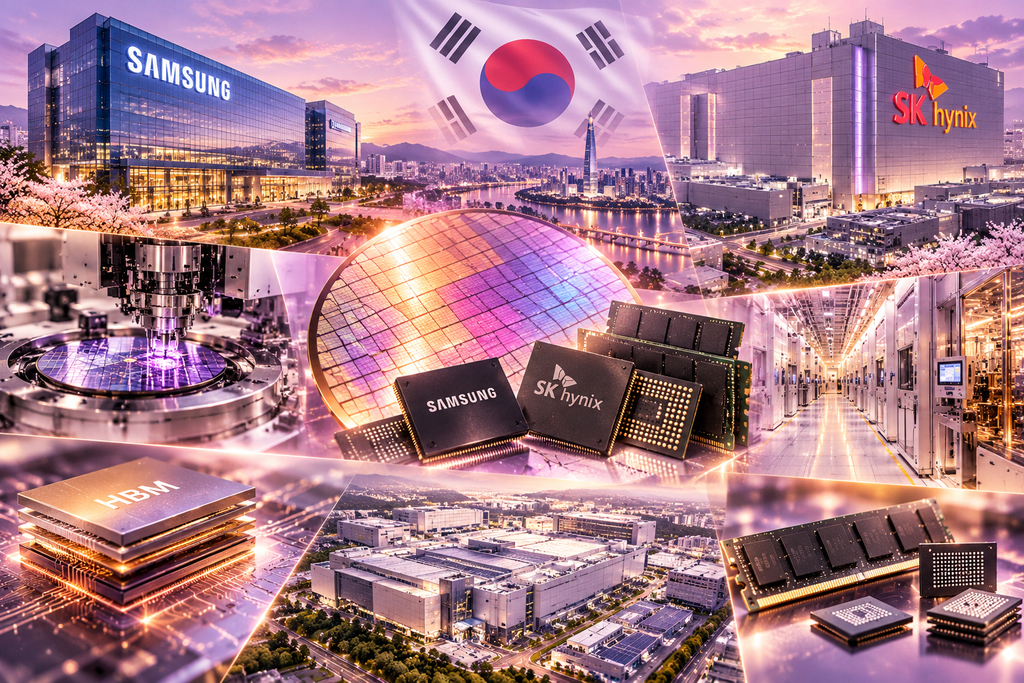
Two South Korean companies play particularly important roles in the global memory industry.
6.1 Samsung Electronics
Samsung Electronics manufactures several categories of semiconductor products.
Its memory business includes DRAM, NAND flash, mobile memory, and advanced memory technologies.
Samsung also operates semiconductor foundry and system semiconductor businesses.
This means Samsung is involved in both memory manufacturing and other areas of chip production.
For consumers, Samsung semiconductors may appear inside products from multiple electronics manufacturers, not only Samsung-branded devices.
6.2 SK hynix
SK hynix is another major manufacturer of memory semiconductors.
Its products include DRAM, NAND flash, and advanced memory designed for high-performance computing.
The company’s HBM development has attracted attention because AI computing systems require increasingly sophisticated memory solutions.
6.3 Why Competition Matters
Samsung and SK hynix compete with other memory manufacturers, including U.S.-based Micron.
Competition affects research priorities, manufacturing investments, product performance, and long-term pricing.
No single company controls every part of semiconductor technology.
Even large manufacturers rely on specialized equipment, materials, design tools, and customers across international markets.
7. Why Is Artificial Intelligence Increasing Semiconductor Demand?
AI systems require enormous amounts of computation and frequent movement of data.
Advanced AI processors perform mathematical calculations, while memory provides access to model information and intermediate results.
This creates demand for processing performance, memory capacity, and high data-transfer bandwidth.
7.1 The Importance of HBM
High-bandwidth memory is designed to move substantial amounts of data efficiently.
HBM typically uses vertically stacked memory dies with advanced interconnections.
These arrangements can provide high bandwidth within the physical constraints of advanced computing systems.
HBM is particularly useful when AI processors need large amounts of data delivered rapidly.
7.2 Why AI Needs More Than One Type of Chip
An AI data center may use GPUs or specialized accelerators for computation, HBM for high-bandwidth working memory, conventional DRAM for server workloads, and SSDs for persistent storage.
Networking chips, power-management components, and other semiconductors are equally important.
As a result, rising AI investment can affect several semiconductor markets simultaneously.
7.3 Does AI Guarantee Continued Growth?
No.
AI creates significant opportunities, but future demand depends on computing investment, energy availability, software development, economic conditions, and technological changes.
Manufacturers also face production costs, intense competition, and uncertainty about future market needs.
A technology’s importance does not guarantee steadily rising sales or profits.
8. Does South Korea Manufacture Every Kind of Advanced Chip?
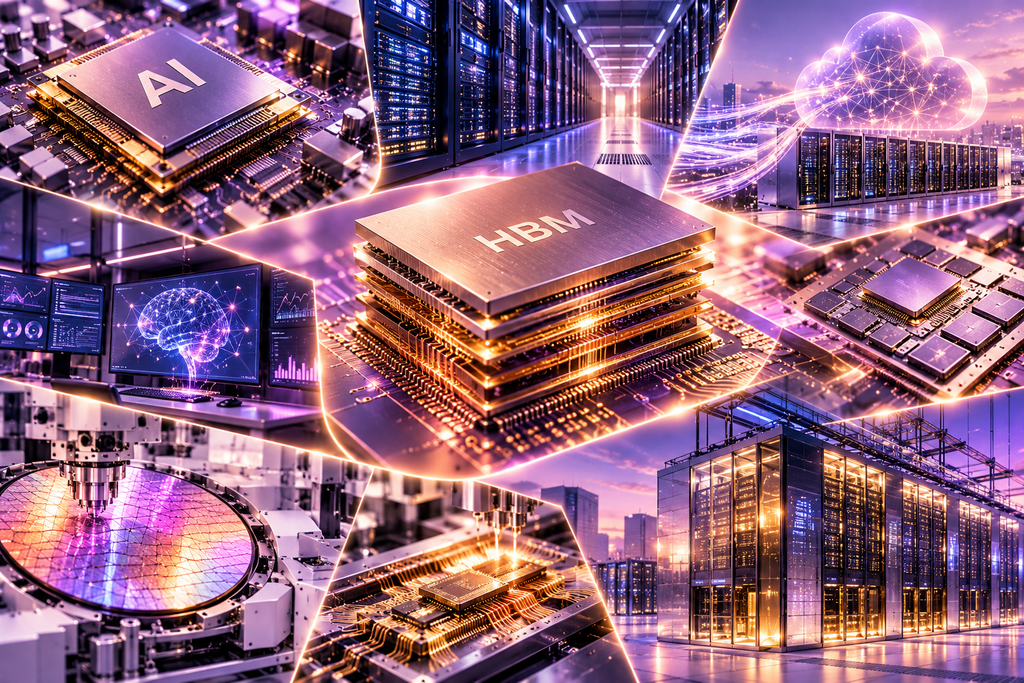
No. South Korea is especially competitive in memory semiconductors, but the global industry contains many distinct specialties.
The United States has major strengths in semiconductor design, research, software tools, and certain manufacturing technologies.
Taiwan plays a central role in contract manufacturing of advanced logic semiconductors.
Japan and European countries contribute important manufacturing equipment, materials, and specialized technologies.
South Korea has also developed system semiconductor and foundry capabilities, although competition in these areas remains challenging.
The U.S. International Trade Administration’s South Korea AI semiconductor market assessment identifies opportunities and remaining gaps in Korean fabless design, system semiconductors, packaging, and supply chain development.
Therefore, describing South Korea as a global semiconductor leader is accurate, but claiming that it dominates every semiconductor category would be misleading.
9. How Does Semiconductor Manufacturing Work?
Manufacturing modern chips involves hundreds of carefully controlled processing operations.
The exact production sequence varies by chip type.
9.1 Silicon Wafer Preparation
Manufacturing begins with highly purified semiconductor material.
Silicon is processed into wafers that provide the physical foundation for many integrated circuits.
9.2 Circuit Patterning
Engineers use lithography and other fabrication techniques to create extremely small structures.
Layers of materials are deposited, patterned, modified, and selectively removed.
These steps form transistors and the electrical connections between them.
9.3 Testing and Packaging
After fabrication, individual chips are tested to determine whether they meet quality and performance requirements.
Chips are then separated from the wafer and packaged using techniques appropriate for the product.
Advanced packaging can combine multiple semiconductor components into a single high-performance assembly.
9.4 Why Factories Are So Expensive
Semiconductor production requires highly specialized equipment, cleanroom environments, reliable infrastructure, and skilled workers.
Advanced manufacturing facilities can cost many billions of dollars.
Companies must also invest continuously because technology and customer requirements evolve.
This high financial barrier helps explain why relatively few companies operate at the most advanced manufacturing levels.
10. Why Do Semiconductors Matter to American Consumers?
Semiconductors affect everyday life even when consumers never purchase an individual chip.
10.1 Smartphones and Computers
A smartphone contains numerous semiconductors responsible for processing, memory, communication, imaging, and power management.
Does Your Smartphone Use Memory Chips Made in South Korea?
A laptop likewise depends on processors, memory, storage controllers, and related components.
Supply disruptions or higher component costs can influence manufacturing expenses and product availability.
However, retail prices depend on many additional factors, including brand positioning, competition, logistics, and retailer pricing.
10.2 Cars and Electric Vehicles
Modern vehicles rely on chips for engine management, safety features, entertainment systems, battery control, and driver assistance.
Electric vehicles also use important power semiconductor technologies.
Chip shortages can interfere with vehicle manufacturing when the affected components have limited substitutes.
10.3 Health Care and Household Appliances
Medical devices, monitoring equipment, washing machines, refrigerators, and home networking systems all use semiconductor components.
Even relatively inexpensive chips may be critical to a finished product.
10.4 Why Chip Prices Can Change
Semiconductor prices respond to supply and demand, production capacity, technology transitions, and market conditions.
Memory markets are especially sensitive to changes in demand and manufacturing investment.
A consumer does not need to predict the semiconductor cycle to make a sensible purchase.
Comparing device specifications, warranties, repairability, and total ownership costs is often more practical.
11. How Do the United States and South Korea Depend on Each Other?
The U.S. and South Korean semiconductor industries are closely connected through trade, investment, and technology development.
American companies design processors, develop software, manufacture equipment, and purchase memory products.
South Korean companies manufacture memory and other semiconductors used by global customers, including American technology companies.
This relationship involves both cooperation and competition.
11.1 The U.S. Semiconductor Industry
The Semiconductor Industry Association reported global semiconductor sales of $791.7 billion in 2025, up 25.6% from 2024.
That figure represents worldwide semiconductor sales rather than sales by South Korean manufacturers alone.
The United States remains a major semiconductor design and technology center, while global manufacturing is distributed across multiple countries.
11.2 The CHIPS and Science Act
The United States enacted the CHIPS and Science Act in August 2022 to encourage domestic semiconductor research and manufacturing.
The legislation included substantial federal support for semiconductor-related industrial development.
The U.S. Department of Commerce describes these objectives in its semiconductor manufacturing program overview.
Expanding domestic manufacturing can support supply chain resilience, although building facilities and developing the required workforce takes time.
11.3 Why International Cooperation Still Matters
Even when a country expands domestic chip production, it cannot easily replace every foreign supplier.
Semiconductor manufacturing depends on complex networks of equipment makers, chemical suppliers, specialized manufacturers, and research organizations.
International cooperation remains important for maintaining reliable technology supply chains.
At the same time, governments and businesses must consider export controls, geopolitical tensions, trade restrictions, and strategic dependencies.
12. What Challenges Does South Korea’s Semiconductor Industry Face?
South Korea’s position in semiconductor manufacturing creates opportunities, but also significant challenges.
12.1 Global Competition
Competitors continue improving memory production, advanced packaging, and chip design.
South Korean firms must invest in research while controlling costs.
12.2 High Manufacturing Costs
Advanced factories require enormous capital investments.
Electricity, water, specialized equipment, construction, and engineering talent all influence production economics.
12.3 Dependence on International Markets
Much of South Korea’s semiconductor production serves international customers.
Changes in overseas demand, trade relationships, or economic conditions can influence exports.
12.4 Technology Transitions
New manufacturing processes and memory architectures can create opportunities for leading producers.
They can also introduce technical risks and increase development expenses.
12.5 Environmental and Infrastructure Pressures
Chip manufacturing consumes significant resources, including energy and highly purified water.
Companies and governments face pressure to improve resource efficiency and maintain reliable infrastructure.
Managing these challenges will be important for long-term competitiveness.
13. What Is the Future of South Korea’s Semiconductor Industry?
Future growth will depend on the country’s ability to remain competitive across increasingly demanding technologies.
AI memory, advanced packaging, manufacturing efficiency, and energy performance are likely to remain important priorities.
South Korea is also working to expand capabilities beyond conventional memory manufacturing.
However, industry forecasts should be treated as estimates rather than guaranteed outcomes.
Long-term results will depend on global demand, technology development, investment decisions, trade policies, and competitive pressures.
For American consumers, the most visible effects may appear through improvements in computing performance, storage capacity, AI services, and electronic products.
South Korea’s importance lies not in manufacturing every chip, but in producing essential components that complement technologies developed around the world.
Frequently Asked Questions (FAQ)
1. What is a semiconductor in simple terms?
A semiconductor is a material whose electrical conductivity can be controlled. It is used to create electronic components such as transistors and integrated circuits.
2. Why does South Korea manufacture so many semiconductors?
South Korea developed substantial memory manufacturing expertise through decades of investment, industrial specialization, research, and the expansion of companies such as Samsung Electronics and SK hynix.
3. Is Samsung the largest semiconductor company in South Korea?
Samsung Electronics is one of South Korea’s largest semiconductor manufacturers. Its businesses include memory chips, foundry services, and other semiconductor products.
4. What kinds of chips does SK hynix make?
SK hynix manufactures memory products, including DRAM, NAND flash, and advanced high-bandwidth memory.
5. What is the difference between a semiconductor and a memory chip?
A semiconductor is a broader term describing a material or an electronic component made using semiconductor technology. A memory chip is a specific type of semiconductor device designed to store information.
6. Why are Korean memory chips important for AI?
AI systems require fast access to large amounts of data. South Korean manufacturers supply memory technologies, including HBM, that support high-performance computing.
7. Does South Korea make all the world’s computer chips?
No. Semiconductor manufacturing and design are distributed across numerous countries. South Korea is especially strong in memory, while other countries specialize in logic manufacturing, chip design, equipment, and materials.
8. Can semiconductor shortages increase American product prices?
Yes. A shortage can raise component costs or restrict production. However, the final consumer price also depends on demand, competition, transportation, and other business factors.
9. Why does the United States invest in semiconductor manufacturing?
Domestic manufacturing can strengthen supply chain resilience, support economic activity, and improve access to strategically important technologies.
10. Will South Korea remain important in the semiconductor industry?
South Korea has considerable manufacturing expertise and established semiconductor businesses. Its future position will depend on continued innovation, investment, and competition rather than being guaranteed.
Conclusion: Why South Korea Matters to the Global Semiconductor Industry
Semiconductors are essential building blocks of modern technology.
Learning what is a semiconductor provides a useful foundation for understanding South Korea’s role in the global technology industry and the devices Americans rely on every day.
They process information, store data, manage electrical systems, and support the devices that people rely on every day.
South Korea became a major semiconductor manufacturing center through long-term investment, technical expertise, industrial specialization, and globally competitive companies.
Samsung Electronics and SK hynix have helped establish the country as a major producer of memory chips used in smartphones, computers, servers, and AI infrastructure.
For Americans, this matters because semiconductor supply chains influence technology availability, business investment, manufacturing costs, and economic relationships between countries.
Understanding what semiconductors do—and why South Korea produces so many—provides a clearer picture of the international systems supporting modern digital life.
The future of technology will depend not on one country or company, but on the continued development of a deeply interconnected global semiconductor industry.