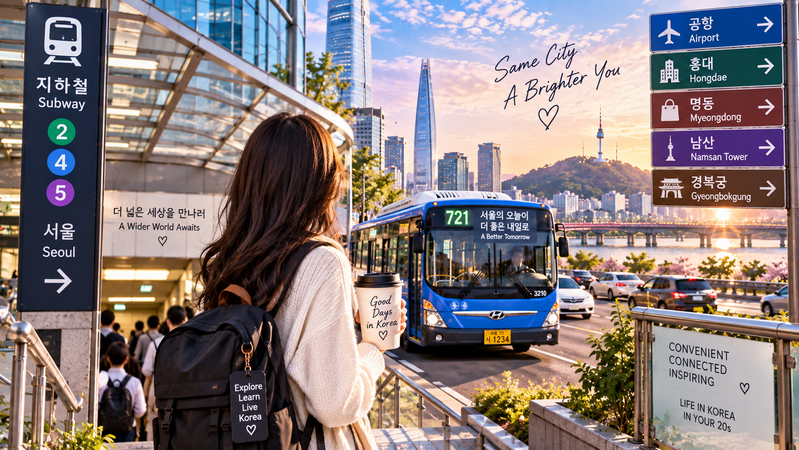
Moving to another country in your 20s can sound exciting, intimidating, and slightly unrealistic all at the same time. South Korea, in particular, attracts young adults from around the world because of its modern cities, public transportation, food, entertainment, technology, and relatively convenient urban lifestyle.
But can you really move to South Korea in your 20s and build a life there?
The short answer is yes—but moving to South Korea is very different from visiting Seoul for two weeks.
You need a legal reason to stay, enough money to establish yourself, a realistic housing plan, and an understanding of how everyday life works once the excitement of arriving wears off.
This guide explains the major things young adults should consider before moving to South Korea in 2026, including visas, jobs, housing, living costs, transportation, healthcare, banking, language barriers, and long-term planning.
Table of Contents
- Can You Actually Move to South Korea in Your 20s?
- Visiting Korea vs. Living in Korea
- Choosing the Right Visa
- Can You Move Without a Job?
- Finding Work in South Korea
- How Much Money Should You Save?
- Housing in South Korea
- Understanding Jeonse and Wolse
- Transportation Without a Car
- Healthcare and Health Insurance
- Banking and Mobile Phones
- Do You Need to Speak Korean?
- Making Friends and Building a Social Life
- Advantages of Moving to Korea in Your 20s
- Challenges You Should Expect
- A Practical Moving Checklist
- Is South Korea a Good Long-Term Home?
- FAQ
Can You Actually Move to South Korea in Your 20s?

Yes. Your 20s can actually be one of the easier stages of life for experimenting with living abroad.
Many people in their twenties have fewer long-term commitments involving children, property, established careers, or other responsibilities that can make international relocation more complicated later in life.
However, being young does not automatically give you the legal right to live in Korea.
That is the first important distinction.
You cannot simply arrive as a visitor and decide to remain indefinitely. Your ability to stay depends on your nationality, purpose of residence, visa status, employment, education, family circumstances, or another qualifying immigration category.
Therefore, the first question shouldn’t be:
“Can I afford an apartment in Seoul?”
It should be:
“What legal status would allow me to live in South Korea?”
Everything else comes after that.
Visiting Korea vs. Living in Korea
A vacation can give you a misleading impression of what living abroad will actually feel like.
As a tourist, you may spend your days exploring Hongdae, visiting cafés in Seongsu, shopping in Myeongdong, eating Korean barbecue, or taking weekend trips to Busan.
Living in Korea means dealing with completely different responsibilities.
You may need to:
- sign a housing contract,
- pay utility bills,
- obtain the appropriate residence documentation,
- open a Korean bank account,
- set up a mobile phone,
- understand garbage and recycling rules,
- navigate healthcare,
- pay taxes,
- renew your immigration status,
- communicate with landlords,
- and manage everyday administrative tasks.
This doesn’t make Korea a bad place to live.
It simply means that living in Korea is not the same experience as consuming Korean culture from abroad.
The more realistically you prepare, the easier the transition is likely to be.
Choosing the Right Visa
Your visa or residence status is one of the most important parts of your moving plan.
South Korea has numerous immigration categories, and the appropriate one depends on why you are moving.
Young foreigners may potentially enter Korea through routes connected with employment, university study, language study, working holidays, professional qualifications, business activities, or family relationships.
For example, someone attending a Korean university will have a very different immigration path from someone hired by a Korean company.
A person of Korean heritage may also have options that are unavailable to someone without Korean ancestry.
Do not choose an apartment, quit your job, or purchase a one-way flight simply because you have found a visa name online.
Start with three questions:
1. Why am I moving?
Are you moving for employment, school, language study, family, business, or simply because you want to experience life in Korea?
2. How long do I want to stay?
There is a major difference between living in Korea for six months and trying to establish a life there for five years.
3. What will I do after the first visa expires?
Young people sometimes concentrate entirely on getting into Korea.
A better strategy is to think about what happens afterward.
If you enjoy living there, can your status be extended? Can you change to another status? Will your career allow you to remain?
Your immigration plan should include an entry strategy and an exit or transition strategy.
Can You Move to South Korea Without a Job?
Potentially, but this depends heavily on your immigration status.
Having enough savings does not automatically give you permission to reside in Korea indefinitely.
For many people, employment or education becomes the practical foundation for legal residence.
If you are considering moving before finding a job, calculate how long you could realistically support yourself without income.
For example, suppose you arrive with savings but need to pay:
- housing deposit,
- monthly rent,
- food,
- transportation,
- mobile service,
- health-related expenses,
- household supplies,
- visa-related costs,
- and emergency expenses.
Your savings can disappear much faster than expected.
A safer approach is to maintain a separate emergency fund rather than treating every dollar you have as available moving money.
Finding Work in South Korea
Employment is one of the biggest concerns for foreigners considering Korea.
The Korean job market can be competitive, and opportunities vary significantly depending on your education, nationality, language skills, profession, experience, and immigration eligibility.
English teaching is one of the best-known employment routes, but it is not the only possibility.
Foreign professionals may work in areas such as:
- technology,
- engineering,
- international business,
- marketing,
- research,
- design,
- education,
- entertainment,
- translation,
- trade,
- and multinational corporations.
Korean-language ability can dramatically expand your options.
Even when a position technically operates in English, knowing Korean can make everyday communication with colleagues and clients much easier.
Another important consideration is salary versus lifestyle.
A salary that looks attractive from overseas may feel different after rent, taxes, insurance, transportation, food, and other monthly expenses are deducted.
Evaluate the entire compensation package rather than looking only at the headline salary.
How Much Money Should You Save Before Moving?
There is no single number that works for everyone.
Someone moving into employer-provided housing has completely different startup costs from someone renting independently in central Seoul.
Instead of asking, “How much does moving to Korea cost?” divide your savings into categories.
Initial relocation fund
This can cover airfare, temporary accommodation, immigration-related expenses, luggage, transportation, and basic household purchases.
Housing fund
Korean rental arrangements frequently require a deposit.
The amount can vary dramatically depending on location and housing type.
Monthly living fund
Budget for:
- rent,
- utilities,
- groceries,
- restaurants,
- public transportation,
- mobile service,
- insurance,
- entertainment,
- personal expenses.
Emergency fund
Keep this separate.
An unexpected medical expense, job loss, housing problem, or emergency flight home can create serious financial pressure.
Ideally, moving abroad should not require spending your last dollar simply to arrive.
Housing in South Korea

Housing is one of the areas where newcomers can experience the biggest culture shock.
Common housing options include:
- one-room apartments,
- officetels,
- villas,
- shared housing,
- university dormitories,
- employer-provided housing,
- and larger apartments.
Seoul is generally more expensive than many smaller Korean cities, but prices also vary significantly within Seoul itself.
A fashionable neighborhood near a major subway station may command substantially higher rent than an area farther from central commercial districts.
Before signing a lease, consider more than appearance.
Check:
- distance to the subway or bus,
- neighborhood noise,
- building security,
- heating and cooling,
- included appliances,
- maintenance fees,
- utility arrangements,
- deposit requirements,
- contract length,
- and move-out conditions.
Understanding the contract before transferring a large deposit is particularly important.
Understanding Jeonse and Wolse
Two Korean housing terms newcomers often encounter are jeonse and wolse.
Wolse
Wolse generally involves paying a deposit plus monthly rent.
For many foreigners moving to Korea for the first time, this arrangement may feel more familiar.
Jeonse
Jeonse traditionally involves providing the landlord with a much larger deposit, with little or no monthly rent depending on the specific arrangement.
The system can appear attractive because of the reduced monthly payment.
However, transferring a very large deposit introduces significant financial and contractual considerations.
Young foreigners unfamiliar with Korean property law should never treat a large housing deposit casually.
Understand the contract, property situation, deposit protections, and applicable registration procedures before transferring funds.
Transportation Without a Car
One major advantage of living in South Korea—particularly in Seoul—is that many residents can live comfortably without owning a car.
Seoul has an extensive network of:
- subways,
- city buses,
- intercity buses,
- taxis,
- high-speed trains,
- and regional rail services.
For someone moving from a car-dependent American city, this can significantly change daily life.
Instead of budgeting for:
- car payments,
- gasoline,
- insurance,
- maintenance,
- registration,
- and parking,
you may be able to rely primarily on public transportation.
This can make living in Korea particularly appealing to younger adults who do not want the financial burden of owning a vehicle.
Healthcare and Health Insurance
Healthcare should be part of your moving plan from the beginning.
South Korea has a national health insurance system, but how and when a foreign resident becomes covered depends on residence status and individual circumstances.
Employment may also affect how insurance is handled.
Do not assume that entering Korea automatically means every medical expense will immediately be covered.
Before relocating, determine:
- whether your status makes you eligible or subject to enrollment,
- when coverage begins,
- whether your employer handles enrollment,
- what contributions you may need to pay,
- and whether temporary private coverage is appropriate during any gap.
Keep copies of important medical records and prescriptions if you take regular medication.
Banking and Mobile Phones
Some of the most frustrating parts of moving abroad are surprisingly ordinary.
Opening a bank account or getting a mobile phone plan can become much more complicated when you are new to the country.
The services available to you can depend on your residence status, identification documents, bank policies, and other requirements.
This is one reason establishing your legal residence documentation is so important.
Once your basic administrative setup is complete, everyday life becomes considerably easier.
You may eventually need Korean banking and phone services for things such as:
- receiving salary,
- paying bills,
- transferring rent,
- online shopping,
- identity verification,
- delivery services,
- and local applications.
Expect your first few weeks to involve more paperwork than your vacation photos suggested.
Do You Need to Speak Korean?
You can survive in certain parts of Korea with limited Korean.
But surviving and building a comfortable life are different things.
In major tourist areas, universities, international companies, and neighborhoods popular with foreigners, English may be relatively accessible.
Everyday situations can be different.
Imagine needing to explain:
“The hot water isn’t working.”
Or:
“I think I was charged twice.”
Or:
“When will my housing deposit be returned?”
These conversations become much easier when you have basic Korean skills.
You don’t need perfect grammar.
Start with practical Korean involving:
- numbers,
- directions,
- transportation,
- restaurants,
- housing,
- banking,
- medical care,
- emergencies,
- and workplace communication.
Learning Hangul before moving is particularly worthwhile.
The Korean writing system can be learned much faster than many newcomers expect, and being able to read signs, station names, menus, and basic instructions provides immediate benefits.
Making Friends and Building a Social Life
One part of international relocation that receives less attention is loneliness.
When you first arrive, everything can feel exciting.
Several months later, you may miss your family, familiar food, old friends, or simply the comfort of understanding how everything works.
Building a community is therefore important.
Possible ways to meet people include:
- language exchanges,
- university clubs,
- professional groups,
- hobby communities,
- sports,
- volunteer activities,
- religious communities,
- and expatriate groups.
Try not to build a social circle consisting exclusively of other temporary foreigners.
Developing relationships with Korean residents can deepen your understanding of the country and help Korea feel more like home rather than an extended vacation.
Advantages of Moving to South Korea in Your 20s
There are several reasons Korea can be attractive during this stage of life.
Excellent public transportation
You may be able to live independently without purchasing a car.
Convenient urban lifestyle
Restaurants, cafés, convenience stores, delivery services, entertainment, and transportation can be concentrated within relatively small areas.
Opportunity to learn Korean
Immersion can accelerate language development.
International experience
Living abroad can strengthen independence, adaptability, and cross-cultural communication.
Access to the rest of Asia
Korea’s location can make travel to other parts of Asia relatively accessible.
Personal growth
Living thousands of miles away from familiar surroundings forces you to solve problems independently.
For some people, that becomes the most valuable part of the experience.
Challenges You Should Expect
Moving to Korea also has disadvantages.
Language barriers
Administrative or legal situations can become difficult without sufficient Korean.
Housing deposits
The Korean rental system can surprise newcomers accustomed to American leases.
Work culture
Some workplaces may have expectations concerning hierarchy, communication, overtime, or social relationships that feel different from what you are accustomed to.
Distance from family
A flight across the Pacific is very different from living a few hours away from home.
Visa dependence
Your ability to remain in Korea may be connected to your job, school, family situation, or another qualifying status.
Cultural adjustment
Even things you initially love about Korea may eventually become ordinary.
At that point, the question changes from:
“Do I love Korea?”
to:
“Can I build a sustainable everyday life here?”
That is the more important question.
A Practical Moving Checklist
Before moving to South Korea, work through this checklist.
6–12 months before moving
Research your immigration options and determine why you legally qualify to stay.
Begin studying Korean.
Research potential cities and neighborhoods.
Estimate your income and expenses.
Build an emergency fund.
3–6 months before moving
Prepare required immigration documents.
Research employment or education opportunities.
Compare temporary and long-term housing.
Review healthcare arrangements.
Reduce unnecessary possessions.
1–3 months before moving
Finalize your arrival plan.
Prepare important documents.
Arrange temporary accommodation if necessary.
Research transportation from the airport.
Prepare access to money during your first few weeks.
After arriving
Complete required immigration procedures.
Set up housing.
Arrange banking and mobile service when eligible.
Learn your neighborhood’s transportation routes.
Understand garbage and recycling requirements.
Confirm health insurance arrangements.
Create a realistic monthly budget based on your actual spending.
Is South Korea a Good Long-Term Home?
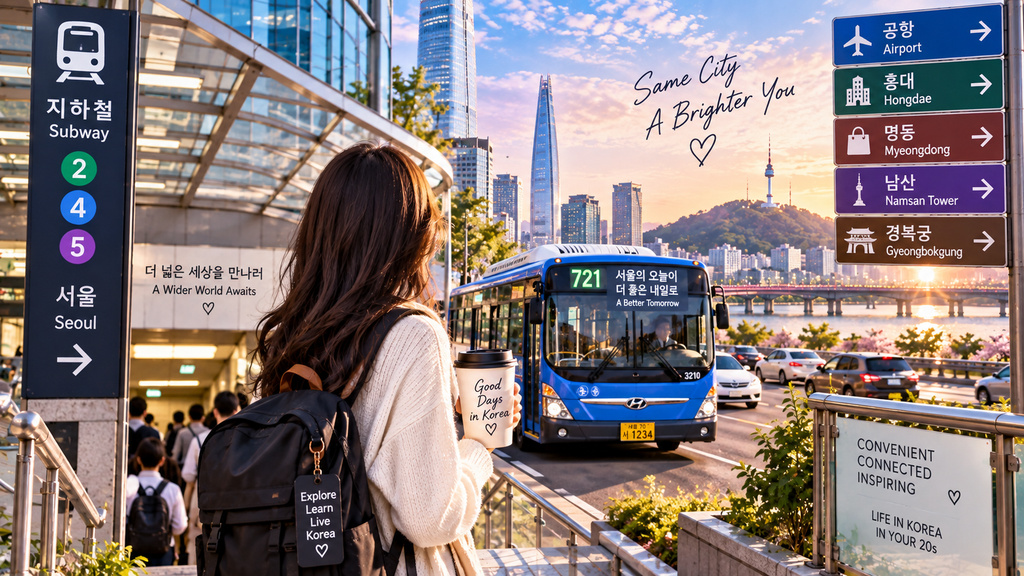
This depends entirely on the person.
Korea may be an excellent place for someone who values urban convenience, public transportation, Korean culture, career opportunities, and life in a densely connected city.
Someone else may eventually find the language barrier, housing system, workplace culture, immigration requirements, or distance from family difficult.
That is why moving in your 20s does not have to mean making a permanent decision.
You could approach the experience in stages.
Stage 1: Experience Korea
Spend enough time there to understand everyday life rather than only tourist attractions.
Stage 2: Establish legal residence
Choose an immigration route appropriate for your actual circumstances.
Stage 3: Build stability
Develop income, housing, language ability, insurance, banking, and a social network.
Stage 4: Decide whether to stay
After living there for a meaningful period, evaluate whether Korea fits your long-term goals.
You do not have to know today where you want to live at age 40.
Your 20s can be a time to explore.
The important thing is to turn the dream into a plan.
Final Thoughts
So, can you really move to South Korea in your 20s?
Absolutely—but successful relocation requires much more than loving Korean food, K-pop, K-dramas, or Seoul nightlife.
Start with immigration eligibility.
Then examine employment, savings, housing, healthcare, transportation, Korean-language ability, and your long-term goals.
Moving abroad works best when excitement and preparation exist together.
South Korea can offer young adults an extraordinary international experience, but the people who adapt most successfully are usually those who prepare for ordinary life—not just the exciting parts.
If Korea is where you want to spend the next chapter of your twenties, don’t begin by asking whether the dream is possible.
Begin by asking:
What would I need to make it sustainable?
That question can turn an idea into an actual moving plan.
Frequently Asked Questions
Can an American move to South Korea in their 20s?
Yes, provided the person qualifies for an appropriate immigration or residence status. Being a U.S. citizen alone does not provide an unlimited right to live or work in South Korea.
Can I move to Korea without speaking Korean?
It is possible, particularly in international environments, but learning Korean can make housing, healthcare, banking, employment, transportation, and everyday communication significantly easier.
Can I live in Seoul without a car?
Many people do. Seoul’s extensive subway and bus networks make car-free living practical in many neighborhoods.
Should I find a job before moving to Korea?
For many people, securing employment before relocating provides greater financial and immigration stability. However, the appropriate approach depends on the person’s visa or residence category.
Is South Korea expensive for someone in their 20s?
It depends heavily on location and lifestyle. Housing in desirable parts of Seoul can represent a major expense, while public transportation and car-free living may reduce costs compared with some U.S. cities.
How much money should I save before moving to Korea?
There is no universal amount. Your savings should account for housing deposits, initial accommodation, transportation, food, utilities, administrative expenses, and an emergency reserve.
Is moving to South Korea worth it?
For someone genuinely interested in Korean life, language, or career opportunities, it can be a valuable experience. The decision should be based on everyday realities as well as enthusiasm for Korean culture.