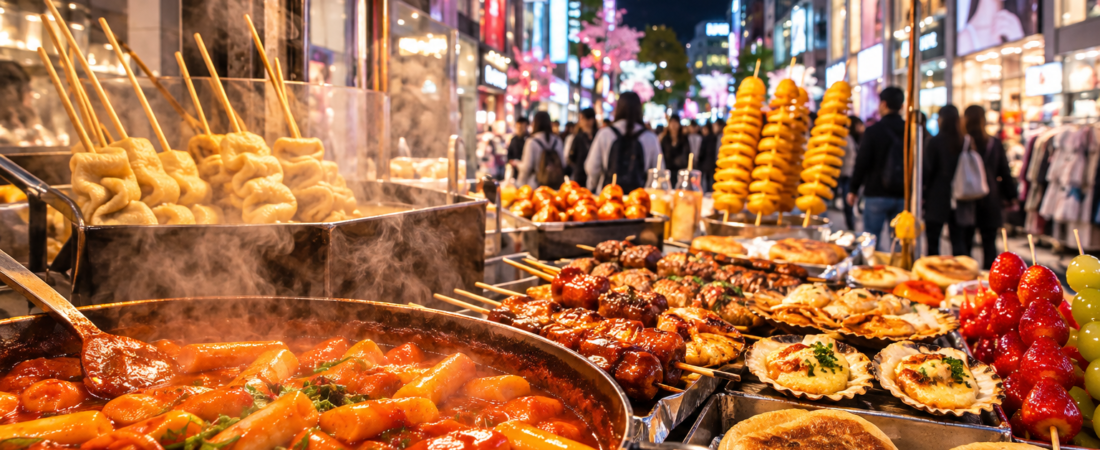
If you are visiting Seoul for the first time, there is a good chance that Myeongdong street food is already somewhere on your itinerary.
This Myeongdong Street Food Guide will help you spend your time and food budget wisely while still enjoying the excitement of one of Seoul’s most famous neighborhoods.
Myeongdong is one of Seoul’s best-known shopping districts, packed with cosmetics stores, fashion shops, cafés, restaurants, and street vendors. But once evening approaches and food stalls begin competing for your attention, deciding what to eat can become surprisingly difficult.
Should you try tteokbokki?
Is the giant grilled lobster worth the price?
What about tornado potatoes, hotteok, fish cakes, tanghulu, grilled scallops, and all those cheese-covered creations?
This Myeongdong Street Food Guide is designed especially for first-time visitors to Korea. Instead of simply listing everything available, we will separate the foods that provide a memorable Korean food experience from those that may be better treated as optional treats.
One important point before we begin: street vendors, menus, prices, and operating schedules can change frequently. Think of this guide as a way to decide what kinds of foods to look for, rather than a fixed directory of stalls.
Table of Contents
- Why Myeongdong Is Famous for Street Food
- When to Visit Myeongdong for Street Food
- Tteokbokki — A Korean Classic
- Eomuk — The Perfect Cold-Weather Snack
- Hotteok — One of the Best Sweet Choices
- Gyeran-ppang — Korean Egg Bread
- Korean Fried Dumplings
- Grilled Seafood
- Tornado Potato
- Korean-Style Skewers
- Tanghulu
- Cheese-Heavy Tourist Snacks
- Foods You Can Consider Skipping
- How Much Food Should You Order?
- Cash or Card?
- Food Safety Tips
- A First-Timer’s Myeongdong Food Route
- Myeongdong vs. Traditional Markets
- Final Recommendations
- FAQ
Myeongdong Street Food Guide: Why Is Myeongdong Famous for Street Food?
Myeongdong sits in central Seoul and is one of the city’s most recognizable shopping areas.
Unlike a traditional Korean market, Myeongdong combines modern retail stores with restaurants, cafés, beauty shops, entertainment, and street vendors. That makes it particularly convenient for international travelers.
You do not need to understand Korean to enjoy the area.
Many vendors are accustomed to serving international visitors, and the food itself is usually visible before you order. This makes Myeongdong an easy introduction to Korean street-food culture.
The experience is also about more than eating.
You walk through illuminated shopping streets, hear music coming from stores, smell food cooking on grills, watch vendors prepare snacks in front of you, and try several different foods without committing to a full restaurant meal.
For a first trip to Seoul, that atmosphere alone makes Myeongdong worth experiencing.
However, there is an important distinction.
Myeongdong is a major tourist district, not necessarily the place where every street food will be the cheapest or most traditional version in Seoul.
That is why choosing wisely matters.
1. Tteokbokki — Definitely Try It
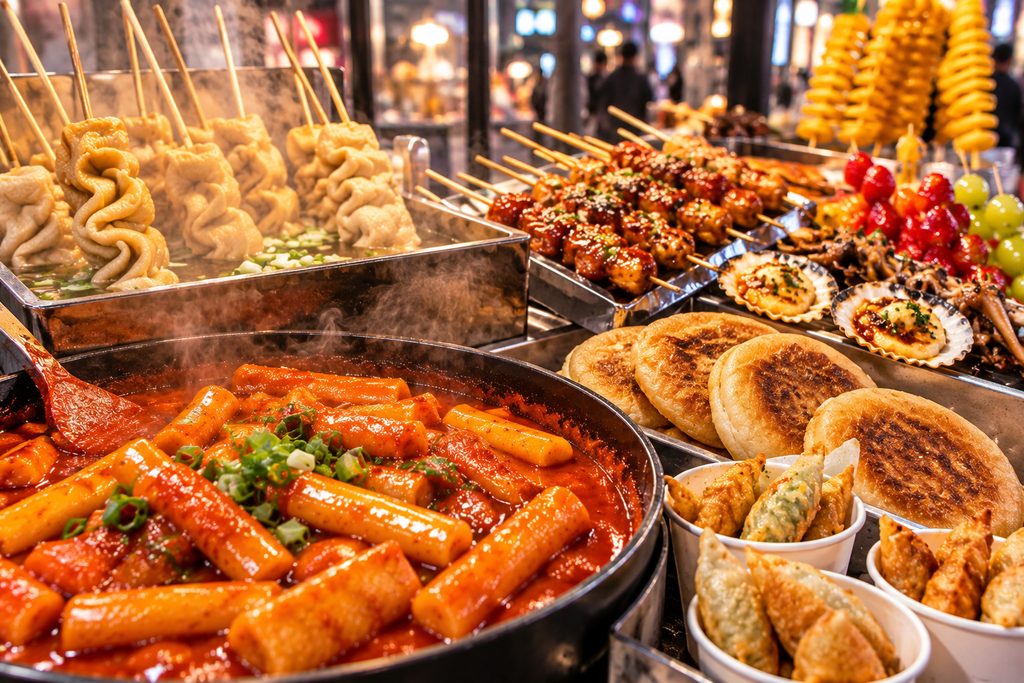
Verdict: Worth trying
If you want to understand Korean snack culture, start with tteokbokki.
Tteokbokki consists primarily of chewy rice cakes cooked in a red sauce commonly made with gochujang and other seasonings.
For someone seeing it for the first time, the bright red color can make it look extremely spicy.
The actual heat level varies enormously.
Some versions are relatively sweet, while others can be surprisingly spicy.
What Does Tteokbokki Taste Like?
Imagine a combination of:
- chewy rice cakes
- sweet and savory sauce
- chili heat
- deep umami flavor
The texture is one of the most distinctive parts of the experience.
Americans accustomed to pasta may expect something soft, but Korean rice cakes are intentionally chewy.
Beginner Tip
Do not buy the largest portion immediately.
Try a smaller serving first, particularly if you are sensitive to spicy foods. You will probably want to sample several other foods during the same visit.
Tteokbokki also pairs wonderfully with eomuk.
As this Myeongdong Street Food Guide shows, tteokbokki is one of the best foods to try if you want a classic Korean street-food experience.
2. Eomuk — Simple but Surprisingly Good
Verdict: Worth trying
Eomuk, often translated as Korean fish cake, does not look particularly dramatic.
That is exactly why travelers sometimes overlook it.
Fish paste is shaped into thin sheets or other forms, cooked, and commonly served on skewers. At many Korean street-food stalls, it sits in a warm savory broth.
During Seoul’s colder months, that combination is extremely comforting.
Why Try It?
Eomuk offers something different from the heavily sauced and fried foods surrounding it.
It is:
- warm
- savory
- relatively mild
- easy for beginners to eat
If spicy tteokbokki becomes overwhelming, alternating bites with fish cake can also help balance your meal.
For visitors exploring Seoul in winter, this would be near the top of my list.
This Myeongdong Street Food Guide recommends eomuk as an easy choice for travelers who prefer mild and savory flavors.
3. Hotteok — One of the Best Korean Street Desserts
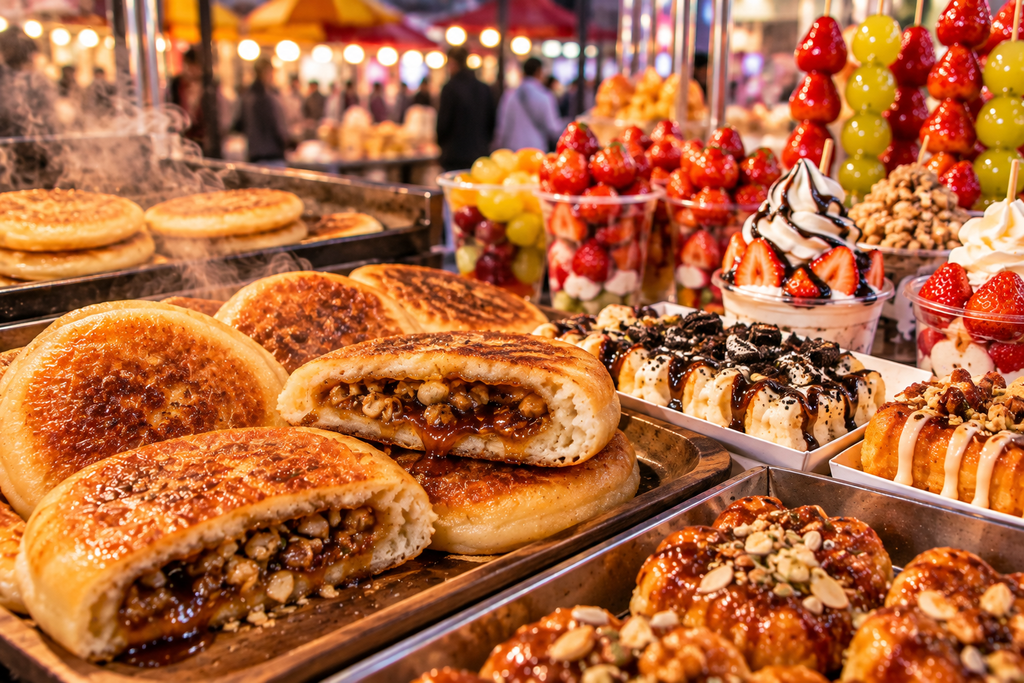
Verdict: Highly recommended
Hotteok is one of the easiest Korean foods to recommend to someone who has never eaten Korean food.
It is a fried or griddled pancake traditionally filled with a sweet mixture that may contain brown sugar, cinnamon, and seeds or nuts.
When freshly cooked, the outside becomes slightly crisp while the inside stays soft and hot.
The sugar filling melts inside the pancake.
Be Careful With the First Bite
Fresh hotteok can be extremely hot inside.
Do not immediately take a giant bite after receiving it.
Let it cool for a moment.
Why It Is Worth Trying
Hotteok represents something many visitors miss when thinking about Korean cuisine.
Korean food is not only kimchi, barbecue, and spicy dishes.
Korea also has a long culture of simple snacks and sweets.
Hotteok is an inexpensive and approachable introduction to that side of Korean food.
No Myeongdong Street Food Guide would be complete without mentioning hotteok as a classic sweet snack to try in Seoul.
4. Gyeran-ppang — Korean Egg Bread
Verdict: Worth trying, especially for beginners
Gyeran-ppang literally means egg bread.
It usually consists of a small soft bread or cake-like base topped or baked with an egg.
Depending on the vendor, additional ingredients may be added.
The flavor is mild compared with tteokbokki.
That makes it particularly useful for travelers who are curious about Korean street food but do not enjoy spicy dishes.
Who Will Like It?
Gyeran-ppang is a good choice if you enjoy:
- eggs
- slightly sweet bread
- breakfast foods
- mild savory snacks
It is also fairly filling, so consider sharing one if you plan to sample many foods.
5. Mandu — Korean Dumplings
Verdict: Worth trying
Mandu are Korean dumplings filled with combinations of meat, vegetables, tofu, noodles, or kimchi.
They may be steamed, boiled, or fried.
For street-food exploring, crispy fried versions are particularly tempting because you can smell them cooking before you even reach the stall.
Mandu is also one of the safest choices for a cautious first-time visitor.
If the idea of spicy rice cakes or fish cake seems unfamiliar, dumplings provide an easy bridge into Korean food.
What Should You Choose?
If several fillings are available, consider trying:
Meat mandu for a mild introduction.
Kimchi mandu if you want more spice and stronger Korean flavors.
Sharing an order allows you to try both without becoming too full.
For first-time visitors following this Myeongdong Street Food Guide, mandu is an approachable choice that is easy to share.
6. Grilled Seafood — Delicious but Check the Price
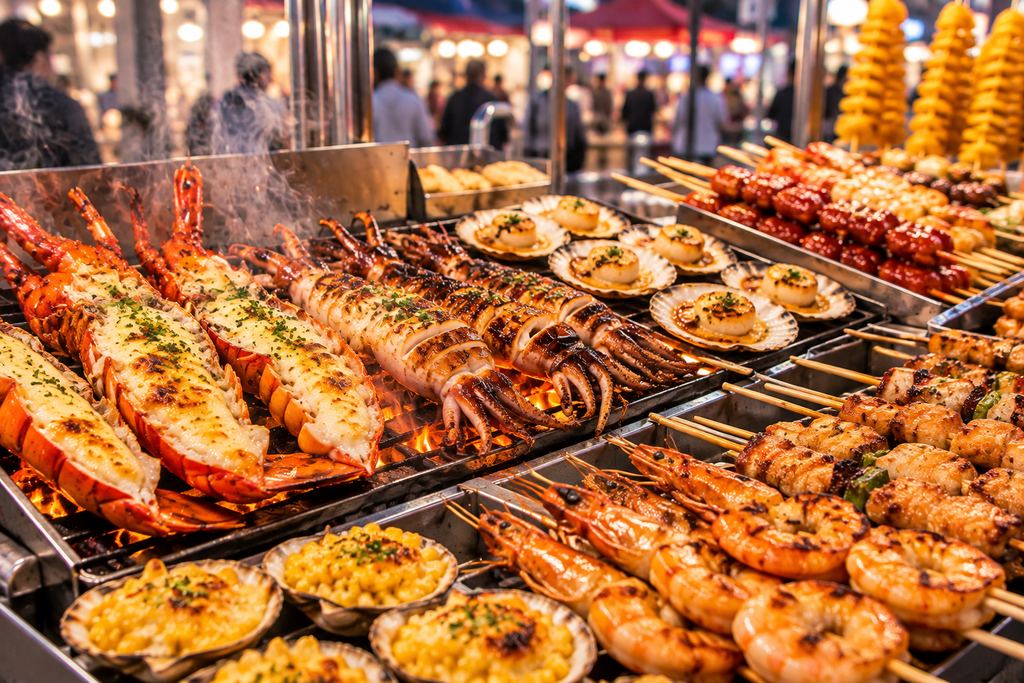
Verdict: Try selectively
Myeongdong food stalls are known for visually impressive seafood.
Depending on the vendor and season, you may encounter shrimp, scallops, squid, octopus, or seafood covered with cheese and sauces.
These foods smell fantastic while being grilled.
But this is where I recommend slowing down before ordering.
Check the Displayed Price First
Seafood can be considerably more expensive than simple Korean snacks.
Do not assume that every street-food item is inexpensive simply because it comes from a street stall.
Ask or confirm the price before ordering.
Is It Worth It?
If you love seafood and watching it grilled is part of the experience you want, absolutely consider trying it.
If your primary goal is discovering traditional Korean snack culture on a limited budget, spend your money first on tteokbokki, eomuk, hotteok, or mandu.
For visitors following this Myeongdong Street Food Guide, grilled seafood is worth considering after trying some of Korea’s more traditional street snacks.
7. Korean-Style Skewers
Verdict: Usually worth trying
Skewered foods are convenient because you can eat them while exploring.
You may find meat, chicken, seafood, sausages, rice cakes, or combinations of ingredients served on sticks.
The biggest advantage is portion control.
Instead of buying a large plate of food, two people can share one skewer and continue to the next stall.
Look for a stall where food is being cooked actively rather than sitting for a long period.
Freshly grilled skewers are almost always more appealing.
8. Tornado Potato
Verdict: Fun, but optional
A whole potato is spiral-cut, placed on a long skewer, fried, and seasoned.
It certainly photographs well.
It is crispy, salty, easy to share, and fun to eat.
But if you have only one evening in Myeongdong and limited stomach space, this would not be my first priority.
Why?
Because it is essentially a creatively presented fried potato.
There is nothing wrong with it. It simply tells you less about Korean cuisine than tteokbokki, eomuk, hotteok, or traditional Korean dumplings.
Try It If:
You are traveling with children, love potatoes, want a fun snack, or simply like the appearance.
Skip It If:
You are already full and want to reserve your remaining appetite for foods more closely associated with Korea.
9. Tanghulu
Verdict: Try if you love sweets
Tanghulu consists of fruit covered in a hardened sugar coating.
The contrast is the attraction:
crunchy sugar outside + juicy fruit inside.
It became extremely visible in Korean food and social-media culture, and you may encounter colorful displays that are difficult to ignore.
However, it is very sweet.
If you already had hotteok, ice cream, or another dessert, you probably do not need tanghulu too.
For families or travelers who love photographing food, though, it can be a fun experience.
10. Giant Cheese-Covered Foods
Verdict: Optional
Myeongdong has plenty of foods designed to attract attention.
Large portions of melted cheese, oversized seafood, unusual combinations, and visually dramatic snacks are part of the modern tourist experience.
They can be delicious.
But do not automatically assume that the most spectacular-looking stall offers the most authentic Korean food.
If this is your first trip to Korea, prioritize foods with stronger connections to everyday Korean snack culture first.
After that, enjoy the crazy cheese-covered creation if it looks good.
Travel is supposed to be fun.
What Street Foods Should You Consider Skipping?
“Skip” does not mean that a food is bad.
It means that your stomach and budget are limited.
If you have only one evening in Myeongdong, consider placing these lower on your priority list:
Familiar Fried Foods
French fries, generic sausages, and other snacks you can easily find at home may be enjoyable but do not provide much of a Korean food experience.
Extremely Large Portions
Street-food exploration works best when you sample several small things.
Buying one enormous item at your first stall can end your food tour immediately.
Foods You Are Buying Only for a Photo
Ask yourself:
Would I still want to eat this if I couldn’t post a picture of it?
If the answer is no, keep walking.
You will find something better.
Anything Without a Clear Price
If you cannot determine the price, ask before ordering.
Never assume.
The Best Strategy: Share Everything
One of the biggest mistakes first-time visitors make is ordering one full item per person.
Instead, share.
If two people visit Myeongdong together, one serving can often provide enough of a taste before moving on.
For example:
Stop 1: Share tteokbokki.
Stop 2: Try an eomuk skewer.
Stop 3: Share one grilled skewer.
Stop 4: Try mandu.
Stop 5: Finish with hotteok.
That provides five different experiences without requiring five complete meals.
How Much Should You Budget?
Street-food prices change, and tourist districts can be more expensive than neighborhood markets.
Rather than building your visit around exact prices found online, decide on a total food budget before arriving.
Then look at the posted price at each stall.
A useful rule is:
Never spend most of your budget at your first stall.
Walk through part of the area first.
See what is available.
Then start eating.
This prevents the classic mistake of buying the first impressive food you see and discovering something far more interesting twenty meters later.
Cash or Card in Myeongdong?
Korea is highly card-friendly, particularly in established shops and restaurants.
Street stalls, however, can operate differently.
Payment methods may vary from vendor to vendor.
For that reason, carrying some Korean won is useful even if you plan to use a credit card for most of your trip.
Do not carry excessive cash.
You simply want enough flexibility that payment method does not prevent you from trying something interesting.
Food Safety Tips for Myeongdong Street Food
Street food is part of the travel experience, but use the same common sense you would use anywhere.
Look for Busy Stalls
A stall with steady customer turnover is generally preferable to food that appears to have been sitting for a long time.
Choose Food Cooked in Front of You
Freshly grilled, boiled, or fried foods allow you to see how the item is being handled and served.
Watch the Temperature
Hot foods should ideally be served hot.
Consider Your Allergies
Korean sauces and prepared foods can contain ingredients that are not obvious from appearance.
Common ingredients may include:
- soy
- wheat
- sesame
- seafood
- shellfish
- eggs
- nuts
If you have a serious food allergy, do not rely solely on appearance.
Start Slowly With Spicy Food
Korean chili dishes can taste manageable for the first few bites and become much hotter as you continue eating.
There is no prize for finishing the spiciest dish.
A Simple Myeongdong Street Food Route for First-Time Visitors
If I were designing a first Myeongdong food experience, I would structure it like this:
Stop 1: Tteokbokki
Begin with one of Korea’s most recognizable street snacks.
Stop 2: Eomuk
Follow the spicy rice cakes with something warm and savory.
Stop 3: Mandu or a Grilled Skewer
Choose something with a different texture and flavor.
Stop 4: One “Fun” Myeongdong Food
This could be grilled seafood, tornado potato, or another eye-catching creation.
Stop 5: Hotteok
Finish with a warm Korean dessert.
If you still have room, then consider tanghulu, ice cream, or another sweet snack.
This approach gives you a combination of traditional Korean flavors and the modern tourist atmosphere of Myeongdong.
Myeongdong Street Food vs. Gwangjang Market
Visitors often ask whether they should visit Myeongdong or a traditional market for food.
One question readers of this Myeongdong Street Food Guide may have is whether Myeongdong or Gwangjang Market is better for experiencing Korean food.
The answer depends on what experience you want.
Choose Myeongdong If You Want:
- shopping and food together
- K-beauty stores
- easy access for first-time visitors
- a lively evening atmosphere
- modern and international food options
- quick snacks while sightseeing
Choose a Traditional Market If You Want:
- stronger traditional-market atmosphere
- market-specialty dishes
- a more food-centered experience
- to explore Korean market culture
Ideally, experience both.
Do not treat them as substitutes.
Myeongdong shows one side of contemporary Seoul, while traditional markets show another.
Don’t Forget Myeongdong’s Restaurants
There is another mistake worth avoiding:
Do not eat so much street food that you miss Myeongdong’s restaurant culture entirely.
The neighborhood also has long-established restaurants serving dishes such as kalguksu, mandu, gimbap, and tteokbokki.
For example, Myeonghwadang has a history of more than 30 years and is known for gimbap and tteokbokki, while other long-running establishments in the neighborhood specialize in dishes such as Chungmu gimbap.
Street food should be part of your Myeongdong experience, not necessarily the entire experience.
What I Would Prioritize on a First Visit
If you can try only five things, I would build the experience around:
1. Tteokbokki
For the classic Korean snack experience.
2. Eomuk
For something savory and comforting.
3. Hotteok
For a classic sweet street snack.
4. Mandu
For an easy, satisfying introduction to Korean dumplings.
5. One grilled skewer or seafood item
For the lively modern Myeongdong street-food experience.
After those, choose whatever catches your eye.
That balance lets you experience both traditional Korean snack culture and the playful food culture that makes modern Myeongdong entertaining.
Final Thoughts: Is Myeongdong Street Food Worth It?
This Myeongdong Street Food Guide is not about trying every food stall you see, but about choosing a variety of Korean flavors while enjoying the atmosphere of Seoul.
Yes — but the best way to enjoy it is not to assume that you need to eat everything.
Myeongdong is an experience.
You are there to walk through one of Seoul’s busiest shopping districts, explore Korean beauty and fashion stores, watch food being prepared, smell dozens of dishes cooking at once, and discover flavors that may be completely new to you.
For first-time visitors, tteokbokki, eomuk, hotteok, mandu, and a freshly grilled skewer provide an excellent starting point.
Foods such as tornado potatoes, tanghulu, oversized cheese dishes, and elaborate seafood snacks can be fun additions, but they do not have to dominate your food tour.
The smartest strategy is simple:
Walk first. Look at the prices. Share portions. Try several foods. Save room for dessert.
Most importantly, do not become so focused on finding the “best” stall that you forget to enjoy Myeongdong itself.
Sometimes the best travel-food memory is simply standing on a busy Seoul street, holding a hot snack in your hand, and realizing that you are finally experiencing Korea for yourself.
Use this Myeongdong Street Food Guide as a starting point, then explore the stalls and choose the foods that look most appealing to you.
Frequently Asked Questions
Is Myeongdong good for street food?
Yes. Myeongdong combines shopping, restaurants, cafés, and numerous snack options in a compact central Seoul neighborhood, making it convenient for first-time visitors.
What is the best Myeongdong street food for beginners?
Tteokbokki, eomuk, hotteok, mandu, and gyeran-ppang are excellent starting points because they introduce several different flavors and textures found in Korean snack culture.
Is Myeongdong street food expensive?
Prices vary by vendor and item. Simple snacks may cost considerably less than elaborate seafood or oversized specialty items. Always check the displayed price before ordering.
What should I avoid eating in Myeongdong?
There is no universal food that everyone should avoid. If your time, budget, and appetite are limited, prioritize Korean foods you cannot easily find at home and place generic fried foods or oversized novelty snacks lower on your list.
Is Myeongdong street food spicy?
Some foods are spicy, particularly tteokbokki, but many options are mild. Eomuk, egg bread, dumplings, hotteok, grilled foods, and desserts give travelers plenty of alternatives.
Is Myeongdong better than Gwangjang Market for food?
They offer different experiences. Myeongdong is particularly convenient for combining shopping, sightseeing, and snacking, while traditional markets provide a different market-focused food experience. Travelers with enough time can visit both.
When is the best time to visit Myeongdong for street food?
The area becomes especially lively later in the day and into the evening, but individual vendors and operating times can vary. Avoid planning your entire visit around a particular stall unless you have confirmed its current schedule.