An American Traveler’s Practical Guide to Entry Requirements, Transportation, Money, Food, and Planning
Last fact-checked: November 6, 2026 | Audience: U.S. travelers visiting South Korea for the first time
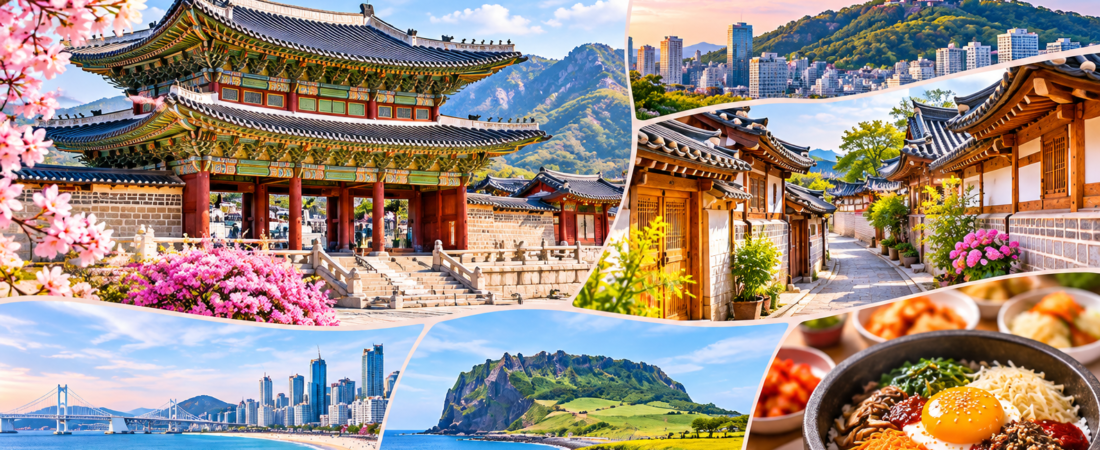
Travel to Korea for the first time, and you will discover a country where ancient palaces stand beside modern skyscrapers, high-speed trains connect major cities, and a simple neighborhood restaurant can become one of the most memorable parts of your trip.
But your first visit may also raise questions that ordinary destination guides do not fully answer.
Will your American credit card work at a subway station? Should you take a train or taxi from Incheon International Airport? Do you need K-ETA in 2026? What happens if your navigation app cannot find your hotel? How much cash should you carry?
For Americans, these decisions affect more than convenience. They can influence travel expenses, wasted time, missed reservations, and the overall quality of a vacation.
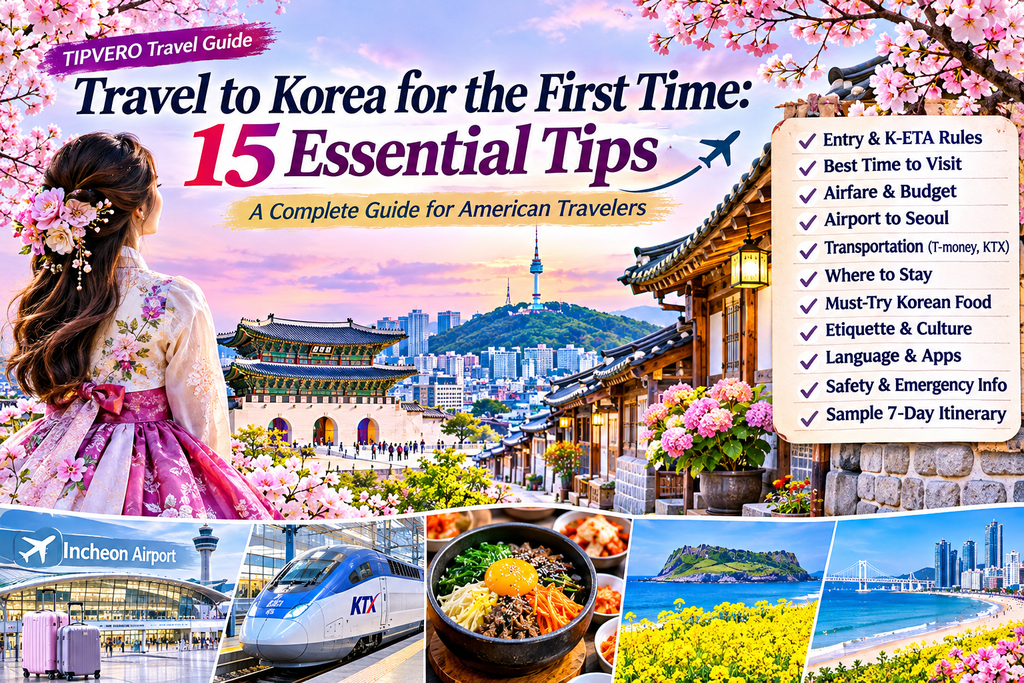
This practical guide explains 15 essential tips for traveling to South Korea for the first time, using official information and realistic planning examples. Instead of promising that every trip will be effortless, it explains what works, what can go wrong, and how to prepare.
Table of Contents
1.Travel to Korea for the First Time: Entry Requirements
For U.S. passport holders visiting South Korea for tourism or ordinary business for up to 90 days, a visa is generally not required.
There is also an important rule for 2026: the temporary K-ETA exemption for eligible U.S. citizens remains in effect through December 31, 2026.
According to the U.S. Department of State’s South Korea travel information, K-ETA is expected to be required again for these travelers beginning January 1, 2027.
The official K-ETA website confirms the 2026 exemption extension.
1.1 Understand the e-Arrival Card
K-ETA exemption does not automatically mean that you can skip an arrival declaration.
Travelers who are required to submit an arrival card can complete the official electronic form within three days before arriving in Korea, based on Korean Standard Time.
The official Korea e-Arrival Card service is free.
Before departure, prepare:
- Your valid U.S. passport
- Confirmed flight details
- Your accommodation address and contact information
- Your departure or onward travel details
- Your completed arrival declaration, when required
The electronic system has an eligibility checker. Use it if you already hold a valid K-ETA, Korean residence card, or another qualifying status.
Practical tip: Save the hotel address in both English and Korean. You may need it for an arrival form, taxi driver, or navigation search.
Entry requirements can change, especially for trips in 2027 and later. Always recheck before departure.
2. Choose Your Airport-to-Hotel Transportation in Advance
For many American travelers, the first difficult decision occurs immediately after landing at Incheon International Airport.
You may have spent more than ten hours on an international flight. You are tired, your phone may not yet have mobile data, and your luggage feels heavier than it did at home.
Deciding how to reach your hotel before arrival can prevent unnecessary stress.
2.1 Compare the Main Airport Transportation Options
| Transportation | Best for | Important consideration |
|---|---|---|
| AREX Express Train | Travelers going toward Seoul Station | Direct service with reserved seating |
| AREX All-Stop Train | Budget-conscious travelers | More stops; connections may be needed |
| Airport Limousine Bus | Travelers staying near a served bus stop | Convenient with luggage, but affected by traffic |
| Taxi | Families, groups, or travelers with heavy luggage | Door-to-door convenience at a higher cost |
The official Airport Railroad Express Train information lists a 43-minute journey between Incheon Airport Terminal 1 and Seoul Station and a 51-minute journey from Terminal 2. Its published adult Express Train fare is ₩13,000.
These figures describe the train journey, not the complete trip from your airplane to your hotel.
You must still allow time for immigration, baggage collection, walking to the station, and any onward connection.
2.2 The Hotel Location Matters More Than the Fastest Train
Suppose your hotel is near Seoul Station. The Express Train may be an excellent choice.
But if your hotel is in an area served directly by an airport limousine bus, the bus may be easier than carrying luggage through multiple subway transfers.
A family of four should also compare the total cost of four individual tickets with the cost of one taxi.
Practical tip: Before leaving the United States, write down your hotel’s nearest subway station, exit number, and Korean-language address.
3. Get a Transportation Card Before Exploring Seoul
One of the most useful things to understand before traveling to Korea for the first time is that paying for public transportation is different from paying for a restaurant or hotel.
South Korea has convenient prepaid transit cards, including Tmoney and EZL.
The Korea Tourism Organization’s transportation card guide explains that these cards can be purchased and reloaded at participating convenience stores and used for public transportation and certain affiliated purchases.
3.1 Why a Tmoney Card Is Useful
A Tmoney card can simplify ordinary subway and bus journeys.
Instead of repeatedly buying individual tickets, you can tap your card when entering and exiting.
However, a transit card is not a universal replacement for every rail ticket. KTX intercity trains and the AREX Express Train require their applicable separate tickets.
For first-time visitors, it is often helpful to keep:
- One regular bank credit card
- One prepaid transportation card per traveler
- A small amount of Korean won
- A backup payment method
Practical tip: Learn where and how to reload your specific card before the balance runs low. Reload methods and accepted payment types can differ by card and location.
4. Install Korean Navigation Apps Before Your Flight
American visitors frequently assume that the navigation apps they use at home will provide every function in Korea.
That is not always the case.
For local public transportation routes, subway transfers, walking directions, and business listings, Naver Map and KakaoMap can be particularly useful.
The Korea Tourism Organization’s 2026 travel app guide identifies Naver Map as an important tool for foreign visitors.
The Hidden Cost of Choosing the Cheapest Airport Transfer
The cheapest airport transfer is not always the least expensive option for an entire travel group.
Consider a hypothetical family of three arriving at Incheon International Airport. At the published AREX Express Train adult fare of ₩13,000, three tickets would cost ₩39,000 before any additional subway or taxi expenses.
A family staying near Seoul Station may find this convenient. However, travelers staying farther away should also consider the cost and difficulty of transferring luggage from the station to their hotel.
Before choosing transportation, compare the total group fare, number of transfers, amount of luggage, final walking distance, and arrival time.
This simple comparison is often more useful than choosing a train solely because its advertised journey time is shorter.
4.1 Create a Small Offline Information Folder
Before your flight, save:
- Hotel name and address in Korean
- Airport-to-hotel route
- Main attractions you want to visit
- Train and hotel reservation confirmations
- Emergency contact information
Screenshots can be useful if mobile data fails temporarily.
Do not rely on an English translation of a business name alone. Korean-language names and addresses may return more accurate results.
Practical tip: Test your first day’s route while you still have reliable internet access at home.
5. Choose an eSIM, SIM Card, or Roaming Plan
Reliable mobile data is useful for transportation, translation, reservations, maps, and payment notifications.
Travelers typically consider three options.
International roaming: Convenient because you can continue using your existing mobile plan, but the cost depends on your U.S. carrier.
Travel eSIM: Often convenient for unlocked, eSIM-compatible phones. Some products provide data only.
Physical SIM: Useful for phones that support physical cards, subject to carrier and device compatibility.
5.1 Check Whether You Need a Korean Phone Number
A data-only eSIM may be sufficient for maps, messaging, and basic internet use.
However, some local services use Korean mobile numbers or additional identity verification.
An eSIM advertising data access does not necessarily provide a Korean voice number.
Compare the plan’s data allowance, validity period, coverage, voice/SMS features, and hotspot rules before purchasing.
Practical tip: Keep access to your U.S. number if you depend on it for bank verification codes. Plan your phone settings carefully to avoid unexpected international roaming charges.
6. Use Credit Cards, but Carry Some Korean Won
South Korea is highly card-friendly.
According to the Korea Tourism Organization’s currency guide, major credit card networks are widely accepted at hotels, department stores, and many shops.
Nevertheless, a foreign-issued card may not work with every ticket machine, local app, or unattended payment terminal.
That is why carrying a modest amount of Korean cash is sensible.
6.1 Avoid Common Currency Mistakes
Check your bank’s foreign transaction fees before leaving home.
When a payment terminal offers a choice between Korean won and U.S. dollars, paying in the local currency can help avoid unfavorable dynamic currency conversion terms, depending on your card agreement.
Do not assume that every ATM accepts foreign-issued cards. Look for an ATM that specifically supports international cards.
For a short city visit, you may not need a large quantity of cash. But having some won available for a street-food purchase, transit top-up, or payment failure can prevent inconvenience.
Practical tip: Keep your primary and backup payment cards in separate places.
7. Choose Accommodation Based on Your Daily Route
The cheapest hotel is not always the least expensive choice overall.
A room far from your attractions might save money per night while increasing transportation expenses and reducing sightseeing time.
In Seoul, first-time travelers often consider several areas.
| Area | Potential advantage | Possible disadvantage |
|---|---|---|
| Myeongdong | Shopping, central location, transportation access | Busy streets and tourist crowds |
| Hongdae | Cafés, nightlife, youth culture | Some areas may be noisy |
| Jongno/Insadong | Palaces, traditional neighborhoods, cultural attractions | Hotel options vary considerably |
| Seoul Station | Convenient for airport rail and intercity trains | Less atmospheric than some historic areas |
| Gangnam | Modern shopping and business districts | Longer trips to some central historic attractions |
7.1 Check the Last 500 Meters
A hotel advertised as a five-minute walk from a station may still be difficult to reach with luggage if the route includes steep hills, stairs, or complicated station exits.
Check the exact station exit and whether an elevator is available.
Travelers with mobility concerns should review access arrangements rather than assuming that every old building, guesthouse, or station exit is step-free.
Practical tip: For a first visit, prioritize a location that reduces transfers and walking with luggage.
8. Book KTX Trains Strategically
Korea’s railway network makes it possible to explore destinations beyond Seoul without renting a car.
KTX high-speed trains connect important mainland cities, making rail travel attractive for visitors interested in Seoul, Daejeon, Daegu, Busan, and other destinations.
The Korea Tourism Organization reported expanded multilingual booking and seat-selection services for international visitors in 2025.
You can check schedules and reservations through the official Korail website.
8.1 When to Reserve
If you plan to travel during major Korean holidays, weekends, or particularly busy vacation periods, booking earlier can reduce the risk of limited seating.
Do not leave a must-take train until the last minute merely because high-speed rail is frequent.
Also distinguish between different train stations in the same wider region.
For example, purchasing a ticket to an unfamiliar station without checking the final transfer can create unnecessary inconvenience.
Practical tip: Confirm the correct departure station, arrival station, departure date, and passenger names before completing a booking.
9. Build a Realistic Itinerary Instead of Visiting Too Many Cities

A common planning mistake is trying to visit Seoul, Busan, Jeju, Gyeongju, Sokcho, and several smaller towns in a single week.
The destinations may look close on a map, but packing, transfers, airport security, and hotel check-ins consume time.
For a first trip, choose one primary region and add destinations only when the journey makes sense.
9.1 A Practical Seven-Day Example
Days 1–3: Seoul
Spend time exploring historic palaces, traditional neighborhoods, markets, and modern shopping districts. Allow the first day to be relatively light after your flight.
Day 4: Travel to Busan
Take a morning train and leave the afternoon for a coastal walk or one neighborhood.
Days 5–6: Busan
Explore beaches, markets, viewpoints, and local restaurants without rushing from one end of the city to the other.
Day 7: Departure
Return according to your international flight plans. If your flight departs from Incheon, consider whether returning to Seoul the previous evening would provide a safer schedule.
This is an illustrative itinerary, not a verified package or a record of a particular person’s trip.
9.2 What About Jeju and Mokpo?
Jeju Island is an excellent option for nature, coastal scenery, and a slower pace. But adding Jeju usually means another flight or ferry journey.
Mokpo offers a different coastal experience, including regional food and maritime scenery, and can suit travelers who prefer less conventional stops.
A Seoul–Mokpo–Jeju–Busan route is possible with carefully planned train, ferry, and flight connections. However, it is more suitable for a longer trip than for a rushed seven-day vacation.
Practical tip: Allow a buffer between separate transportation reservations. Do not build an itinerary that depends on every train, ferry, and flight operating without delay.
10. Explore Korean Food Beyond the Most Famous Dishes
Trying Korean cuisine is one of the best reasons to visit.
But a first-time visitor should not limit the experience to Korean barbecue and bibimbap.
Korean meals vary across region, season, and restaurant type.
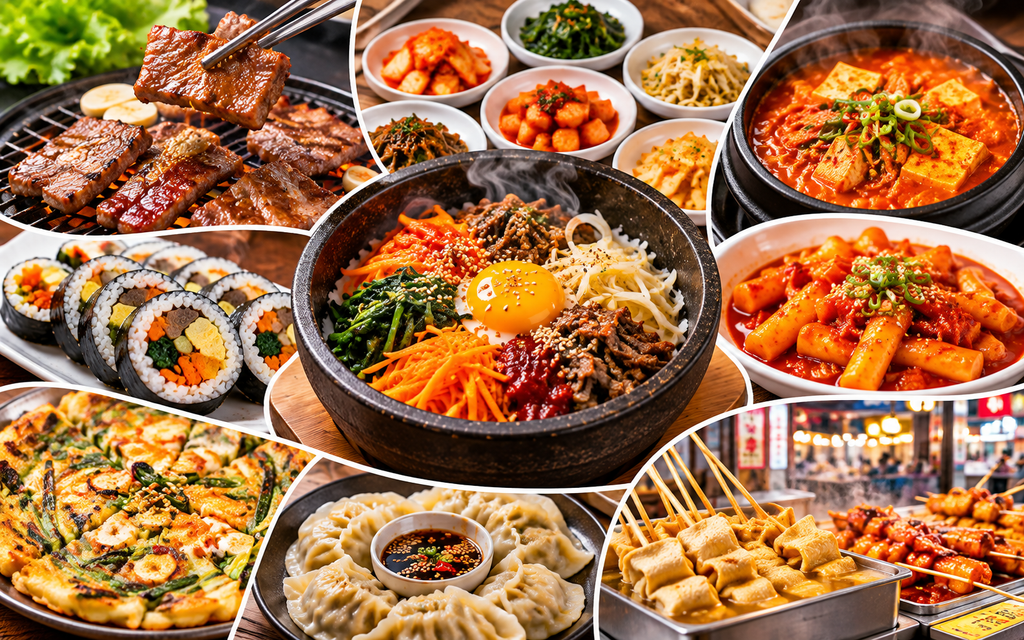
Some common foods to explore include:
- Bibimbap: Rice mixed with vegetables and other ingredients
- Gimbap: Rice and fillings rolled in seaweed
- Bulgogi: Marinated meat, commonly beef
- Kimchi jjigae: Kimchi-based stew
- Mandu: Korean dumplings
- Tteokbokki: Rice cakes served in a seasoned sauce
- Kalguksu: Knife-cut noodle soup
- Banchan: Small side dishes accompanying a meal
10.1 Understand the Side-Dish Culture
At many Korean restaurants, small side dishes arrive with the meal. They are not necessarily appetizers to finish before the main course.
They are intended to complement rice, soup, grilled meat, and other dishes.
For a more detailed explanation, read What Is Banchan? A Beginner’s Guide to Korean Side Dishes on TIPVERO.
You can also explore What Koreans Eat Every Day to understand how ordinary home meals differ from restaurant dining.
Practical tip: If you have food allergies, learn to communicate the specific ingredient in Korean. Do not assume that a vegetable dish is free from fish sauce, shrimp, or another animal-derived ingredient.
11. Learn a Few Practical Korean Phrases
You do not need to speak fluent Korean to enjoy your first trip.
However, a few simple expressions can make everyday interactions easier.
| Korean | Pronunciation | Meaning |
|---|---|---|
| 안녕하세요 | Annyeonghaseyo | Hello |
| 감사합니다 | Gamsahamnida | Thank you |
| 얼마예요? | Eolmayeyo? | How much is it? |
| 이거 주세요 | Igeo juseyo | This one, please |
| 화장실 어디예요? | Hwajangsil eodiyeyo? | Where is the restroom? |
| 영어 하세요? | Yeongeo haseyo? | Do you speak English? |
Pronunciations are approximations intended to help English-speaking beginners.
Translation apps are useful, but a short, polite expression can help create a friendlier interaction.
Save addresses and essential phrases before traveling to areas where English-language assistance may be limited.
Practical tip: Show written Korean text when a pronunciation-based conversation becomes confusing.
12. Understand Everyday Etiquette
Korean etiquette does not need to feel intimidating.
Simple awareness can prevent misunderstandings.
On public transportation, be mindful of designated priority seating and avoid loud phone conversations.
When entering a Korean home or certain traditional accommodations, you may need to remove your shoes.
At a restaurant, observe how shared dishes and utensils are arranged.
Respect signs restricting photography, and ask before taking close-up photographs of strangers.
12.1 Restaurant Tipping
U.S. travelers are accustomed to tipping servers at restaurants.
In South Korea, routine restaurant tipping is generally not expected in the same way.
A visitor should pay the stated bill and follow the establishment’s payment practices rather than automatically adding an American-style tip.
Practical tip: Learn the local custom without assuming that every restaurant, taxi, or accommodation operates identically.
13. Prepare for Weather and Seasonal Differences
South Korea has four distinct seasons.
The Korea Tourism Organization’s climate guide explains that spring and fall generally offer milder conditions, summer can be hot and humid, and winter can be cold.
13.1 Choose Your Travel Season
Spring (March–May): Often attractive for flowers, walking, and sightseeing, although temperatures can vary.
Summer (June–August): Suitable for beaches and seasonal activities, but humidity, heavy rain, and occasional severe weather require preparation.
Fall (September–November): Popular for comfortable walking temperatures, foliage, and outdoor experiences.
Winter (December–February): Appropriate for travelers interested in snow scenery, winter sports, and seasonal food, provided they bring warm clothing.
There is no universally perfect travel month.
Someone who loves winter festivals may enjoy a season that another traveler finds too cold.
Practical tip: Check the forecast for each destination, not just Seoul. Coastal, mountainous, and island weather may differ from what you expect.
14. Create a Realistic Travel Budget
Travel costs vary widely by season, hotel category, booking date, exchange rate, and personal preferences.
Instead of presenting an unverified “average cost,” a first-time traveler can build a flexible budget using daily spending categories.
The following table is a hypothetical planning exercise, not a survey of current market prices.
14.1 Example Daily Spending Plan Per Person
| Category | Illustrative daily allowance |
|---|---|
| Accommodation share | ₩60,000 |
| Meals and drinks | ₩35,000 |
| Local transportation | ₩10,000 |
| Admission and activities | ₩15,000 |
| Miscellaneous purchases | ₩10,000 |
| Illustrative daily total | ₩130,000 |
At this assumed spending level, seven days would amount to ₩910,000 per traveler.
That example excludes international airfare and may exclude intercity trains, domestic flights, travel insurance, shopping, or unusually expensive activities.
It is not a guaranteed budget.
14.2 Plan for the Costs People Forget
A budget can fail even when hotel and airfare prices look reasonable.
Consider:
- Airport-to-hotel transfers
- Checked baggage charges
- Seat reservations
- Mobile data
- Laundry
- Luggage storage
- Extra transportation after missed connections
- Unexpected weather-related expenses
Practical tip: Keep a separate contingency allowance instead of assigning every available dollar to planned purchases.
15. Prepare for Safety, Healthcare, and Unexpected Problems
South Korea offers extensive transportation and modern services, but travelers should still prepare for emergencies.
The U.S. Department of State’s South Korea information provides details about local conditions, entry requirements, medical care, and travel precautions.
15.1 Know the Emergency Numbers
- 119: Fire and emergency medical assistance
- 112: Police
- 1330: Korea Travel Helpline for visitor information and assistance
The Korea Tourism Organization’s 1330 service also provides multilingual information and online contact options.
15.2 Review Medication Rules Before Departure
Travelers should not assume that medications legally prescribed in the United States are automatically permitted in Korea.
Some controlled or restricted substances may require advance approval.
Check applicable Korean rules before packing regulated prescription medicine. Bring medications in their original containers with relevant documentation.
Also verify whether your health insurance covers international medical expenses.
15.3 Create a Backup Plan
Save copies of key documents in a secure place.
Know how to contact your accommodation if you arrive late.
Keep access to emergency money and an alternative payment method.
If you are traveling alone, share a basic itinerary and contact plan with someone you trust.
Practical tip: The strongest travel plan is not the one with the most activities. It is the one that still works when something changes.
A First-Time Korea Travel Checklist
Before leaving the United States, use this final checklist.
- Confirm passport validity and applicable entry requirements.
- Complete the e-Arrival Card if required.
- Verify airport terminal and hotel address.
- Choose your airport transportation.
- Install Korean navigation and translation apps.
- Arrange mobile data.
- Prepare a transit card and payment backup plan.
- Reserve important intercity transportation.
- Review weather and pack appropriate clothing.
- Check any medication restrictions.
- Save emergency contacts and travel confirmations.
- Leave space in your itinerary for delays and unexpected discoveries.
Frequently Asked Questions
1. Do Americans need a visa to visit South Korea in 2026?
For tourism or ordinary business visits of up to 90 days, U.S. passport holders generally do not need a visa. Different rules apply to employment, longer stays, and other purposes.
2. Is K-ETA required for U.S. citizens in 2026?
Eligible U.S. passport holders remain temporarily exempt through December 31, 2026. The U.S. Department of State states that the requirement returns on January 1, 2027, under the currently announced rules.
3. Is the Korea e-Arrival Card free?
Yes. The official electronic arrival card is free. Eligible travelers who must submit one can generally complete it during the three days before arrival.
4. Is South Korea expensive for American tourists?
Costs depend on your accommodation, travel season, transportation, food choices, and spending habits. Creating a budget in Korean won is more useful than relying on a single national average.
5. Do I need cash in South Korea?
Credit cards are widely accepted, but keeping some Korean won is useful for certain transit transactions, small businesses, and payment problems.
6. Should I rent a car for my first trip?
A car is usually unnecessary for a Seoul-focused vacation. Rail and public transportation may be more convenient for major mainland cities. For some areas of Jeju or rural destinations, a rental car can be useful, subject to driving requirements.
7. Can I travel around Korea without speaking Korean?
Yes. Many visitor services offer English-language support, especially in major destinations. Navigation and translation apps can make travel easier, but communication may be more challenging in smaller establishments.
8. Is seven days enough for a first visit?
Seven days can provide a rewarding introduction to Seoul and one additional city. Trying to include too many distant regions usually creates unnecessary travel pressure.
9. Can I use my American credit card for KTX tickets?
International payment options have improved, including certain foreign-card and alternative booking channels. Payment acceptance can vary by platform, so use an official or established booking channel and confirm the payment method before relying on it.
10. What should I do if I need help while traveling?
Call 119 for emergency medical assistance, 112 for police, or contact the 1330 Korea Travel Helpline for visitor information. Keep your accommodation details and emergency contacts accessible.
Conclusion: Make Your First Korea Trip Easier, Not Busier
Travel to Korea for the first time with a plan that prioritizes understanding over rushing.
Learn the entry process before flying. Choose transportation based on your actual hotel location. Carry more than one way to pay. Prepare navigation and mobile connectivity. Reserve important train journeys, but leave room for spontaneous experiences.
Most importantly, do not measure the success of your vacation by the number of attractions you photograph.
A quiet walk through a traditional neighborhood, a friendly conversation at a market, or an unexpectedly delicious meal may become a more meaningful memory than another crowded sightseeing stop.
With thoughtful preparation, your first visit to South Korea can be comfortable, rewarding, and the beginning of a much deeper interest in the country.