Updated: November 4, 2026
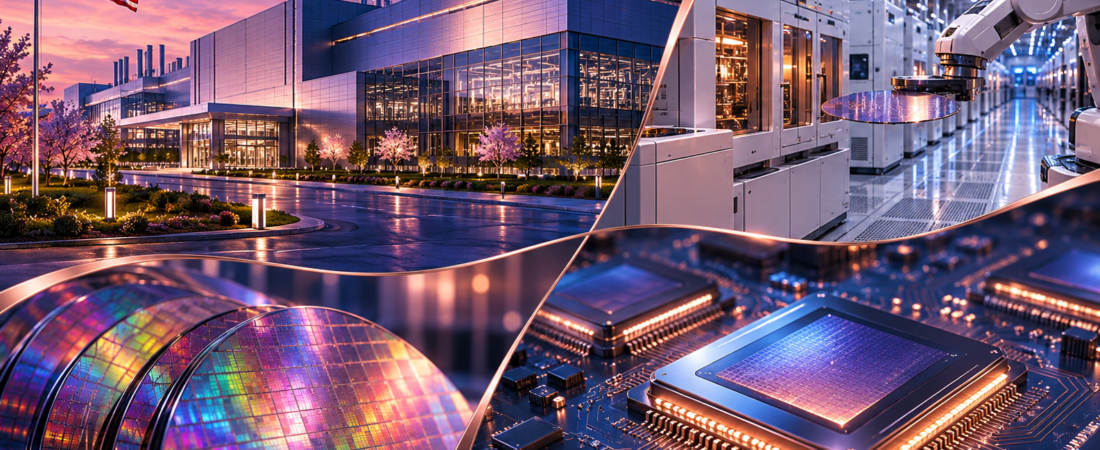
US Semiconductor Factories are becoming a major focus of American economic and industrial policy. Across the country, technology companies are investing billions of dollars in new manufacturing facilities designed to produce the tiny computer chips that power smartphones, cars, artificial intelligence, medical equipment, and national defense systems.
But why is America suddenly investing so heavily in semiconductor manufacturing?
The answer involves more than bringing factory jobs back to the United States. America wants to strengthen its supply chains, reduce dependence on overseas manufacturing, support artificial intelligence development, protect national security, and maintain its position in the global technology economy.
For American consumers, these developments could eventually influence electronics prices, vehicle availability, employment opportunities, regional economic growth, and the reliability of essential technologies.
According to the Semiconductor Industry Association (SIA), companies in the semiconductor supply chain had announced more than $828 billion in planned U.S. private-sector investments across more than 160 projects as of September 22, 2026.
However, announced investments are not the same as completed factories or money already spent. Many projects will take years to finish.
This article explains why America is expanding domestic semiconductor manufacturing, where the new factories are being built, how government policies support the industry, and what these developments could mean for everyday Americans.
Table of Contents
- What Are Semiconductor Factories?
- Seven Reasons America Is Building More Semiconductor Factories
- How Much Is America Investing in Chip Manufacturing?
- Where Are the New U.S. Semiconductor Factories Being Built?
- What Is the CHIPS Act and How Does It Work?
- Why Are Taiwan and South Korea Important to America’s Chip Strategy?
- Will New Semiconductor Factories Lower Prices for Americans?
- What Are the Biggest Challenges Facing U.S. Chip Manufacturing?
- What Will America’s Semiconductor Industry Look Like by 2030?
- Frequently Asked Questions
- Conclusion
1. What Are Semiconductor Factories?
Semiconductor factories, also called fabrication plants or fabs, manufacture electronic components that are essential to modern technology.
These facilities produce integrated circuits and other semiconductor devices using highly specialized equipment.
Unlike ordinary factories, advanced chip plants require precisely controlled environments, sophisticated chemicals, ultrapure water, dependable electricity, and machinery capable of working at microscopic scales.
1.1 How Semiconductor Manufacturing Works
The process generally begins with a thin silicon wafer.
Manufacturers use repeated steps involving material deposition, photolithography, etching, cleaning, and other processes to create intricate electrical structures.
A single wafer can contain many individual chips.
After fabrication, chips must undergo additional processes such as testing, cutting, packaging, and final inspection.
Manufacturing advanced semiconductors can involve hundreds of individual processing steps.
Because even tiny defects can affect performance, controlling contamination is essential.
1.2 Why Are Semiconductor Factories So Expensive?

Building an advanced semiconductor fab can cost tens of billions of dollars.
The price depends on the technology being manufactured, production capacity, location, equipment, and supporting infrastructure.
Expenses include construction, cleanrooms, lithography machines, electrical systems, water treatment, materials handling, and highly trained workers.
The cost does not end when construction is completed. Factories require continuous maintenance, ongoing technology upgrades, and substantial operating expenses.
These enormous financial requirements explain why only a relatively small number of companies can operate leading-edge semiconductor manufacturing facilities.
The expansion of US Semiconductor Factories requires advanced equipment, skilled workers, and reliable infrastructure, making each new facility a significant long-term industrial investment.
2. Seven Reasons America Is Building More Semiconductor Factories
The expansion of US Semiconductor Factories reflects several connected economic, technological, and strategic priorities.
2.1 Reason 1: Reduce Dependence on Overseas Chip Manufacturing
The United States is home to some of the world’s most influential semiconductor designers.
However, many chips designed by American companies are manufactured abroad.
Historically, manufacturing capacity became concentrated in parts of Asia, including Taiwan, South Korea, China, and Japan.
According to the Semiconductor Industry Association and Boston Consulting Group, America’s share of global semiconductor fabrication capacity fell from approximately 37% in 1990 to around 10% in 2022.
This does not mean American companies lost their leadership in chip design.
Rather, it reflects the difference between creating semiconductor designs and physically manufacturing the devices.
Expanding domestic factories can reduce reliance on a limited number of geographic locations.
However, complete semiconductor self-sufficiency would be extremely difficult because the industry relies on an extensive international network of suppliers.
2.2 Reason 2: Protect National Security
Semiconductors are essential components in modern defense equipment.
They support communications systems, aircraft, satellites, radar, cybersecurity infrastructure, and military electronics.
If an international crisis interrupted semiconductor shipments, defense manufacturers could face delays or shortages.
This concern extends beyond cutting-edge AI processors.
Older-generation chips are also important in specialized defense and industrial equipment.
The National Institute of Standards and Technology’s national security guidance identifies reliable semiconductor supply chains as critical to America’s economic and defense interests.
Domestic manufacturing cannot eliminate every security risk, but it can provide additional sources of production and reduce exposure to certain international disruptions.
2.3 Reason 3: Support Artificial Intelligence and Advanced Computing
Artificial intelligence is increasing demand for high-performance semiconductor technology.
AI systems rely on processors, memory chips, networking components, and power-management devices.
Training large AI models and operating data centers require enormous computing resources.
As AI becomes more common in businesses and consumer products, technology companies need dependable access to advanced chips.
US Semiconductor Factories could support this growth by producing sophisticated logic devices, memory products, and other components closer to American technology customers.
Still, domestic fabrication is only one part of the supply chain. Advanced packaging, specialized memory, manufacturing equipment, and global materials remain essential.
2.4 Reason 4: Prevent Another Semiconductor Supply Crisis
The semiconductor shortage of 2021–2022 revealed how vulnerable modern manufacturing can be.
Automakers struggled to obtain essential electronic components.
Some factories temporarily reduced production, while vehicle inventories became unusually constrained.
Electronics manufacturers also experienced component shortages and changing delivery schedules.
The shortage had multiple causes, including pandemic-related disruptions, changes in demand, and limits on manufacturing capacity.
Building additional fabs can improve supply-chain flexibility.
However, US Semiconductor Factories must produce the types of chips customers actually need.
A new factory making advanced AI processors cannot automatically replace production of specialized automotive microcontrollers.
Supply-chain resilience therefore requires investment in both leading-edge and established semiconductor technologies.
2.5 Reason 5: Create Skilled American Jobs
Semiconductor projects can create employment during both construction and operations.
Building a fabrication facility requires electricians, pipefitters, construction workers, engineers, and specialized contractors.
Once operational, a fab needs equipment technicians, process engineers, quality specialists, maintenance personnel, and production managers.
Supporting industries may also grow, including semiconductor materials, logistics, equipment maintenance, and technical services.
The SIA’s September 2026 investment tracker estimated that announced semiconductor supply-chain projects could create or support more than 525,000 U.S. jobs across direct facility employment, construction, and the wider economy.
These are projected or supported employment figures, not a count of jobs already filled.
For American communities, large manufacturing investments may offer new career opportunities.
But the benefits depend on project completion, workforce preparation, and the availability of qualified employees.
2.6 Reason 6: Strengthen America’s Global Technology Competitiveness
Semiconductor manufacturing is closely connected to research, engineering, and technological innovation.
Companies developing new chips benefit from strong relationships with manufacturing partners.
Factories also create demand for specialized equipment, software, testing, materials, and technical expertise.
The United States already has major strengths in chip design, manufacturing equipment, and semiconductor research.
Expanding production could reinforce these existing advantages.
The competition is not simply about which country manufactures the greatest number of chips.
Manufacturing advanced processors, memory, power semiconductors, and packaging technologies requires different capabilities.
American competitiveness depends on developing a balanced semiconductor ecosystem rather than focusing on one product category.
2.7 Reason 7: Encourage Long-Term Industrial Investment
Semiconductor manufacturing requires unusually large upfront investments.
Government incentives can help make expensive domestic projects financially attractive.
Other countries have supported semiconductor manufacturing for decades through industrial policies, infrastructure, research programs, or investment incentives.
The United States is now using a combination of federal support, tax incentives, state programs, and private investment to encourage domestic production.
These policies can reduce some investment barriers.
However, public financial support also creates questions about economic returns, accountability, competition, and whether projects would have proceeded without subsidies.
The long-term success of new fabs will depend on actual production, customer demand, efficiency, and technological performance.
3. How Much Is America Investing in Chip Manufacturing?
The growth of US Semiconductor Factories is one of the largest industrial investment efforts in the country.
3.1 Semiconductor Investment Announcements in 2026
According to the SIA’s September 22, 2026 update, companies had announced more than $828 billion in U.S. semiconductor supply-chain investments across more than 160 projects in 30 states since 2020.
These announcements include projects involving fabrication facilities, materials, equipment, and other semiconductor infrastructure.
Because project schedules can change, announced investment totals should not be confused with completed capital spending.
The same SIA tracker reported approximately $34.08 billion in announced Commerce Department grant awards and up to $7.15 billion in loans.
Those federal commitments are separate from the total private-sector investment announcements and should not be added to them as though every figure represents completed spending.
3.2 How Fast Could U.S. Production Capacity Grow?
An SIA and Boston Consulting Group analysis projected that U.S. semiconductor fabrication capacity could increase approximately 203% between 2022 and 2032.
That would represent a little more than three times the starting capacity.
| Indicator | Historical or projected change |
|---|---|
| U.S. fabrication capacity growth, 2012–2022 | 11% |
| U.S. fabrication capacity growth, 2022–2032 | 203% projected |
| U.S. global capacity share in 2022 | Approximately 10% |
| U.S. global capacity share in 2032 | Approximately 14% projected |
Source: Semiconductor Industry Association and Boston Consulting Group, Emerging Resilience in the Semiconductor Supply Chain. Projections are not guaranteed outcomes.
These figures suggest that domestic manufacturing capacity could expand rapidly while remaining part of a much larger international industry.
The projected growth of US Semiconductor Factories could strengthen domestic production capacity, although actual results will depend on construction progress and market demand.
4. Where Are the New U.S. Semiconductor Factories Being Built?
Several states have become important locations for semiconductor investment.
The locations reflect existing technology ecosystems, workforce availability, infrastructure, incentives, and business strategy.
4.1 Arizona: Advanced Logic Manufacturing
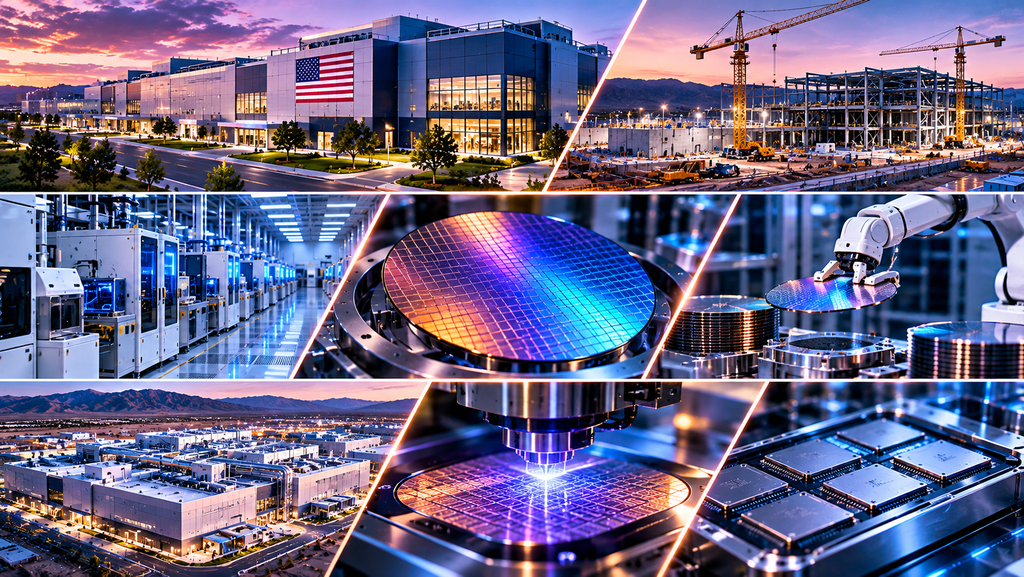
Arizona is becoming a major center for leading-edge semiconductor production.
Taiwan Semiconductor Manufacturing Company, commonly called TSMC, has developed a large manufacturing campus in the Phoenix area.
According to TSMC’s 2026 Arizona update, its first fab began high-volume production using N4 technology in the fourth quarter of 2024.
Its second fab is targeting high-volume N3 production in the second half of 2027.
Additional factories and advanced packaging facilities are in various planning or construction stages.
These investments could help U.S. technology companies access advanced manufacturing capacity domestically.
4.2 New York: Advanced Memory Manufacturing
Micron Technology is developing a major memory manufacturing complex in Clay, New York.
The company officially broke ground in January 2026.
In July 2026, Micron announced that its planned U.S. fab and technology investment would exceed $250 billion through 2035, reflecting growing demand for memory technology.
The New York development is planned as a long-term project involving multiple potential fabs.
Its completion schedule and final scale will depend on continued construction, financing, market conditions, and other factors.
4.3 Idaho: Memory and Research
Micron is also expanding its manufacturing presence in Idaho.
The state has an existing semiconductor research and engineering ecosystem.
Micron’s plans include advanced memory fabrication facilities associated with its Boise operations.
The company expects its first new Idaho fab to begin wafer output in 2027.
These projects could support production of memory technologies used in computing and AI applications.
4.4 Other Important Semiconductor Regions
Other U.S. states, including Texas, Ohio, Oregon, and New Mexico, have semiconductor manufacturing or supply-chain investments.
Different regions specialize in particular parts of the industry.
Some projects focus on advanced logic, while others emphasize mature chips, materials, packaging, equipment, or memory.
This geographic diversity can improve resilience, but each facility still depends on a much broader supplier network.
New US Semiconductor Factories are helping create regional manufacturing centers where technology companies, equipment suppliers, and specialized workers can collaborate.
5. What Is the CHIPS Act and How Does It Work?
The CHIPS and Science Act of 2022 was designed in part to encourage semiconductor manufacturing and research in the United States.
The legislation provided funding for manufacturing incentives and related semiconductor initiatives.
5.1 Federal Support for Semiconductor Manufacturing
Congress appropriated $39 billion for semiconductor manufacturing incentives.
Eligible projects can involve fabrication plants and other facilities supporting the semiconductor supply chain.
The law also established broader support for research, development, and workforce initiatives.
Federal assistance is not necessarily paid in a single installment.
Award agreements can include construction, investment, and operational milestones.
According to an August 6, 2026 report from the Government Accountability Office, Commerce had funded 49 semiconductor-related projects across 24 companies as of July 15, 2026.
The same report found that $13.1 billion in direct funding had been disbursed as of April 2026.
5.2 Tax Incentives for Semiconductor Investment
Federal tax incentives are another important part of semiconductor policy.
The Advanced Manufacturing Investment Credit provides qualifying tax benefits for eligible semiconductor manufacturing investments.
Legislation enacted in 2025 increased the credit rate from 25% to 35%.
A July 2026 Congressional Research Service report noted that the 35% credit applies to qualifying projects beginning construction before the end of 2026 under the rules then in effect.
Tax policy can change, so project eligibility depends on the applicable law and technical requirements.
5.3 Is the CHIPS Act Still Operating in 2026?
Yes, semiconductor manufacturing incentives continued to be implemented in 2026.
However, the program has experienced administrative changes.
The August 2026 GAO report found progress in manufacturing awards but identified major changes and delays affecting semiconductor research and development initiatives.
This distinction matters because manufacturing grants, research programs, and individual company projects do not necessarily move forward at the same pace.
The success of the policy should ultimately be evaluated by completed facilities, productive capacity, private investment, workforce development, and economic value.
Government incentives for US Semiconductor Factories aim to encourage private investment while supporting manufacturing capacity, research, and economic resilience.
6. Why Are Taiwan and South Korea Important to America’s Chip Strategy?
Expanding US Semiconductor Factories does not mean the United States can or should eliminate all international semiconductor relationships.
The industry is deeply interconnected.
6.1 Taiwan’s Importance in Advanced Chip Manufacturing
Taiwan is a critical center of semiconductor fabrication.
TSMC manufactures advanced chips for customers around the world, including major American technology companies.
By expanding in Arizona, the company is adding manufacturing capacity in another geographic region.
However, its operations in Taiwan remain essential to its global business.
Domestic U.S. expansion therefore adds geographic flexibility rather than immediately replacing Taiwan’s manufacturing ecosystem.
6.2 South Korea’s Leadership in Memory Chips
South Korea is particularly influential in semiconductor memory.
Samsung Electronics and SK hynix are major global memory manufacturers.
Their products support computers, smartphones, servers, and advanced AI systems.
High-bandwidth memory has become especially important for powerful AI accelerators.
American memory producer Micron is also investing in domestic capacity.
Together, these developments demonstrate that memory technology is a strategic part of semiconductor competition.
6.3 Why International Cooperation Still Matters
Semiconductor manufacturing equipment, materials, engineering expertise, and packaging services are distributed internationally.
Even a chip fabricated in the United States may depend on equipment or materials produced abroad.
A resilient supply chain therefore requires both domestic capability and reliable international relationships.
The goal is not necessarily to manufacture every component in one country.
It is to reduce dangerous concentrations of risk while maintaining efficiency and technological progress.
7. Will New Semiconductor Factories Lower Prices for Americans?
For ordinary consumers, one of the most practical questions is whether US Semiconductor Factories will make smartphones, cars, and computers more affordable.
The answer depends on several factors.
7.1 Domestic Manufacturing Does Not Automatically Mean Cheaper Chips
Semiconductor production costs depend on factory efficiency, wages, energy prices, equipment costs, production yields, and manufacturing scale.
New American factories may have different cost structures from established Asian facilities.
Government incentives can offset some expenses, but those benefits do not guarantee lower retail prices.
The price of a smartphone or vehicle also includes many components besides semiconductors.
7.2 More Supply Could Help Reduce Shortage Risks
Additional production capacity may help stabilize supply when demand increases or disruptions occur elsewhere.
For example, more reliable access to automotive chips could reduce the risk of manufacturing delays.
However, a new fab only helps with products it is capable of manufacturing.
A factory designed for advanced AI processors cannot immediately supply every type of automotive or industrial chip.
7.3 How New Factories Could Affect American Consumers
| Potential benefit | Important limitation |
|---|---|
| More domestic chip supply | Factories take years to build |
| Greater manufacturing resilience | International dependencies remain |
| New high-skilled jobs | Specialized training is required |
| Reduced exposure to some disruptions | No guarantee against shortages |
| Potentially more stable electronics supply | Retail prices depend on many factors |
| More investment in local communities | Infrastructure and housing costs may rise |
For households, the strongest near-term benefit may be increased supply-chain resilience rather than an immediate reduction in product prices.
8. What Are the Biggest Challenges Facing U.S. Chip Manufacturing?
Building semiconductor factories is difficult even when substantial investment is available.
8.1 High Construction and Equipment Costs
Advanced chipmaking facilities are among the most complex industrial projects in the world.
Costs can increase due to specialized equipment, infrastructure delays, and construction challenges.
Manufacturers must also achieve competitive production yields after factories begin operating.
8.2 Skilled Worker Shortages
Semiconductor operations require specialized technical expertise.
Training workers for advanced manufacturing can take time.
Universities, community colleges, apprenticeships, and employer training programs can help develop the necessary workforce.
Long-term industry growth depends on having enough qualified workers across engineering, construction, and operations.
8.3 Water, Electricity, and Environmental Requirements
Semiconductor production uses large amounts of highly purified water and requires dependable electricity.
Factories must also manage chemical materials, wastewater, emissions, and other environmental impacts.
The scale of these requirements varies significantly by facility and process.
Communities considering semiconductor developments must evaluate infrastructure capacity and environmental safeguards.
8.4 Global Competition and Changing Technology
Manufacturers compete on cost, production yield, reliability, and technological capability.
New process technologies require continuous investment.
Market conditions can also change before a factory is completed.
If demand weakens or technology advances unexpectedly, a planned project may need to change its schedule or strategy.
That makes careful financial planning essential.
The long-term success of US Semiconductor Factories will depend on technological competitiveness, production efficiency, reliable infrastructure, and sustainable customer demand.
9. What Will America’s Semiconductor Industry Look Like by 2030?
By 2030, US Semiconductor Factories could play a considerably larger role in the global supply chain.
However, long-term projections remain uncertain.
9.1 More Advanced Manufacturing Capacity
New projects may expand American production of advanced logic chips, memory products, and specialized semiconductor components.
Successful construction and production ramp-ups would increase the range of technologies manufactured domestically.
9.2 Stronger Links Between AI and Manufacturing
AI demand is reshaping the semiconductor industry.
High-performance processors require advanced memory, packaging, networking, and power-management technologies.
Domestic investment may strengthen connections between American AI developers and semiconductor suppliers.
9.3 A More Diverse Semiconductor Supply Chain
Additional American manufacturing capacity can improve geographic diversification.
But chip production will remain international.
Long-term resilience depends on suppliers across multiple regions, responsible inventory planning, and cooperation between manufacturers and customers.
9.4 The Importance of Measuring Actual Results
Announced investments are a useful indicator of industry confidence.
However, the most meaningful measures of success will include operating factories, manufacturing yields, production volumes, competitive costs, and sustained employment.
By 2030, policymakers and consumers will be able to compare many of today’s announcements with their actual outcomes.
10. Frequently Asked Questions
FAQ 1: Why is America building more semiconductor factories?
America is expanding semiconductor manufacturing to strengthen supply chains, support AI development, improve national security, create jobs, and reduce exposure to overseas production disruptions.
FAQ 2: How many new chip factories are being built in the United States?
Dozens of semiconductor manufacturing and supply-chain projects have been announced or supported. Exact counts depend on whether a project refers to an individual fab, expansion, equipment plant, or broader industrial development.
FAQ 3: What is the CHIPS Act?
The CHIPS and Science Act of 2022 includes federal incentives designed to encourage semiconductor manufacturing, research, and related investment in the United States.
FAQ 4: Which states are receiving semiconductor investments?
Major semiconductor projects are associated with Arizona, New York, Idaho, Texas, Ohio, Oregon, New Mexico, and other states.
FAQ 5: Will American semiconductor factories make computers cheaper?
They may improve long-term supply resilience, but they do not guarantee lower computer prices. Production costs, demand, component availability, and competition also influence retail pricing.
FAQ 6: Why does America depend on Taiwan for chips?
Taiwan developed an extensive semiconductor manufacturing ecosystem, particularly in advanced logic production. Major American chip designers rely on foundry services provided by companies such as TSMC.
FAQ 7: Why is South Korea important to semiconductor manufacturing?
South Korean companies are important global suppliers of memory products used in smartphones, computers, servers, and AI hardware.
FAQ 8: Are semiconductor factories creating American jobs?
New projects are expected to support construction, engineering, manufacturing, and supply-chain employment. Actual job creation depends on project schedules and completed investments.
FAQ 9: Will America manufacture all of its own chips by 2030?
That is unlikely. Semiconductor production depends on a highly specialized global supply chain, and domestic expansion does not eliminate the need for international manufacturing and materials.
FAQ 10: How will new semiconductor factories affect everyday Americans?
Potential effects include more skilled jobs, regional investment, stronger supply chains, and greater technology availability. Consumer prices and local economic impacts will depend on how successfully projects are completed.
11. Conclusion: Why America’s Semiconductor Expansion Matters
US Semiconductor Factories represent a major effort to strengthen America’s technological and industrial future.
Semiconductors are essential to artificial intelligence, automobiles, smartphones, communication systems, healthcare equipment, and national defense.
The growth of domestic manufacturing reflects a recognition that access to reliable semiconductor production is economically and strategically important.
Federal policies, private investment, and international manufacturing partnerships are helping expand America’s semiconductor industry.
However, building factories is only the beginning.
Long-term success requires skilled workers, competitive manufacturing operations, reliable infrastructure, advanced research, responsible public investment, and strong global partnerships.
For American consumers, the benefits may include more dependable technology supply chains, new employment opportunities, and greater economic resilience.
Whether these investments also reduce electronics prices will depend on future production costs and market conditions.
The next decade will reveal how effectively America can turn semiconductor investment announcements into operating factories and sustainable technological leadership.
The future of American semiconductor manufacturing is not simply about producing more chips. It is about building a stronger foundation for the technologies that increasingly shape everyday life.